|
Elon Musk was in the news last week, tweeting that he was assembling an aggressive litigation team in what is thought to be a preparation for lawsuits related to Tesla crashes due to autonomous driving failures. Tesla's autonomous driving technology is industry leading, and they are clear that the driver still needs to be active, but some have become overly reliant on the autopilot which has lead to crashes.
Musk has taken a strong stance against using LiDAR (Light Detection and Ranging), calling it 'expensive, unnecessary, and a fools errand'. Teslas use only cameras. Musk's logic is that humans don't have LiDAR and if the camera resolution and machine learning is good enough, his cars don't need it either.
His position is increasingly isolated as the price of LiDAR systems come down - Bloomberg reports that 17 Manufacturers have announced 21 vehicles that are equipped with LiDAR. There is a suggestion that Tesla may reverse course, as they have been testing LiDAR Systems lately.
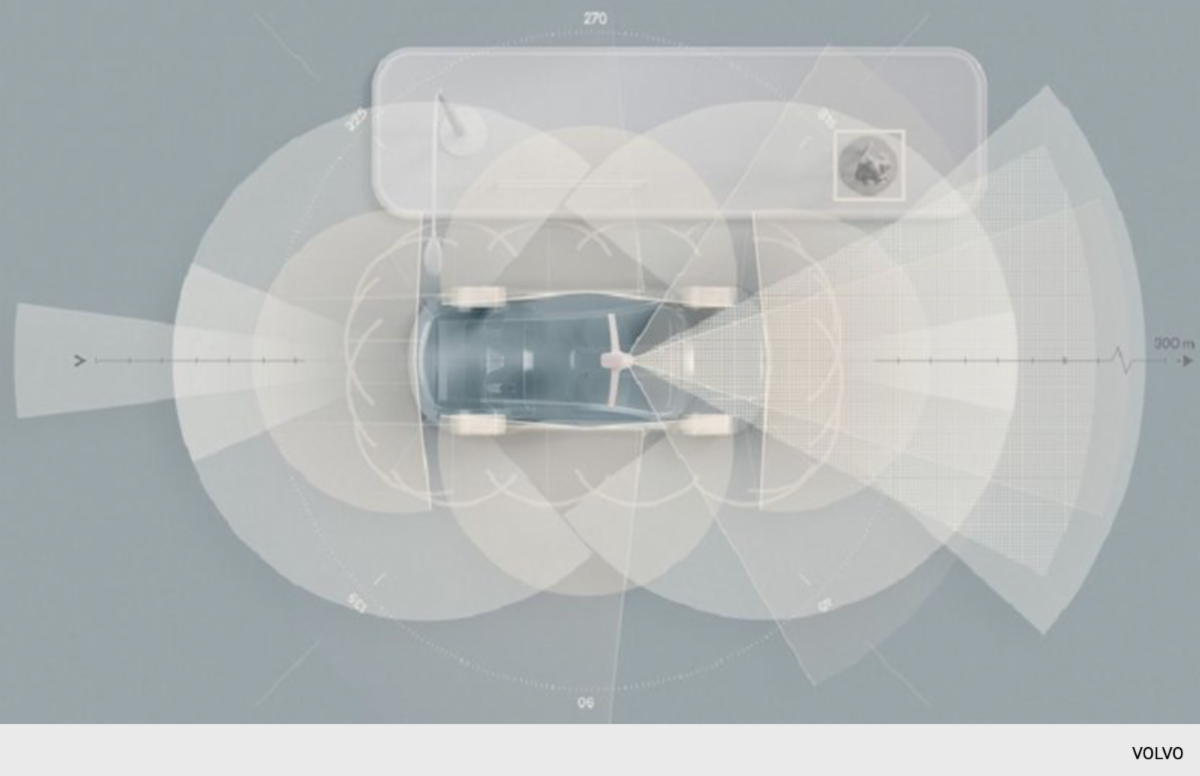
The problem with cameras is that they have to infer distance, and can't measure it exactly. The car can look at an image, classify the objects in it, and then determine their proximity by comparing the number of pixels they occupy with stored dimensional data. But is the yellow circle a traffic light or the sun? LiDAR can tell the difference because it bounces a laser off the object and it comes back to the car. A camera-based system has to rely on code. The overlaying of exact distance measurements on top of camera images provides an important redundancy for autonomous driving applications.
Combining sensor data is called 'Sensor Fusion'. Many automobiles have Doppler Radar sensors that are used for active cruise control, multiple cameras, and ultrasonic sensors for parking. Lidar would be normally layered on top of these other sensors. This requires some sophisticated computing power as the ultrasonic radar measures sound waves, at the speed of sound, while the camera, radio and laser systems measure inputs at the speed of light. Each data stream needs to be time calibrated. Then each object needs to be isolated and the data from each sensor type combined. Then the object is classified. If it is moving its trajectory is computed, and then the car has to decide what to do. This isn't as easy as it sounds!
When automotive LiDAR systems came out a decade ago they were $75,000. Now more basic systems cost between $500 and $1,000. For $500 who wouldn't want this in their car?
My opinion on autonomous driving is that complete autonomous operation of a vehicle is a long way off. We may start to see widespread use in dedicated transportation corridors that are strictly controlled, but the idea of all cars navigating around the city by themselves may never happen. In a congested environment there are simply too many unexpected situations for the car to do the right thing 100% of the time. 99.99% isn't good enough when we are talking about billions of km driven, and even the remote possibility of cars running over baby strollers.
I suggest we look to commercial aviation as an example of how to use this technology. The plane flies itself and the pilot monitors the systems and is there to take control when needed. Letting the car drive itself frees the driver up to better monitor the traffic around them. This brings the benefits of both machine and human ability. I think we should forget about the idea of reading a book and letting the car drive us to work.
|