My Harm Reduction Experience in Lisbon | | |
Celia Sampayo Perez, LCSW, Deputy Clinical Director
This October, while visiting friends and family in Spain and Portugal, I was offered a tour to visit the social support facilities of Centro de Acolhimento de Emergência Municipal and Centro de Acolhimento do Beato, an emergency and temporary shelter managed by Associação VITAE. Located in Lisbon, VITAE focuses on social inclusion, migrant integration, and helping vulnerable individual adults who experience homelessness, socioeconomic and addiction issues using a holistic and harm reduction approach focused on radical acceptance, dignity, compassion, self-determination, collaboration, and authentic humanity.
Portugal provides free or low-cost public healthcare, public education, and reliable public transportation systems. It ranks remarkably high on global peace and safety indexes. And it decriminalized the personal possession and consumption of all substances in 2001. Substances consumed by people in Portugal are primarily cannabis (hashish and herbal cannabis), cocaine, MDMA/ecstasy, heroin and other opioids. There are also emerging synthetic drugs and psychoactive substances that have surfaced in recent years.
The wonderful staff of VITAE (Juliana, Hélder, Vitória, and Alicia) walked me through the different service areas (sleeping, dining, safe injection unit, vending machine with clean syringes, medical/psychiatric care, recreational, patio, etc) while we exchanged information about treatment services in Lisbon and San Francisco. It was a beautiful and unforgettable experience as we tried to communicate with each other in four different languages (Galician, English, Portuguese, and Spanish). We then realized that we actually spoke the same language of compassion, acceptance, and collaboration! At one point, I became overwhelmed seeing the interactions between staff and residents; residents responded to staff with such genuine trust.
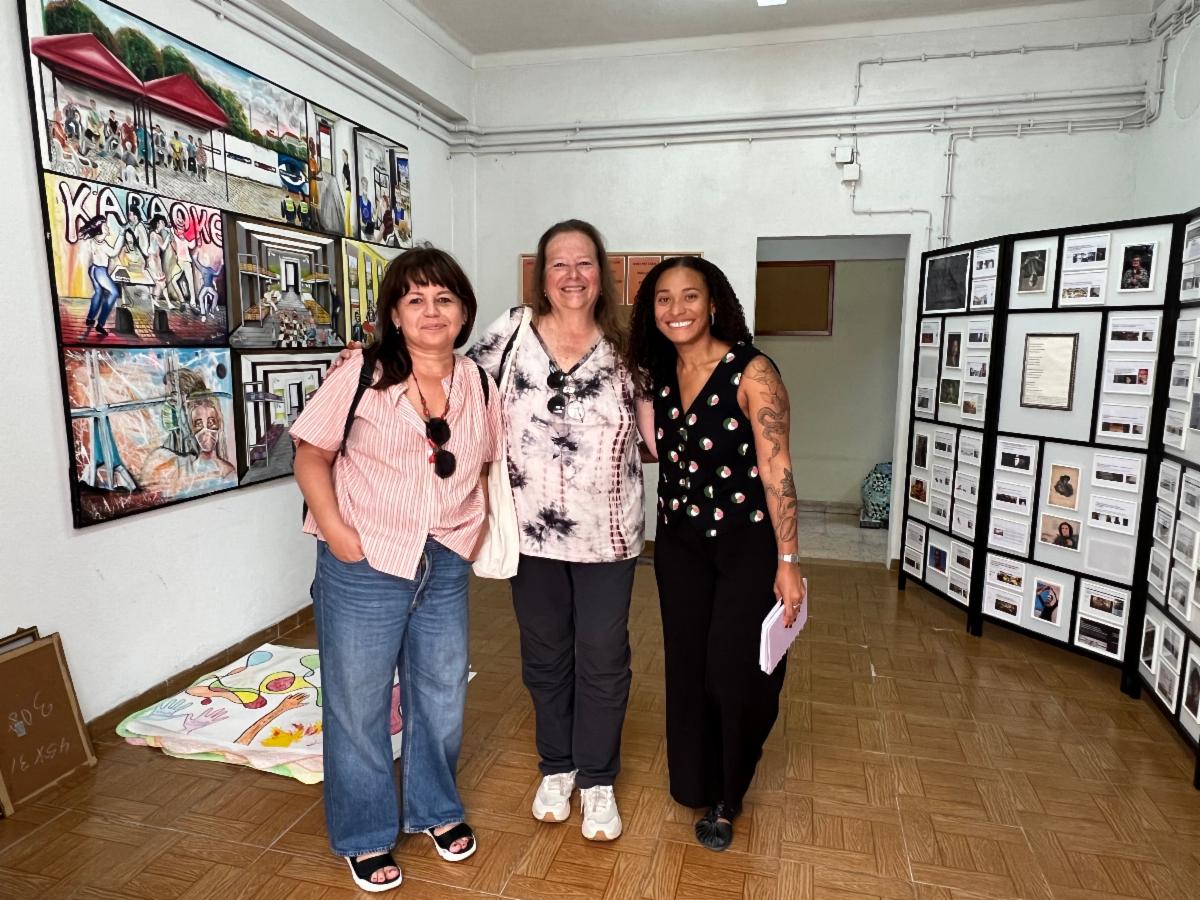
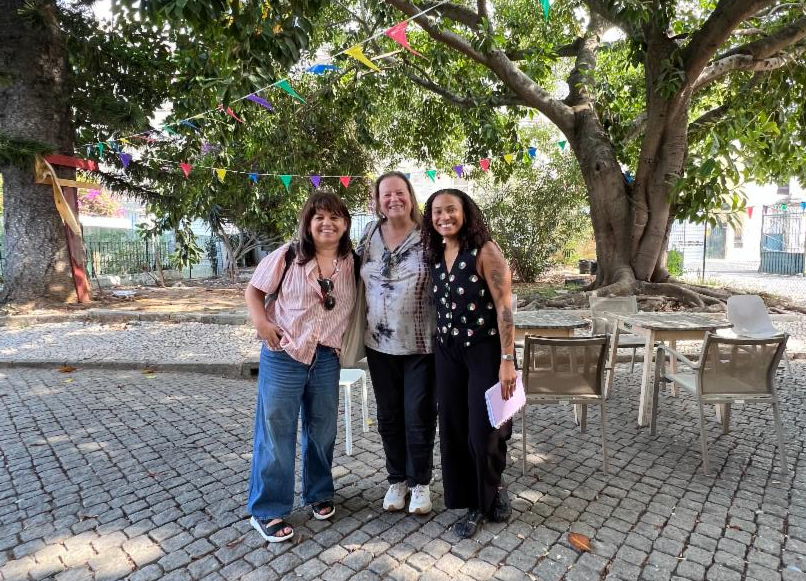
| | Marta Borges, Celia, & Juliana Salvador in one of the agency’s common areas. | | Marta Borges, Celia & Juliana Salvador in the open courtyard where residents and staff engage. | | |
Today, Lisbon is a quarter of a century ahead of us in creating the kind of residential program that could treat a person who has substance misuse issues while respecting their self-determination and readiness to start making changes. Instead, our politicians promote punishment and coercive treatment which, while being incredibly expensive and largely ineffective, also increases risk for fatal overdoses.
While learning about Portugal and the services at VITAE, I thought a lot about our people here in San Francisco, and the negativity against the harm reduction model. Not long ago, San Francisco was on track to open a pilot safe use program (along with 3 other California cities), a program that would also offer medical and psychiatric care onsite. The Governor vetoed the pilot measure and San Francisco decided not to pursue this evidenced-based practice.
Substance use is a health issue and not a moral or political one. Making substance use a political issue is causing harm to a lot of people. A lot of people would be infected with HIV today if we did not distribute condoms. By supporting people with safer ways to use substances, while also offering treatment, and other resources that address people’s needs and where they fall in the change process, we not only save lives, but offer opportunities to better–for each person and their community.
In the 25 years it may take us to catch up, I take energy from continuing to be part of a community that believes in creating a world for safer lives through the firm belief that everyone matters and that better is possible–for all of us! I want to thank Lisbon for offering unique alternative treatment programs to vulnerable individuals and the wonderful care providers for giving me the opportunity to observe how successful and sustainable these programs can be. Thank you for showing how radical acceptance, kindness, respect and compassion helps the residents lead their lives with dignity.
| |
|
HRTC is no stranger to a little water…Encouraging people to stay hydrated and well nourished is a long-standing cornerstone of harm reduction practice! Unfortunately, we have also experienced significant flooding at our main offices in the SOMA neighborhood of San Francisco in early 2023 and again on November 18 when City pumps and sewers failed.
Because of long-neglected sewer upgrades in San Francisco, flood water here often becomes contaminated with sewage. It has been a steep learning curve for us to understand that when it rains, and El Niño comes to call, that pooling water on the street and anywhere is likely contaminated with fecal matter. [check out this super-explanatory comic on the sewage situation from Mission Local]
What this means for HRTC is a long El Niño winter, likely punctuated with frequent needs for site closure, cleaning and sanitizing. This is an extra blow to our clients, many of whom seek us out for respite from street and poor housing conditions as well as individual psychotherapy and social support.
At our Merlin Street drop-in therapy site, we have gone from an average of 35 visitors a day in January 2026 to more than 110 in October–the need for welcoming, low-barrier services does not go away with weather or punitive City policies. In fact, it usually increases.
All of this is incredibly taxing: on our clients, our staff and our finances. We are committed to being here to support our folx as best as we absolutely can and have invested in additional flood prevention measures, shoe/boot drying equipment for our clients, and partnering with organizations like RAMS peer counselors to help bring additional support to our clients during this time. And we know we will need more: more sandbags, more deep cleaning, more flexibility so that we can keep our doors open to people struggling with so much.
This Giving Tuesday, please consider HRTC in your giving. Keeping our doors open as much as possible this winter is shaping up to be the most client-first, people-first thing we can do. Thank you for your help!
| | | | Site Spotlight: Embarcadero Navigation Center | | |
Nathan Kamps-Hughes, LCSW, MBH Program Manager
As part of San Francisco’s ongoing de-prioritization of street-based outreach and treatment services in favor of less visible, “brick and mortar” type service locations, HRTC has had to scale back its mobile programs to a significant degree. At the request of our DPH partners, we have phased out 3 of our mobile sites, while simultaneously expanding our role within the city’s shelters and navigation centers.
In January 2025 we began hosting twice-weekly drop-in clinics at the Embarcadero Navigation Center (ENC), with each clinic lasting approximately 3 hours. We have provided integrated treatment services to more than 140 unique people at this site alone! The open layout of the ENC, with multiple gathering places, chairs, common areas, as well as a “quiet room” that doubles as a therapy office, make this a good setting to engage folx in a paced and relaxed way. The scattered tables in the courtyard are well suited to HRTC mini-groups, which are often co-facilitated by staff therapists Callie Olpin and Corey Drew, in between individual sessions.
Given the temporary nature of an individual’s stay at the ENC, our engagement and treatment style continuously evolves to meet the needs of our clients, with many of the folx we see here focusing on short term goals related to their pending transition into housing.
| | Holiday Cookie Volunteers Needed! | | |
Each holiday season, we pass out homemade cookies at our mobile sites and drop-in treatment center — a small but sweet tradition that means a lot to folks we serve. We’re looking for volunteers to bake cookies. Any amount is appreciated — every batch makes a difference!
| | | | |