A Weekly Newsletter from David Pickler | | |
TODAY'S TOPIC:
Andy Warhol
| | Andy Warhol was a pioneer of the Pop Art movement, best known for turning everyday objects and celebrities into bold, iconic masterpieces. From Campbell’s Soup Cans to Marilyn Monroe’s portraits, his work blurred the line between commercial culture and fine art, leaving a lasting mark on the art world. Keep reading to learn more about Warhol and his legacy! | | |
Artistry in Advising
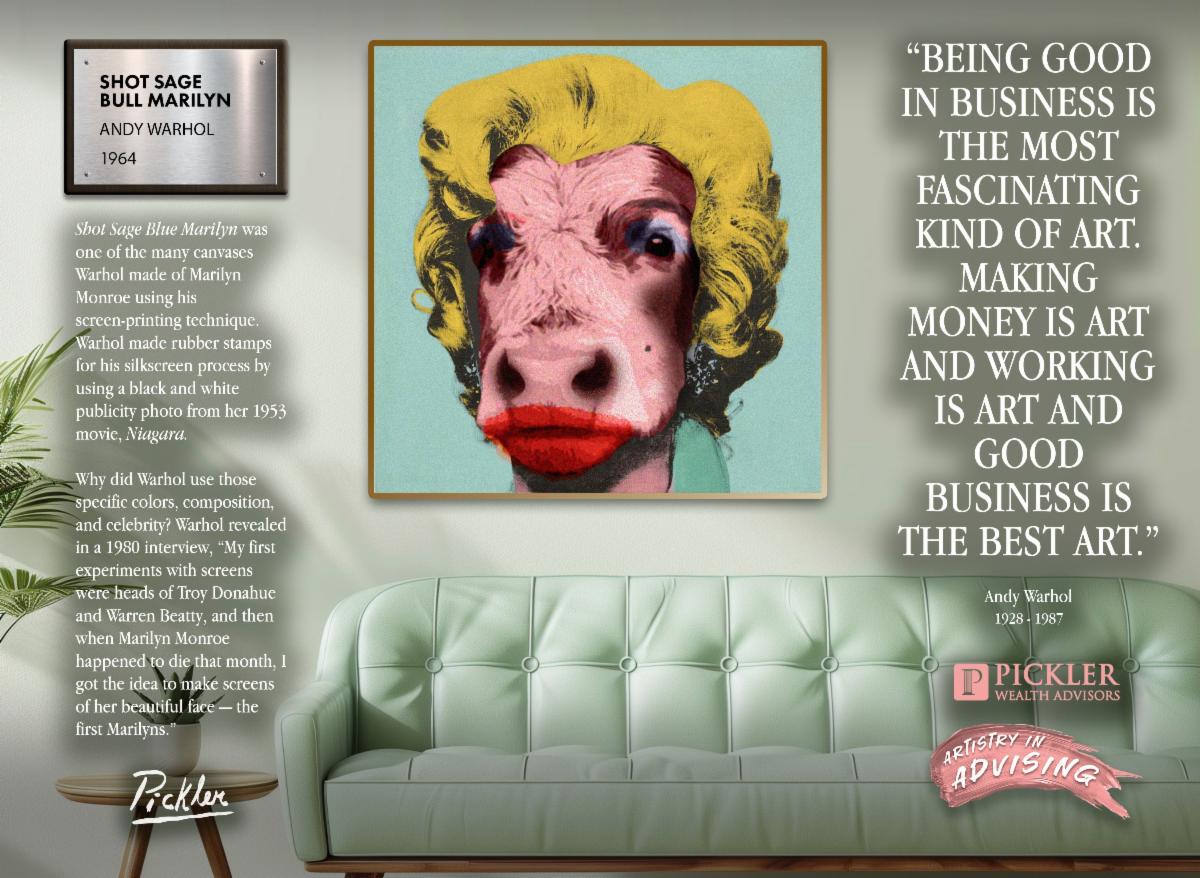
Shot Sage Bull Marilyn
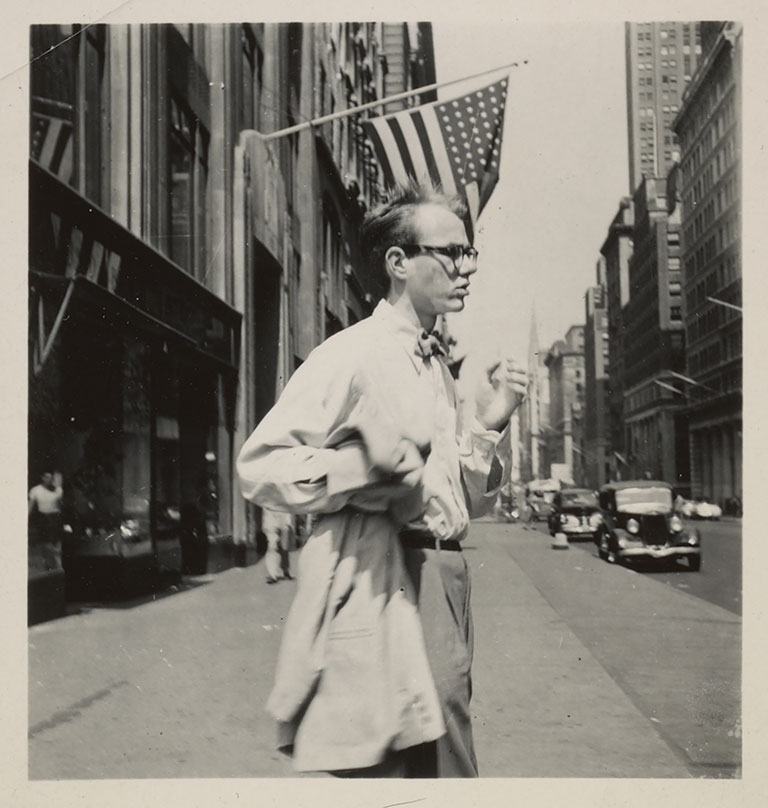
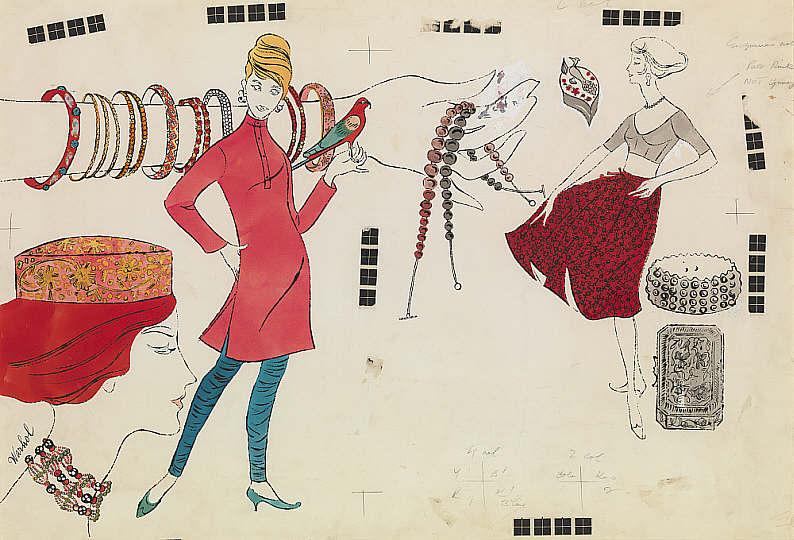
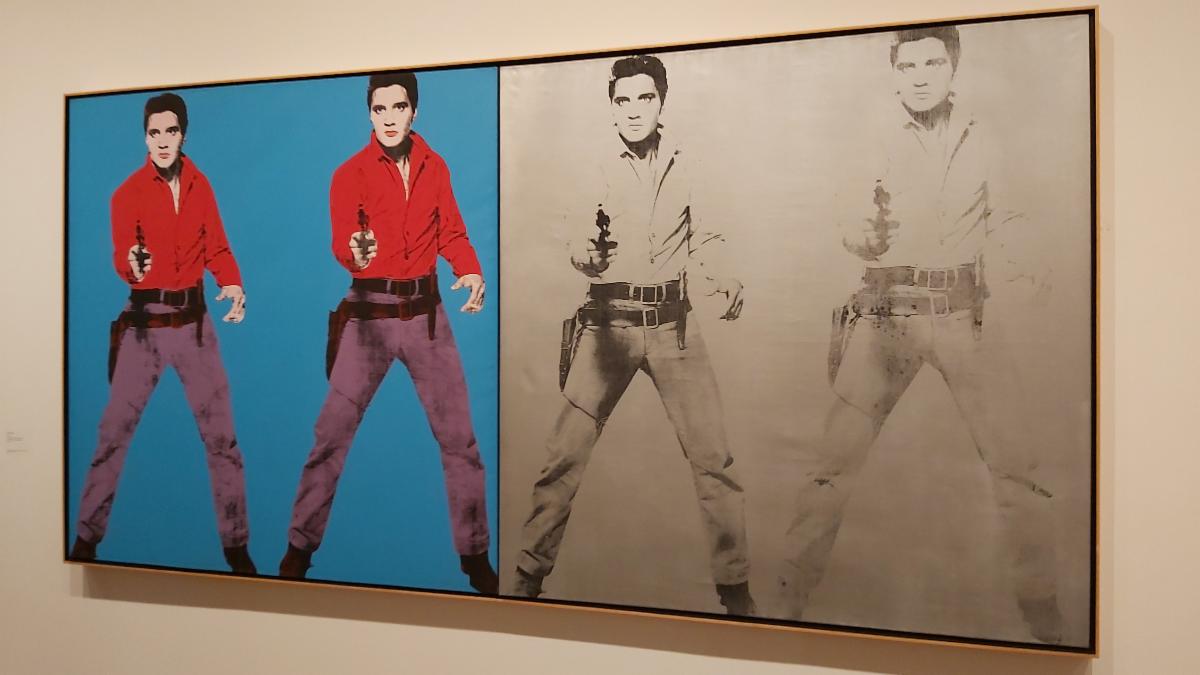
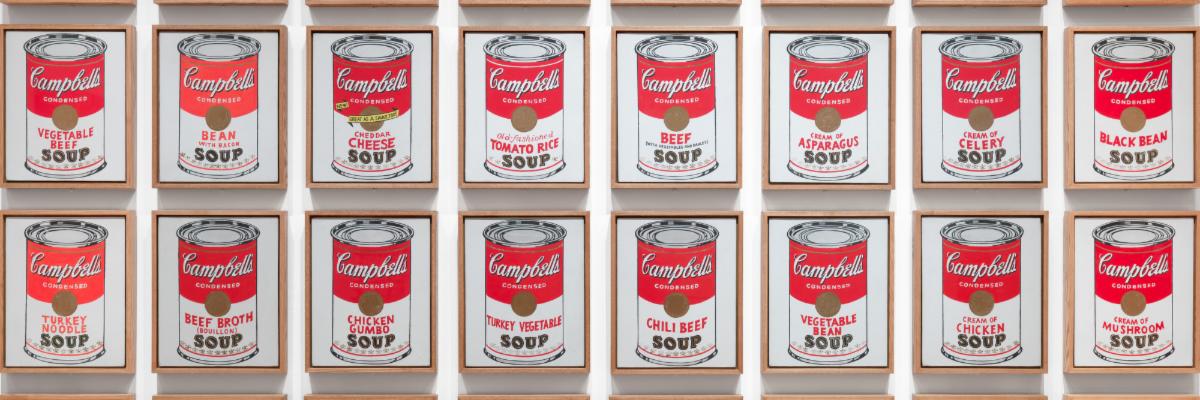
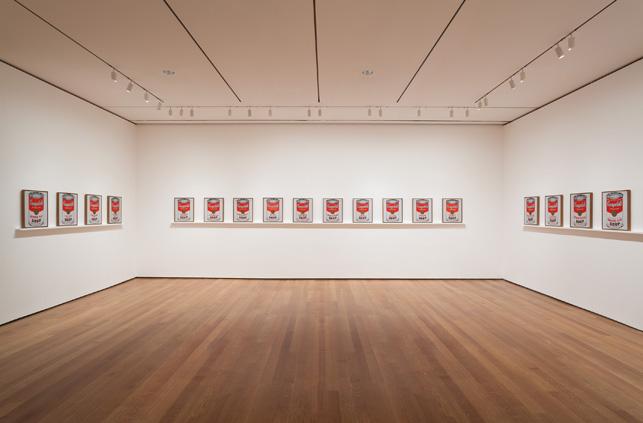
| | Created by Pickler Wealth Advisors' Chief Branding Officer, Cameron Spann | | Andy Warhol, born Andrew Warhola on August 6, 1928, was the youngest of three sons born to Andrej Warhola and Julia Zavacky Warhola. His parents immigrated to the United States from the European region that is now Slovakia, settling into the working-class neighborhood of Uptown in Pittsburgh, Pennsylvania. Warhol graduated from Carnegie Institute of Technology (now Carnegie Mellon University) in Pittsburgh with a Bachelor of Fine Art in Pictorial Design in 1949 and soon after moved to New York City to pursue a career as a commercial artist. | | Throughout the 1950s, he became one of the most successful illustrators of his time and won numerous awards for his work. His clients included Tiffany & Co., The New York Times, I. Miller Shoes, Bonwit Teller, Columbia Records, Fleming-Joffe, NBC, and others. Much of his commercial work was based on photographs and other source images, a process he would use for the rest of his life. While he continued to work as a commercial artist throughout his career, in the early 60s Warhol transitioned into the fine art world, gaining notoriety in the nascent Pop Art movement. | | Early Pop paintings were based on comics and ads, with his series of Campbell’s Soup Cans in 1962 creating a buzz in the art world that launched Warhol as a celebrity. Other early subjects drew upon Warhol’s life-long fascination with Hollywood and sensationalism; in 1962 he began a large series of celebrity portraits, including Marilyn Monroe, Elvis Presley, and Elizabeth Taylor. | | Andy Warhol’s 'Four Marilyns' | | Warhol's Soup Can Paintings | | On July 9, 1962, a little-known artist named Andy Warhol opened a small show at the Ferus Gallery in Los Angeles. His head-scratching subject: Campbell’s Soup. Each of his 32 paintings portrayed a different flavor in the lineup, from Tomato to Pepper Pot and Cream of Celery. | | |
What Did the Soup Can Paintings Mean?
Pop turned traditional art upside down. Instead of portraits, landscapes, battle scenes or other subjects that experts thought of as “art,” artists like Warhol took images from advertising, comic books and other bits of popular culture—the “pop” in Pop art. They used humor and irony to comment on how mass production and consumerism had come to dominate so much of American life and culture. Abstract artists of the 1950s like Jackson Pollock may have glorified themselves as creative, individualist geniuses, but Pop artists of the 1960s took the opposite approach. They tried to smooth over or eliminate all traces of their own art-making processes—like brush strokes—so that their work seemed almost mechanical, like the mass-produced subject matter it portrayed.
To make the “Campbell’s Soup Can” paintings, Warhol projected the image of a soup can onto his blank canvas, traced the outline and details, then carefully filled it in using old-fashioned brushes and paint. For consistency, he used a hand stamp to make the fleur-de-lys pattern around each label’s bottom edge, but he didn’t always get it right. Small details—tiny splashes of red on the Tomato Soup painting, the unevenly applied fleur-de-lys stamp on others—betrayed the paintings’ handmade origins. In using fine art techniques to depict an everyday manufactured object, Warhol captured an essential contradiction in Pop art. Although they were supposed to look like they’d been made mechanically, every painting was slightly different—and not only in the flavor on the label.
But there’s one thing all 32 paintings have in common. Instead of detailing the intricate medallion at the center of every can's label—representing the “gold medal of excellence” that Campbell’s Soup won at the 1900 Paris Exposition—Warhol substituted a plain gold circle.
| |
Why Did the Paintings Become Such a Sensation?
Once the public and the critics got over their shock, they warmed to Warhol’s soup cans. For one thing, they made art fun. How hard could it be to understand a painting when the original was probably on your kitchen shelf?
Today, Warhol soup cans remain a pop culture icon, turning up on everything from plates and mugs to neckties, t-shirts, surfboards and skateboard decks. One of the most striking images involved Warhol himself—the May 1969 cover of Esquire magazine showed him drowning in a can of Campbell’s Tomato Soup.
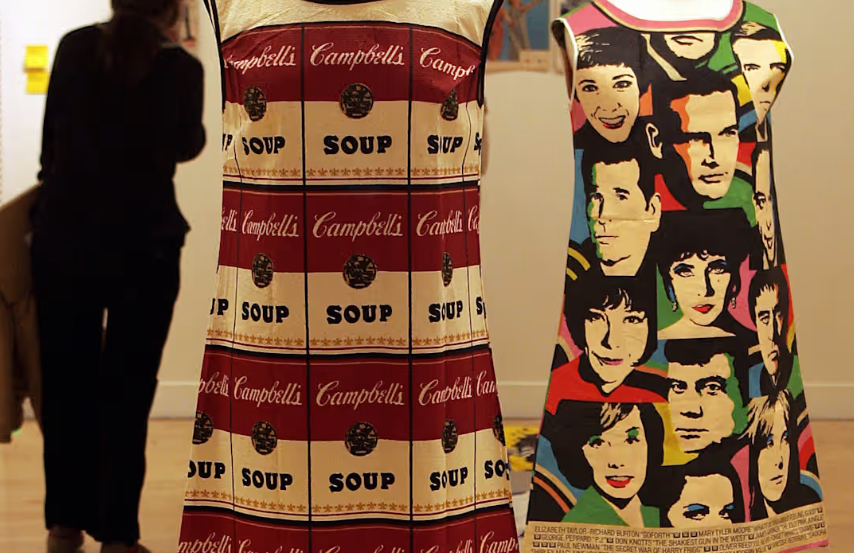
In the end, Warhol’s soup cans were recognized as museum-worthy art, by no less than The Museum of Modern Art. In 1996, the museum bought the 32 paintings from Irving Blum as a combination gift and sale valued upwards of $15 million—a jaw-dropping return on his $1,000 investment in 1962. Even the Souper Dress has been declared a classic. In 1995—the year before the paintings went to MoMA—it became part of the collection of The Metropolitan Museum of Art.
| |
Did You Know?
Campbell’s Soups jumped on the then-popular fad for paper dresses, coming out with the Souper Dress, a kicky little number covered in Warhol-esque soup labels. Each dress had three gold bands at the bottom, so the wearer could snip her dress to the ideal length without cutting into the soup can pattern. The price: $1 and two Campbell’s Soup labels.
| | PAYING IT FORWARD WITH PASSION AND PURPOSE | | In 2019, Pickler Companies was approached by representatives of the University of Tennessee Health Science Center (UTHSC) about creating a series of presentations for the benefit of its students. We got to work on creating a library of robust presentations that would prepare the audience – medical residents and fellows who have completed Med School and are in training for a specialty – for life outside of the classroom. | | Kinder & Griffin's Picture of the Week | | Julianne's Picture of the Week | | Coralyn's Picture of the Week | | Stay connected with me on social media | | | | |