A Weekly Newsletter from David Pickler | |
|
TODAY'S TOPIC:
Franklin D. Roosevelt
| |
The Man in the White House | |
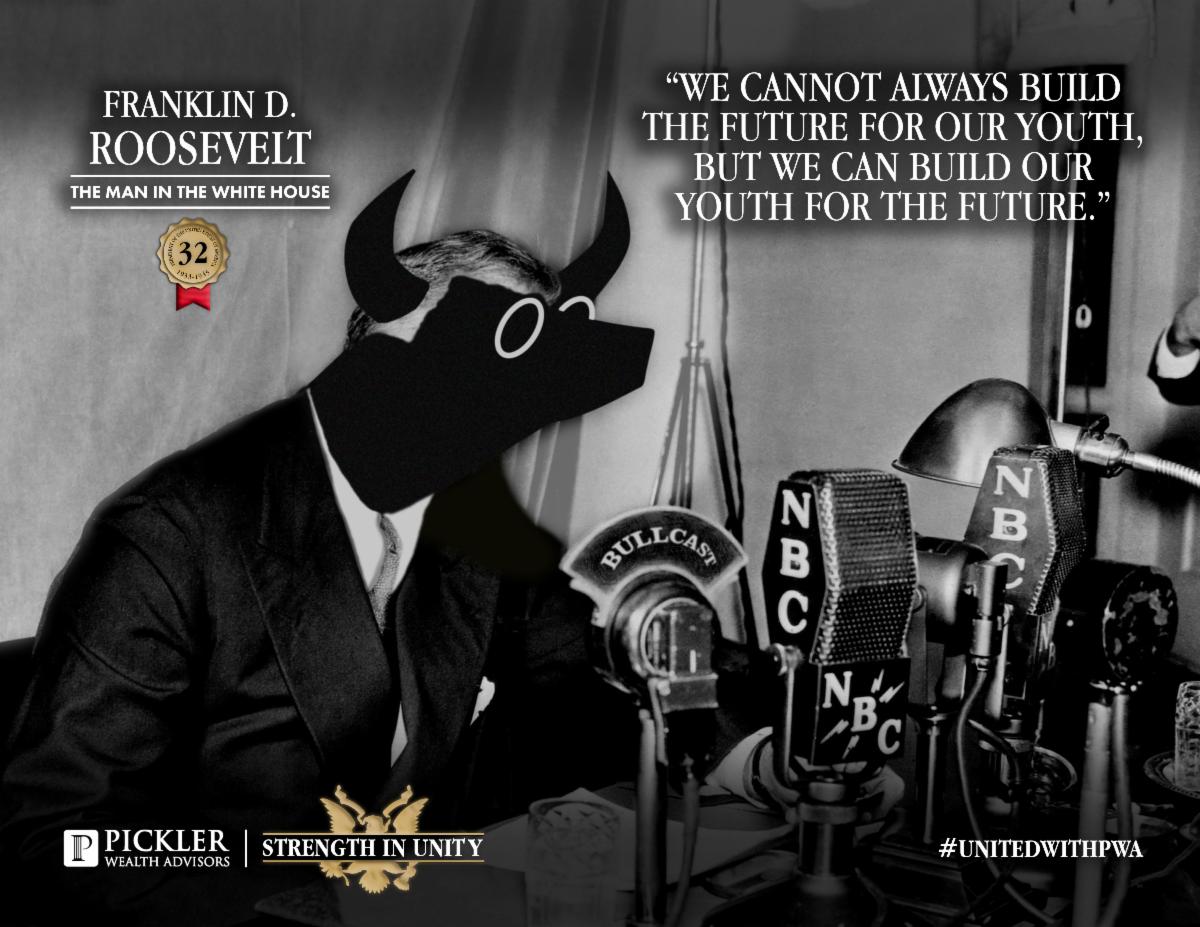
On this day in 1933, FDR gave his first fireside chat. These informal and intimate conversations, delivered directly to the American people, allowed FDR to establish a sense of connection and trust with the public. Through these chats, Roosevelt addressed pressing issues, explained his policies, and reassured citizens during times of crisis, effectively using the power of communication to foster unity and confidence amidst uncertainty. The fireside chats not only provided vital information but also showcased FDR's ability to leverage technology to engage and inspire a nation. | |
|
Strength in Unity
Honoring the Historic Presidents of the United States
| |
Designed by Pickler Wealth Advisors' Chief Branding Officer, Cameron Spann | |
|
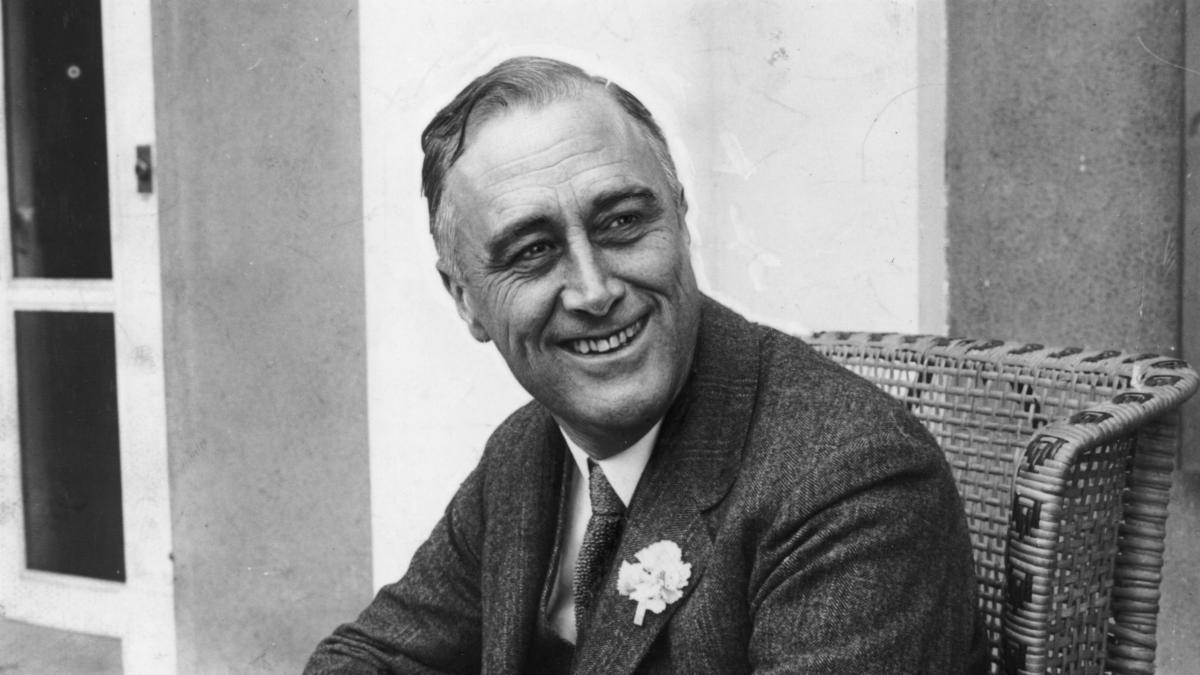
Born in 1882 at Hyde Park, New York–now a national historic site–he attended Harvard University and Columbia Law School. On St. Patrick’s Day, 1905, he married Eleanor Roosevelt.
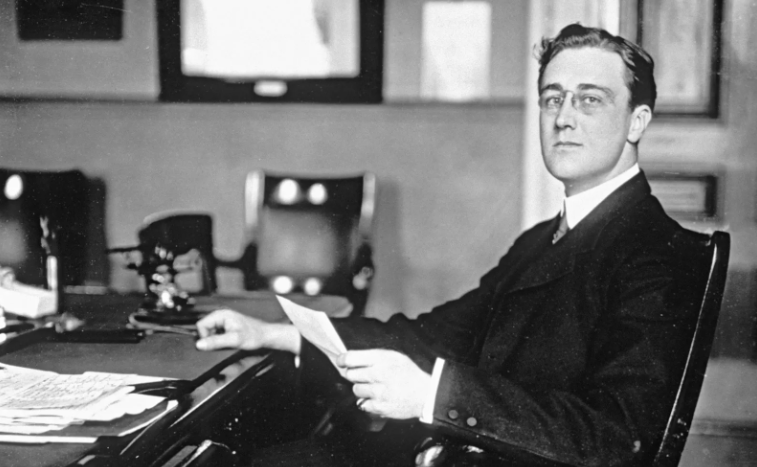
Following the example of his fifth cousin, President Theodore Roosevelt, whom he greatly admired, Franklin D. Roosevelt entered public service through politics, but as a Democrat. He won election to the New York Senate in 1910. President Wilson appointed him Assistant Secretary of the Navy, and he was the Democratic nominee for Vice President in 1920.
In the summer of 1921, when he was 39, disaster hit-he was stricken with poliomyelitis. Demonstrating indomitable courage, he fought to regain the use of his legs, particularly through swimming. At the 1924 Democratic Convention he dramatically appeared on crutches to nominate Alfred E. Smith as “the Happy Warrior.” In 1928 Roosevelt became Governor of New York.
| |
|
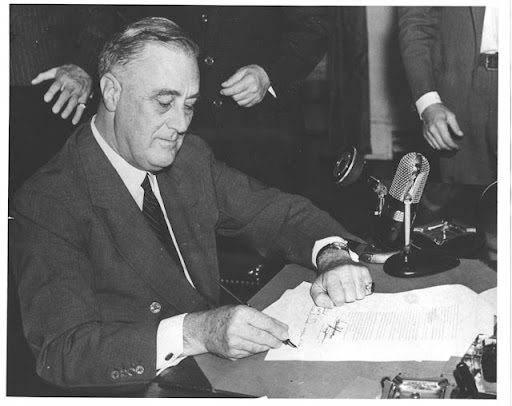
He was elected President in November 1932, to the first of four terms. By March there were 13,000,000 unemployed, and almost every bank was closed. In his first “hundred days,” he proposed, and Congress enacted, a sweeping program to bring recovery to business and agriculture, relief to the unemployed and to those in danger of losing farms and homes, and reform, especially through the establishment of the Tennessee Valley Authority.
By 1935 the Nation had achieved some measure of recovery, but businessmen and bankers were turning more and more against Roosevelt’s New Deal program. They feared his experiments, were appalled because he had taken the Nation off the gold standard and allowed deficits in the budget, and disliked the concessions to labor. Roosevelt responded with a new program of reform: Social Security, heavier taxes on the wealthy, new controls over banks and public utilities, and an enormous work relief program for the unemployed.
In 1936 he was re-elected by a top-heavy margin. Feeling he was armed with a popular mandate, he sought legislation to enlarge the Supreme Court, which had been invalidating key New Deal measures. Roosevelt lost the Supreme Court battle, but a revolution in constitutional law took place. Thereafter the Government could legally regulate the economy.
|  | |
Roosevelt had pledged the United States to the “good neighbor” policy, transforming the Monroe Doctrine from a unilateral American manifesto into arrangements for mutual action against aggressors. He also sought through neutrality legislation to keep the United States out of the war in Europe, yet at the same time to strengthen nations threatened or attacked. When France fell and England came under siege in 1940, he began to send Great Britain all possible aid short of actual military involvement.
When the Japanese attacked Pearl Harbor on December 7, 1941, Roosevelt directed organization of the Nation’s manpower and resources for global war.
Feeling that the future peace of the world would depend upon relations between the United States and Russia, he devoted much thought to the planning of a United Nations, in which, he hoped, international difficulties could be settled.
As the war drew to a close, Roosevelt’s health deteriorated, and on April 12, 1945, while at Warm Springs, Georgia, he died of a cerebral hemorrhage.
| |
How FDR's 'Fireside Chats' Helped Calm a Nation in Crisis | 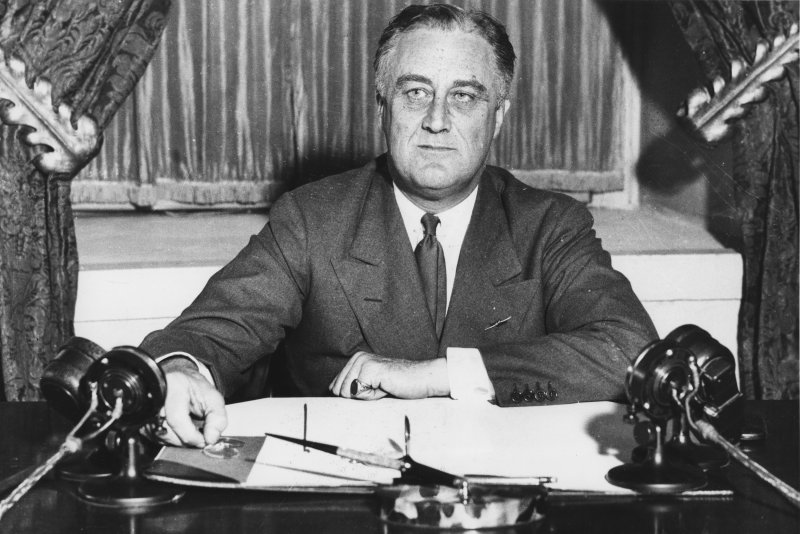 | |
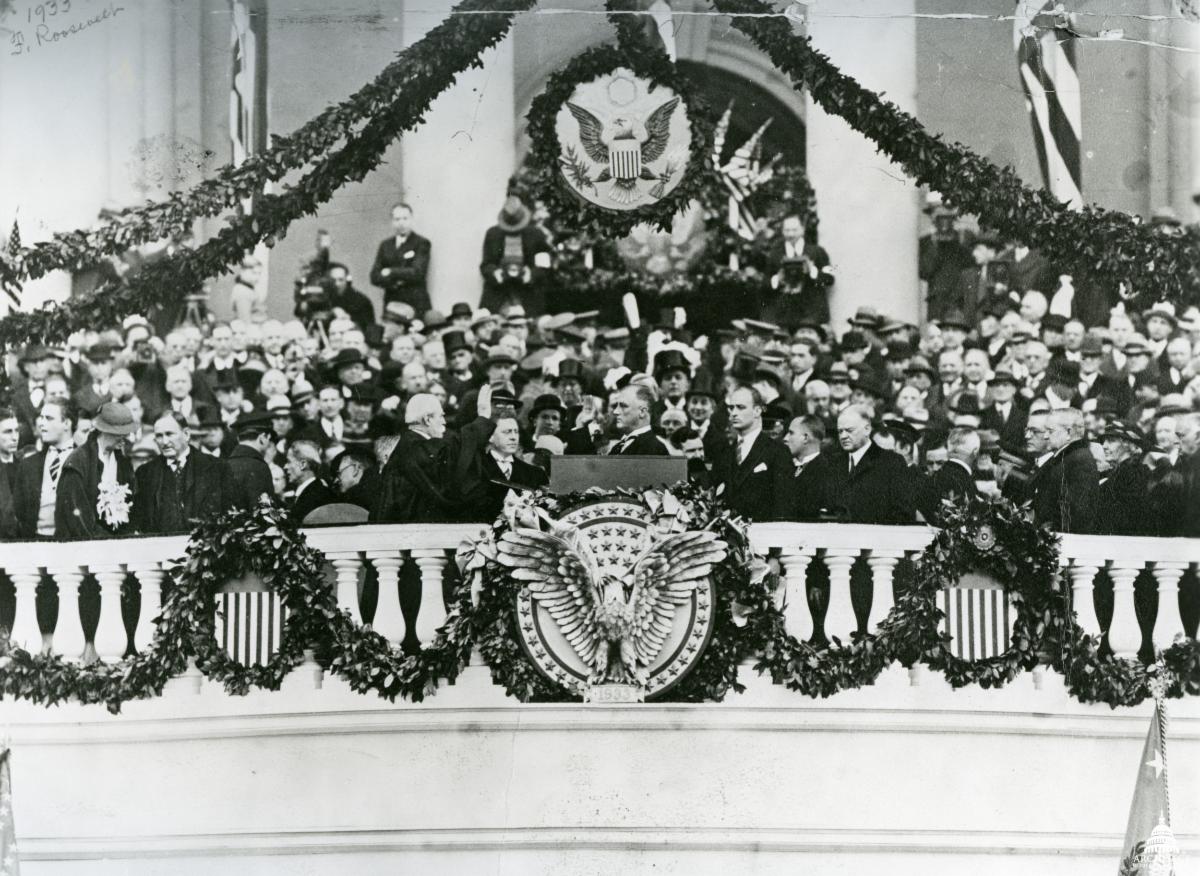
When Franklin D. Roosevelt was inaugurated on March 4, 1933, the United States was entering the fourth year of the Great Depression, the worst economic downturn in the nation’s history.
The stock market had fallen a staggering 75 percent from 1929 levels, and one in every four workers was unemployed. In the weeks before Roosevelt took office, things had gotten even worse. Some 4,000 banks were forced out of business, costing millions of people their life savings. As depositors panicked and rushed to withdraw their money from the remaining banks, the crisis threatened to bring down the nation’s entire financial system.
“The only thing we have to fear is fear itself,” Roosevelt famously declared on that cold and cloudy Inauguration Day. But stirring words would not be enough, and Roosevelt knew it: “This nation asks for action, and action now.”
Two days later, he declared a nationwide “bank holiday,” temporarily shutting down the nation’s entire banking system. Called into a special session, Congress passed the Emergency Banking Act on March 9. The bill gave the federal government the power to investigate each bank’s finances. Those that were judged to be healthy and stable enough would reopen on March 13.
| 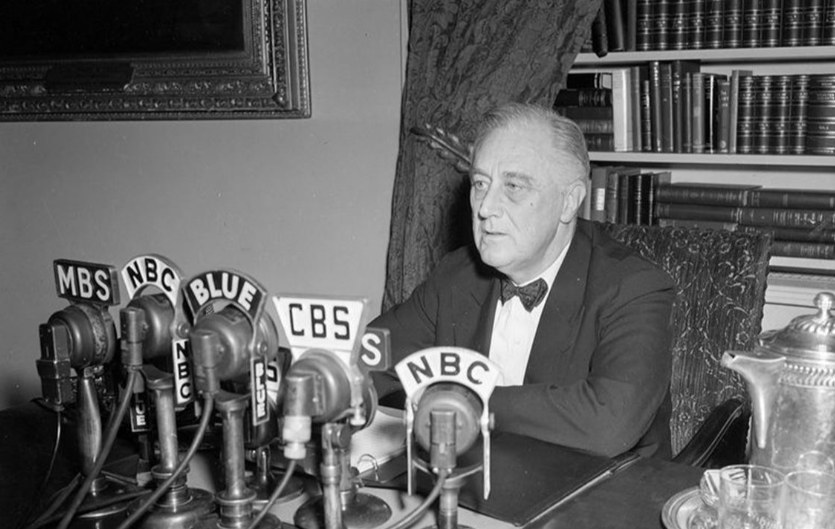 | |
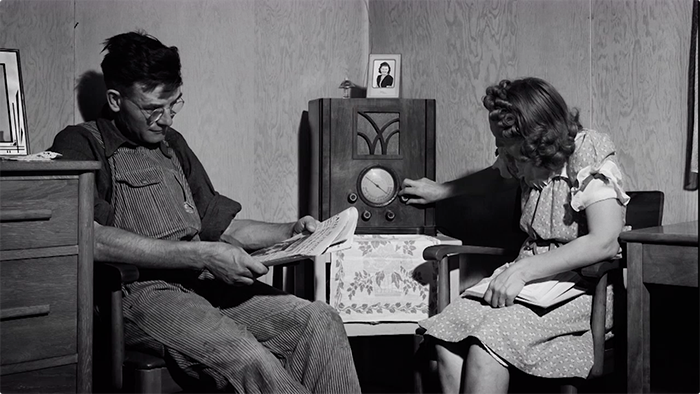
But on March 12, 1933, the day before banks were set to reopen, it wasn’t clear that these emergency measures had done enough to calm the public’s fears. That evening, at 10 pm Eastern time, Roosevelt addressed the nation via radio broadcast, directly from the Diplomatic Reception Room at the White House.
“My friends, I want to talk for a few minutes with the people of the United States about banking,” he began. For roughly 13 minutes, more than 60 million Americans listened as Roosevelt explained—in straightforward language designed “for the benefit of the average citizen”—what the federal government had done in the past few days to address the banking crisis, why they had done it and what the next steps were going to be.
After explaining how banking worked, Roosevelt laid out what had happened to cause the current crisis. He argued that the government’s emergency measures would enable a survey of the nation’s banks and allow stable ones to reopen. After that, he said, people could feel completely safe returning their money to the banks rather than hoarding it at home out of fear. “I can assure you,” he said, “that it is safer to keep your money in a reopened bank than under the mattress.”
Finally, Roosevelt called on the American people to renew their “confidence and courage,” and to have “faith,” rather than be “stampeded by rumors or guesses.”
“Let us unite in banishing fear,” he concluded. “Together we cannot fail.”
|  | |
The effect was powerful: On March 13, when healthy banks reopened, people lined up in droves to return their cash. More than half of the funds Americans had withdrawn during the crisis were back in the bank within two weeks. March 15, the first day stocks were traded after the banking holiday, saw the market’s largest ever one-day percentage price increase, reflecting a new surge of confidence among American investors.
Before Roosevelt’s second radio address, broadcast on May 7, 1933, the CBS station manager Harold Butcher dubbed the speeches “fireside chats.” Thousands of letters had begun pouring into the Roosevelt White House every day, many of them expressing gratitude for the president’s words. A single fireside chat could generate more than 450,000 cards, letters and telegrams.
It was a long, hard slog, however, before the country began to regain its economic foothold. After a period of gradual recovery, a sharp recession hit in 1937. Then a second severe contraction in 1938 reversed many gains in production and employment and prolonged the effects of the Great Depression through the end of the decade. Through it all, FDR continued to speak to the American people directly through his radio addresses.
Roosevelt went on to deliver around 30 fireside chats over the course of his long presidency, as the nation took on economic recovery, only to be thrust headlong into World War II. The fireside chats enabled Roosevelt to connect with Americans in an unprecedented way—an ability that likely contributed to his historic four presidential victories.
| FDR's First Fireside Chat | Presidential Facts About FDR | |
|
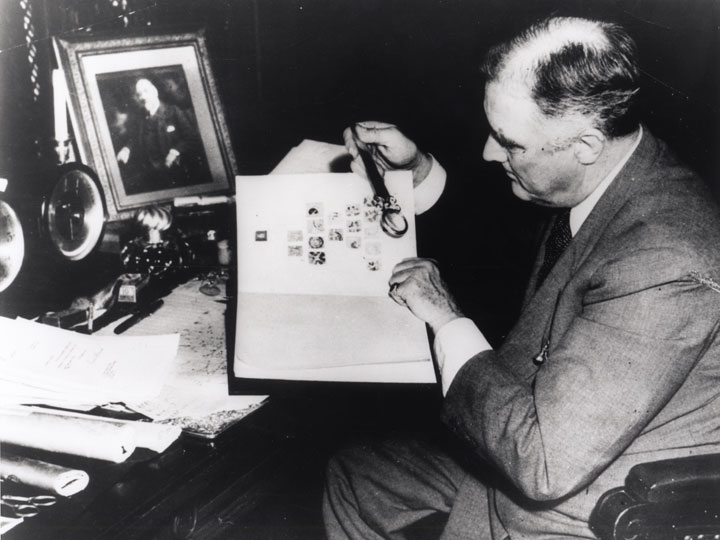
FDR was an avid collector.
Born on January 30, 1882, Roosevelt had a life-long love affair with postage stamps. He started collecting them as a child and later attended stamp shows, bought rarities from stamp dealers, and joined stamp clubs. He even designed a few stamps himself. “I owe my life to my hobbies—especially stamp collecting,” FDR once remarked.
Ornithology—and collecting birds—was another passion of his. Young Roosevelt received a BB gun on his 11th birthday. He then shot, stuffed, and mounted birds of about 300 different species in his native Dutchess County, New York. FDR also loved to go birdwatching, even while president.
| |
|
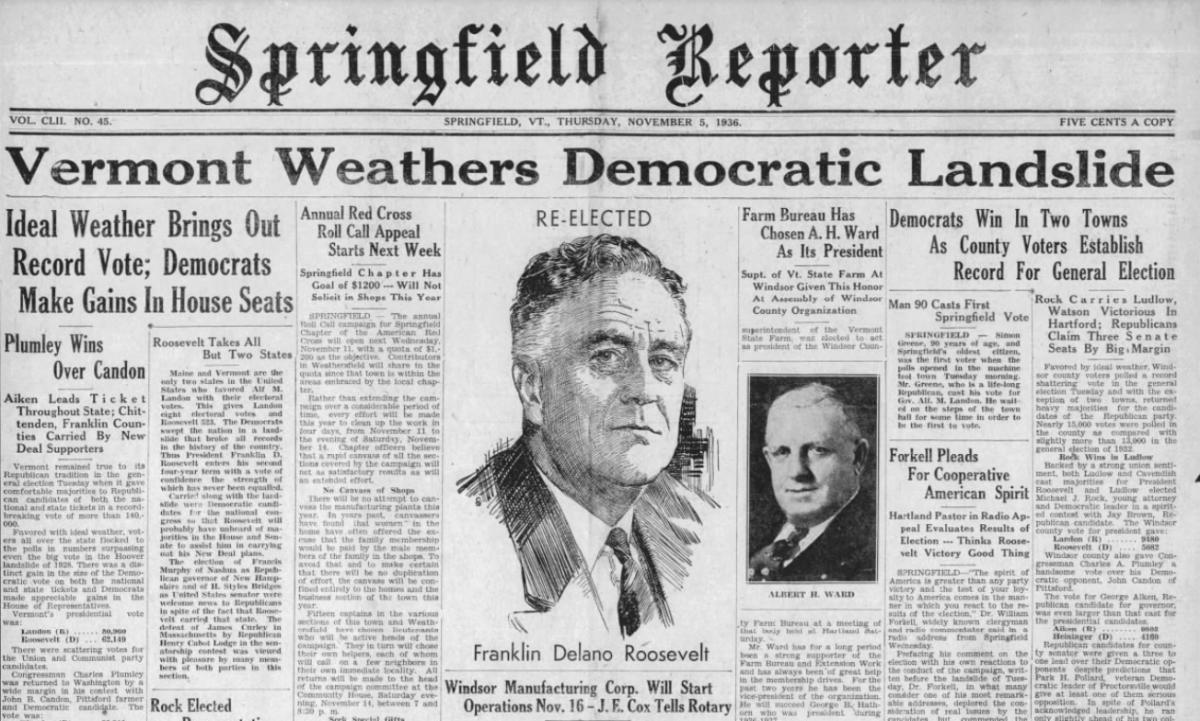
Maine and Vermont were the only two states that never voted for him.
Landslides became FDR’s specialty. When Roosevelt defeated Hoover in the 1932 presidential election, he earned 472 Electoral College votes to Hoover’s 59. The next race was even more lopsided; 531 electoral college votes were up for grabs that year, and Roosevelt claimed 523. He scored two more blowout victories in his 1940 and 1944 re-election campaigns.
Of the 48 states that existed at the time (Alaska and Hawaii didn’t join the Union until 1959), 46 voted for FDR at least once. But he never won Maine or Vermont; they backed the Republican nominee in all four races.
| |
|
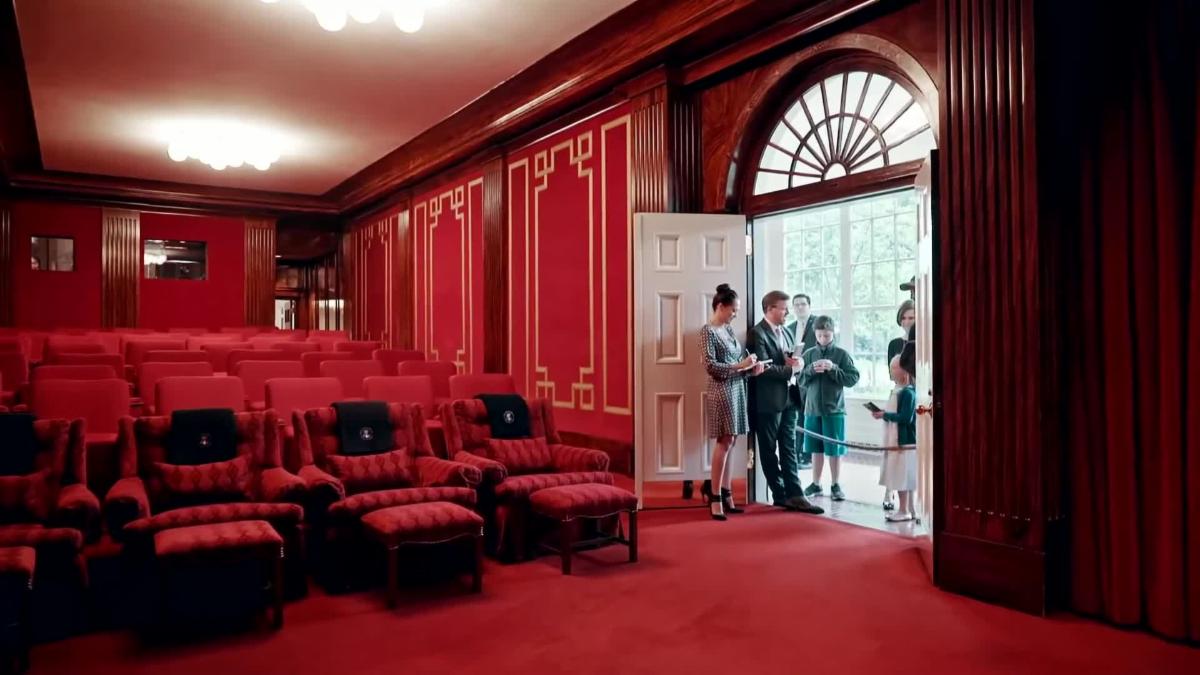
FDR established the White House’s movie theater.
Ever watch The West Wing? The movie theater at 1600 Pennsylvania Avenue that Jed Bartlett (Martin Sheen) uses in season two is 100 percent real. It’s called the White House Family Theater and FDR had it converted from an old cloakroom in 1942. (Records show Dwight D. Eisenhower watched more than 200 westerns there.)
| 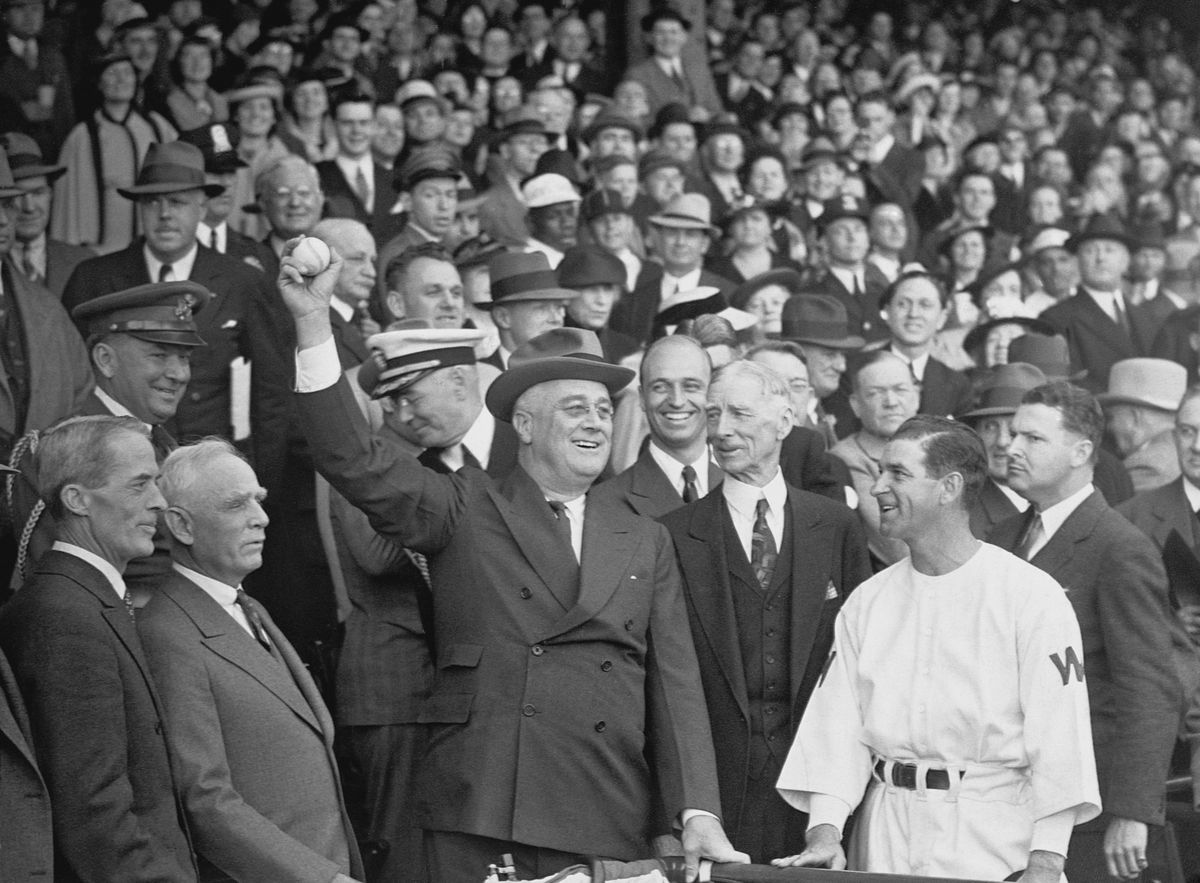 | |
FDR gave Major League Baseball the “green light” in World War II.
Japanese forces suddenly attacked Pearl Harbor on December 7, 1941. The unexpected blow propelled the U.S. into World War II—and left baseball commissioner Kenesaw Mountain Landis with a tough decision. Now that the country was at war, should he suspend America’s pastime and put pro baseball on hold for the duration?
FDR didn’t think so. Writing Landis on January 15, 1942, the president said, “I honestly feel that it would be best for the country to keep baseball going.” Noting that, “there will be fewer people unemployed and everybody will work longer hours and harder than ever before,” Roosevelt believed Americans deserved “a chance for recreation and for taking their minds off work.”
Known as “the Green Light letter,” this dispatch from FDR emboldened Major League Baseball to carry on for four seasons during the war—although hundreds of players left to join the military.
| |
|
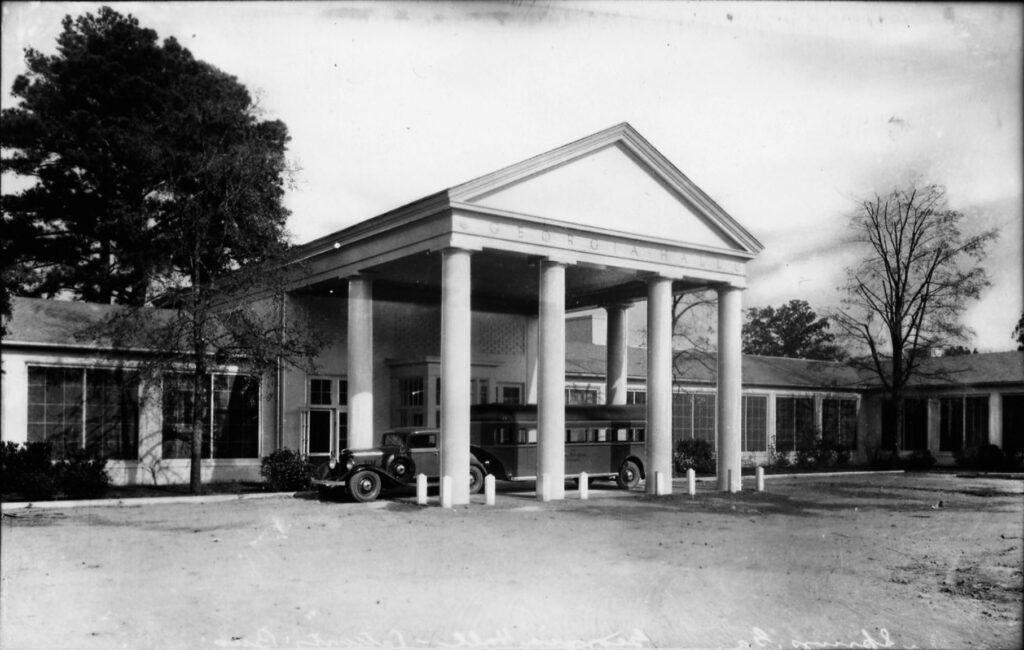
FDR set up a polio rehab center in Georgia.
Roosevelt was just 39 years old—and less than a year removed from his vice presidential campaign—when he was diagnosed with poliomyelitis (polio) in the summer of 1921. The virus left him paralyzed from the waist down; he was fitted for leg braces the next year. Putting ambition aside, Roosevelt temporarily retired from politics to focus on his health.
One day, philanthropist George Foster Peabody told him about a resort he owned in Warm Springs, Georgia, whose pools had allegedly cured a young polio victim. FDR soon became a regular guest. Then he bought the property off Peabody for $20,000 in 1926. On-site, Roosevelt established the nonprofit Warm Springs Foundation—cited by the National Parks Service as “the first, and for many years, the only hospital devoted solely to the treatment of poliomyelitis victims in the world.”
| |
|
Decades of Dedication
Celebrating 40 Years of Client Service Excellence
| |
|
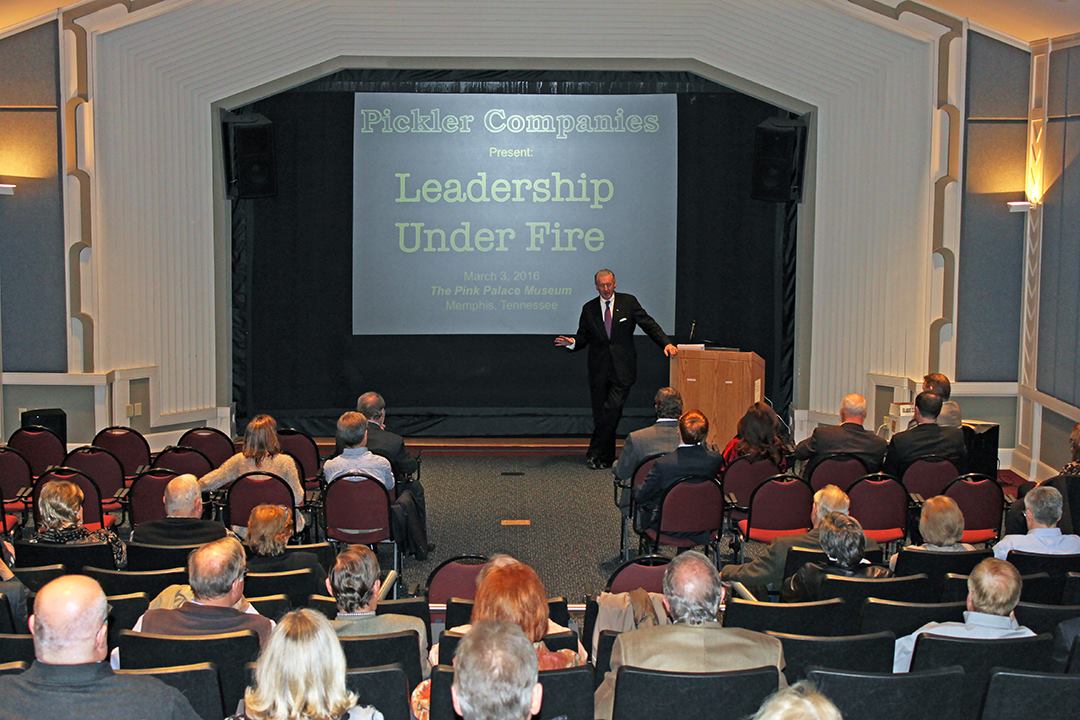
Leadership Under Fire
The Pink Palace Museum (2016)
| |
PAYING IT FORWARD WITH PASSION AND PURPOSE | |
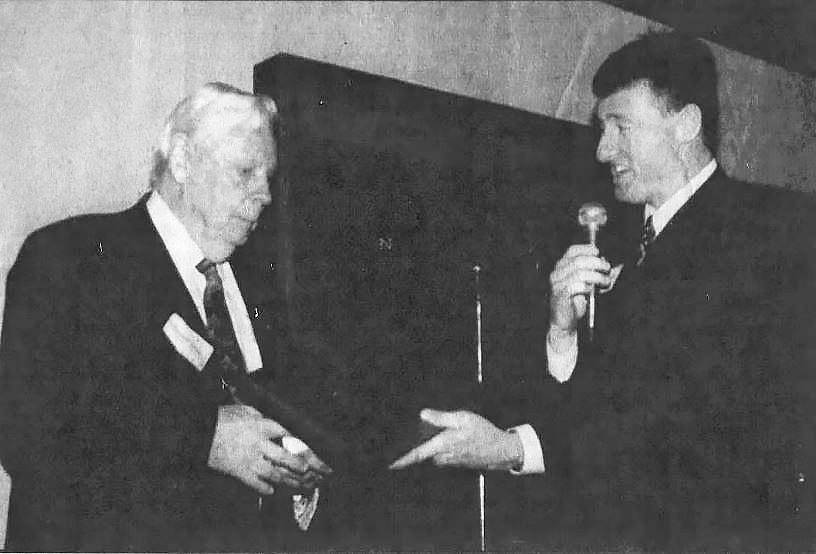
In 1996, I joined the charter class of Leadership Germantown, a servant leadership organization that directly impacts Germantown through building communities of engaged citizens. Leadership Germantown is a nine-month program that creates unique opportunities for its members to serve Germantown. | |
Stay connected with me on social media | | | | |