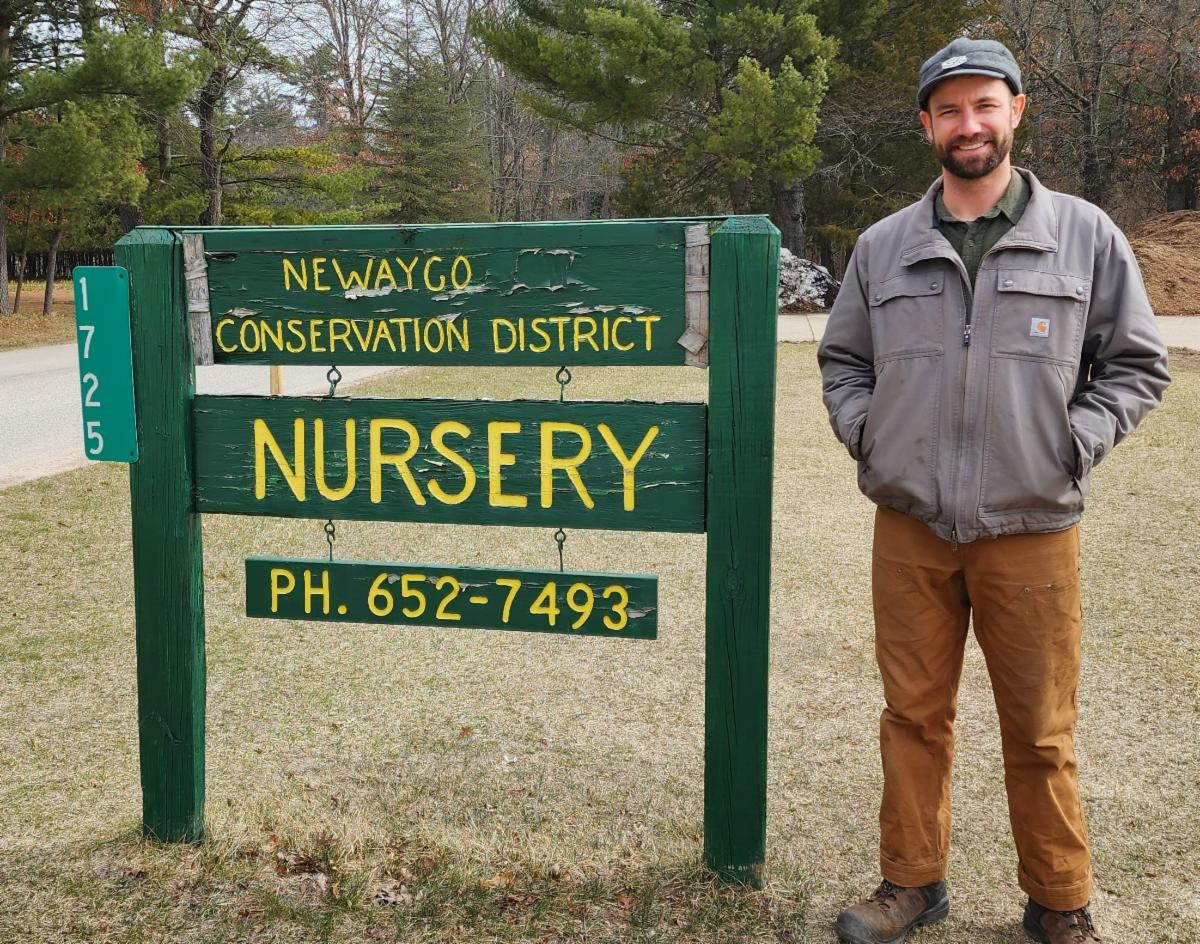
The Newaygo Conservation District (NCD) in western Michigan was established in 1950 and the NCD Nursery was established the same year.
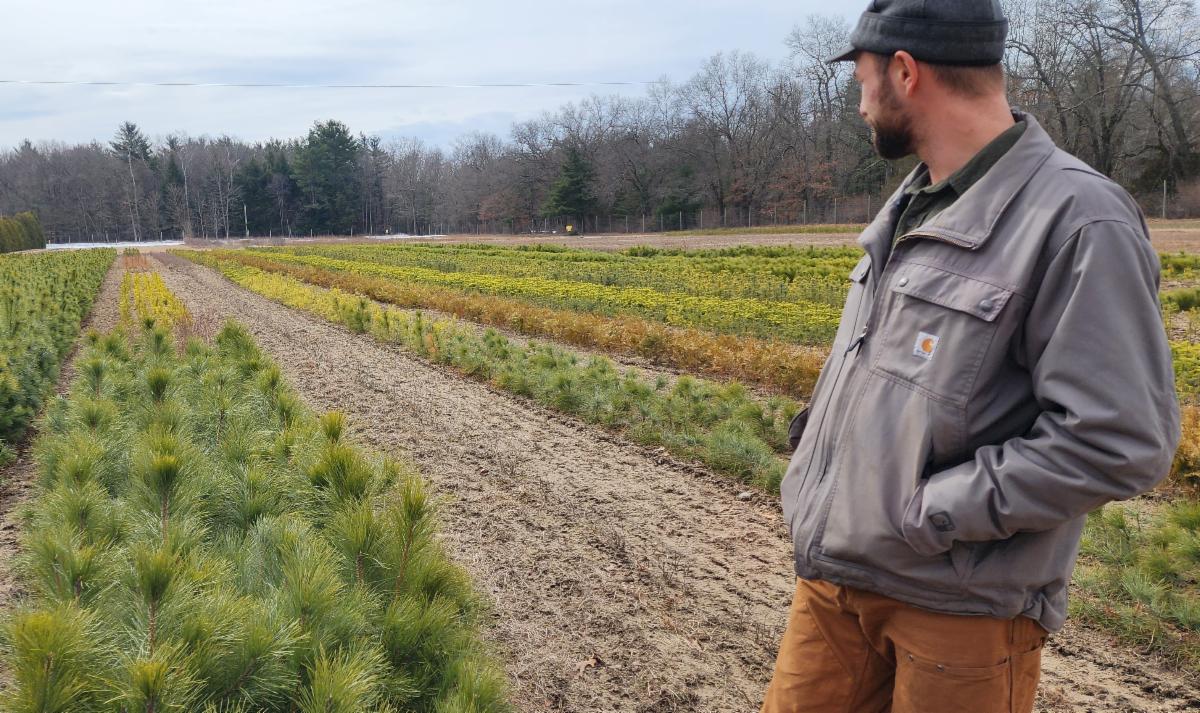
The nursery provides bare-root seedlings in bulk to conservation districts throughout the state of Michigan and to residents for reforestation, afforestation, wildlife planting and erosion control. The nursery prioritizes native Michigan trees and shrubs and sold over 1.5 million seedlings the past 3 years, all grown at their 28-acre property. With the recent hiring of Symon Cronk, Nursery Manager, the NCD Nursery is looking ahead to continuing to meet the growing demand and staying on top of industry changes (and challenges) in seed collection, germination, and propagation of these species.
|
In addition to assessing the current and future capacities of the nursery, meeting a variety of local and in-state demands for stock, NCD Nursery is also engaging partners like Michigan State University in understanding climate assisted migration and the species shifts anticipated in response to warming temperatures.
When Conservation Districts were established out of the Dust Bowl, there were considerably more district managed nurseries. Referring to the “1981 Directory of Forest Tree Nurseries in the United States,” of the handful of conservation district operated nurseries mentioned in the 1981 directory, Newaygo Conservation District Nursery in Michigan and Antelope Valley Resource Conservation District Nursery in California remain. With an increasing need for reforestation, these district managed tree nurseries are meeting a critical need.
|
COLLABORATION IN COLORADO PROTECTS HOMES, WATER SUPPLIES, & WILDLIFE HABITAT |
The Peaks to People Water Fund was awarded $1,000,000 to restore forest health and reduce the risk of severe wildfire in the Big Thompson Watershed in partnership with Big Thompson Initiative partners, Larimer Conservation District (LCD) and Big Thompson Watershed Coalition (BTWC). Together these partners have planned distinct and complementary projects to restore more than 450 acres on private land and create 1-3 mi of roadway fuel breaks. Paired with previous treatments, this project will achieve a landscape-scale footprint of over 3,000 acres.
The Forest Restoration and Wildfire Risk Mitigation (FRWRM) grant program, managed by the Colorado State Forest Service, provides funding for fuels and forest health projects or capacity building projects on non-federal land in Colorado. The program was funded to reduce risk of wildfire, promote forest health, and encourage the use of woody material for traditional forest products and biomass energy.
This collaborative project expands and leverages a 2022 Colorado Strategic Wildfire Action Program (COSWAP) grant awarded to LCD and BTWC for forestry and wildfire mitigation work in the Big Thompson. COSWAP supports fuels reduction efforts in the wildland urban interface (WUI) by strategically awarding funds for landscape scale strategic wildfire mitigation projects. The critical funding provided by FRWRM and COSWAP will enable our organizations to increase the pace and scale of work going on in the watershed.
Read the full story here. |
THE FUTURE OF FORESTRY IN THE FARM BILL |
Beginning on April 26, the Environmental and Energy Study Institute (EESI) and U.S. Nature4Climate will be hosting a briefing series on opportunities to advance climate-friendly forestry in this year’s Farm Bill.
The forestry programs and incentives in the Farm Bill can provide greenhouse gas emission reduction benefits, as well as build resilience to climate impacts such as wildfire risk and extreme heat. At the same time, these programs generate jobs and present opportunities for innovation.
During this briefing, panelists will explain forestry-related programs in the Farm Bill and cover essential forestry topics, including wildfire management, innovative wood products, carbon markets, and urban forestry.
To register, see the list of speakers, and learn more about the upcoming briefings please visit the EESI website here. |
THE NATURE CONSERVANCY RELEASES ROADMAP FOR WILDFIRE RESILIENCE |
The Roadmap concentrates on the two pillars of the 2014 National Cohesive Wildland Fire Management Strategy – resilient landscapes and fire adapted communities – that require an investment commensurate with the third pillar, safe and effective wildfire response, to alter the current wildfire trajectory. It also weaves together lessons from decades of policy and practice with forward-thinking approaches that incorporate new technology and knowledge.
To learn more and access the roadmap and associated resources, please visit the TNC website here.
NACD's Wildfire Desk Guide, a resource for Conservation Districts on applying the National Cohesive Wildland Fire Management Strategy, can be accessed here. |
FORESTRY FUNDING OPPORTUNITIES |
USFS Urban & Community Forestry Program Funding Opportunity
In early April, the U.S. Department of Agriculture (USDA) Forest Service (USFS) announced a Notice of Funding Opportunity for the Urban and Community Forestry Program. Under the Inflation Reduction Act, the Urban and Community Forestry Program received a historic $1.5 billion to support urban tree-planting, urban forest planning and management, and related activities, particularly in disadvantaged communities. A webinar was held on Wednesday, March 29 at 3:00pm ET about the upcoming funding opportunity and how to apply. Watch the recorded webinar via this link. Find more information about the USFS Urban and Community Forestry Program Home page here. Find more information about the Inflation Reduction Act and opportunities in this guidebook. T he proposal submission deadline is June 1, 2023.
Wildfire Smoke Preparedness in Community Buildings Grant Program
The Environmental Protection Agency (EPA) is seeking proposals under a grant program for Wildfire Smoke Preparedness in Community Buildings. Proposals can focus on conducting demonstrations, technical assistance, training, education and/or outreach projects that seek to improve public health protection against smoke from wildfires by enhancing preparedness in community buildings. It is expected that project activities will improve the capability and capacity of communities and buildings to effectively reduce indoor air pollutants concentration in wildfire smoke, especially particulate matter (PM). The proposal submission deadline is May 9, 2023.To learn more about the proposal preparation guideline and submission process, click here. |
|
Forestry News & Resources |
USDA National Agroforestry Center Hosts Webinar Series |
The USDA National Agroforestry Center has been hosting a webinar series on agroforestry that started September 2022 and continues this spring with three more upcoming webinars.
April 7 at 3 pm ET, the webinar focuses on the Agricultural Marketing Service (AMS)’s specialty crop multi-state program.
May’s webinar focuses on the US Forest Service’s Community Forest program and will be held May 5 from 3 pm ET.
In June, the Farm Service Agency (FSA) will present information on Conservation loans (June 2, 3 pm ET). Registration and past webinar recordings can be accessed here.
|
Cities Nationwide Combat Climate Change With Urban Forests
Sixteen cities are meeting to exchange ideas and plan urban forests to provide shade, absorb storm water runoff and filter air pollution. Urban forestry can mitigate the health risks of a warming climate.
Leaders in many communities now consider trees to be critical infrastructure, providing shade, absorbing storm water runoff and filtering air pollution. The focus on urban forests has coincided with a growing recognition that low-income neighborhoods and communities of color often have far less tree cover — and suffer increased vulnerability to extreme heat as a result.
Sixteen cities will join the first program as full participants, bringing in representatives from urban forestry and public health departments, community groups and nonprofit partners to share strategies with one another. Dozens more communities and federal officials have signed up as observers, to learn from the program’s instructional sessions. Subsequent programs will focus on issues such as storm and flooding risks and green infrastructure.
Read the full story here. |
Forest Service Creates More Opportunities for Women in Fire |
The USDA Forest Service recently hired three female fire leaders to mentor interns with the Student Conservation Association, which aims to train the next generation of conservation leaders. The all-female team, called a wildland fire crew, is partnering with the Student Conservation Association, Clemson University and the Forest Service’s Southern Research Station through funding from the Bipartisan Infrastructure Law.
The Forest Service’s fire workforce in early 2022 was 87% male and 13% female. This program provides participants with direct experience with the Forest Service. The goal is to encourage more women to join the next generation of fire management leaders and practitioners.
“The program carves out a specific space for women to train, work and learn about wildland fire together within the different ecosystems in the Appalachia, Piedmont and Coastal Plain regions,” said Megan Saylors, crew superintendent with the Forest Service.
The full story is available here. |
Add your conservation district's tree sale, state association meeting, field day or celebration to NACD's calendar!
Click the button above to submit an event. Events will be reviewed by the website administrator and published to NACD's online calendar when approved. |
|