2024 Economic Update

Dr. Chris Kuehl


 As the economy enters its second half, and the assessments start to focus on everything from political impact to the prospects for Fed action, it is safe to say there are far more questions than reliable answers. Inflation numbers are far lower than they were even a year ago but that inflation which remains is the hardest to reduce as it is based on wages and they don’t go down as fast as they go up. The supply chain worries of a couple of years ago faded but now they are back and logistics costs are surging again. The job market is still historically strong but showing signs of weakness as there are fewer jobs on offer and the rate of unemployment has risen a bit. There is potential for major political change in a few months and that could mean radically different government priorities. The US could very well become much more protectionist and hostile to the global trends of the last few decades. The data reflects this period of concern and trepidation. Some are still experiencing a pretty solid year and expect to see a good conclusion, but others are seeing declines already.


 An important indicator of overall economic performance is capacity utilization. Traditionally it is assumed that “ideal” capacity utilization is between 80% and 85% (at a national level). This suggests that machines are being efficiently deployed and that the workforce is productive. Anything less than 80% suggests there is slack. For much of the last two years the capacity numbers have been stuck in the mid to high 70s. That means there is little incentive to acquire more machinery or hire new people.


All eyes are on employment data as this is the key motivator for Federal Reserve action. The mantra of the central bank is that they raise rates until they break something and then they lower the rates to fix what they broke. The inflation surge of the last few years has the Fed deeply concerned and that prompted rate hikes to 5.5%. The primary means by which the Fed assesses what they have broken is employment. If they see the jobless numbers increase that is a signal to start cutting rates. Thus far these rates have stayed at historical lows (although they have come up a bit lately). Overall, there have been fewer job postings nationwide but this has been attributed to the inability to find the people needed. There has also been more investment in technology and robotics as a means by which to cope with the shortage of skilled workers.


 In general, there has been a decline in commodity prices and that is what has driven the overall inflation rate down. This does not suggest that commodity prices are universally falling as some manufacturers have been seeing the price of metals increase. Many are reporting higher steel and aluminum prices. Copper has been even worse as prices have set all-time records. Much of this price volatility has been attributed to the actions of speculators (especially copper and aluminum). Commodities that have fallen include oil, gas, lumber, food and so on.


The most consistent jump in prices has been seen in the logistics sector. This is a complex story as many factors have combined to drive these costs up. There is a severe capacity imbalance as far as trucking is concerned. Maritime rates have been out of control due to the mess in the Red Sea. The rate for containers from Asia to Europe has gone up over 300%. Even the route from Shanghai to LA is up by over 200% as there has been a serious issue of rerouting that has created ship shortages. The Panama Canal is back to normal – 35 ships a day. That has taken some heat off the West Coast ports and opened up the Gulf and East Coast again. There has been a freight recession for the last year as there was far too much capacity but now that this capacity is fast eroding there is the start of a recovery.


Despite all these challenges, there are reports that planned capital equipment purchasing is on track. The worker shortage is still driving businesses to bring in robotics and technology and there is also the need to stay competitive. Reshoring slowed a bit last year but is still taking place. There is also evidence that buying decisions are waiting on Fed action as a rate cut would make some of these purchases cheaper. The latest data for GDP growth in Q2 are hit an unexpected 2.8% and most analysts are asserting that Q3 and Q4 will be in that range as well. This is not breakneck growth but it is far from recession and this supports the idea of a “soft landing”. 

A Big Win for Creditors of Small Business Debtors

Bruce Nathan, partner & Mike Papandrea, counsel, Lowenstein Sandler LLP 


The “big” win: In a decision that helps balance Subchapter V’s pro-debtor provisions, the U.S. Court of Appeals for the Fifth Circuit recently held that the Bankruptcy Code’s exceptions to discharge apply to a corporate Subchapter V debtor with a nonconsensual plan (even though the exceptions do not apply to corporate debtors in “traditional” Chapter 11 cases). In doing so, the Fifth Circuit joined the only other Circuit-level court to address the issue (the U.S. Court of Appeals for the Fourth Circuit), bucking what appeared to be a growing trend among other, non-Circuit-level courts that have held the exceptions to discharge do not apply to corporate Subchapter V debtors. Read More


This article originally appeared in eNews


Ty Knox is Director of Credit and Risk for EFCO Corp in Des Moines, Iowa and has served on the NACM Heartland Board of Directors since 2004, currently as the Chairman. He served on the National Board from 2016 to 2022 and was elected as the National Chairman in 2018 and also assuming that role in 2020. 


Born and raised in Des Moines, IA this is where Ty and his family continue to call home. His career has primarily involved credit and collections, coming to EFCO from Ruan Leasing Company as the Director of Corporate Credit and prior to that working as a financial data consultant for Dun & Bradstreet.


What drives your passion for the credit industry?

My passion for the credit industry is driven by its critical economic impact, the intellectual and analytical challenges it presents, the continuous opportunities for learning and innovation, the importance of building trust-based relationships, and the role it plays in maintaining financial stability. Coupled with the fact this industry is always changing is what makes it so interesting. From recessions to pandemics, we never know what challenges the next day will bring.


What is your long-term vision for the board?

My long-term vision for the NACM Heartland Board is centered around fostering sustainable growth, enhancing member value, and strengthening our industry influence. Here’s how I envision achieving this:


Strategic Innovation: I aim to drive strategic initiatives that embrace technological advancements and innovative practices. By leveraging data analytics (think CMI & ICE), AI, and other emerging technologies, we can improve our services, streamline operations, and provide actionable insights to our members.


Educational Excellence: Continuing education and professional development are crucial for our members. I would like to see us expand our educational programs, offering more diverse and comprehensive training opportunities that address current industry challenges and prepare members for future trends.


Member Engagement and Support: My vision includes a focus on member engagement. This involves not only listening to their needs and concerns but also actively involving them in decision-making processes through timely surveys. I propose establishing more interactive platforms for feedback and collaboration, ensuring our members feel valued and heard.


Advocacy and Networking: Strengthening our advocacy efforts to represent our members' interests at local and national levels is paramount. Additionally, fostering a strong network among members to facilitate knowledge sharing, mentorship, and business opportunities is a key component of my vision.


Financial Stability and Growth: Ensuring the financial health of the association is essential. I would like to explore new revenue streams and maintain transparency and accountability in our financial practices.


By focusing on these areas, my long-term vision is to position NACM Heartland as an indispensable resource for our members and a thought leader in the industry. This vision is not just about sustaining our current success but driving growth and making a lasting impact on the Credit & Risk industry and community.


What is your favorite thing to do outside of work?

I am an avid mountain biker and ride almost every day. I also recently started disc golfing (again) with my son.


Nate Yagle is the Vice President of Credit for Premier Companies and has served on the NACM Heartland Board of Directors since 2022, currently as the Vice Chair. He was instrumental in creating and growing the Ohio River Valley Group, serving as Vice Chair and Chair.


Born and raised in Sandborn, IN, this is where Nate continues to call home with his wife and two sons, 4 and 6 months. Nate’s journey to the credit industry was not a direct path, but his diverse background in banking, insurance, and ag equipment sales provided a strong foundation of financial expertise.


What drives your passion for the credit industry?

For me I enjoy being in the financial world. When I was in lending and underwriting I didn’t care for having to hit sales goals and also never had a huge desire to just do GL entries all day, so credit is the quirky place in the numbers world where if you like dealing with numbers but don’t want to be the accountant and at the same time want to be involved in sales and helping structure deals but not be responsible for monthly sales goals then it fits.


Credit allows you to engage in various areas of the company, often making a significant yet underappreciated impact until challenges arise. When I initially took over the credit department, there was a multi-million-dollar credit problem where the write off from the prior year made the company go from a year end profit to a loss. Being a part of a team that resolves those issues, implementing processes and systems to prevent future problems, is extremely satisfying. I enjoy problem-solving and helping customers find effective solutions.


What is your long-term vision for the board?

Growth of our credit groups. Expanding our credit groups is challenging in a mergers and acquisitions environment, but growth opportunities are there. Participation from members. I believe it’s a major responsibility of our board to find ways to add value for our members and increase participation rates. If you look at our national credit groups, they have members from all over the country. How do we find ways to drive engagement and participation? We need to focus on enhancing areas such as:


Education Opportunities, Networking Opportunities, Products/Services for our members, and Technology


What is your favorite thing to do outside of work?

My extracurricular activities involve staying busy with my family, but if I do find time on my own I enjoy music, barbecuing, random road trips, and golf. I recently acquired a golfcart that I am looking forward to fixing up and have been making my wife nervous with my intense interest and studying of extreme Christmas light displays. I am ready for my Clark Griswold moment. 

Blake Davidson

From a credit management perspective, my favorite sessions were the ones on excel because simple efficiencies in organizing data and streamlined processes to get there are important to productivity and efficiency in “who” and “where” to look for potential problems. I thought the teacher was well attuned to having a breadth of talents in the audience and gave several one off tool uses that can add value for even the least proficient user.


My personal favorite speaker was Fred Dons on global currency. The topic was fascinating, and he was adept at describing the currency landscape and hedging currency to ensure payment. 


Networking opportunities at Credit Congress were many and frequent. If you had a mission to connect with a leader, a company, or a speaker, the space always felt to be welcoming and have good energy.


My favorite part of Credit Congress was the location and the offering of concurrent sessions. By allowing a self-guided format, you could take your interests and focus in any direction and most everything applies in some way.


Why would you recommend someone attend Credit Congress for the first time or as a returning attendee? 


It was an opportunity to network, learn, and explore the industry. The most tenacious of us should always want to exploit our talents and grow professionally when an opportunity presents itself.


Jaime Madkiff

My favorite sessions were two classes on tips and tricks for Excel that were great, the speaker Sheri Tingle was very knowledgeable and a fun speaker. I also attended a session that had an FBI and Secret Service agent talking about Cyber Security, that was an eye-opener on how prevalent phishing scams are and how easy it is for employees at organizations to fall for them. 


There was plenty of opportunities to network at Credit Congress, the expo was busy with lots of different companies ready to give presentations and talk about any issues we were having as an organization, there were plenty of opportunities to speak with other credit professionals in between sessions and at the different receptions and closing night party.


My favorite parts of Credit Congress were the sessions and networking with other credit professionals.


Why would you recommend someone attend Credit Congress for the first time or as a returning attendee? 


I would definitely recommend anyone interested to give Credit Congress a try. There was a lot going on and it could have been overwhelming but the NACM staff was always available to help and direct everyone where they need to be, the signage for all the sessions made everything easy to find, they obviously put a lot of thought and work into making this event go smoothly and making it enjoyable for everyone.


What was your biggest disappointment at Credit Congress?


Not winning the cruise!


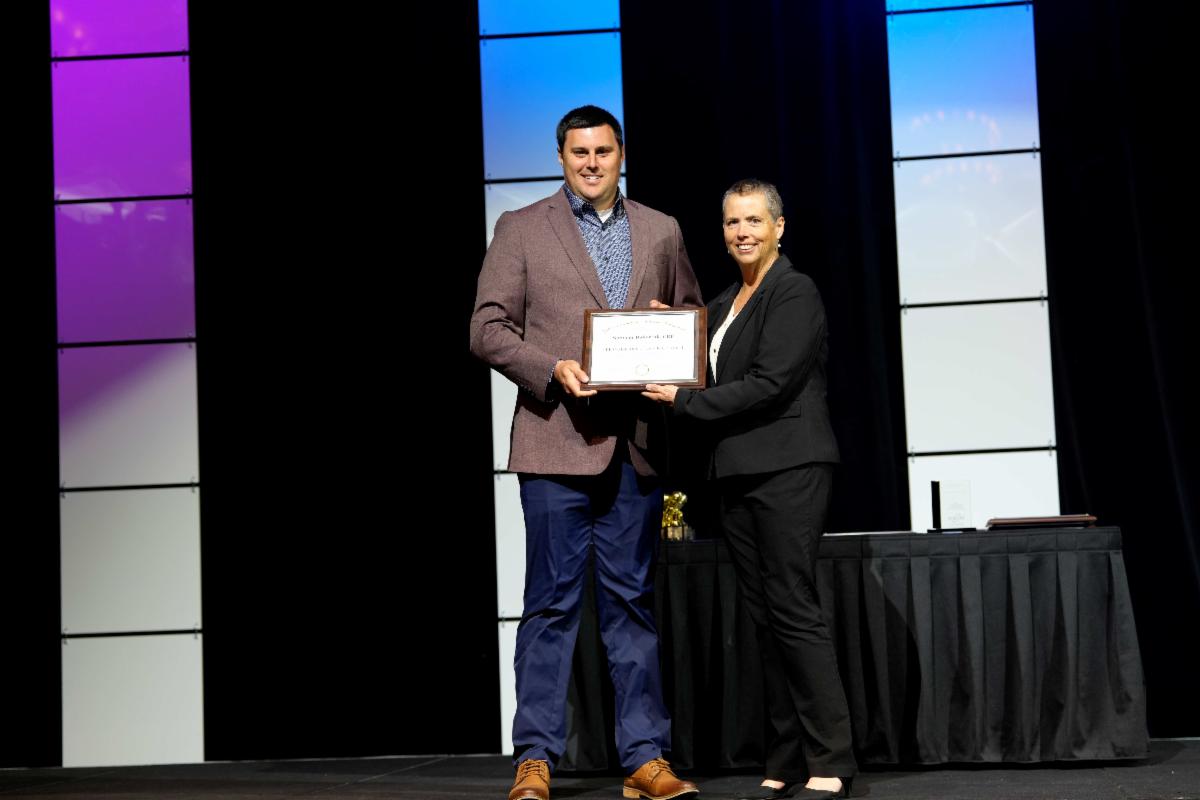
Spencer Bakerink, CBA, CBF was recognized for his unrelenting pursuit of excellence through enhanced and improved knowledge with the CBF Designation of Excellence award at the 128th Annual Credit Congress & Expo.


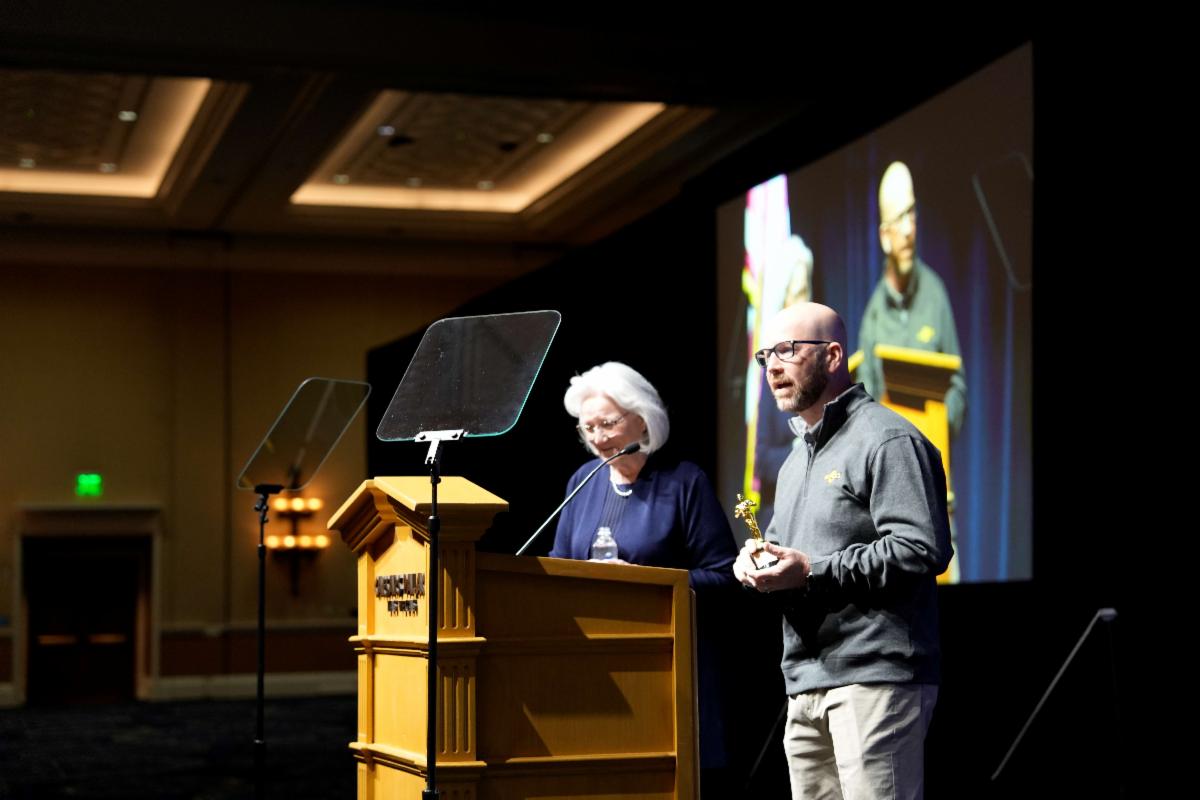
Ty Knox was awarded a Noscar (NACM Oscar video stars) for his unforgettable performances in NACM videos, showcasing what makes credit so special.


Congratulations, Jason Mott!


Jason was announced Chair-Elect for the NACM National Board of Directors.


Are You Interested?

NACM Heartland has had some inquiries about an in-person Financial Statement Analysis 1 in the Des Moines area. If you have any interest in this course, please let Maggie know by August 14. If we have enough interest, we will put a class together for this fall. 


Course Description

Financial statement analysis is a reasonably unstructured method of interpreting accounting data in an effort to understand the current financial performance of an entity and project its future health. This first course in financial statement analysis keeps the process simple and ignores many complex issues that can arise. The emphasis of the course is on analyzing financial statements issued by companies using simple ratio analysis techniques and analysis of the statement of cash flows.


Course Objective

To examine the content and purpose of the financial statements and analytical techniques used to evaluate the operating efficiency, profitability and financial risk of a firm.


 Learning Outcomes

Upon successful completion of this course, the student will have a better understanding of the content and interpretation of financial statements and know how to approach financial statements in order to obtain practical, useful information from their content to assess how well companies are actually performing.

Did you know we have a list of open positions on our website? Check it out!

Job Listings

CCE

Blake Davidson, Helena Agri-Enterprises

CBA

Gabrielle Hall, Helena Agri-Enterprises

Brandon Wofford, MFA Incorporated

Dallas Kleiboeker, MFA Incorporated

CBF

Whitney Styer, Helena Agri-Enterprises

Rachel Elrod, Tennessee Farmers Cooperative


Norman Honas, Helena Agri-Enterprises, LLC


Janet Roberts, The Andersons, Inc.


Linda Petersen, StateLine Cooperative


Larry O'Brien, Nutrien


Janet Begyn, Chicago Tube & Iron


CALENDAR


AUGUST

8-5/8-7 (GSCFM) Legal Environment of Credit Online

8-8 Credit Thought Leaders Online

8-9 Emerging Thought Leaders Online

8-13 Global Credit Thought Leaders Online

8-13 Bond Claims and Public Construction Online

8-14 Technology Thought Leaders Online

8-15 Performance Metrics Thought Leaders Online

8-16 NAR - GL Credit Exchange Angola, IN

8-19 Heartland Steel Credit Exchange Kansas City, MO

8-19/8-20 (GSCFM) Advanced Negotiations NACM National Headquarters

8-20/8-21 (GSCFM) Leadership NACM National Headquarters

8-20 Construction Credit Thought Leaders Online

8-21 NAR Texas Credit Exchange Houston, TX

8-21 Learning About the Multigenerational Workforce Online

8-22 Construction Credit Exchange Online

8-27 Understanding the Mechanic's Lien Process for States with Notices of Non-Payment Online


SEPTEMBER

9-2/12/13 Accounting Online Course Online

9-10 NACM and FCIB Author Chat: We're All in This Together Webinar

9-10 States with an Optional Notice: Security Beyond Mechanic's Lien Online

9-10 Global Credit Thought Leaders Online

9-11/9-12 Missouri Conference

9-11 Technology Thought Leaders Online

9-12 Credit Thought Leaders Forum

9-12 NAR Iowa Credit Exchange Ankeny, IA

9-13 Application Deadline for November 4th Test Date

9-13 Emerging Thought Leaders Online

9-17 Construction Credit Thought Leaders Online

9-18 Construction Credit Exchange IA

9-18/9-20 All South Credit Conference

9-19 Performance Metrics Thought Leaders Online

9-19 NAR Minnesota Credit Exchange Mankato, MN

9-24 Mechanic's Lien Foreclosure Online

9-25 NAR Kansas Credit Exchange Hays, KS


OCTOBER

10-1/10-3 NACM Heartland Agricultural Group Meetings Kansas City, MO

10-8 Secured Transactions in the US and Canada Online

10-8 Global Credit Thought Leaders Online

10-9 Technology Thought Leaders Online

10-9/10-11 Credit in the West Conference

10-10 Credit Thought Leaders Online

10-11 Emerging Thought Leaders Online

10-15 Credit in the West Conference

10-16 Construction Credit Exchange Online

10-16/10-18 Western Credit Conference

10-17 Performance Metrics Thought Leaders Online

10-22 Construction Credit Thought Leaders Online

10-23/10-24 NACM Connect Conference

To keep up with current news and NACM events, make sure to follow our website, twitter, Facebook, and LinkedIn.