|
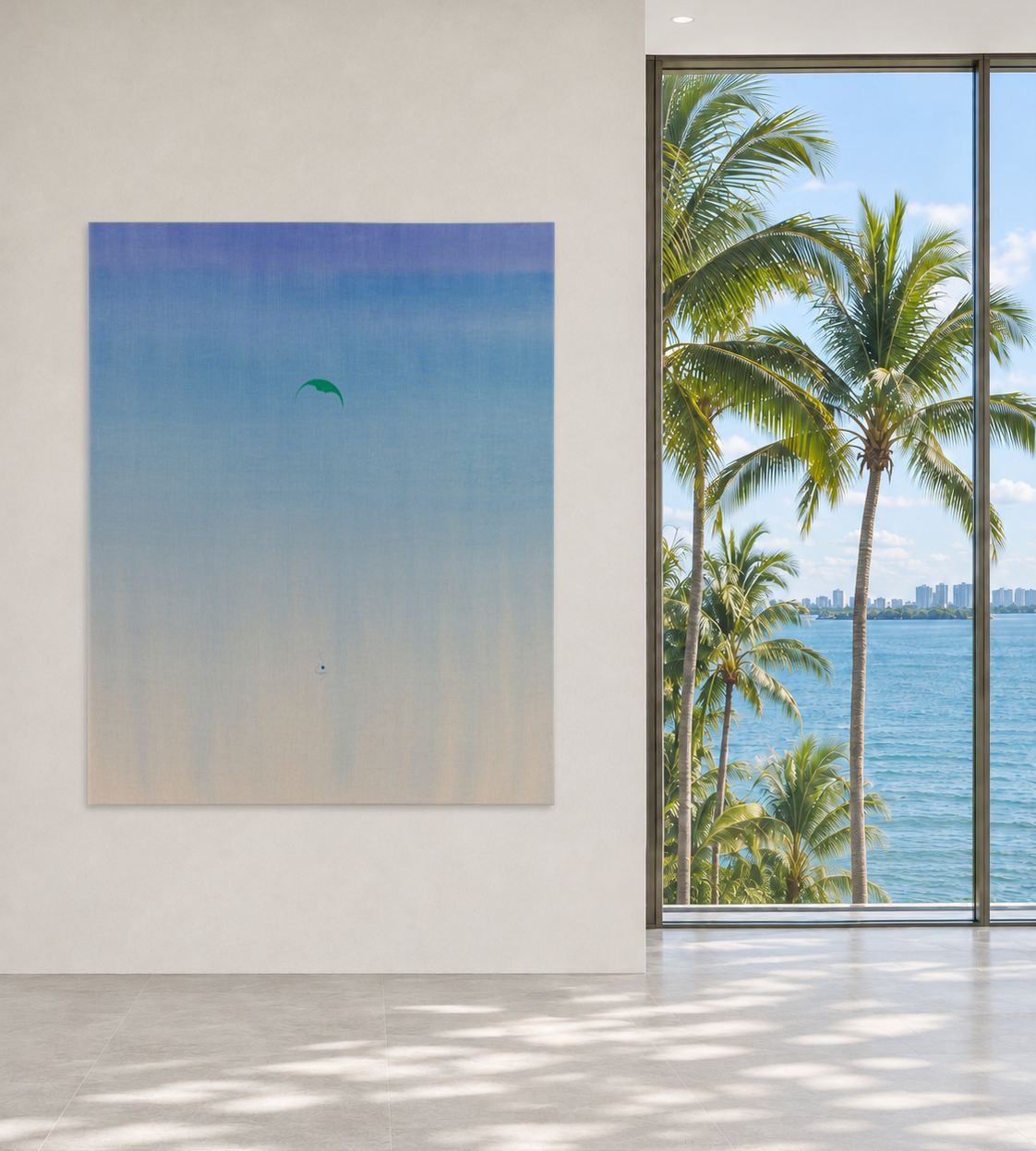
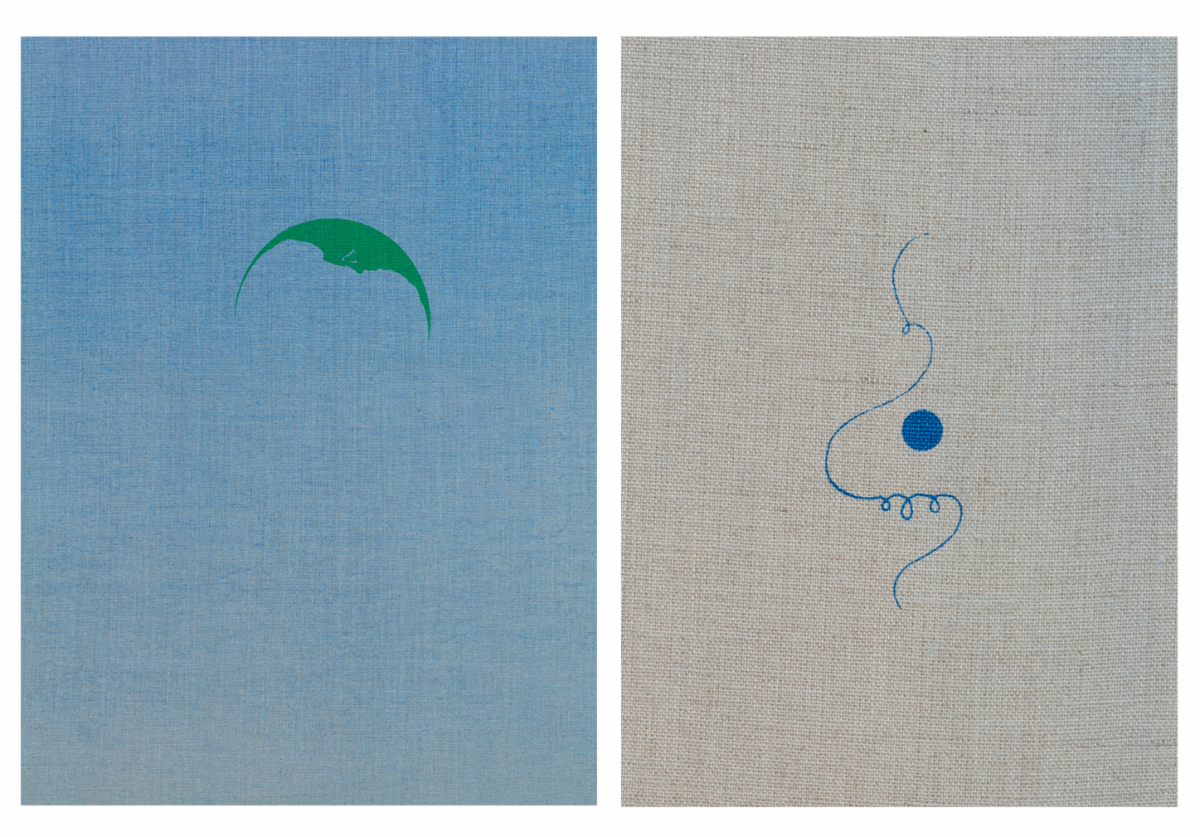
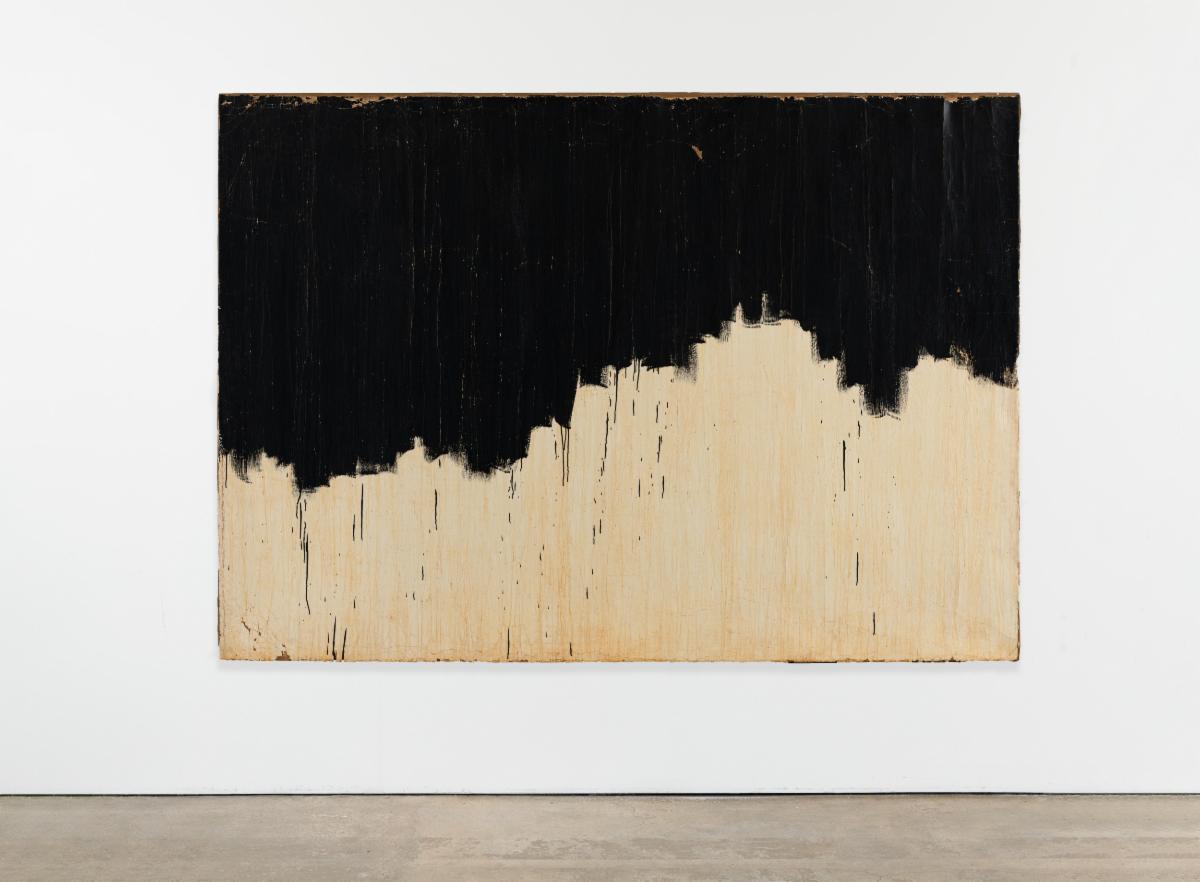
Oolong Gallery presents SKZ Chance and Color Studies, an exhibition by Los Angeles artist Dan Levenson of works attributed to the students of the State Art Academy, Zürich (SKZ), an imaginary art school. SKZ students construct their compositions by dividing standard metric format canvases, whose dimensions derive from the meter and therefore from the speed of light. They learn geometry with straightedge and compass, and determine their colors by rolling dice. The exhibition includes a maquette of the SKZ’s “Chance Operations” classroom and the board game its students used to generate color relationships. Levenson was born in New York, raised in Cambridge, Massachusetts, and lived in the city from 1997 to 2012. This is his first solo exhibition in New York and the first New York presentation of the SKZ.
For several years Levenson has produced the paintings, furniture and teaching materials of the SKZ as the surviving record of an institution whose curriculum is only partly documented and whose closure is unexplained. The project has been presented in Artifacts from the SKZ (2025) and A5 Format Oil on Paper Studies and A3 Format Student Palettes from the SKZ (2026) at Municipal Bonds, San Francisco, and in SKZ Centimeter Studies Classroom at Timothy Hawkinson Gallery, Los Angeles (2026). The works at Oolong come from the Academy’s focus on the relationship of color and chance.
The SKZ curriculum is organized around the format of the support. Students paint on canvases built to “A Series” paper sizes, the international standard that includes A4 office paper. The A0 sheet has an area of one square meter, each subsequent format is half the size of the one before, and the ratio of 1 to √2 between the sides keeps the proportions constant throughout the series. Since 1983 the meter has been defined by the speed of light. The dimensions of every SKZ painting therefore derive, through the meter, from a physical constant of light.
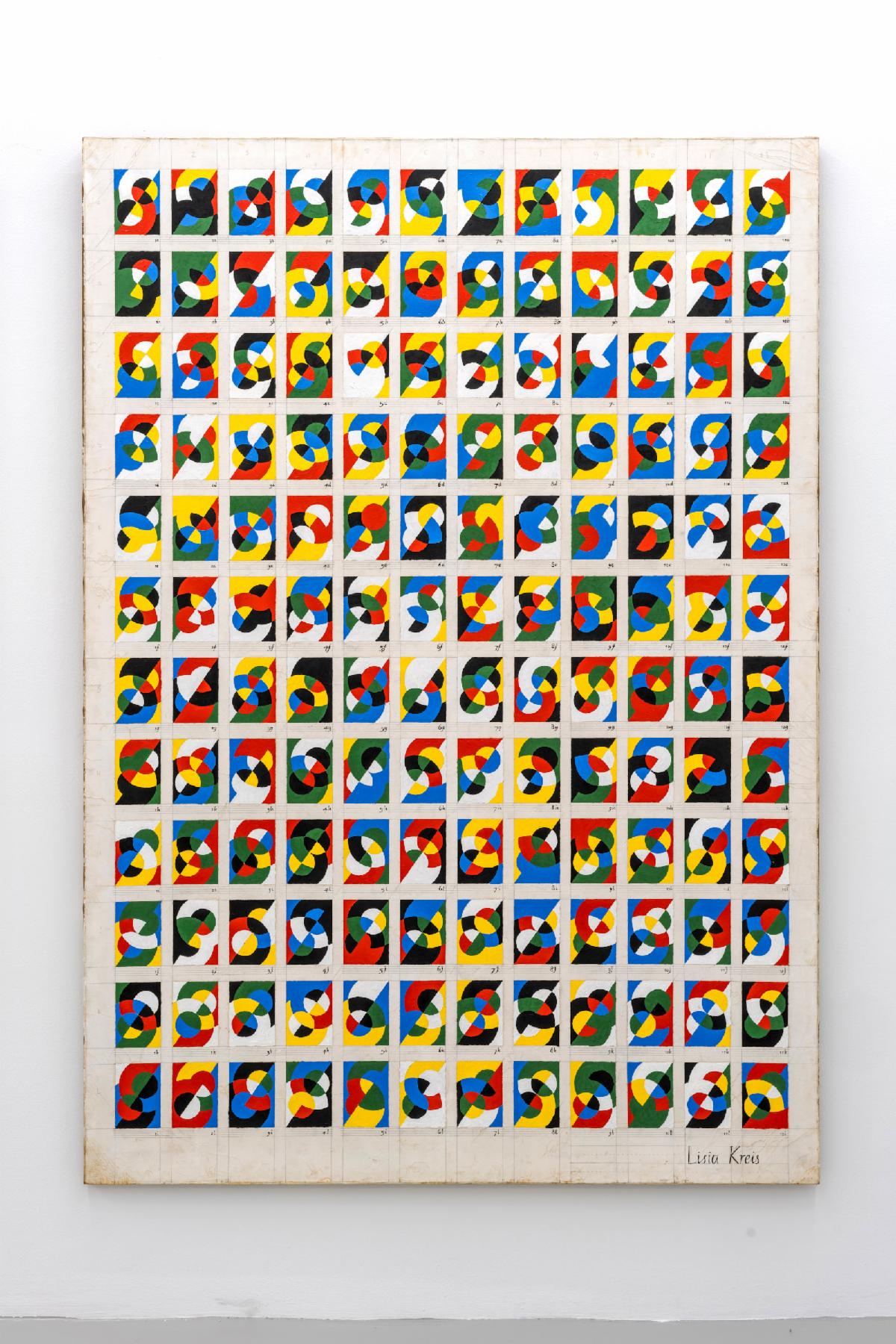
Each composition is constructed by dividing the rectangle with straightedge and compass, using methods developed in Ancient Greece. Color is determined separately, by chance. In the SKZ’s teaching, taking color out of the student’s hands bypasses learned preferences and admits relationships that deliberate choice would exclude.
Light connects the two procedures. It is the physical basis of color, and in quantum mechanics the behavior of individual particles of light is described in terms of probability rather than certainty, a conclusion that grew out of Einstein’s own work but that he resisted for the rest of his life. The SKZ curriculum holds both conditions together: proportion fixed by a constant, color left to chance.
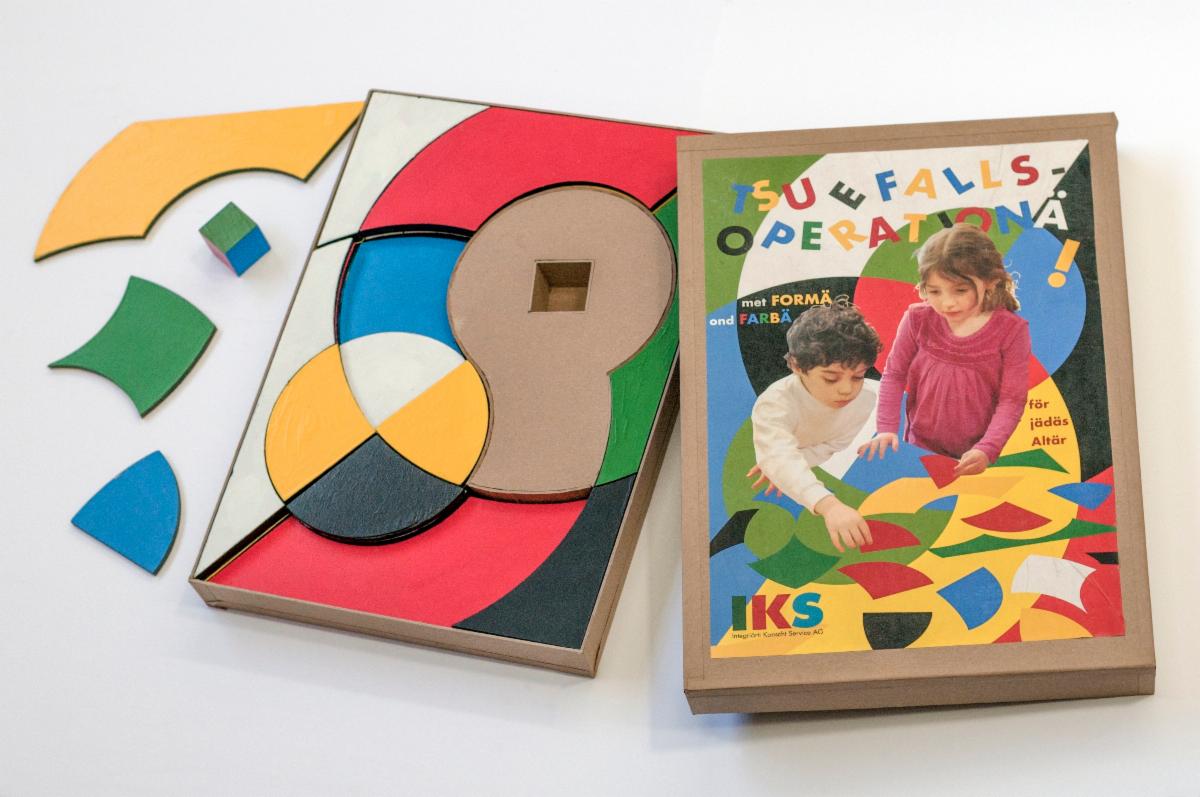
At the center of the exhibition is a maquette of the SKZ “Chance Operations” classroom as it stood at the Academy, shown with the educational board game of the same name that students used to generate color relationships. The game consists of a sixteen-space board, an eight-sided color die, and wooden tiles painted a different color on each face. Many of the paintings were created using games of chance involving cards and dice, recalling an avant-garde legacy that includes Arp, Duchamp, Cage and others.
The ultimate lesson of the SKZ may be that although creative freedom occurs within limits set by necessity, there are always unexplored possibilities within those constraints. Allowing ourselves to roll the dice is one way to discover new ways of arranging familiar colors.
Dan Levenson is an artist based in Los Angeles whose practice spans painting, objects, and installation. He has exhibited at the Hammer Museum, Los Angeles; the Philadelphia Art Alliance; James Fuentes, New York; Vielmetter Los Angeles; Municipal Bonds, San Francisco; Oolong Gallery, New York and Rancho Santa Fe; Honor Fraser, Los Angeles; Praz-Delavallade, Paris and Los Angeles; de boer Gallery, Los Angeles; BozoMag, Los Angeles; Blue Door, Los Angeles and Brooklyn; Eric Firestone Gallery, East Hampton; PARTICIPANT INC, New York; LAXART, Los Angeles; White Columns, New York; and Vox Populi, Philadelphia. He has received a Pollock-Krasner Foundation grant and fellowships from Skowhegan, Yaddo and MacDowell, among other awards. He has taught performative drawing lessons at the Hammer Museum, American Jewish University, USC’s Roski School of Art, and the Saas-Fee Summer Institute in Berlin. He received a BA from Oberlin College and an MA from the Royal College of Art, London (1997).
|