|
Holiday Greetings & News from NAOCC
With the winter solstice and the holidays upon us, we look forward to the return of the light and another productive season of orchid conservation work. Here are a few snapshots of NAOCC's and collaborators' activities in recent months.
| |
|
Past. Present, and Future
By Dennis Whigham
| |
It has been 12 years since we launched the North American Orchid Conservation Center (NAOCC) and I am very proud of our accomplishments - from the creation of a popular interactive website, Go Orchids, to educational initiatives and productive collaborations with a growing network of individuals and organizations that share our common goal to conserve native orchids.
The need to step up our collective orchid conservation work is as urgent as ever, but we truly believe that the “NAOCC model” - an ecological, collaborative, and educational approach - is the best way forward to protect our fragile orchids for future generations.
| |
|
|
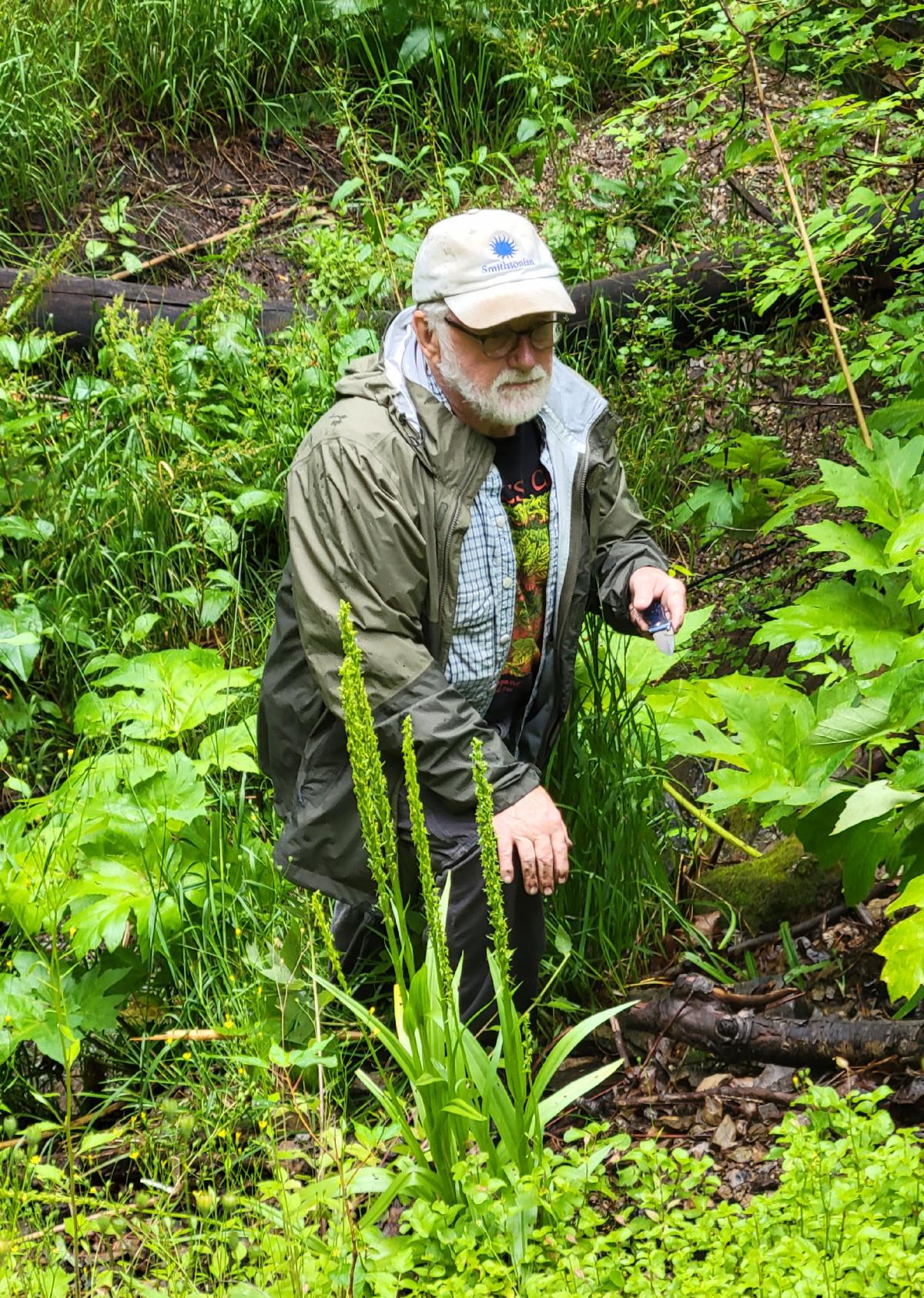
Time flies. At the end of December I will have been at the Smithsonian for almost 47 years, after 6 years as a Professor at Rider College and the years of graduate school - in total, a wonderful run of almost 57 years! It is now time for me to step back to enjoy the remaining time I have on this amazing planet - so on December 29, I will turn in my keys and gate card to the Smithsonian Environmental Research Center and become Emeritus.
What a fortunate person I have been for these many decades - but the job is not done. After I retire, I will continue to support Melissa and Julianne in their efforts to advance NAOCC’s mission and work. Dr. Melissa McCormick is now a Federal employee, and will take on the leadership of NAOCC within the Smithsonian. I will continue to focus on building an endowment for NAOCC at the Smithsonian, to ensure that our goals will be reached.
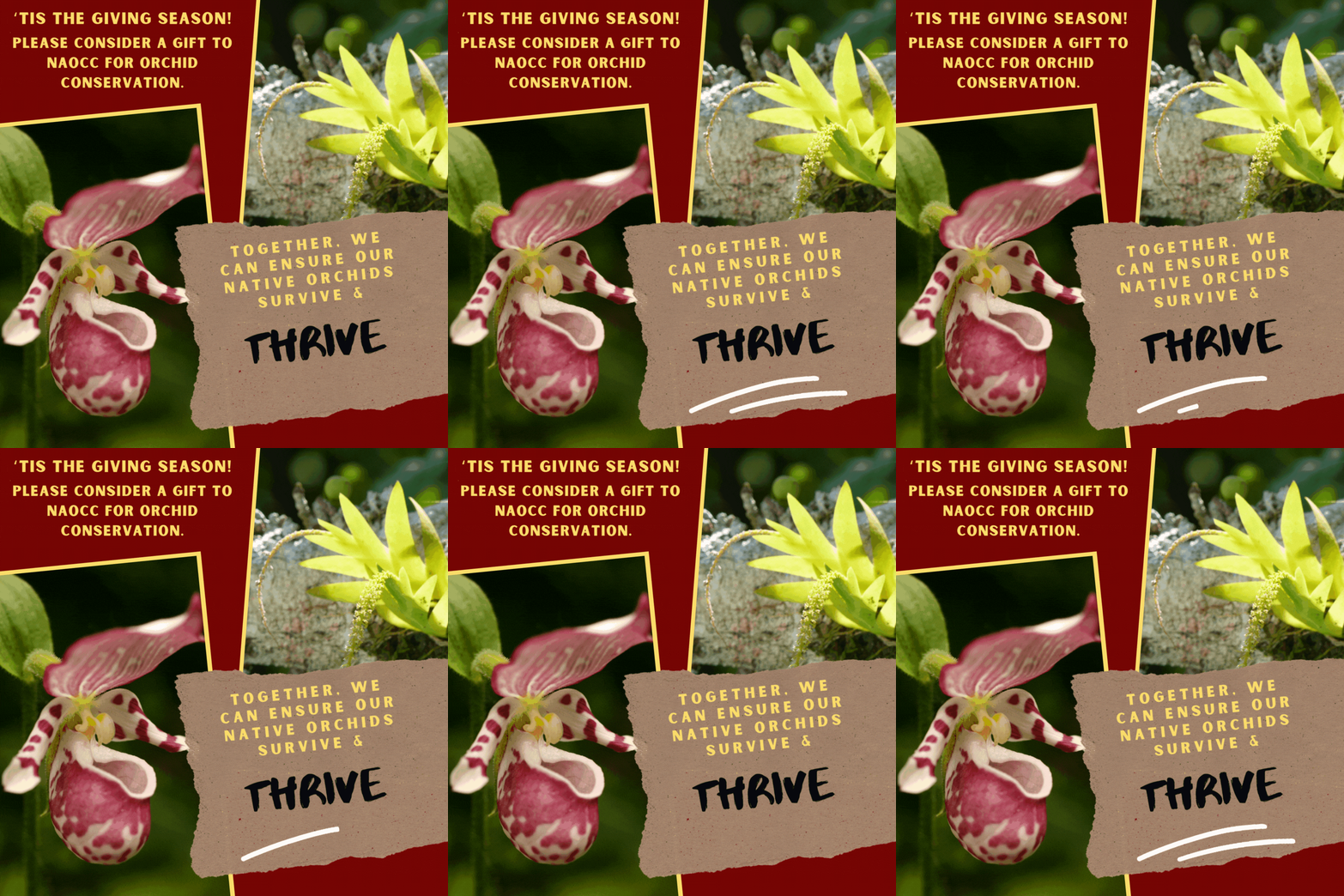
Many of you share my commitment to preserving native orchids, and have contributed generously with your time, expertise, and funding to support NAOCC’s work. Ultimately, NAOCC’s success and sustainability depends on the continued generosity of our donors and collaborators – people like you! I hope you will continue to be part of our journey by contributing generously whatever you can during this season of giving and NAOCC’s Annual Appeal.
| I have been honored to be with you on this journey and I thank all of you who have provided energy, enthusiasm and resources that have taken us to where we are today. A heartfelt thanks to all of you. | |
A Special Note: Congratulations to Dennis Whigham!
The Smithsonian Institution recently bestowed its first-ever Distinguished Career Service Medal upon Dennis Whigham, Senior Scientist at the Smithsonian Environmental Research Center (SERC) and founding director of the North American Orchid Conservation Center (NAOCC). The award recognizes Dennis' "extraordinary achievements and sustained performance to the Smithsonian", and notes "Through your initiative, creativity and commitment, your career will have an exceptional and lasting impact on the Smithsonian Institution and its mission."
All of us with NAOCC are very proud of Dennis' achievements as well as his exemplary vision and dedication to create and develop NAOCC. Please join us in wishing Dennis heartfelt congratulations and best wishes on his imminent retirement!
| |
Looking Ahead
By Melissa McCormick
The next few years are likely to bring dramatic advances in the science behind orchid ecology, propagation and conservation strategies. As incoming acting director of NAOCC upon Dennis’ retirement, I’m excited and humbled by the progress our program has made, and will continue to work to advance orchid research, conservation, and public education and outreach through our broad range of collaborations and programs such as Native Orchid Propagation for Sustainability (NOPS – see article, below), our continental-scale project to sample orchid DNA and mycorrhizal fungi, Orchids-in-the-Classroom, database development, pollinator and scent dog research, and more.
As a founding member of NAOCC, I have been fortunate to work with Dennis to grow NAOCC since its inception, and I look forward to leading NAOCC forward in the years to come. This great group of people – NAOCC and its growing network of collaborators - can make exciting strides for ecologically-based orchid conservation in North America.
As anthropologist Margaret Mead famously said, "Never doubt that a small group of thoughtful committed individuals can change the world. In fact, it's the only thing that ever has."
| New: Native Orchid Propagation for Sustainability (NOPS) | |
NAOCC and several long-time collaborators - Longwood Gardens, Smithsonian Gardens, the University of Minnesota Landscape Arboretum, Fairchild Tropical Botanic Garden, the Desert Botanical Garden and Illinois College’s Orchid Recovery Program - have launched an exciting new project to develop propagation protocols for North American native orchid species. NOPS is an important new phase in NAOCC’s mission to preserve our native orchids for future generations.
Orchids play a vital role in ecosystems and environmental health, sharing intricate interdependencies with specific trees, pollinators, soils, and mycorrhizal fungi. Their presence is an indicator that the pieces of the environmental puzzle are in place. When orchids disappear from historical habitats, it is a sign something is wrong. Orchids are indeed, a “canary in the coal mine” - signaling the urgent need to address accelerated climate change and biodiversity loss.
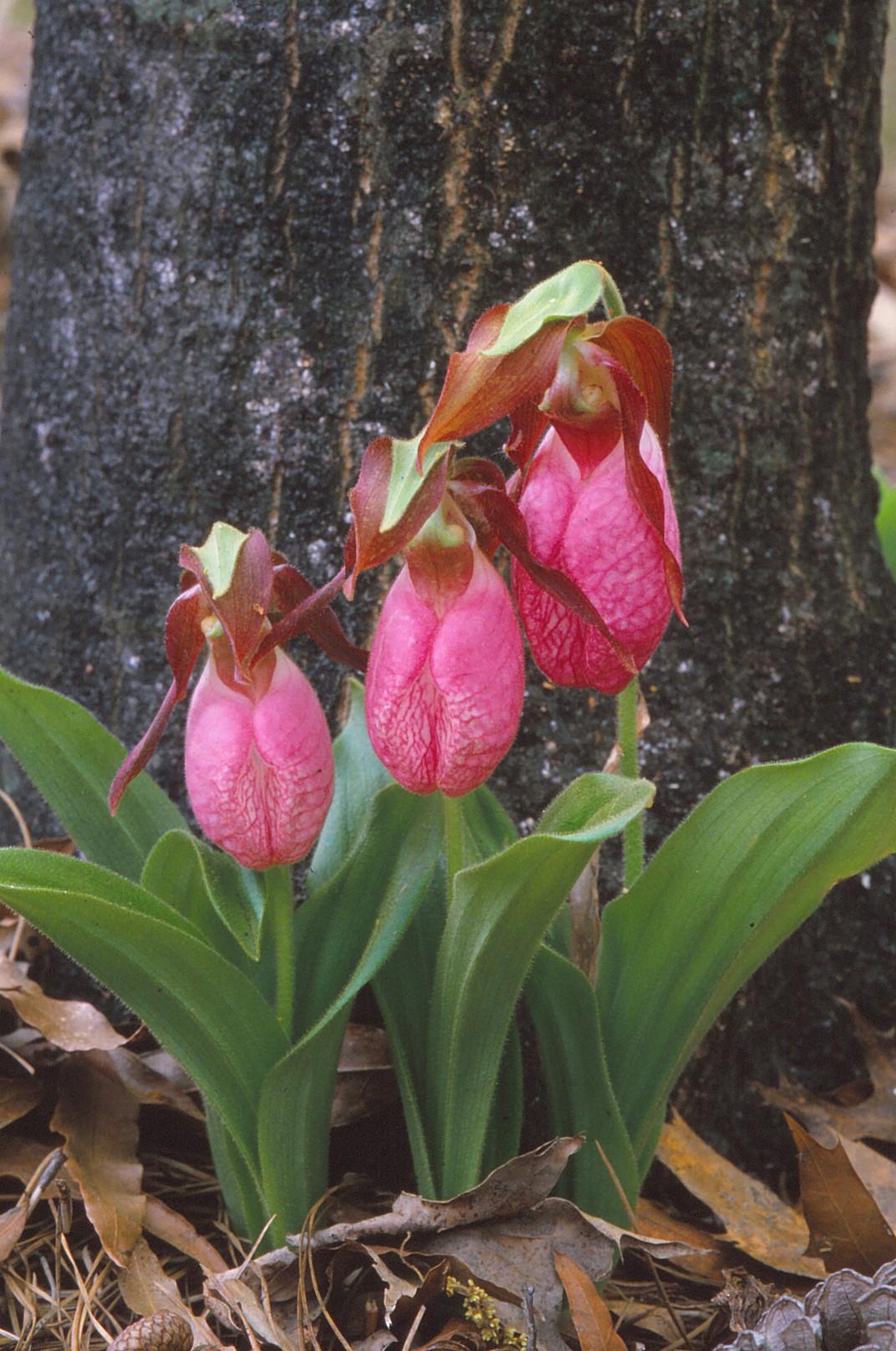
Above: Cypripedium acaule (Pink Lady's Slipper), Photo © Hal Horwitz
| |
Few North American native orchid species have been propagated in botanic gardens to date because of their complex habitat and growth requirements. Much work is still needed to unlock this puzzle to develop “best practices” for propagation of the broad range of native orchid species.
Funding has been secured to begin NOPS as a 5-year project focused on the sustainable propagation of 25 orchid species from different U.S. ecoregions. Eventually, the project will expand to include additional partners and orchid species. The ultimate aim is to propagate all of the native orchids of North America north of Mexico.
The knowledge we will gain through NOPS will inform restoration projects, allow botanical gardens to establish native orchid collections, and will benefit orchid professionals and enthusiasts alike - while advancing NAOCC’s vision to ensure the survival of all native orchids of the US and Canada.
| |
|
The NOPS project will:
- Have a continental scale – we will study orchids in different habitats - from the temperate north to the subtropics to the arid southwest - species that represent a range of ecological life history strategies and conservation priorities.
- Increase our collective understanding of orchid-fungal interactions, and provide the basic horticultural knowledge required to support the growth, survival, and reproduction of native orchids from seed to flowering plants.
- Result in “best practice” propagation protocols for individual native orchid species to inform sustainable growing practices and support efforts by a wide range of horticulture professionals, hobby growers, and individuals – and ultimately, to advance biodiversity and conservation goals.
- Disseminate knowledge broadly, through publication of results in peer-reviewed scientific journals, trade publications, and popular media.
We are deeply grateful for the partnership and support of the U.S. Botanic Garden, Smithsonian Gardens, and Longwood Gardens, as well as the contributions of the Maxwell-Hanrahan Foundation, Biophilia Foundation, Underwood & Associates, The Nature Foundation at Wintergreen, and private individuals. Thank You!
| |
|
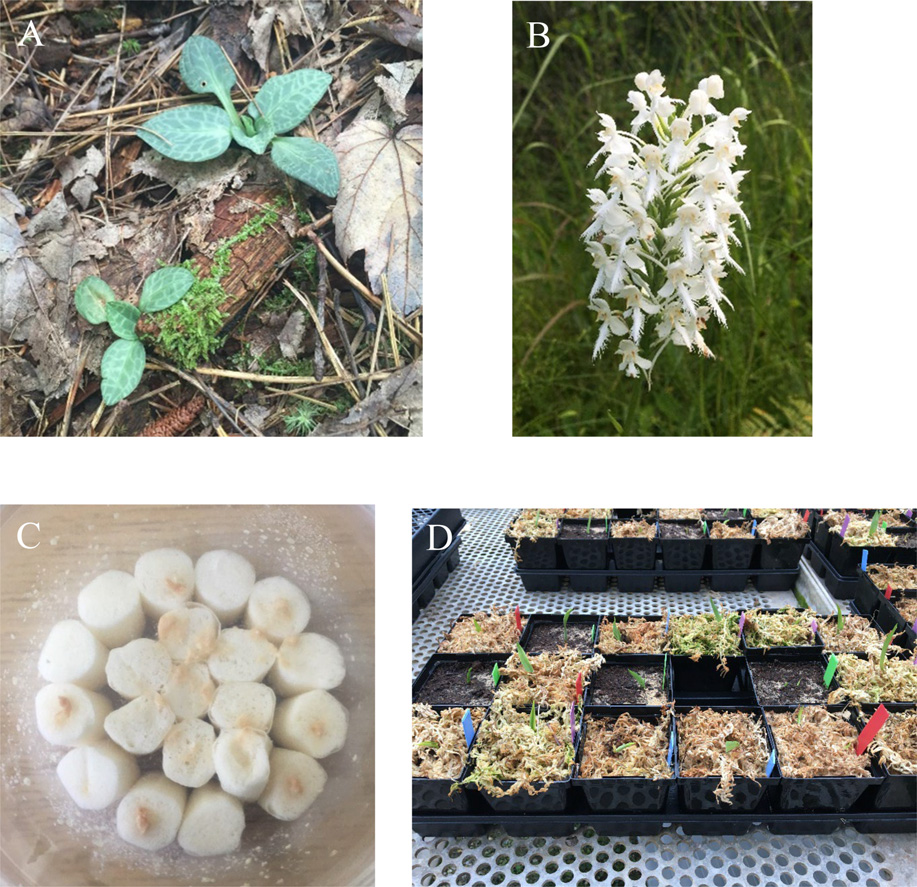
Above left: (A) Evergreen rosettes of Goodyera tesselata in Huntingdon County, PA, Sept. 2016.
(B) A flowering Platanthera blephariglottis in Luzerne County, PA, July 2017.
(C) Sorba rods inoculated with Ceratobasidium sp. immediately before planting with G. tesselata seedlings. (D) An example of containerized P. blephariglottis seedlings used in a recent study.
From Zale, McCormick, & Whigham (2022), Choosing a Favorable Substrate to Cultivate Native Orchids Symbiotically: Examples Using Goodyera tesselata and Platanthera blephariglottis. Hortscience 57(5):634–642. 2022. https://doi.org/10.21273/HORTSCI16509-22
| |
|
More NAOCC Updates at a Glance:
2023 has been a busy year for NAOCC, with travel to various places throughout the US, Europe, and Palau, our Collections Project, and other fieldwork. Here are some highlights and project updates:
| |
A Warm Welcome to NAOCC's Newest Collaborators:
The Desert Research Institute is a recognized world leader in basic and applied environmental research, based in Las Vegas and Reno, Nevada. Committed to scientific excellence and integrity, DRI faculty, students, and staff have developed scientific knowledge and innovative technologies in research projects around the globe.
Now, DRI scientists have launched a first-ever cohesive effort to study and conserve Nevada’s orchids. DRI will partner with NAOCC and Illinois College's Orchid Recovery Program to study Nevada's orchids, their mycorrhizal fungi, habitat needs, and growth requirements - with the aim to propagate and plant them in areas where populations are disappearing. See more about this exciting new project:
https://www.dri.edu/dri-scientists-launch-nevada-orchid-project/
---------------------------------------------------
The Claytor Nature Center is a research and environmental education center owned by the University of Lynchburg. The center is located near the town of Bedford, Virginia, near the Blue Ridge Parkway at the Peaks of Otter. The preserve has 491 acres under a conservation easement, with notable populations of Platanthera peramoena and other native orchids. Research conducted at the Center and published by University of Lynchburg faculty and staff can be found on the University of Lynchburg's Digital Showcase.
The Claytor Nature Center are expanding their facilities as a field research station, and will soon begin working with NAOCC's continental-scale specimen collections project to study the local native orchids, their DNA, mycorrhizal fungi, and habitat requirements. The Center hopes to develop an "orchid scout" volunteer program to support these efforts.
Watch for more information about these new collaborations in future newsletters!
| |
An Orchid-focused Upper Midwest Summer Road Trip
By Hope Brooks, SERC Research Technician
| |
|
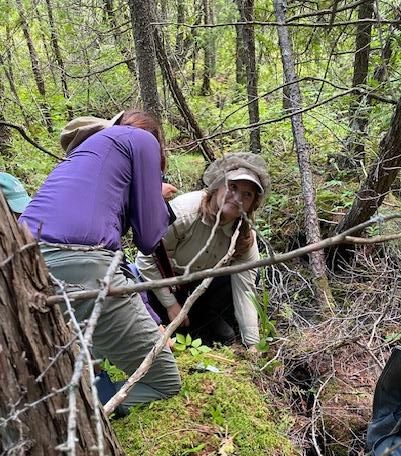
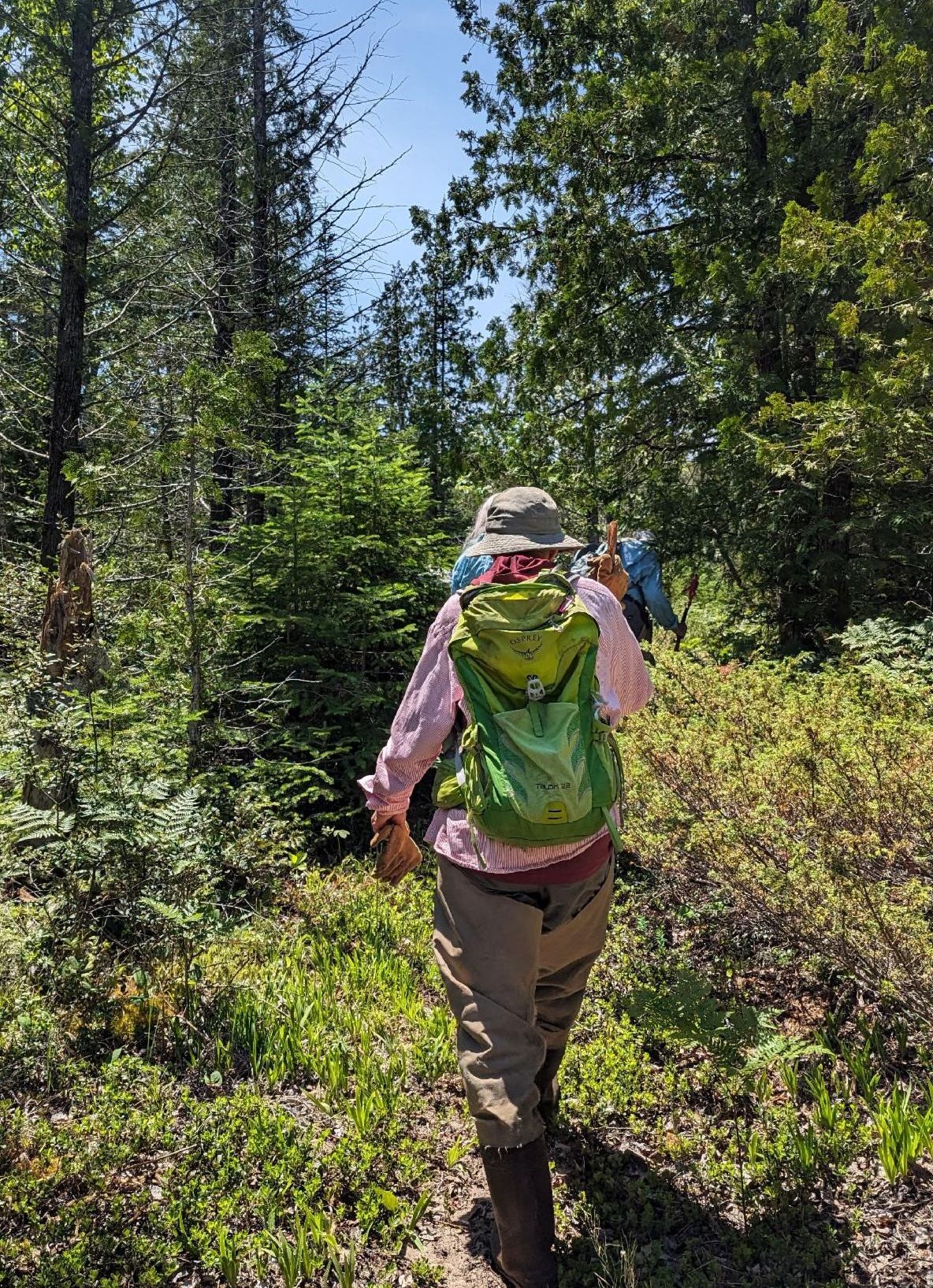
This summer, Melissa McCormick, Ida Hartvig, and I shoved ourselves into Melissa’s Toyota Camry hybrid and made our way northward towards the Upper Peninsula of Michigan. We were all scheduled to present at the 2023 Native Orchid Conference (NOC) Symposium, and planned to collect tissues (roots, leaves) for NAOCC’s many research projects along the way, having obtained research permits for sites in Illinois, Wisconsin, and Michigan.
Our first stop was in Illinois, where we planned to collect samples of the Oklahoma Grass Pink (Calopogon oklahomensis). However, by the time we arrived - several months into a drought - the year’s three vegetative plants had already disappeared into the thick prairie grasses. The two flowering plants had finished blooming and had begun to set fruit, precluding sample collection.
| |
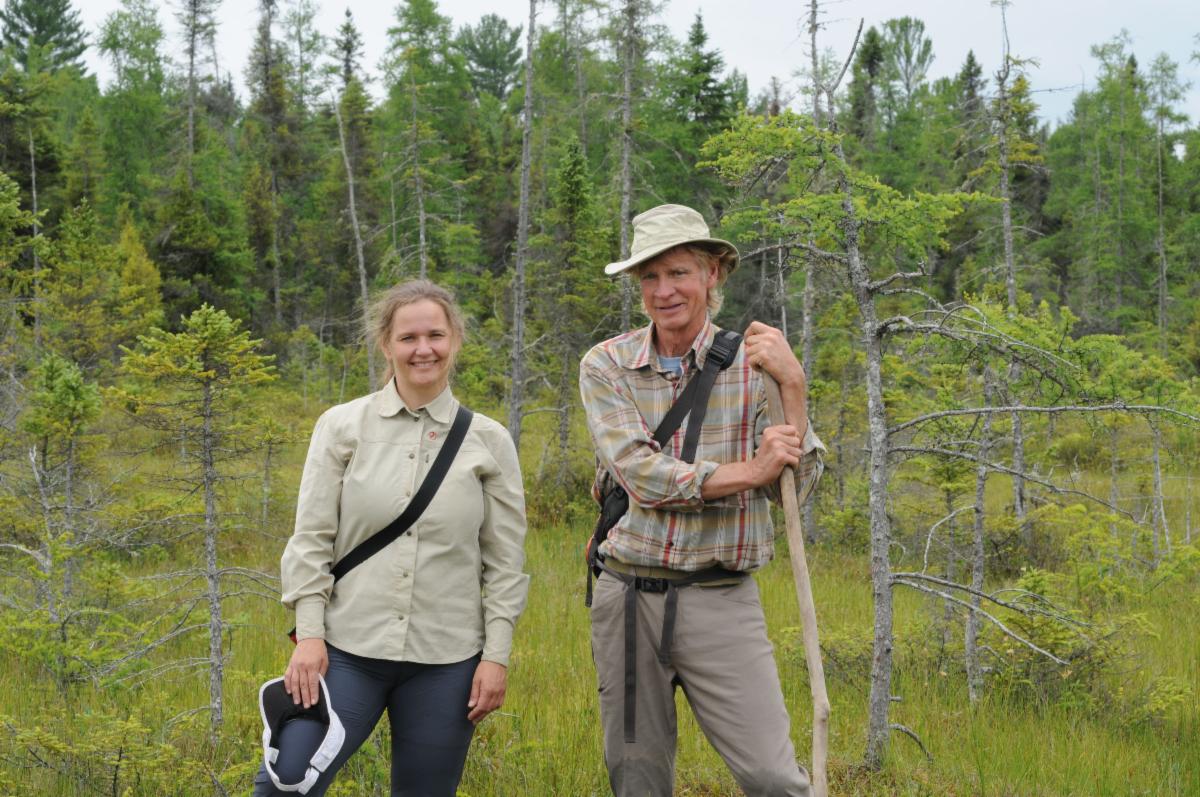
Photo: Hope Brooks and Ida Hartvig in the wilds of The Ridges Sanctuary, Wisconsin. Photo by Julianne McGuinness | |
|
Top: Julie Knox leading the orchid trek at The Ridges;
Center: Platanthera psycodes
Above: Ida Hartvig and Steve Baker in the wilds of Michigan’s Lower Peninsula
Photos by Hope Brooks
| |
|
Our next stop was The Ridges Sanctuary on Wisconsin’s Door Peninsula, where we met up with The Ridges staff and volunteers and NAOCC's Julianne McGuinness to exchange ideas for our long-term orchid conservation collaboration. The “Orchid Trekkers” - citizen scientists who have spent extensive time documenting the orchids found at The Ridges, led us through the preserve’s glacial ridges and swales to show off their orchids. All told, we saw fourteen species of orchids in less than half a day’s walking - an exciting day for all involved! The afternoon consisted of presentations about NAOCC’s work and orchid research at SERC, and learning about The Ridges’ conservation and education efforts, including their dedication to propagating the Ram’s Head Lady’s Slipper (Cypripedium arietinum).
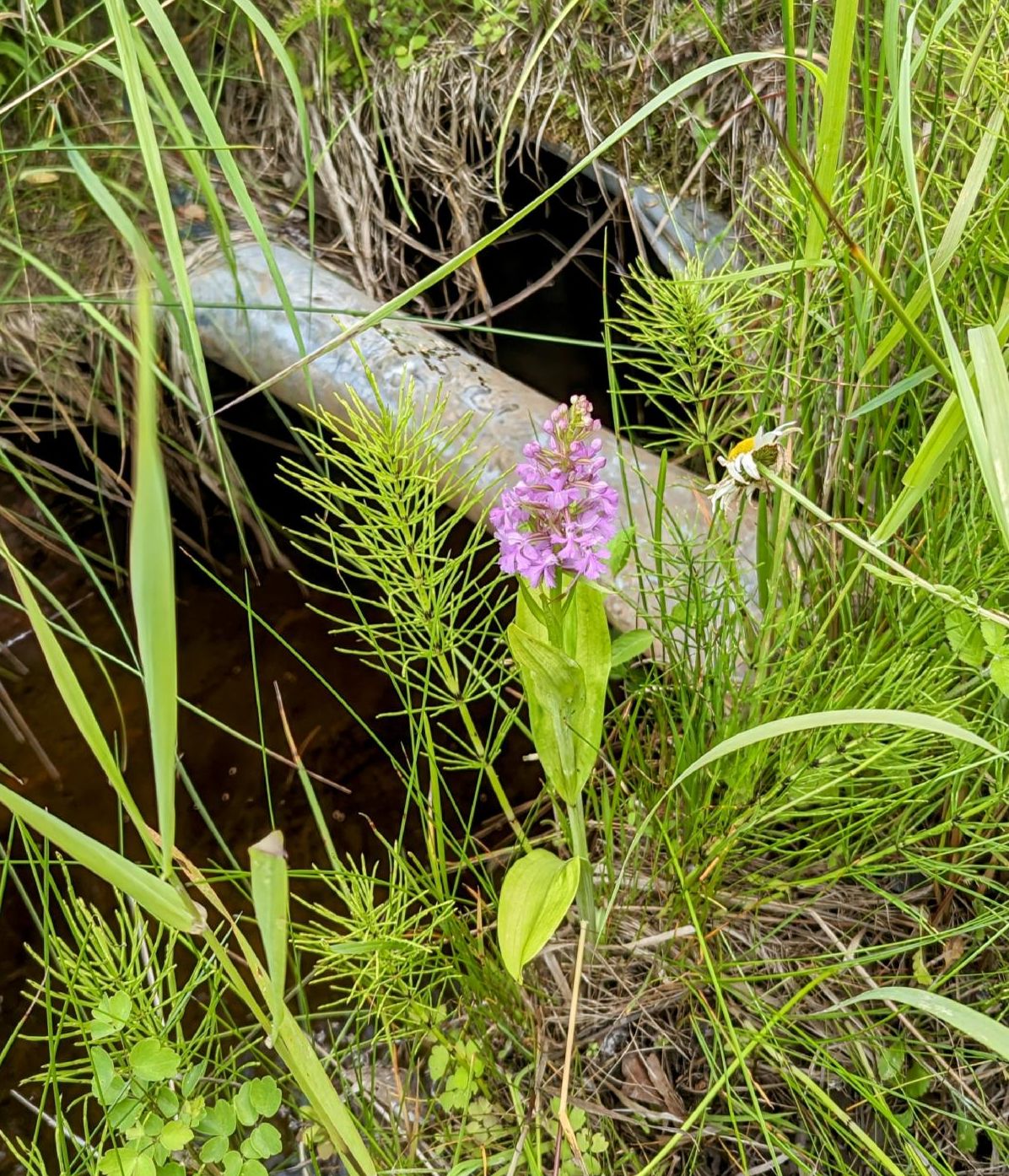
In Michigan, we were able to make sample collections and take floral morphology measurements from both the Lesser Purple Fringed Orchid (Platanthera psycodes) and the White Fringed Bog Orchid (Platanthera blephariglottis) at multiple sites. One notable collecting adventure included hunting for P. psycodes from a roadside site, where we found a singular plant growing and blooming atop the metal slats of a storm drain. Orchids truly epitomize the duality of strength and fragility!
The most enduring memory from the trip involved an attempt to visit a specific Platanthera site in a remote location on the Upper Peninsula. The decision to take Melissa’s Toyota Camry came back to haunt us on the sandy roads, and we ended up mired in the sand. Luckily, two men with a winch pulled us free for the price of two cold beers. Thankfully, a kind colleague eventually returned to collect samples for us using his trusty Subaru Forester.
All in all, the 2023 Orchid Roadtrip Extravaganza was a rousing success. Many thanks to our collaborators who hosted us, helped with collections, and provided much orchid camaraderie!
| |
Take Me to Your Anther: Creating a Curriculum on Nectar Guides | |
|
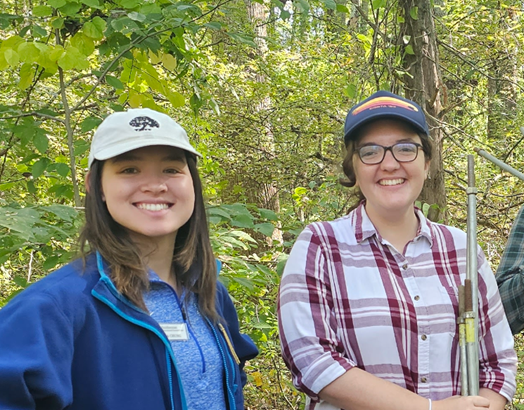
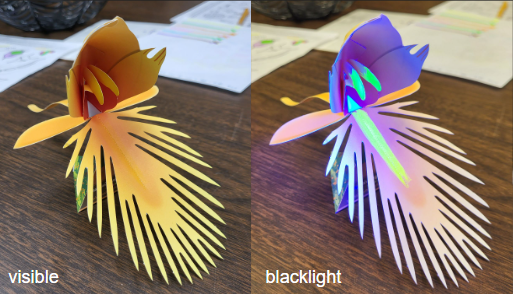
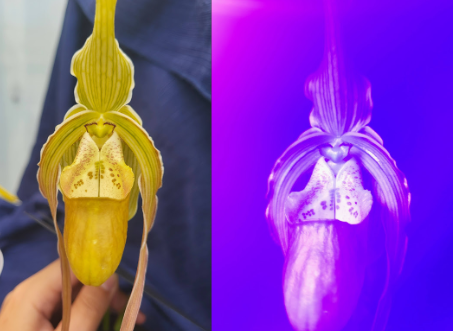
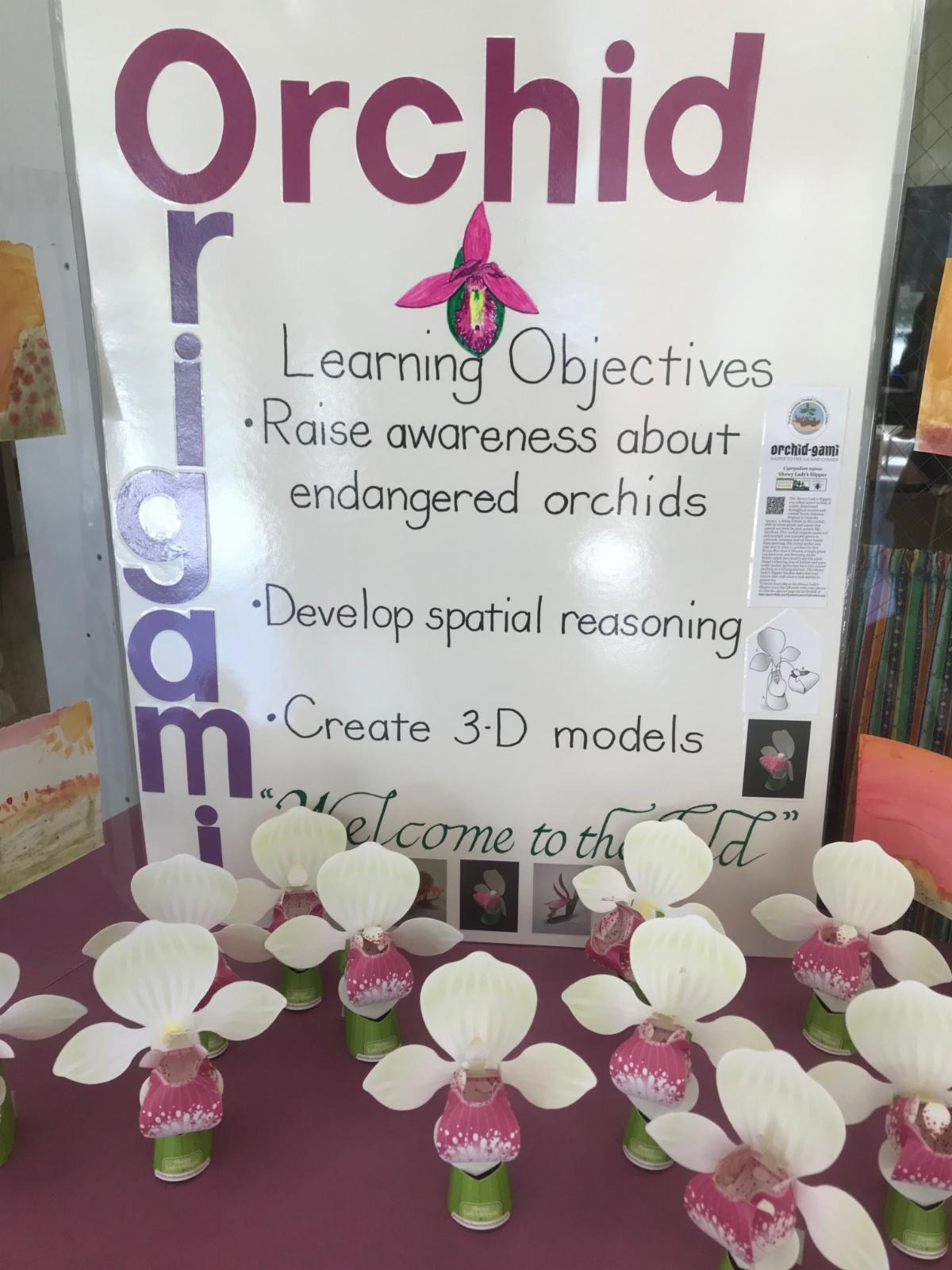
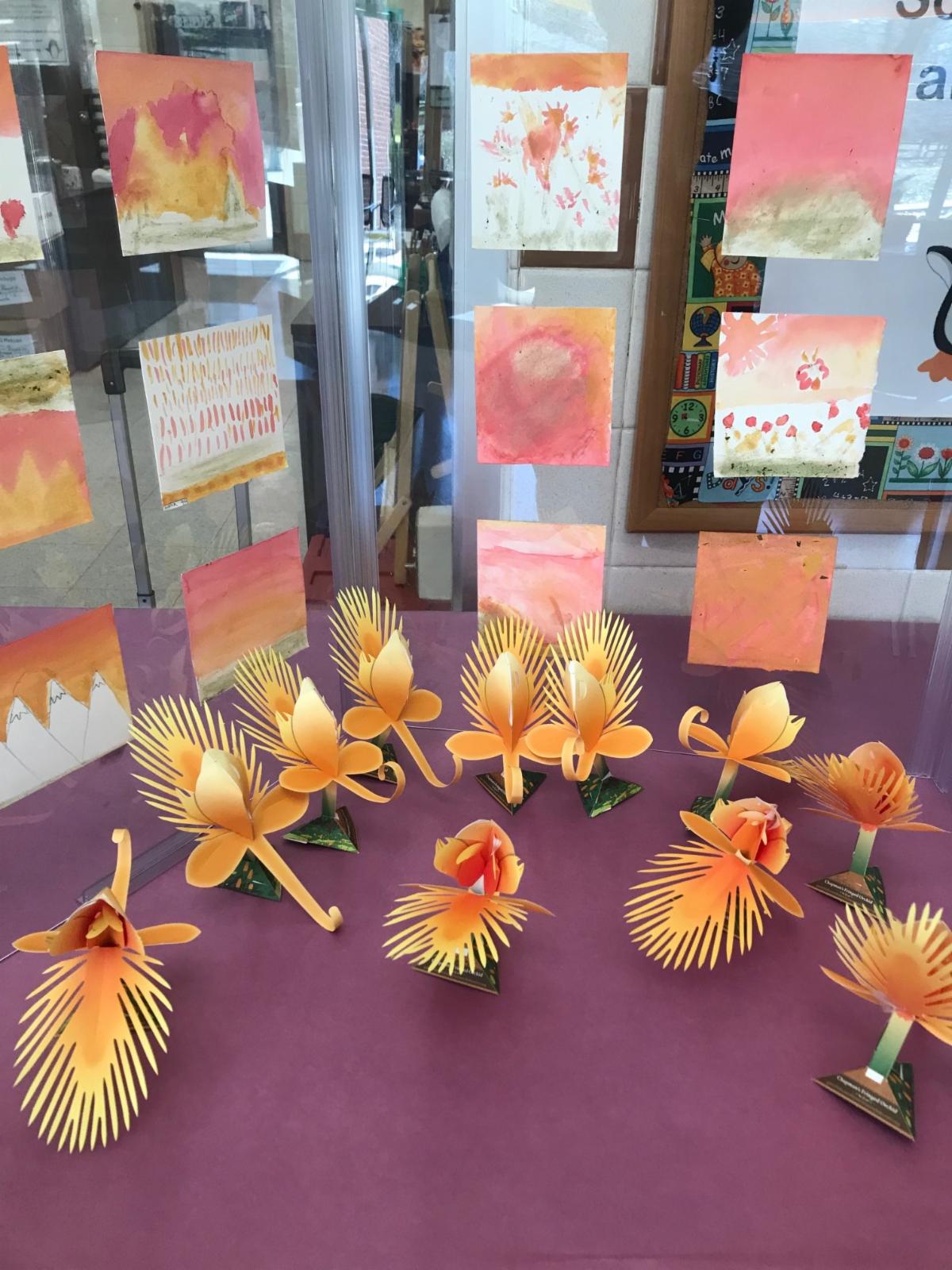
The curriculum combined art and STEM (science, technology, engineering, mathematics), in a one-hour STEAM lesson plan about "nectar guides" by simulating what a bee sees when approaching a flower. Kathryn and Nina used highlighters that fluoresce under ultraviolet black lights, and incorporated NAOCC's orchid-gami 3D flower models to enable students to visualize UV fluorescent nectar guides in native flora such as the featured orchids.
| | |
|
|
Top, Left: Nina Chung and Kathryn Vanhooser, interns at SERC
Above: Simulating nectar guides on Chapman’s Fringed Orchid (Platanthera chapmanii) using orchid-gami with highlighters
Left: Ultraviolet nectar guides visible under black light on an orchid at Smithsonian Gardens.
Photos by Kathryn Vanhooser and Nina Chung
| |
|
We're Going to the Dogs!
You may have seen the article about NAOCC's recent work with scent dogs on two projects involving endangered orchids recently. Field work in 2023 demonstrated that dogs can successfully find Isotria medeoloides (Virginia) and Spiranthes delitescens (Arizona).
Orchids can be hard to find, and dogs' powerful sense of smell can be an invaluable tool to find elusive orchids through scent work. But just how effective and efficient can they be?
In 2024, we hope to initiate a series of trials to compare the use of scent dogs along with human surveyors to determine the efficacy and cost effectiveness of both methods (humans v. dogs) at Fort Walker (formerly Fort AP Hill) in forested areas slated for tree-removal. In the past, Ft. AP Hill personnel have had to do extensive surveys for Isotria prior to such harvesting.
In 2025 and 2026, we will expand to include Vermont, where Isotria medeoloides was thought to be extinct until a new population was found in 2023, and to Pennsylvania, where a new population was also recently located.
We greatly appreciate the support and partnership of the U.S. Botanic Garden for this and other NAOCC initiatives. Stay tuned for more information on this exciting project as it unfolds!
Photo of scent dog Circe © Lauralea Oliver, k9inSCENTive, LLC
| |
Pollinator Project Update | |
In past newsletters, we have told you about our "pollinator project" - a nation-wide orchid pollinator identification program, which began a few years ago in collaboration with researchers from Texas A&M University.
We use modular, customized motion-detecting Raspberry Pi video cameras to capture pollination visits, and to quantify pollinator diversity across distribution ranges.
| |
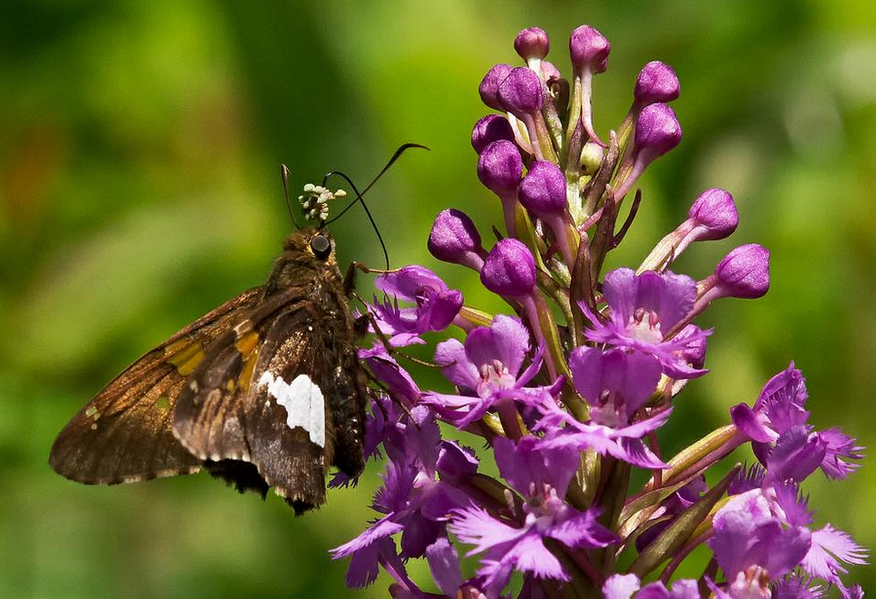
Platanthera psycodes, Photo © Jim Fowler | |
|
The project has evolved significantly and has grown in scope and scale - we have now deployed cameras for over 6000 hours and recorded nearly 900 pollinator visits. These observations have focused on 21 orchid species and recorded pollination by at least 32 insect species. We recently improved the infrared lights for the night cameras and are working to implement solar power, to allow the cameras to be unattended for longer.
With these improvements, we’re poised to roll out the cameras to more species and more locations with the help of volunteers in the next growing season.
Stay tuned for more information in future newsletters as this project unfolds. You can also see more here: https://serc.si.edu/research/projects/orchid-pollinator-diversity
| |
NAOCC Participation in Chelsea Flower Show 2023, 2024 | |
|
We're pleased to announce that NAOCC will once again participate in a collaborative exhibit at the Royal Horticultural Society’s Chelsea Flower Show in London. Watch for more information in upcoming NAOCC newsletters about the exhibit, which is entitled "Orchids in the Wild - The Beauty of Nature: Great Britain, India, and North America.
This past May, NAOCC had an opportunity to carry the message about the urgency of orchid conservation at the 2023 Chelsea Flower Show as a participant in Orchid Conservation Chelsea - Finding the Rare Florida Ghost Orchid. After a successful exhibit presenting the Queen's Platinum Jubliee Orchid in 2022, NAOCC friend and exhibit sponsor, John Parke Wright IV of Naples, Florida, convened an international team of orchid conservation partners, including several NAOCC collaborators, to present an exhibit highlighting the orchids of Cameroon, England, and Florida. Contributions and participation by Royal Botanic Gardens, Kew, Chicago Botanic Garden, Elite Orchids, Fairchild Tropical Botanic Garden, Glasgow Botanic Gardens, Grow Tropicals, Illinois College's Orchid Recovery Program, NAOCC, Naples Botanical Garden, Stetson University, and the University of Florida made the exhibit a popular success and garnered a Silver Medal from the Chelsea Flower Show judges.
A show-stopping feature of the 2023 exhibit was a near-blooming Florida Ghost Orchid (Dendroplylax lindenii) contributed by the Chicago Botanical Garden to illustrate the story of this flagship endangered species, and underline the urgent need for orchid conservation. A stunning backdrop photo of a ghost orchid by eminent Everglades photographer Clyde Butcher featured an incandescent bloom appearing to float in midair.
Most importantly, the exhibit provided education and inspiration to visitors from all over the world, encouraging the public to join the effort to conserve these fragile plants and their ecosystems.
We look forward to another opportunity to promote orchid conservation in 2024!
| |
|
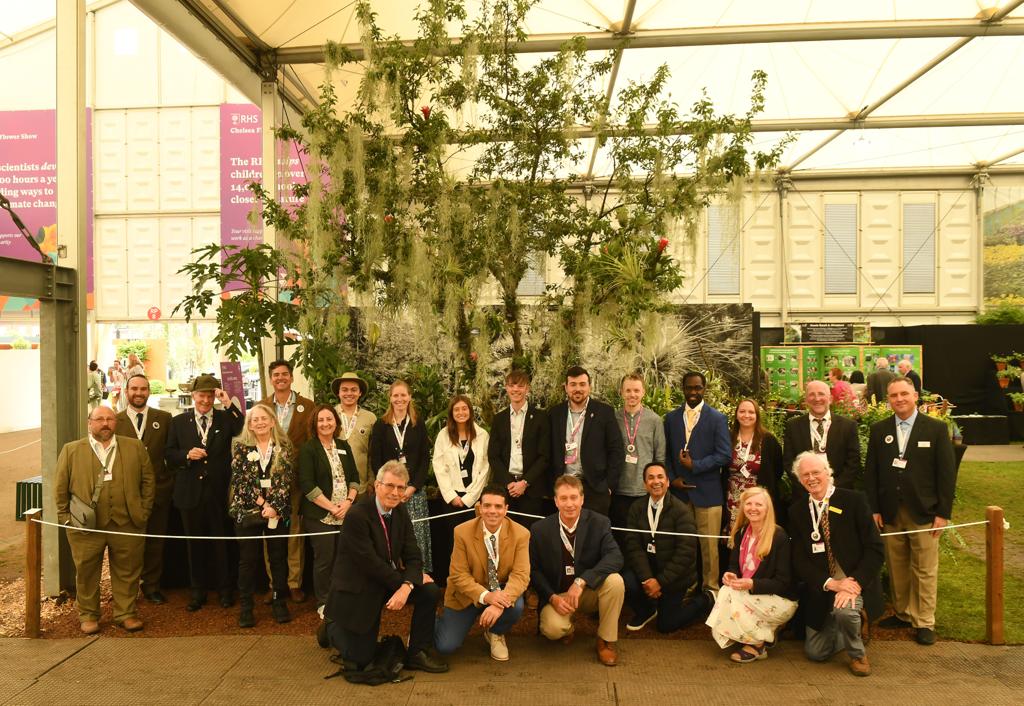
Top: Orchid conservation team at the Chelsea Flower Show 2023
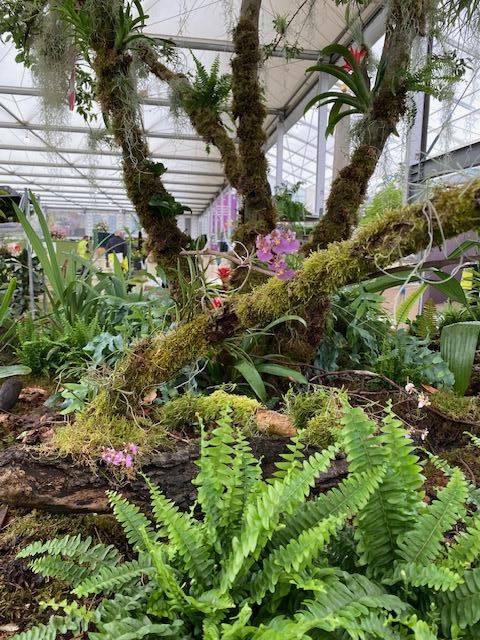
Above, Left: Thanks to the hard work and plant contributions by the Chicago Botanic Garden, Illinois College Orchid Recovery Program, and Naples Botanical Garden, the centerpiece of the display beautifully invoked the essence of a typical South Florida swamp orchid habitat.
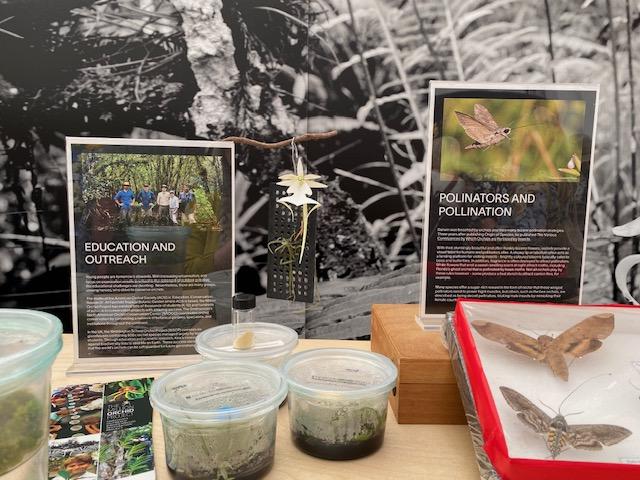
Above, right: An educational display at the "Orchid Genius Bar" section of the exhibit
Photos © Julianne McGuinness
| |
|
The ancient Greek philosopher Heraclitus is often credited with saying that the only constant in life is change. While NAOCC is a program that does not have its own employees per se, quite a few changes are happening at SERC which affect NAOCC.
SERC research technician, Hope Brooks, has taken a job with the state of Pennsylvania, managing and monitoring endangered species permitting. Hope came to SERC as an Intern, stayed on as a part-time employee, and eventually moved to full-time. Hope is a passionate field-biologist who fears no task. She is equally comfortable in the lab and field. Her contributions have been enormous because of her enthusiasm and talents, including a broad range of computer skills. While Hope will be living in the Harrisburg, PA area, we hope she will continue to work with NAOCC when possible.
Brett Morgan arrived at SERC in 2021 from Taipei to help Melissa continue to develop her molecular lab. He supported NAOCC in many ways, especially with DNA analysis and fungal isolation. Sadly for us, but great for him, he has now moved to California to pursue a Ph.D. Despite the move, Brett continues to work with us to complete a Cypripedium genetics project. We know he will be successful, and wish him the best in his career.
The departure of Brett and the forthcoming departure of Hope were buffered by the arrival of Grace Dougherty, a recent graduate of Warren Wilson College. Grace has jumped into her work at SERC and on NAOCC projects with passion and professionalism that was obvious from the moment of her arrival. Along with solid field skills, she has taken the lead on maintaining our growing fungal collection and orchid genetic analysis.
Finally, we are pleased to learn that Hye Woo Shin, a Visiting Scientist from South Korea, will extend her tenure for another year to continue working with Melissa on orchid mycorrhizal fungi molecular research. Her outstanding artistic skills will again be on display with an exhibition at the Korean Cultural Center in DC in the spring.
| |
A Sampling of Recent Presentations by NAOCC: | |
|
- 7th International Orchid Workshop, Czech Republic (Dennis, Melissa, & Ida)
| |
|
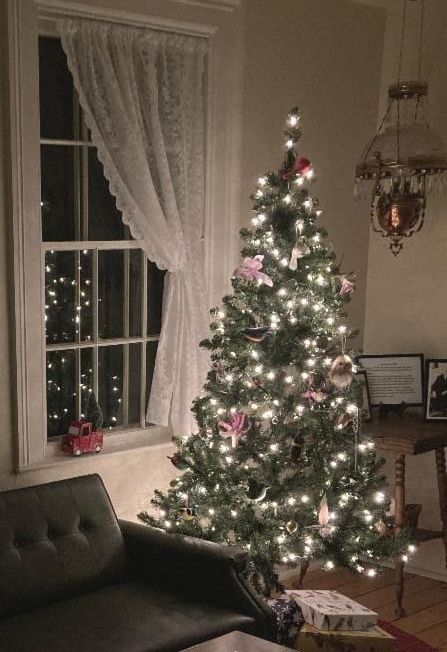
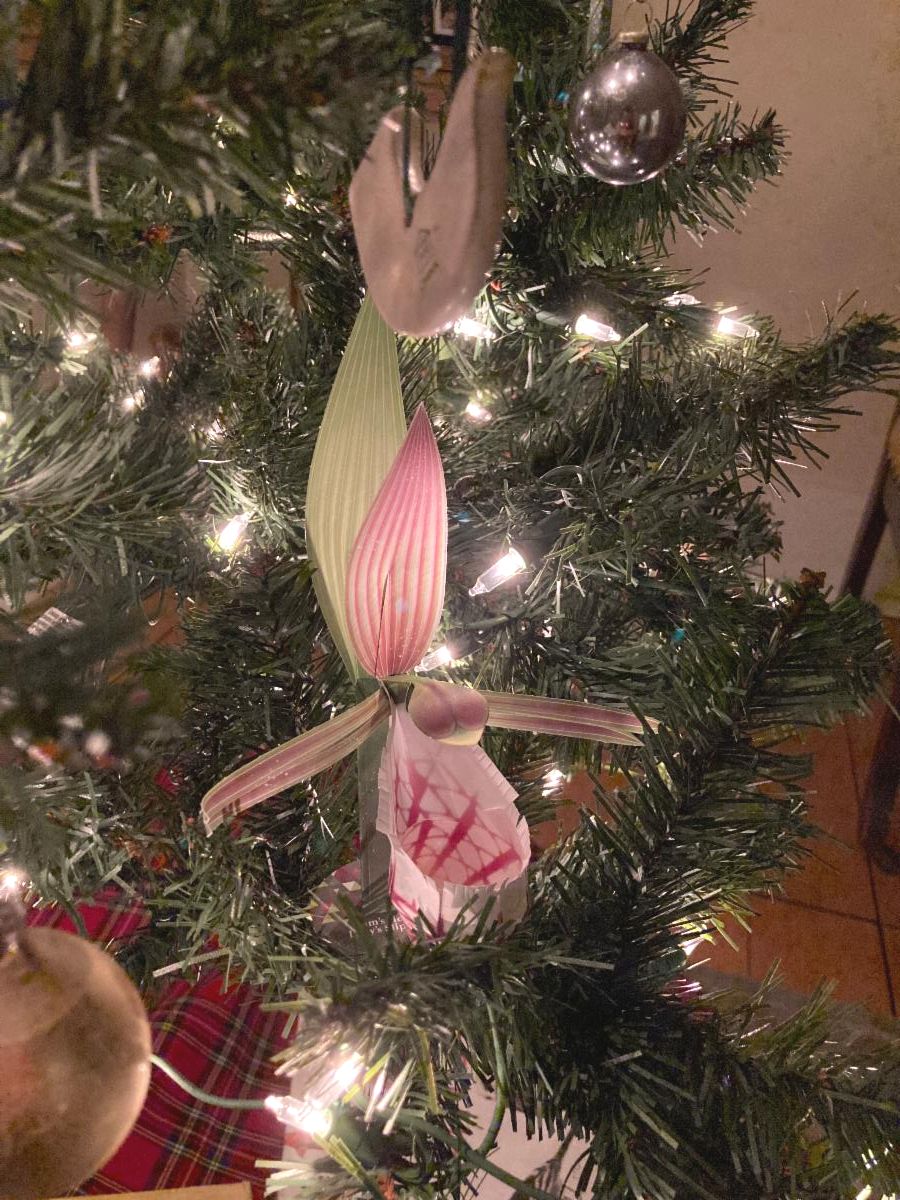
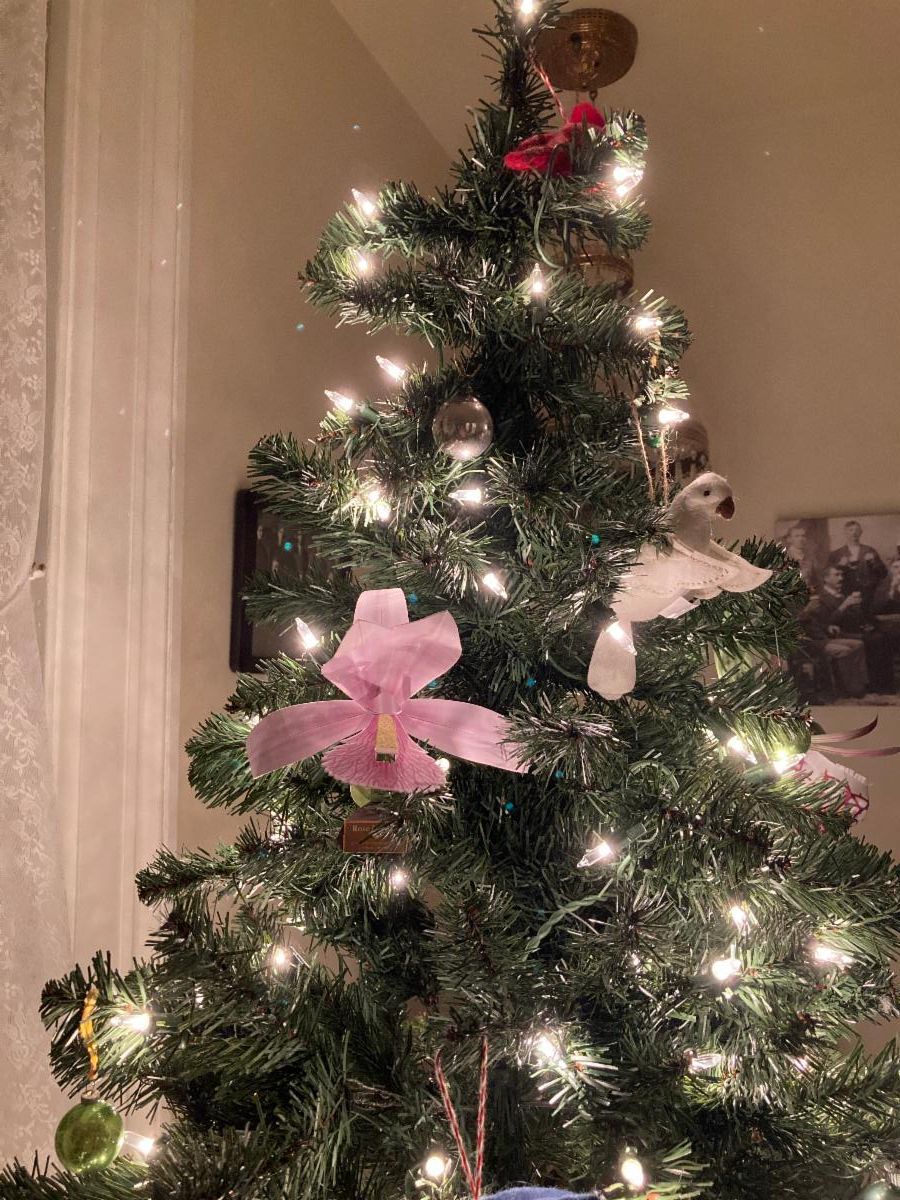
The Ridges Sanctuary in Bailey's Harbor, Wisconsin may have started a new trend this year, using NAOCC's orchid-gami to decorate the Christmas tree in their Upper Range Light for their Natural Christmas celebration, along with an assortment of bird ornaments. Guests adored the paper orchids!
Photos courtesy of Libby Humphries and The Ridges Sanctuary
| |
|
NAOCC Annual Appeal - You Can Support Orchid Conservation!
NAOCC and our non-profit native orchid conservation collaborators appreciate your assistance - together, we can advance native orchid conservation! Here are four ways you can help:
-
Share: Tell family and friends about NAOCC’s, and our collaborators’ orchid conservation work, and share our newsletters and website information.
| |
|
-
DIY: Did you know that you can create your own fundraiser for NAOCC on Facebook, or other social media? (If you have questions, let us know.)
-
Inspire: By offering to match the donations of others, you can magnify the impact and encourage others to give!
| |
Do you have native-orchid related events or news items to share with the NAOCC community? For inclusion in future NAOCC newsletters, please send any brief articles, pictures, or event notices to Julianne. | |
|
Copyright © 2023 NAOCC / Smithsonian Environmental Research Center, All rights reserved.
You are receiving this email because you are a NAOCC Collaborator, Donor, or Friend. Please let us know if you have ideas for future newsletters, or if you prefer to unsubscribe from these emails.
| | | | |