NASDDDS Weekly news & updates | | |
See what's happening this month. | __________________________ | __________________________ |
| Welcome to the weekly NASDDDS newsletter where we spotlight state and federal updates in the IDD field! Send submissions to cmcgraw@nasddds.org. | | | Medicaid Program Integrity Developments | |
Congress and the Administration continue to elevate attention to program integrity in Medicaid Home and Community-Based Services (HCBS). This summary highlights recent developments, emerging areas of focus, and key considerations for state systems as federal interest in these issues continues to grow.
HHS/OIG Letters: Last week, in a move announced by Vice President J.D. Vance’s Anti-Fraud Task Force, US Department of Health and Human Services Inspector General T. March Bell sent a letter to attorneys general in every state announcing increased oversight over Medicaid Fraud Control Units (MFCUs). The letter indicates that the Office of the Inspector General (OIG) will “engage in a robust review” of each state’s MFCU, and will require "every single MFCU to comply with all of their obligations under Federal law in order to receive their MFCU funds.” The letter further indicates that noncompliance could ultimately lead to denial of recertification of the state’s entire Medicaid program. READ MORE
Deferral of $1.3 Billion in Medicaid Payments to California: At the same event, Vice President Vance announced that CMS would be deferring $1.3 billion in Medicaid payments to California. $1.1 billion of the funds come from California’s In-home Supportive Services (IHSS). CMS Administrator Dr. Mehmet Oz, administrator of the U.S. Centers for Medicare & Medicaid Services, indicated that the deferral was due to higher rate of growth in California’s HCBS program compared with other states, and that CMS will withhold the funds until the state can convincingly explain the growth.
Medicare Hospice and Home Health Agency Enrollment Moratoria: On the same day, also in coordination with the Anti-Fraud Task Force, the Centers for Medicare & Medicaid Services (CMS) announced the implementation of a six-month, nationwide moratoria on new Medicare enrollment for hospices and home health agencies (HHAs), calling them “a key source of fraudulent activity.” During the six-month moratoria, CMS says it “will intensify targeted investigations, deploy advanced data analytics, and accelerate the removal of hospice and HHA providers from the Medicare program that are suspected of committing fraud.” Earlier in the year, CMS imposed a similar moratorium on durable medical equipment, prosthetics, orthotics, and supplies (DMEPOS) companies. READ MORE (home health) and READ MORE (hospice)
Ohio Announces New Medicaid Fraud Prevention Initiatives: Last week also saw Ohio Governor Mike DeWine (R) announce several new initiatives to combat fraud in the Ohio Medicaid system. These include:
- A statewide new provider moratorium.
- Immediate payment suspension to high-risk providers
- An Executive Order that will allow the Ohio Department of Medicaid to implement emergency rules to require more frequent revalidation of providers being identified as higher-risk for committing fraud.
- A mandatory GPS requirement for Electronic Visit Verification (EVV).
- Mandatory EVV for live-in caregivers
America First Policy Institute Toolkit: A Medicaid program integrity research report & state policy toolkit issued in April by the America First Policy Institute (AFPI) is gaining increasing traction in Congress, especially among House Republican offices. The toolkit outlines executive and legislative actions that AFPI recommends governors and state officials take to protect beneficiaries and secure taxpayer funds. READ MORE
| ___________________________ | | | Kansas City Hosts Successful Annual Community of Practice for Supporting Families National Meeting | |
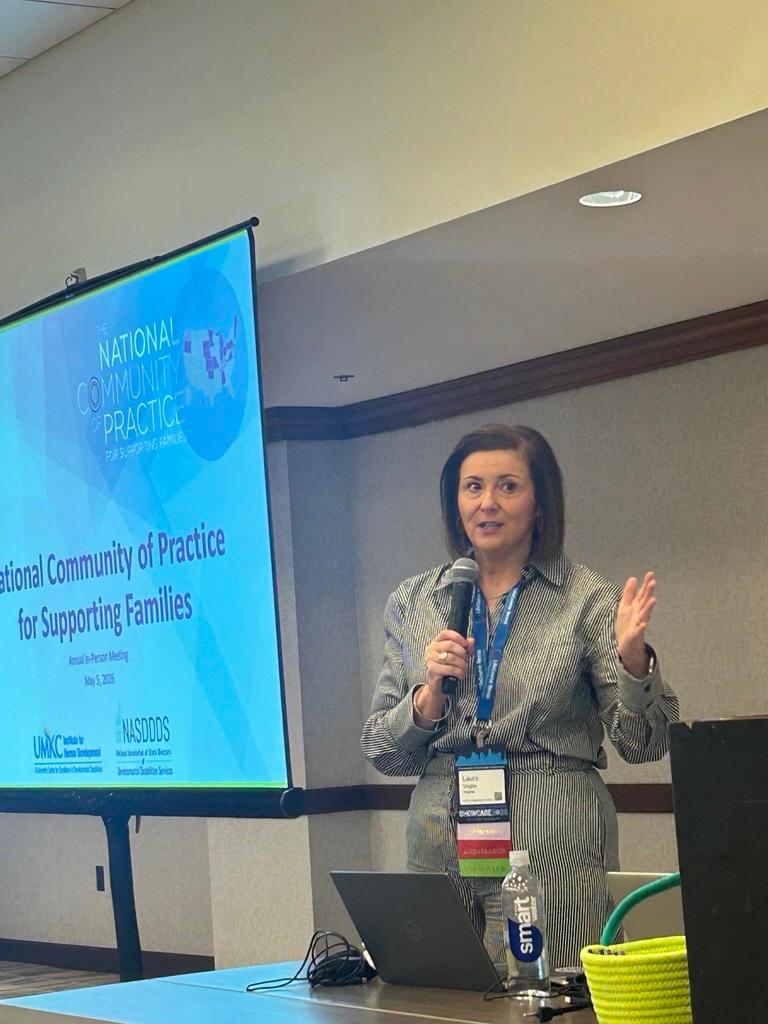
More than 60 leaders representing 22 member states gathered in Kansas City on May 5, 2026, for the Annual Community of Practice (CoP) for Supporting Families national meeting. The day was filled with energy, collaboration, and a shared commitment to strengthening support for families of people with intellectual and developmental disabilities (IDD).
Throughout the meeting, state CoPs highlighted innovative strategies and promising practices aimed at building stronger family networks, establishing shared values, and meaningfully engaging families at every level of the system. Participants also explored how evolving federal policies are influencing state efforts and shaping the future of family support systems nationwide.
Most importantly, the meeting created space for meaningful conversations, authentic connections, and peer learning across states. Attendees left inspired by the creativity and dedication of their colleagues — energized with fresh ideas, strengthened partnerships, and renewed motivation to continue the work that matters every day.
The Community of Practice for Supporting Families is a collaboration between NASDDDS, the University of Missouri, Kansas City Institute for Human Development and 22 member states and is more than 12 years old. It continues to serve a critical role in helping state systems to understand how to best support families of all people with IDD across the lifespan. We are inspired by the states and look forward to continuing in partnership. For more information about joining the CoP for Supporting Families, please contact Laura Vegas at lvegas@nasddds.org or see this website: https://www.supportstofamilies.org/
| ___________________________ | | |
- The U.S. Department of Health and Human Services (HHS) and the Centers for Medicare & Medicaid Services (CMS) held the first Healthcare Advisory Committee meeting on May 18th. The public meeting focused on introducing Committee members, outlining the vision of the Committee and establishing Committee bylaws. The Healthcare Advisory Committee, was established earlier this year as a federal advisory body comprised of experts from across the healthcare system to advise HHS Secretary Robert F. Kennedy Jr. and CMS Administrator Dr. Mehmet Oz on ways to improve how care is financed and delivered across Medicare, Medicaid, the Children’s Health Insurance Program, and the Health Insurance Marketplace. Valerie Huhn, Director of the Missouri Department of Mental Health and President of the NASDDDS Board of Directors, is a member of the Committee. To view the Federal Register Notice on the upcoming Healthcare Advisory Committee meeting, visit: THIS LINK
- CMS is seeking public comment on new measures under development to measure the quality of HCBS for children, youth, and young adults (CYYA). The agency “seeks feedback on the importance, feasibility, usability, and face validity” of the measures to inform the measure specifications, continued development and testing, and potential implementation. Comments are due by June 8th. READ MORE
- The Caregiver Nation Coalition submitted a letter to the CMS with recommendations for implementing the H.R. 1 family caregiver exemption. The letter outlines recommendations for caregiver verification data sources and strategies intended to help eligible family caregivers maintain Medicaid coverage and access to HCBS services. READ MORE
| |
| ___________________________ | |
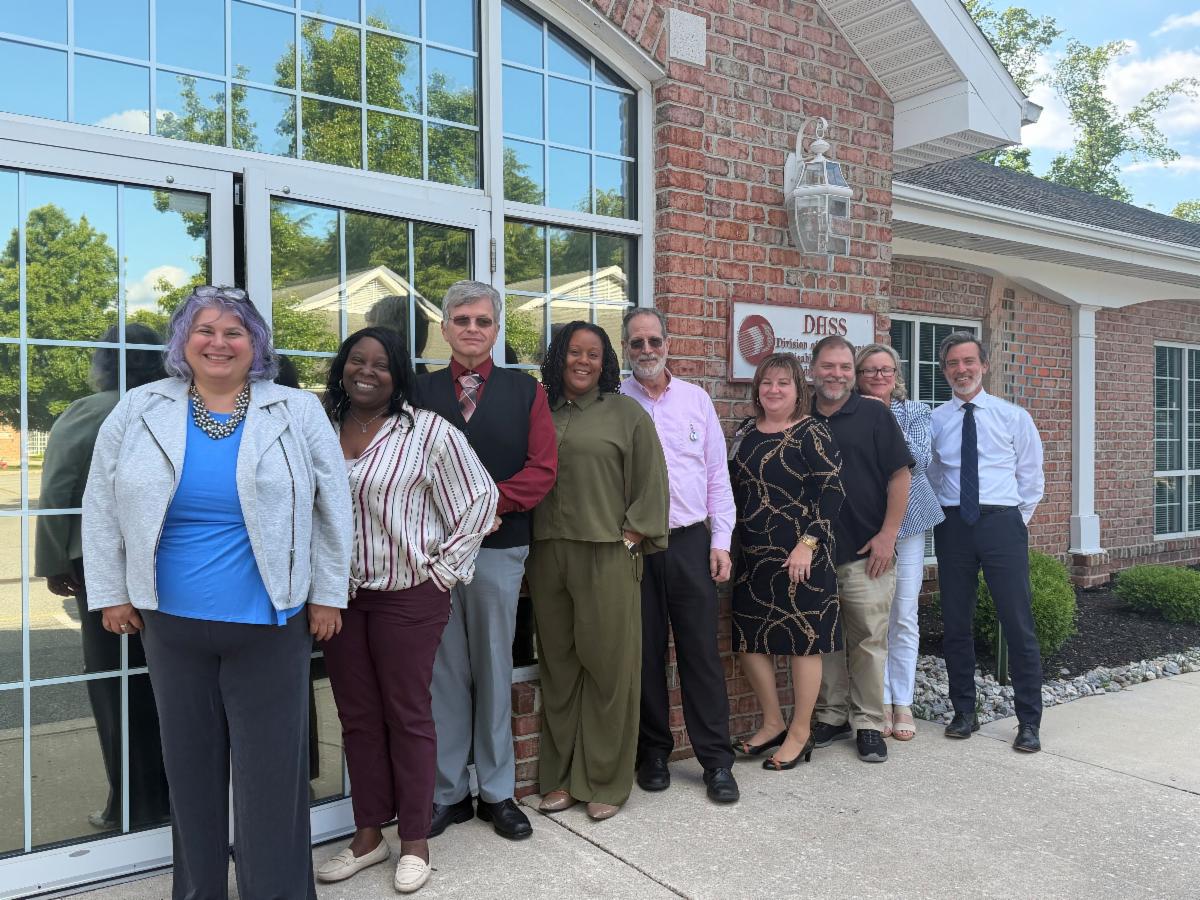
- NASDDDS team members, Mary Sowers, Kim Opsahl, and Teja Stokes, had another opportunity to engage with the Delaware Division of Developmental Disabilities Services (DDDS) leadership team in Dover, Delaware last week. The DDDS team continues to build a strategic approach, undergirded by their recently refreshed values and agency identity, to ensure that they are moving in concert from a position of strength. It was a wonderful afternoon with positive energy and the NASDDDS team is so grateful to be in their corner!
-
The Summer 2026 Leadership Institute is an opportunity for developmental disabilities professionals to strengthen their skills, expand their networks, and learn practical strategies for driving systems change. For 20 years, the National Leadership Consortium on Developmental Disabilities has prepared leaders to advance dignity, belonging, rights, and stronger services for people with disabilities. Through generous support from NASDDDS, the Gary Smith Scholarship for Public Managers is available for one state government participant at the July 26–31, 2026 Institute. The scholarship covers tuition and travel expenses, and applicants can indicate interest when completing the Institute application. Find Out More
| ___________________________ | State and Territory Updates |
-
California’s Medi-Cal program supports nearly one million older adults and people with disabilities through Home and Community-Based Services (HCBS), helping people remain in their homes and communities. New fact sheets released by Justice in Aging provide an overview of HCBS in California, their vital role in supporting health, independence, and community living, and the potential impact of budget challenges on these services. READ MORE
-
Illinois recently released their new Division of Developmental Disabilities (DDD) Strategic Planning Roadmap 2026–2030. The roadmap outlines DDD’s long-term goals, key objectives, and the measures that will be used to track progress over the next several years. To support broad access and understanding, a full plan and a Plain Language version are currently available in English, with a Spanish translation coming soon. A recorded introductory webinar and accompanying PowerPoint are also available for those seeking additional context. As implementation moves forward, DDD will continue sharing updates on milestones, progress, and key outcomes through annual reporting with the community. READ MORE
| ___________________________ | Partner and Community Resources | |
-
Why Does Data Matter for Employment Outcomes? People with disabilities who work have better economic outcomes, and state data can help tell that story. Accurate data allows states to make informed decisions, strengthen services, promote employment systems change, and improve employment outcomes for people with intellectual and developmental disabilities. ThinkWork partners with states to drive change through data using StateData Outcome Metrics. Through this work, states receive support to collect, manage, and display data on employment outcomes and community participation, including the number of people working, types of jobs held, hours worked, and wages earned. States can use this data to track progress, demonstrate impact, ensure accountability, and justify higher provider rates. Flexible data packages are available and can be tailored to meet each state’s needs. READ MORE
- The Arc partnered with the National Press Club Journalism Institute on a three-part Q&A series to help journalists cover disability with greater accuracy, accessibility, and respect. Featuring guidance from Katy Neas, CEO of The Arc of the United States, the series addresses interviewing people with IDD, avoiding harmful framing, and choosing visuals that reflect people with disabilities as diverse participants in everyday life. READ MORE
| | ___________________________ | | Thank you to our newsletter sponsors: | | ___________________________ | | |
The National Association of State Directors of Developmental Disabilities Services (NASDDDS) does not exclusively endorse any sponsor, product, or service referenced in this newsletter. Likewise, the views, information, and content presented in this newsletter do not constitute endorsement by any sponsor. All editorial content is developed independently by NASDDDS to inform and support its members.
For accessible or alternate versions of this information, please email cmcgraw@nasddds.org.
| | | | |