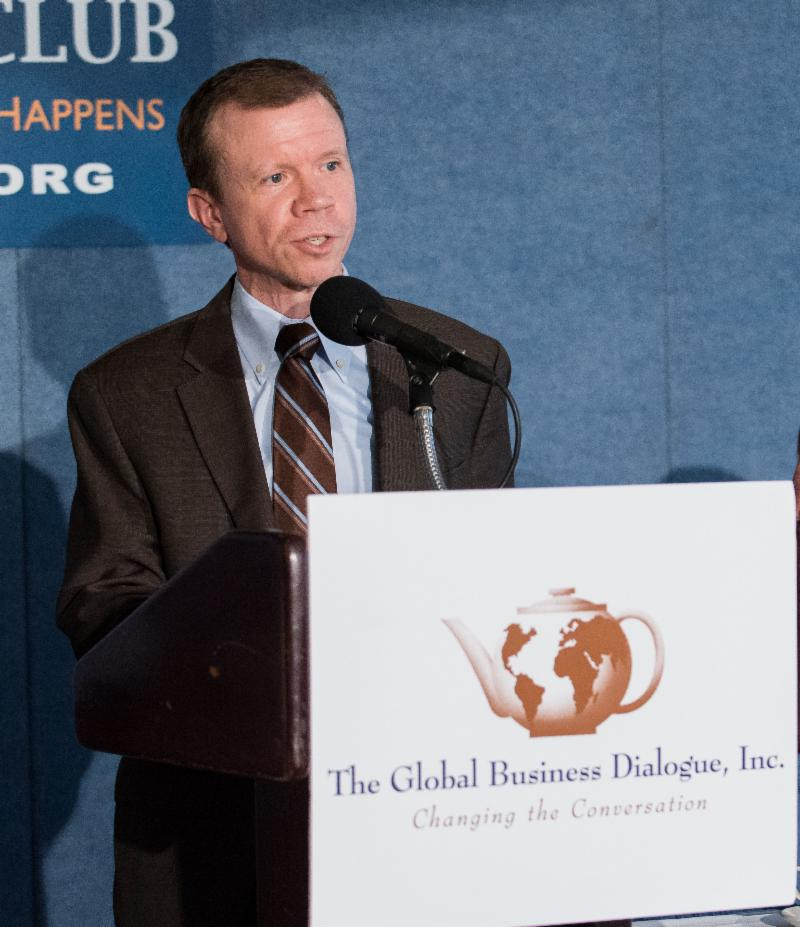
Scott Paul is the President of the Alliance for American Manufacturing. On June 29, he was one of the four speakers who discussed the contentious U.S. tariffs on steel and aluminum. These went into effect for most of the world on March 23 and for products from Canada, Mexico and the EU on June 1. The process and justification for these tariffs - 25 percent on steel and 10 percent on aluminum - is set forth in Section 232 of the Trade Expansion Act of 1962, which deals with trade and national security.
As we have noted in earlier entries, this invocation of a national security provision to justify a trade action has met with a great deal of skepticism and more. There is a domestic challenge to the constitutionality of the law, and the European Union and others have decided to treat these tariffs not as national security actions but as instruments in a safeguard measure. Mr. Paul argued forcefully that these are bona fide measures in defense of national security. He said:
Steel and aluminum are essential to our national security. That may sound very 20th Century and World War II and "arsenal of democracy." If you look around us and you think about what protects us in this country, it's aircraft carriers, that are nuclear powered but are involved with tens of thousands of [tons of] sophisticated armor plate, and aluminum. It's F-35s that are made of an aluminum that was just invented within the last 10 or 15 years. It's a resilient electrical grid that depends on electrical steel, of which we have one remaining producer in the United States. It's the Virginia class submarines that provide part of our nuclear triad that will be part of our nuclear submarine fleet for at least 50 years and contain an amazing amount of metal.
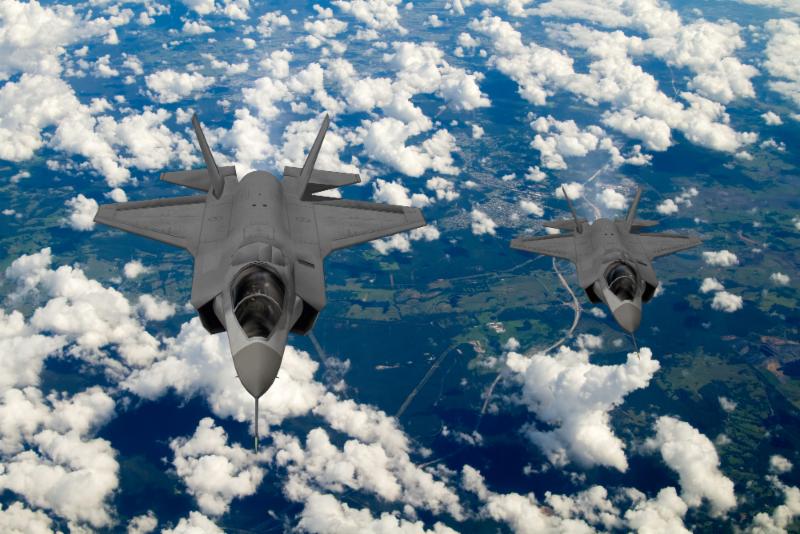
F-35s at 30,000 Feet
Illustration by Keith Tarrier
Shutterstock Image
So, if you ... think that potential conflicts in the future don't involve steel and aluminum, you've been reading way too much fiction, because they do. I think our military establishment understands that.
Mr. Paul talked about both steel and aluminum, but the greater emphasis in his presentation was on steel and the problems for steel producers around the world from China's enormous over capacity. Among the facts he adduced were these:
5 of the 10 largest steel companies in the world are essentially owned by the Chinese government, and they produce roughly half of the world's steel. Wikipedia has a useful table of global steel production, which puts much of this in perspective. It puts world steel production in 2017 at 1,691 million metric tons. Of that, China produced 831 million metric tons and the United States about 81.6.
As Mr. Paul explained the situation, "There is about 500 or 600 million metric tons that need to come out of the global market right now. The United States doesn't even produce 100 million metric tons of steel. So you see the scope of the challenge," he said.
Both a recording and a transcript of Mr. Paul's remarks are available on the GBD website, www.gbdinc.org, on the Events page. So, we won't try to cover everything he said here. We will, however, take note of some his responses to key questions in the debate over the 232 tariffs.
Has U.S. industry been hurt by China's overcapacity? Mr. Paul said:
We lost 30 to 40 steel companies in the early 2000s.
Adding later that:
Since 2009, we've seen important penetration coming into the steel market increase by 50 percent in the United States. We've seen six or seven blast furnaces placed out of operation over the last decade and a half. And during the most recent crisis, we saw about 15,000 steel workers lose their jobs in an otherwise healthy economy.
What about the WTO as a solution to the problems facing American steel? Mr. Paul:
The steel industry has searched for solutions to this challenge for many years. And if the WTO was the solution to it, believe me, we'd have done it by now. The WTO is not well equipped to deal with the massive amount of state capitalism from China.
Why not simply target China? Mr. Paul explained that, especially in light of the antidumping orders already in place against steel imports from China, U.S. steel imports from China are a relatively small part of the problem. But the minor transformations in- and trans-shipments through third countries - he mentioned Vietnam, Malaysia, Indonesia, and South Korea - that are a big part of a problem; hence the need for a global solution.
And What is the Goal? In a nutshell, it is to move the industry from its current 75 percent capacity utilization to a much healthier 80 percent. And progress is being made, mills are coming back on line, Mr. Paul said.
|