Quarterly Newsletter - October 2024 | |
Please share the newsletter with your colleagues and friends! | |
|
Down, set, HIKE! That’s a great way to encourage little ones to run and PLAY. I hope that you are enjoying the great outdoors this fall with North Carolina’s youngest citizens.
Welcome to YOUR birth-to-three newsletter. I encourage you to read, use and enjoy the following information. We hope that everyone finds a nugget of good information!
| |
|
Football, leaves and elections are all on everyone’s mind at this time of year, especially with our presidential AND gubernatorial elections on the line. As the adults who advocate and support NC’s infants and toddlers, I hope that you take time to learn about the candidates and VOTE on Tuesday, November 5, 2024. Our right to choose our own leaders is the foundation of our government and has been fought for by many. Here is a site that you can visit to learn a bit more about the election: www.americaforearlyed.org/our-votes/. Make an informed decision and exercise your right to VOTE!
During the last 12 months, several of our team members and other experts across the state have been writing a new foundational training series for infant and toddler teachers in collaboration with the Division of Child Development and Early Education (DCDEE). Under the umbrella of the title "Infant Toddler Zone," our team will begin conducting four new trainings in October. The new trainings will address important topics such as building relationships, how to understand and support infant and toddler healthy behavior, creating safe spaces and planning appropriate activities using North Carolina Foundations for Early Learning and Development (NCFELD). Look for more information further down in this newsletter. Keep reading for LOTS more good stuff!
Happy fall, y'all!
-Ginger, NC B-3QI Project Manager
You can find additional information by clicking on the links or by going to our website at www.childcarerrnc.org/special-projects/b3qi/.
Click the links below to learn more about the topics featured in every edition:
| |
Cohort-Based Learning Communities | |
|
By Kristin Snellings M.Ed., Amanda Hazen, Asata Virgo, and Heather Noe, Birth-to-Three Anchor Specialists
Wow! Our anchor specialists have been hard at work developing and implementing our Cohort-Based Learning Communities (CBLC). Our project is currently offering CBLCs on the following topics:
-
Circle of Security Classroom: Teachers will engage in group discussion and self-reflection activities to understand how to shift focus from behavior management to enhancing the teacher/child relationship quality through step-by-step approaches for promoting secure attachment with children in their classrooms. The cohort is currently underway. The next application period is TBD.
-
Leading the Way: Child care administrators with various levels of experience come together to discuss management topics and advocacy. Applications closed October 1. Look for an email from Heather if you applied SOON!
-
Love Them Through It: Focusing on strategies to provide the loving care that boosts children’s social and emotional development. Together, participants will ultimately answer the true question: "How can we love them through it?" Applications will open in January 2025.
-
Planning With a Purpose: Discover the link between skillful observation and individualized planning for children. Also, explore observation strategies and create lesson plans that align with NCFELD. The next application period is TBD.
-
Planning With a Purpose Directors' Edition: From a director’s perspective what planning should look like and how to support staff with their purposeful planning using the NCFELD. The cohort is currently underway. The next application period is TBD.
-
Supporting Healthy Lifestyles: How can child care help with childhood obesity? We discuss child nutrition and meal practices in various child care settings including topics such as support for breastfeeding mothers, benefits of outdoor play and enhancements to children’s physical activity. The next application period is TBD.
-
Talk It Out: A language and literacy-rich cohort where we will discuss optimal verbal interactions with young children and strategies to incorporate literacy in early childhood education settings. The cohort is currently underway. The next application period is TBD.
-
Building Classroom Quality: Environment Rating Scales are measures of quality in early childhood settings. Join us as we look into the items in ITERS-3 and why the indicators are so important for young children, teachers and families. This learning community will give you practical resources to improve the quality of your classroom. Participants will learn how the ITERS-3 tool is used to make a big developmental difference for our youngest children. Applications will open in November 2024.
| |
|
We continue to take feedback from previous cohort participants as well as from our regional specialists to inform topics for future learning communities. Here is a teaser for our most recent topic in development: The Whole Story. Applications will open in February 2025.
Please be on the lookout for upcoming opportunities to register for one of our CBLCs. We are so excited to share these new opportunities with you!
| |
|
The Power of Reflective Practice
By Dr. Robin Warfield, Birth-to-Three Coaching Manager
| |
|
Why Do We Self-Reflect?
NC Birth-to-Three Quality Initiative’s birth-to-three specialists (B-3S) coaches make sure to reflect on their relationships with their birth-to-three providers in between each coaching session. They take the time to stop and think about what happened during their site visit, where changes can be made and which resources they want to bring to the next visit. We encourage our teachers and administrators to do the same, carving out time each day to assess how they showed up in the classroom and what influenced their actions. Reflecting this way paves the path to personal and professional growth, identifying areas of need and building skills around them. Reflection has the power to improve communication among staff and interactions with children and families, reducing stress and planting seeds of trust.
When and Where Do We Self-Reflect?
There are no designated spaces that are best for self-reflection. It can occur directly after an event or activity, or it can become a ritual at the end of the workday. Some people like to make voice memos to reflect, and others keep journals to write down their thoughts and perspectives. Shared reflection can even occur in a group setting or staff meeting where the discussion centers around what is going well and what needs special support and attention. According to the Family Connections Project at Children’s Hospital Boston (2008), "an important part of the process of becoming skilled as a professional is understanding why and how you make the choices you do through reflection."
How Do We Self-Reflect?
There are a number of strategies for self-reflection, but first and foremost is to observe children, families and staff, remembering what happened during your time with them. A confidential journal is a great place to document your observations. Think about how you felt during those moments and how you chose to respond. Your personal reaction is how you feel in a work situation, and your professional action includes the words and behaviors you actually used in that situation. Wonder about others’ perspectives and be curious about the ways that they may have understood shared experiences. Be curious about what might have affected their responses to you. Through all of this thinking, identify your main stressors. Naming the circumstances that might lead to burnout in your work life is part of the process of self-care. Identify who might be able to help you with those stressors.
Reach out to our team of coaches to help you put a plan for reflection in place!
Reference:
Avery, M. W., Beardslee, W. R., Ayoub, C. C. & Watts, C. L. (2008). Self-reflection and shared reflection as professional tools. https://static.virtuallabschool.org/atmt/abuse-prevention/TC.AbusePrevent_6.SuppStaff_A1.ReflectiveSupPaper.pdf
| |
|
By Valerie Person, Region 12 Birth-to-Three Specialist
Toddlers love going outside, and they like to do it fast and in a hurry! Once they hear the word outside it does not matter what else needs to be done in the classroom to get ready. They are at the door ready to go. You can imagine what comes next when they are told we cannot go yet, we must clean up first! So, to help make this transition run smoother, try this simple tip:
Continue to let the children complete whatever activity they are doing and begin to gather the materials you need to have for outside. Gather your outside materials in a basket or bag with a handle so you can hang it up out of reach of the children. While you are gathering your materials you are still supervising the classroom by scanning the room while picking up needed items and putting away items that have been abandoned. Once you have everything you need, put the bag in a safe place near the door and begin to gather the children’s coats, if needed. Slowly start putting the coats on each child (or helping put away toys) while they are still playing. As you are putting the coats on, remind the children that it is almost time to clean up. This will give them a warning to let them know their activity is ending. Once everyone has their coats, let the children know it is time to put the remaining toys away.
Have the children finish putting the toys and materials in their place. To help speed this process up, go into each area and verbally and physically help the children as they clean. Once you see the room is almost ready, have the children who have cleaned their area head to the door so they can go outside.
This tip will help prepare children for the upcoming transition as well as cut down on meltdowns of children having to wait to go outside.
| |
|
By Deanna Bledsoe, Region 12 Birth-to-Three Specialist, and Melinda McCullen, Region 10 Birth-to-Three Specialist
Developmental monitoring and screening can give a broad overview of a child’s abilities and potential delays. Early treatment is important for improving a child’s skills and abilities. When talking to parents about monitoring and screening try to be supportive, respectful and honest.
Here are some tips you can consider when talking with parents:
- Start positive. Before sharing results, you can start by mentioning something positive about the child.
- Consider cultural or language issues: What is the family’s home language? Do you need an interpreter?
- Be nonjudgemental: Give parents accurate information in a nonjudgemental way.
- Explain the purpose: You can explain the purpose of the screening, such as how it can help you identify areas where the child may need more help or practice. You can also reassure parents that the screening is confidential and that it only indicates the need for further assessments, not a diagnosis.
- Offer developmental guidance and follow-up resources: Share fun learning activities for home/school. Share community resources.
The CDC Milestone Tracker app is a great way to help families and caregivers feel empowered to advocate for their child’s learning and development. It is a user-friendly way to keep families informed of current developmental milestones that they can expect their child to begin achieving. Knowledge is a powerful tool and can give caregivers the confidence that they need to engage in these potentially challenging conversations.
Center for Disease Control and Prevention. (n.d) Developmental Monitoring and Screening. Retrieved February 17, 2022, from https://www.cdc.gov/ncbddd/actearly/screening.html
| |
|
Building a Superstar Team in Your Center
By Kimberly Peele, Region 3 Birth-to-Three Specialist
A serious challenge in child care programs is getting the staff to cohesively work together as a team. Child care is a field filled with stress, as providers work to keep the children in their care safe and supported while simultaneously being a support to family members when they need help. Directors work to build an environment that reduces turnover. How can you help build a superstar team?
| |
Including and Celebrating ALL of Us | |
|
By Asata Virgo, IMH-E®, Birth-to-Three Anchor Specialist
We are continuing the work of unpacking the Diversity-Informed Tenets for Work with Infants, Children and Families one at a time and what they mean to our project and its services. Developed by the Tenets Initiative, the Tenets are a set of strategies for strengthening the commitment and capacity of individual professionals, organizations and systems that serve young children and their families to embed diversity, inclusion and equity principles into their support. The ten Tenets are divided into four principles. With this issue of our newsletter, we are going to begin focusing on Tenets two through five which fall underneath Stance Toward Infants, Children and Families for Diversity-Informed Practice. Followed by tenets six through nine which are a part of Principles for Diversity-Informed Resource Allocation, and the final Tenet represents Advocacy Towards Diversity, Inclusion and Equity in Institutions. We invite you to download the Tenets and think about how they apply to your work!
Stance Toward Infants, Children, and Families for Diversity-Informed Practice
Tenet #3. Work to Acknowledge Privilege and Combat Discrimination:
Discriminatory policies and practices that harm adults harm the infants and children in their care. Privilege constitutes injustice. Diversity-informed practitioners acknowledge privilege where we hold it and use it strategically and responsibly. We combat racism, classism, sexism, ableism, homophobia, xenophobia and other systems of oppression within ourselves, our practices and our fields.
| |
|
Are you looking to find an ITS-SIDS course? Our birth-to-three specialists are now doing them virtually in an effort to promote accessibility across the state.
As you read about in the introduction we are excited to announce that we are now offering the newly revised Infant Toddler Zone Modules. Just like ITS-SIDS, these will be offered virtually. Each module is for 2-DCDEE contact hours. The modules can be taken in any order.
| |
|
Building Relationships with Infants and Toddlers
Nurturing relationships is critical to the healthy development of infants and toddlers, and is essential to adult wellness. The focus of this training is on the components of important relationships that sustain us throughout our lives, and how we can build them with young children. Join us as we look into the process of developing relationships with infants, toddlers and each other as their caregivers and educators.
Infants and Toddlers Healthy Behaviors
Young children are learning how to function in the world around other children and adults. Understanding how to support infant and toddler social and emotional development is a critical part of caring for this age group. This session will provide a basic overview of child and brain development as it relates to observable behaviors. Participants will also explore strategies for self-care and how to encourage healthy behaviors for young children and for themselves.
Creating a YES Environment: Safe Spaces for Infants and Toddlers
What does it take to create and utilize a safe environment for infants and toddlers? Join us as we look at key strategies incorporating child development and active supervision in maintaining safe and engaging environments.
Applying NCFELD to Infant-Toddler Planning
During this course, we will introduce and review the origin and purpose of the North Carolina Foundations for Early Learning and Development resource. Through observation of high-quality learning experiences participants will have opportunities to reflect on the ways in which using NC FELD is vital for every child. Participants will take a hands-on approach to understanding developmental skills for infants and toddlers, and will discuss strategies to support the growth of school readiness skills.
| |
Incorporate Mindfulness Into Your Day | |
|
By Joy Johnson, Region 11 Birth-to-Three Specialist
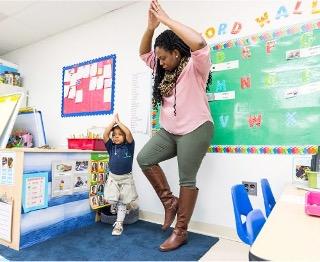
Incorporating mindfulness practices, such as yoga and art, into your daily routine can help to reduce stress and improve overall well-being. The best part is that these practices can involve the children in your care as well. Engaging in activities like these, even for just a short period of time, can make a big difference.
| |
|
Are you new to the early childhood education field? Have you been in the field for a while? Are you working with a different age group than in the past? If you answered yes to any of those questions then we have a course for you! The New Infant Toddler Teacher Orientation (NITTO) provides foundational knowledge and skills that are essential for ALL teachers to understand and a great refresher for experienced teachers and administrators as well.
Here are some quotes from people just like you who have taken NITTO:
| |
|
"This was a great training! I enjoyed the interactive parts; they kept the coursework interesting!"
"Great training, very informative and easy to apply!"
"NITTO is very user-friendly and it gives more in-depth knowledge in childhood development!"
| |
|
NITTO is free with 14 contact credit hours earned upon completion. It is located on DCDEE’s Moodle website. You will need your NCID to register. The course is designed to complete one section per week over the course of 7 weeks, but you may take longer if you need it.
For more information about NITTO contact itorientation@childcareservices.org.
| |
Do you love interacting on social media? Wouldn’t it be great if there was a platform just for early childhood professionals? Well, there is! JOIN TODAY! You can interact with other professionals, ask questions, get and give advice, get access to articles and resources and get inspired by self-care tips. B-3QI has partnered with the Healthy Social Behaviors Project (HSB) on their Mighty Networks platform for Social Emotional Connections. Once you join, you can choose which groups you want to be connected with. B-3QI is helping to facilitate the infant/toddler group and the administrator group. There is even a free app you can get! | |
|
By Hope Buckner, Region 8 Birth-to-Three Specialist
Do you ever hear the phrase "How did you get my child to eat that? They never eat things like that at home!" Child care centers that provide meals/snacks have the opportunity to expose children to new or different foods they might not have at home.
There are many ways to get children interested in new food at home and at school!
- Have a school garden? Include the children to help plant, maintain and pick from the garden.
- Send home some of the freshly grown fruits/veggies from the garden and/or a weekly recipe with families.
- Have your class decorate their own aprons and send them home to help make cooking at home less messy.
According to a NC State Extension Publication, classroom activities based on experiences with growing and cooking fruits and vegetables can help young children learn key developmental skills, including:
- Science skills: classification, weather, insects, soil and plant life cycles
- Math skills: counting, measuring and weighing
- Language skills: describing and comparing color, taste and texture
- Fine motor skills: mixing, spreading and chopping
- Cognitive skills: curiosity, cause-and-effect and problem-solving
Young children are curious and highly motivated to learn new skills like gardening and cooking. With adult encouragement in a safe and supervised environment, growing and cooking abilities can happen quickly.
| |
Self-Care: Connect with Yourself | |
|
Self-Care Activities That Help Boost Mood
By Karen Mintz, Region 6 Birth-to-Three Specialist, and Joy Davidson, Region 1 Birth-to-Three Specialist
It is important to have a workday wellness plan in place to support your physical, mental, emotional and professional well-being throughout the day. We would like to provide you with a document that you can utilize during your workday to maintain your overall well-being. The Workday Wellness Plan consists of two pages.
The first page is a checklist of activities that you are already doing to enhance your mental, emotional, physical and professional well-being. You will also be asked to identify one behavior or change that you would like to focus on during your workday. It is recommended to have a partner or "workday wellness buddy" for support. This buddy will help you stay accountable for your progress and make use of the workday wellness plan alongside you.
On the second page of the Workday Wellness Plan (WWP), you will specify a goal and develop your action plan. This will encompass all the components necessary for your well-being.
| |
|
By Teresa Boykin, Region 12 Birth-to-Three Specialist
Reading tip: Reading with children is one of the easiest and most impactful activities that someone can do with children of all ages. As stated in North Carolina Foundations for Early Learning and Development, (NCFELD) the first goal is to "promote development of the whole child, including physical, emotional-social, language, cognitive development and learning characteristics” is a key factor in building a strong foundational start for learning. Reading and other language-sharing experiences promote all these areas of development. We are the models of example and how we participate and enjoy books will have a reflection on how well the children around us are encouraged to enjoy books as well. So read with your child, read their favorite book (even if that is the request 100 times per day), let them choose the book, and remember that the best way to keep them interested and engaged is to expand on what you see and read, interject questions, actions and movement, change up the ending and see if they notice. There are so many ways to make reading one of the best parts of your day, so have fun and know you are building on the development of the whole child! I have listed a few of my favorite titles to share with children.
We’re Going on a Bear Hunt by Michael Rosen, illustrated by Helen Oxenbury. You find this book in board, paperback, book and tape, I have a pop-up edition. It is appropriate for all ages to love. The story is about going through different experiences outside as the characters follow a path to find a bear. They go through different terrains and weather conditions until they arrive at the bear cave. The book contains great science content, active movement, fun language, and a surprise that will make most kids shine with joy and laughter when read with intentional excitement!
The next two books are titles that can help promote growth in children’s social and emotional development. It is important to intentionally share emotional literacy, language and feelings with children. It helps to guide behavior and promote self-regulation.
I Calm Down, by Cheri J. Meiners, illustrated by Penny Weber. Board book and is part of an early social skills series titled Learning About Me & You. Big emotions are part of natural development, but knowing what they are, how to label them, and how to work through them needs to be included in the everyday practices and experiences that children have with caregivers, parents, and anyone else who spends time with them. This book walks through some of the feelings vocabulary and shares ways that the main character helps to self-regulate when she experiences "Big Feelings and Emotions." Throughout the story the main character shares her feelings and how she helps to calm and comfort herself when experiencing feelings.
Hands Are Not for Hitting by Martine Agassi, illustrated by Marieka Heinlen, is part of a book series titled, "Best Behavior," published by Free Spirit Publishing. There are 13 different titles in the series, from Words Are Not for Hurting, to Waiting Is Not Forever, and many titles in between. I think of them as books that support positive learning behaviors, books that help develop children’s needed skill sets. The most popular one in the series is probably "Teeth Are Not for Biting." Other subjects cover diapers, feet, germs, noses, pacifiers, screen time, pulling tails, voices, waiting and worries. This title is about all of the appropriate and helpful ways that we can use our hands and repeats the main message "Hands are not for hitting, what are hands for?" throughout the book, becoming a catchy reminder to not hit, but by asking the question, leaves it in a more positive tone.
| |
Meet Our Birth-to-Three Anchor Specialists | |
Follow Us on Social Media | | | | |