|
Next Century Cities Tech Tidbits
August 30, 2024
| | |
As the summer months wind down, the Next Century Cities team is working hard to stay abreast of what matters to residents in your communities. In this month's Tech Tidbits Policy Bulletin you will find insights on broadband-related matters from the local and federal perspectives. As you continue your work on the ground, we encourage you to take our member survey so that we can better understand how to serve your community. |
| |
Tech Policy Insights from the NCC Team | |
|
The New GAO Report on the Universal Service Administrative Company
By Ryan Johnston, Senior Policy Counsel, Federal Affairs
The Universal Service Fund (“USF”) has been the topic of much discussion over the course of 2024. From how we can use it to save the Affordable Connectivity Program, to the general need for its reform, has dominated the conversation. On August 22, 2024 the Government Accountability Office (“GAO”) released a report entitled “Administration of Universal Service Program is Consistent with Selected FCC Requirements.” This report, undertaken at the request of Senator Ted Cruz, to determine three things. First, whether USAC’s designation as administrator of the USF complies with federal law? Second, does the FCC’s deemed approved standard for the USF contribution factor comply with best practices? Third, how USAC’s budget and planning processes are approved. Fourth, how USAC and the FCC appoint USAC’s board members. Finally, whether USAC and the Federal Communications Commission (“FCC” or “Commission”) are implementing the Inspector General’s recommendations from the last five years to combat waste fraud and abuse. These requests combined with GAO’s investigation USAC’s adherence to the requirements established in the memorandum of understanding (“MOU”) between the FCC and USAC make up the basis for the publication of the GAO’s report.
The GAO report itself found that as a result of studying materials of USAC’s operational goals from calendar years 2018 to 2023, the FCC and USAC worked collaboratively to create objectives, solicit feedback from the FCC, and once approved, use those goals to set annual targets for measuring staff performance.
Similarly, the GAO found that USAC’s processes for managing its operating budget and expenditures comport with the MOU requirements established by the FCC. Specifically highlighting that the USAC board must oversee the business affairs, and that programmatic committees must review any activity USAC wishes to take. Further, USAC’s compensation policies again require board review. The MOU also requires that USAC seek the FCC’s approval for certain procurements and to provide the FCC an annual procurement assessment. The GAO found that USAC undergoes routine annual audits including financial statements, governance and operation process audits, and information security audits. USAC is also subject to audits by the FCC Inspector General and USAC’s own audit division.
When reviewing USAC’s ethics policies the GAO found that USAC maintains a written ethics policy and alerts the FCC if any changes are made. USAC also requires all board members and employees to acknowledge the ethics policy and complete annual ethics training. USAC is also disallowed from awarding noncompetitive contracts to USAC affiliates or to entities with representation on USAC’s board. USAC also requires both Board members and employees to disclose personal and familial financial interest in entities with which USAC has a relationship. Importantly, this means that Board members and employees must let USAC know if they have a financial interest in USF beneficiaries or recipients.
Ultimately, the FCC has been working to implement 32 recommendations from the GAO and 125 from the FCC’s Office of Inspector General. Since 2017 it has fully addressed 17 and 110 of those recommendations respectively. Additionally and importantly, the GAO did not make any findings that the FCC or USAC that evidence any of the failings that so many attribute to them. This report shows that both USAC and the FCC are working diligently to steward the USF.
| |
The Status of Affordable Broadband in America
By Stacey Baxter, Program Manager
The cost of living is on the rise. From buying groceries to filling up your gas tank, reports suggest that Americans are spending on average, $11,500 more annually on everyday essentials, compared to just three years ago. Thanks to the Affordable Connectivity Program (ACP), starting in 2021, over 22 million Americans received financial assistance to obtain home broadband service and a digital device. Ultimately despite widespread enrollment and an immense positive impact on students, families, and other vulnerable communities, the program ran out of funding in May 2024. Since even before the end of the program, lawmakers put forth legislative bills in both the Senate and the House to try to get additional funding for the ACP and prevent its termination.
Below is a timeline of the efforts made to reinstate the Affordable Connectivity Program and additional resources for understanding broadband affordability across the US.
January 2024
S.3565 - Affordable Connectivity Program Extension Act of 2024
- Introduced into the Senate in January 2024 by Senator Peter Welch (D-VT)
- Extends and provides funding for FY2024
- $7 Billion in funding
- 32 cosponsors
- Referred to Committee on Appropriations on January 10, 2024
- No since action taken as of 08/29/2024
- Related Bills
-
H.R. 6929 - Affordable Connectivity Program Extension Act of 2024 *identical*
April 2024
Amendment to S.4207 - Spectrum + National Security Act of 2024
- Introduced into the Senate in April 2024 by Senator Maria Cantwell (D-WA)
- $7 Billion in funding by using proceeds from commercial auctions
- 1 cosponsor - Senator Ben Ray Lujan (D-NM)
- Referred to the Committee on Commerce, Science, and Transportation
- No since action taken as of 08/29/2024
- Related Bills
- H.R.1784 - Next Generation 9-1-1 Act of 2023
S.4208 - Promoting Affordable Connectivity Act of 2024
- Introduced into the Senate in April 2024 by Senator John Fetterman (D-PA)
- Permanent funding for the ACP by moving the program away from appropriations and under the Universal Service Fund, which is funded through Internet Service Providers
- Referred to the Committee on Commerce, Science, and Transportation
- No since action taken as of 08/29/2024
May 2024
Amendment to the H.R.3935 - Federal Aviation Administration Reauthorization Act of 2023
- Introduced into the Senate in May 2024 by Senator Ben Ray Lujan (D-NM)
- $6 Billion for the Affordable Connectivity Program
- Modernized eligibility and verification to the program
- 16 bipartisan supporters
H.R.8466 - Affordable Connectivity Program Improvement and Extension Act of 2024
- Introduced into the House in May 2024 by Representative Brandon Williams (R-NY)
- $6 Billion to fund ACP through FY2024
- Referred to the Committee on Energy and Commerce; Committees on Financial Services; Transportation and Infrastructure; Science, Space, and Technology; Natural Resources; Oversight and Accountability; Foreign Affairs; Judiciary
- Referred to Subcommittee on Economic Development, Public Buildings, and Emergency Management
- Referred to the Subcommittee on Communications and Technology
- 15 Cosponsors
S.4317 - Secure and Affordable Broadband Extension Act
- Introduced into the Senate in May 2024 by Senator Ben Ray Lujan (D-NM)
- $6 Billion
- Referred to the Committee on Commerce, Science, and Transportation
- 15 cosponsors
Research + Resources
| |
Broadband Update for Your Territory or State
By Corian Zacher, Senior Policy Counsel, State and Local Affairs
State Grant Updates
Louisiana | Louisiana is now accepting grants for their BEAD program. Round one is set to close on August 29th and round two will open later.
Oregon | Business Oregon launched their BEAD subgrantee selection portal, which allows interested applicants to prepare for the prequalification process.
Virginia | After a back and forth between the state and NTIA, Virginia set a price cap for low-cost plans at $75.
West Virginia | West Virginia Opened its BEAD Grant Application Window. The state will accept applications for 60 days.
36/56 Initial Proposals Fully Approved
-
Guam (Aug. 23, 2024)
-
New York (August 13, 2024)
-
Wyoming (August 8, 2024)
-
Wisconsin (August 6, 2024)
-
Arizona (August 5, 2024)
-
Missouri and Tennessee (August 2, 2024)
-
Montana, Oklahoma, and Vermont (August 1, 2024)
-
New Mexico and Virginia (July 26, 2024)
-
Massachusetts (July 25, 2024)
-
Utah, Commonwealth of Northern Mariana Islands, and the U.S. Virgin Islands (July 22, 2024)
-
Connecticut (July 18, 2024)
-
Rhode Island (July 17, 2024)
-
Hawaii (July 16, 2024)
-
Maryland (July 10, 2024)
-
Indiana (July 8, 2024)
-
Kentucky and Maine (June 17, 2024)
-
Illinois, Oregon, and Puerto Rico (June 13, 2024)
-
Colorado and New Hampshire (June 11, 2024)
-
Pennsylvania (May 14, 2024)
-
District of Columbia, Delaware and Washington (May 9, 2024)
-
Kansas, Nevada, and West Virginia (April 25, 2024)
-
Louisiana (December 15, 2023)
Active and Upcoming Challenge Processes
Alabama | Alabama BEAD Challenge Portal (closes 08/31/2024)
Florida | ConnectedFlorida BEAD Program Challenge Process (closes 09/05/2024)
Hawaii | Hawaiʻi BEAD Program Challenge Process (closes 09/18/2024)
Maryland | Maryland BEAD Challenge Process (closes 09/08/2024)
Mississippi | Mississippi BEAD Challenge Process (closes 09/02/2024)
|
| |
NCC Members Are in the News | |
|
|
California Forges Ahead on Nation's Largest Open-Access, Middle-Mile Broadband Network
The Newsom Administration, local officials, and Arcadian Infracom announced the groundbreaking of a crucial segment of California’s Middle-Mile Broadband Network. The Capitol Route groundbreaking in Natomas celebrates California’s work in building the nation’s largest open-access, Middle-Mile Broadband Network.
Continue reading here.
| | | |
|
|
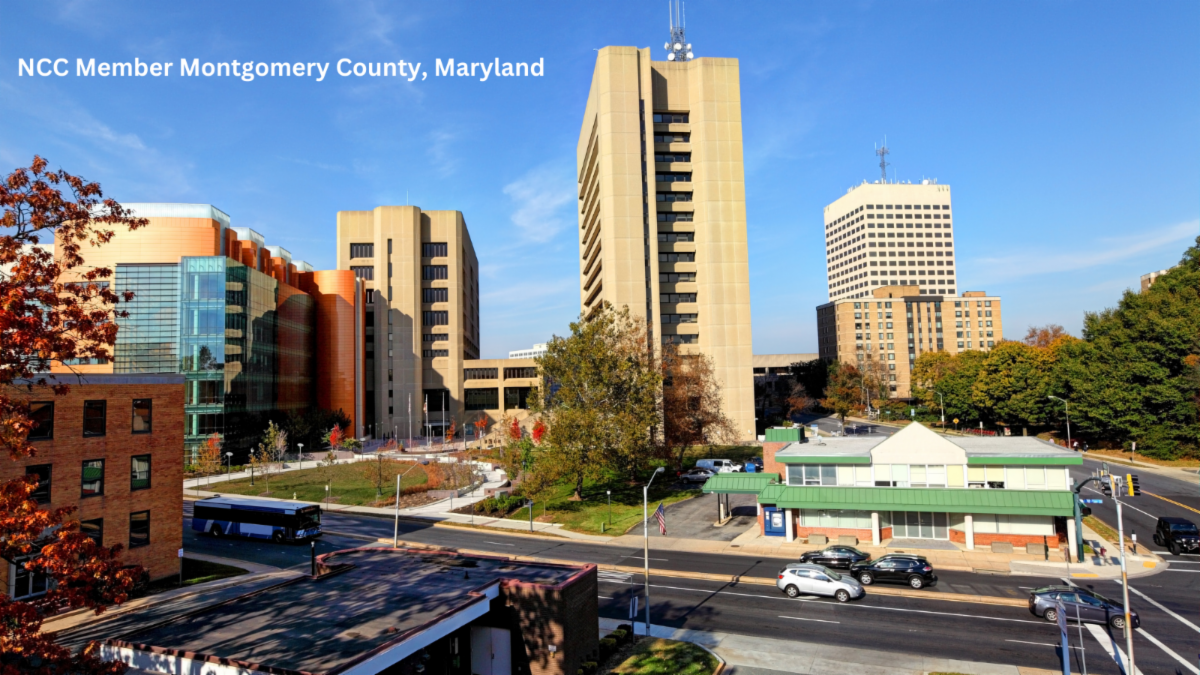
Montgomery County, Maryland Asks Residents Without Access to 100/20 Mbps Internet Service to Submit Internet Speed Tests
Properties without 25/3 Mbps internet service (“unserved”), or properties where the level of broadband service is not at least 100/20 Mbps, are eligible to receive grant funding to bring 100/100 Mbps to the property. Montgomery County is now asking residents who are receiving slower service to notify it before Thursday, September 5, 2024, so it can file any challenges to the eligibility maps as part of the Federal grant process.
Read more here.
| | | | |
Opportunities for Members | |
The applications for the 2024 NTIA Digital Equity Competitive Grant Program are open. Applications must be received by September 23, 2024 at 11:59 p.m. ET. | |
The Department seeks an individual to lead the state's digital equity plan. Applications due September 1, 2024. | |
Support Us
Everything Helps!
| | |
Be Sure to Follow & Share | | | | |