Volume 32, No. 1: Focus on Skills
|
|
|
|
Welcome to Vol. 32, No. 1, of Connections, the newsletter of the National Career Pathways Network.
|
|
|
|
Call for Proposals / Registration Open |
|
|
|
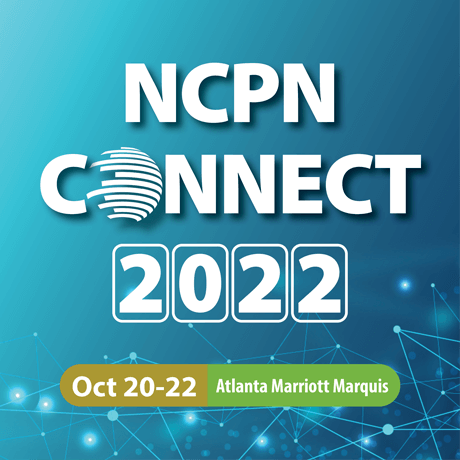
NCPN CONNECT 2022 will be held Thursday–Saturday, October 20–22, at the beautiful Atlanta Marriott Marquis! Don't miss this outstanding professional development opportunity for adult, secondary, and postsecondary educators; workforce development professionals; and employers.
Interested in presenting? Conference strands include Career Counseling, Development, and Advising; Teaching and Learning; Designing/Delivering Programs; Establishing/Growing Partnerships; and Workforce Development.
|
|
|
|
NCPN Webinar: The Counselor’s Role in Career Pathways
March 10, 10:00 a.m. CST
|
|
|
|
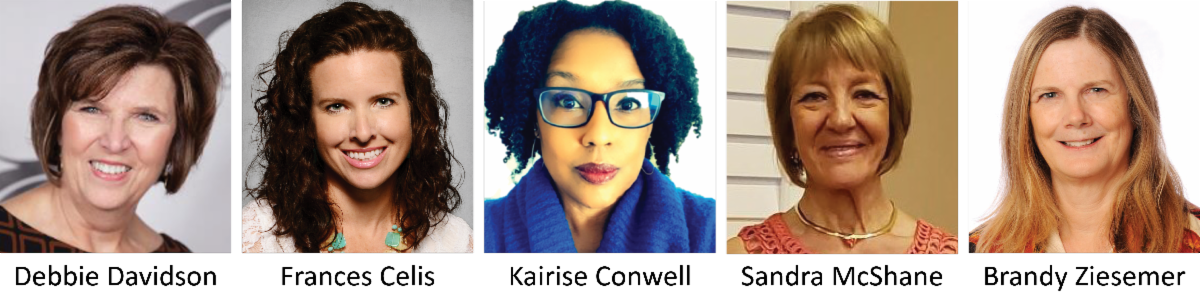
The role of the high school counselor/career navigator/college counselor has changed as schools and institutions have adopted career pathways. Panelists from secondary and postsecondary perspectives will describe their changing roles and responsibilities in this environment, including collaborating with workforce faculty and how it benefits their students and other stakeholders. Moderator: Debbie Davidson, CORD Technical Assistance Director. Panelists: Frances Celis, Director, College and Career Readiness, Lake County Schools, FL; Kairise Conwell, Career Advisor, Lake-Sumter State College, Leesburg, FL; Sandra McShane, Assistant Director Workforce Programs, Lake-Sumter State College, Leesburg, FL; Brandy Ziesemer, Program Manager/Professor, Health Services Management, Lake-Sumter State College, Leesburg, FL
|
|
|
|
Preparing for Emerging Skills
Mike Lesiecki, Senior Consultant, CORD
|
|
|
|
The skills landscape is always evolving and changes quickly. How does, how can, an educator keep pace? The workplace of the future will require technicians who are able to navigate complex workplace environments in which existing jobs are constantly evolving and new jobs are being created. This article focuses on emerging technical skills associated with Industry 4.0. What is Industry 4.0? The term Industry 4.0 carries the promise of a new industrial revolution—one that marries advanced manufacturing techniques with the Internet of Things to create manufacturing systems that are not only interconnected but communicate, analyze, and use information to drive further intelligent action back in the physical world (Deloitte).
|
|
|
|
Making the Case for a Cross-Disciplinary STEM Core
Hope Cotner, President and CEO, CORD; Co-PI, Preparing Technicians for the Future of Work
|
|
|
|
The nature of work is evolving right before our eyes. Technology advancements are transforming existing industries and creating new ones at an unprecedented pace. The World Economic Forum predicts significant disruption in the jobs landscape over the next four years. As many as 85 million current job roles may be displaced while more than 97 million new roles could emerge. Many of those roles will be enhanced by technologies that can collaborate with humans to enrich lives and workplaces in what the National Science Foundation (NSF) describes as the “future of work at the human-technology frontier.” Our challenge as educators is ensuring future technicians acquire the expanding skill sets necessary for success in a rapidly changing environment. |
|
|
|
The Adult Learning Center of Osceola: Going Beyond Business As Usual |
|
|
|
Jeff Arnott, Executive Director of Post-Secondary and Secondary CTE, School District of Osceola County
For years in adult education, we have asked how we can better serve our students transitioning into the workforce. This has become so true in Florida recently. Historically, for the most part, we have concentrated on completions and test gains. Today Florida is asking us to do more and disrupt business as usual. The Adult Learning Center of Osceola, also known as ALCO, located in Kissimmee, Florida, has found some solutions.
|
|
|
|
Focus on Skills at NCPN CONNECT 2021
Highlights from the November 2021 conference
|
|
|
|
Presenters at NCPN CONNECT 2021, the organization’s second annual virtual conference, provided attendees with lots of valuable information on skills.
Connections readers are invited to help themselves to this valuable resource at ncpn.info/ncpn2021-on-demand/, which provides links to videos of the live sessions, along with their accompanying slide decks, and materials pertaining to prerecorded sessions.
A few highlights …
|
|
|
|
A Framework for a Cross-Disciplinary STEM Core
Preparing Technicians for the Future of Work
|
|
|
|
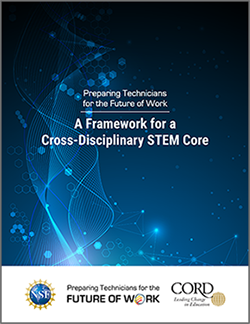
Produced by the NSF ATE project Preparing Technicians for the Future of Work, the Framework for a Cross-Disciplinary STEM Core consists of recommendations for incorporating knowledge and skills in Advanced Digital Literacy, Data Knowledge and Analysis, and Business Knowledge and Processes into associate degree technician preparation programs. Topics within these areas have been prioritized by educators and industry as essential to work of the future, across industry sectors. The Framework is suitable for implementation, with regional customization, by any community college technical program. (See also the article by Hope Cotner shown above.)
|
|
|
Technology and Digital Literacy Education Trends
CompTIA, December 2021
|
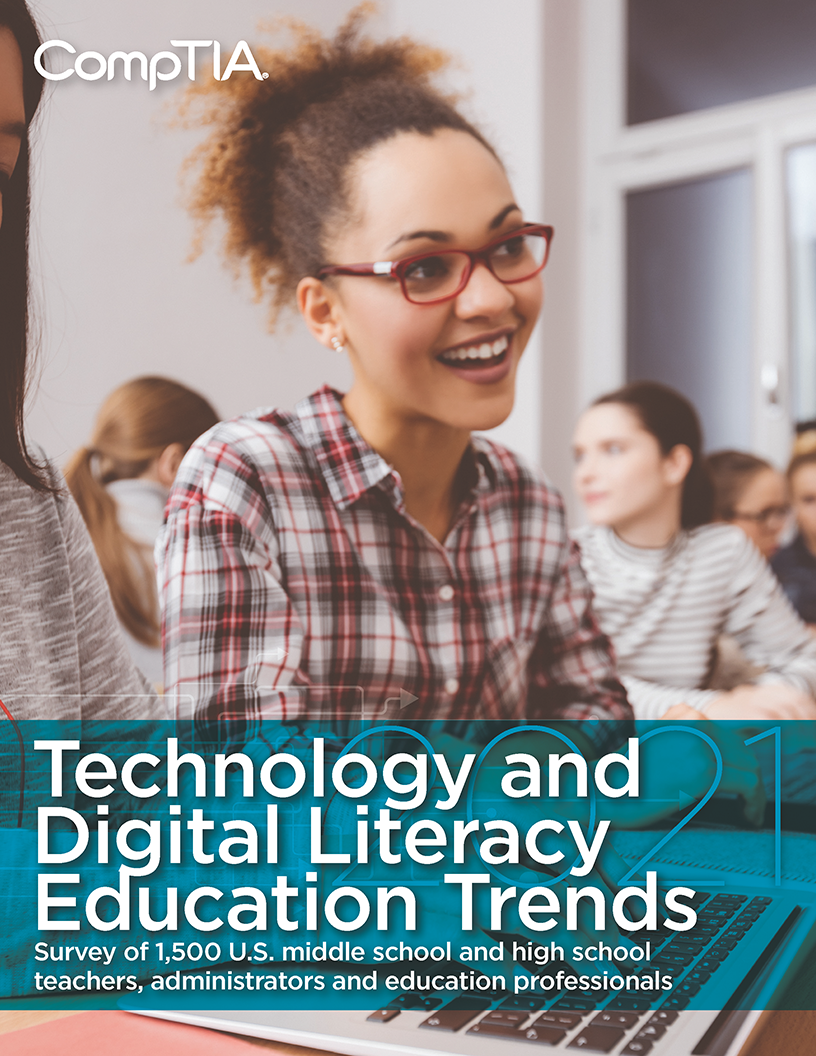
"CompTIA’s Technology and Digital Literacy Education Trends summarizes the key findings of a national survey of 1,500 U.S. middle school and high school teachers, administrators, and education professionals. The research confirms the growing importance of preparing young people for an ever-changing digital future. While there are positive signs of schools on the right path, the data does reveal areas for improvement in the positioning and delivery of technology and digital literacy education. . . . Approximately two-thirds of teachers, administrators, and education professionals believe their school’s technology and digital literacy program generally meets expectations, with the remaining indicating it does not meet expectations. However, the data does reveal several disconnects whereby expectations may need to be reset to better align with best-in-class approaches to technology and digital literacy education." (comptia.org)
|
|
|
Bill Pink, President, Grand Rapids Community College, workshift.opencampusmedia.org," Jan 5, 2022. "Let’s begin with a movie you have likely seen, Apollo 13. One scene in the movie takes place in the flight control room. The Apollo 13 mission is in a precarious situation. The crippled spacecraft, complete with possible damage to the heat shield and re-entry parachutes, is preparing for the time period where it will be in total blackout from mission control. Two NASA leaders are standing near Lead Flight Director Gene Kranz, played by Ed Harris. He overhears them discussing the low probability of a successful landing. One says the mission will be the worst disaster that NASA has ever experienced, to which Kranz replies, 'With all due respect, sir, I believe this is going to be our finest hour.'"
|
|
|
|
Stephen Ezell, IndustryWeek, Jan 21, 2022. "The global economy is becoming increasingly digitalized, with analysts at research firm IDC estimating 60% of global GDP will be digitalized (meaning largely impacted by the introduction of digital tools) by year-end 2022. But this growing digitalization means that if economies are to remain competitive and productive, they’ll need workforces broadly equipped with the requisite digital skills to power this transformation. Unfortunately, as the Information Technology and Innovation Foundation (ITIF) writes in its report, Assessing the State of Digital Skills in the U.S. Economy, domestic and international digital skill assessments show America increasingly faltering and lagging global competitors."
|
|
|
|
Jacques Buffett, Zety.com, Feb 9, 2022. "We surveyed over 200 recruiters and hiring managers to find out what skills employers and companies look for in 2022. Here's a list of the most in-demand skills on the market."
|
|
|
|
©2022 CORD. Connections is published by the National Career Pathways Network (ncpn.info), an organization of CORD (cord.org). NCPN assists educators, employers, and other stakeholders in planning, implementing, evaluating, and improving workforce education programs. Questions? Mark Whitney, mwhitney@cord.org
|
|
|
|
|
|