|
By Susan Wright, MA, NCSF Spokesperson
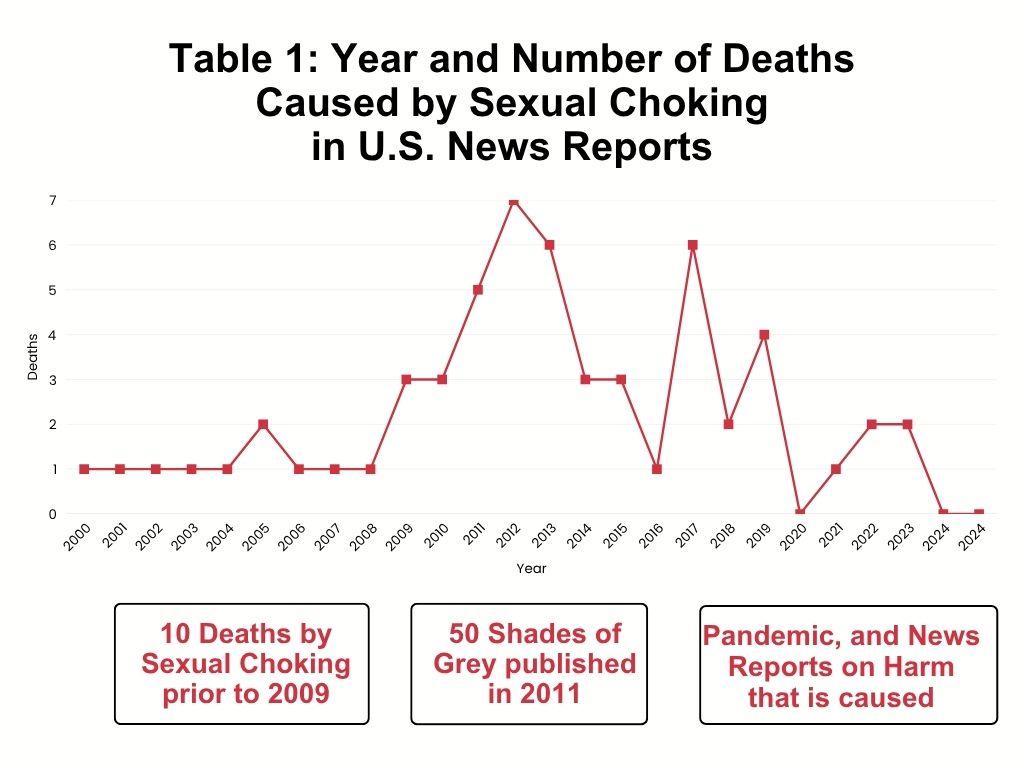
The popularity of sexual choking has grown rapidly in the past several years among adults under the age of 40. In 2021, a campus-representative survey of over 4,200 University students found that most of the choking participants (88.9%) understand that people can die from being choked during sex, yet 37.5% said choking was safe and half (49.6%) reported that they knew how to engage in choking safely (Herbenick, 2024).
Pop culture articles promote this mistaken belief that there is a “safe way” to choke: of 71 articles published between 2007 and 2024 about sexual choking, 17 offered “how-to” advice on how to choke someone “safely.” Nearly one third (n=23) did not state that death is a potential risk from all forms of being choked, with 9 simply mentioning that choking is “risky,” could cause “brain damage,” or it’s impossible to choke someone “safely.”
Recent research has confirmed that cutting off the blood from the brain can potentially cause physical harm, such as brain damage or cardiac arrest (Dunn et al., 2023). Being choked can also cause harm to people’s mental health, including causing them to feel depressed, sad, lonely, and may cause anxiety (Herbenick et al., 2022). Repeated choking seems to compound these harms, increasing the risk of impairing your working memory for verbal and visual tasks (Hou et al., 2023a, 2023b; Huibregtse et al., 2022, 2025)...
|