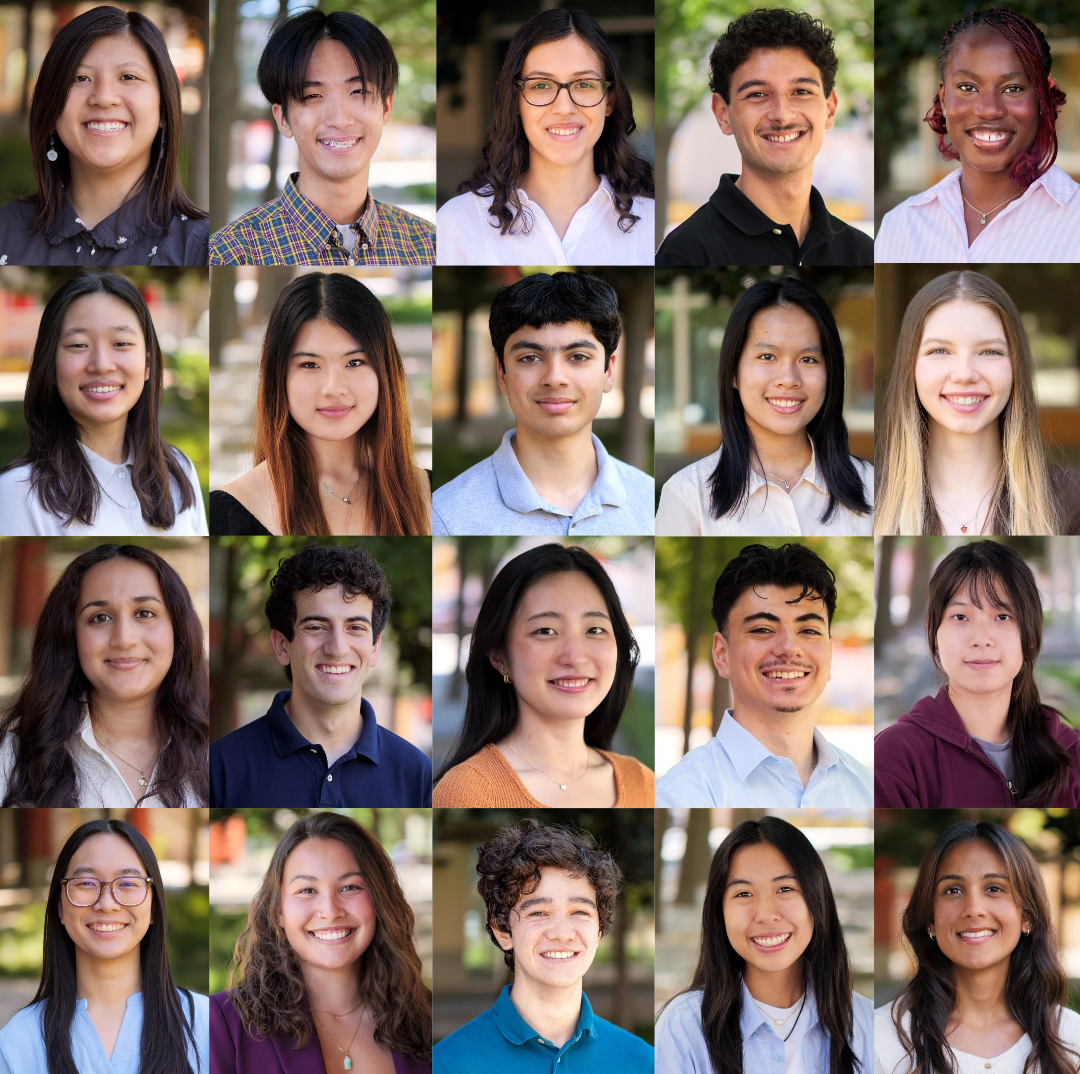
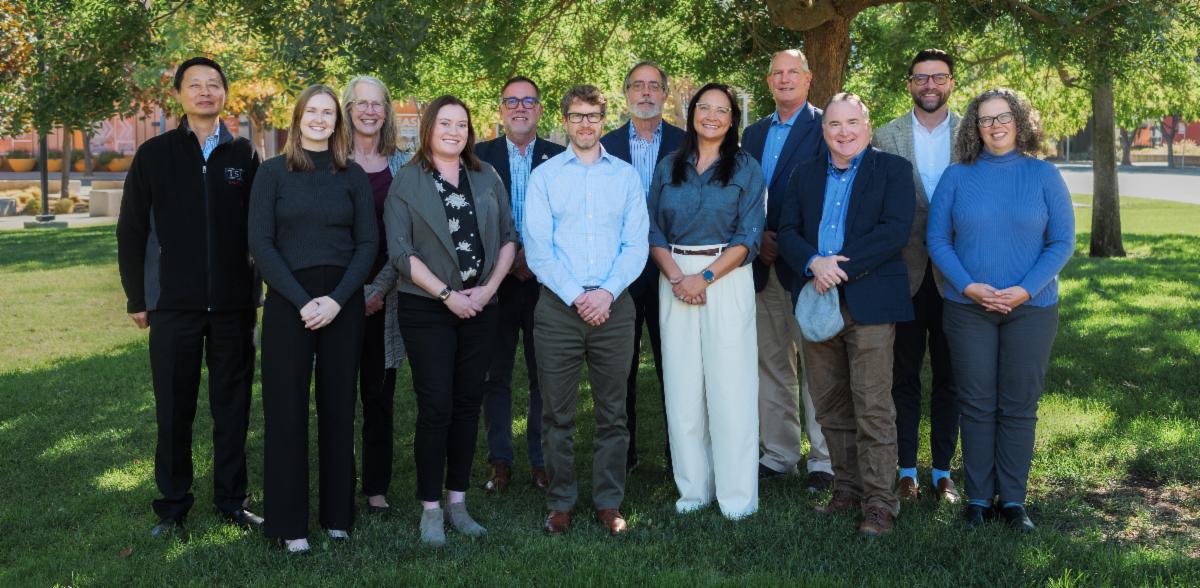
Congratulations to our Summer Undergraduate Research Fellows! | | Congratulations to the twenty Summer Undergraduate Research Fellowship (SURF) fellows who completed their nine-week internships! The UC Davis and Sacramento Community College fellows participated in research with ITS-Davis academic and research faculty, professional researchers, and graduate students over the summer quarter. This year, fellows toured the California State Railroad Museum and Siemens Mobility facility in Sacramento, CA. Several fellows are continuing their research efforts with their mentors this fall. | | (From left to right: Tiffany Tran, Minh Nguyen, Sabrina Wendland, Jack Buschur, Obehi Benito-Oserogho, Kaitlyn Hahn, Jenny (Jiaqi) Zhao, Rohan Chintalapati, Hang Trinh, Bridget O'Neil, Devanshi Agnihotri, Alessandro Selmoni, Aya Higashi, Benjamin Martinez, Joy (Chenxuan) Zhang, Chloe San, Alyssa Goldfield, Adrian Luo, Gabriela Sevilla, Ania Shah) | |
Student Spotlight:
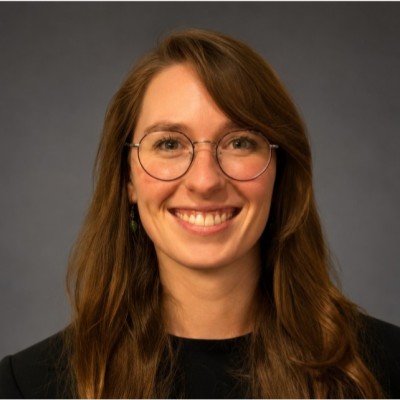
Adair Garrett
| | |
Meet Adair Garrett, a Ph.D. candidate in Transportation Systems Engineering at the Georgia Institute of Technology!
Adair's research focuses on transportation asset management, with an emphasis on rail and transit infrastructure resilience and adaptation. In her Ph.D. research, Adair develops and applies metrics to measure system resilience, analyzes international examples of successful rail system adaptations, and prepares open-access tools for those interested in rail infrastructure asset management.
In addition to her research, Adair enjoys instructing engineering and asset management courses. She is currently teaching a graduate transportation course at Georgia Tech that includes a rail and transit infrastructure asset management module developed through NCST research.
Adair’s work has been recognized through numerous awards and fellowships, including the NCST Outstanding Student of the Year Award (2025), the USDOT Dwight D. Eisenhower Transportation Fellowship Program, the Georgia Institute of Transportation Engineers Scholarship, the WTS Helene M. Overly Memorial Scholarship, and Georgia Engineering Foundation Scholarships. She has also received two NCST dissertation grants to support her research on transportation resilience.
Looking ahead, Adair hopes to leverage her research, teaching, and service to support the development of reliable and adaptive transportation systems.
Congratulations on your achievements, Adair!
| | |
2027 Pacific Southwest Region (PSR) Annual Congress
March 14-16, 2027 | Northern Arizona University, Flagstaff, AZ
| |
Organized by the METRANS Transportation Consortium and the PSR UTC, the PSR Annual Congress brings together students, faculty, researchers, and practitioners to share transportation research and learn about work across the region through presentations, poster sessions, and panel discussions. The PSR UTC supports research, education, workforce development, and technology transfer to strengthen transportation system resilience and the mobility of people and goods.
The call for abstracts is open and there is no registration fee.
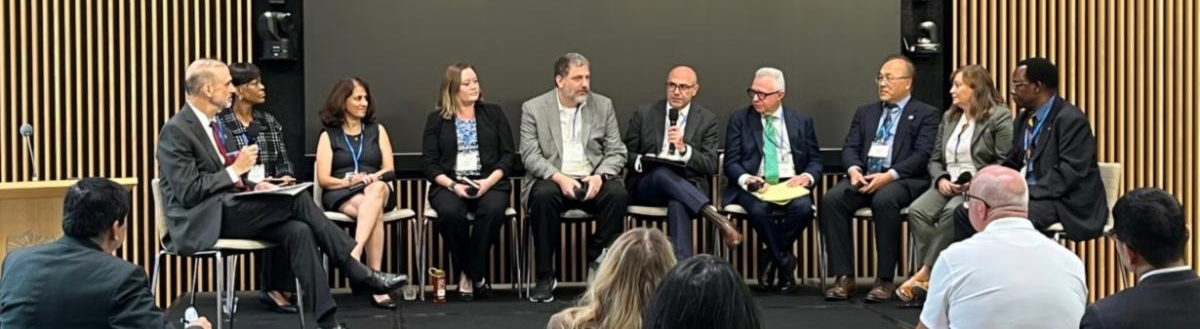
| | University Transportation Centers Meet with USDOT Leadership in Washington, D.C. | | UTC directors and staff participating in a panel discussion at the 2026 National Mobility Summit | | |
On September 14, the 2026 National Mobility Summit brought together leaders from USDOT, state and local government agencies, congressional offices, industry partners, and federally funded University Transportation Centers (UTCs) to advance shared goals: strengthening the mobility of people and goods as a foundation for economic competitiveness, supply chain resilience, and quality of life.
The Summit was organized by the National Center for Understanding Future Travel Behavior and Demand, together with the NCST and eight Regional and Tier-1 UTCs. Rather than serving only as a research showcase, it was designed as a coordinated national platform for advancing mobility system performance.
| | The NCST Convenes its Leadership Council in Davis, CA | | Members of the NCST's Executive Committee and Leadership Council | | |
The NCST's Leadership Council is an influential group of leaders from government agencies, non-governmental organizations, and professional associations across the country. The Council's feedback helps guide, frame, and champion NCST research.
The NCST convenes the Leadership Council each year to provide opportunities for feedback, collaboration, and networking. These meetings enable the NCST's Executive Committee to learn about the most pressing transportation research and policy needs from a broad set of stakeholders. This year, the Leadership Council convening took place on October 26th in Davis, CA.
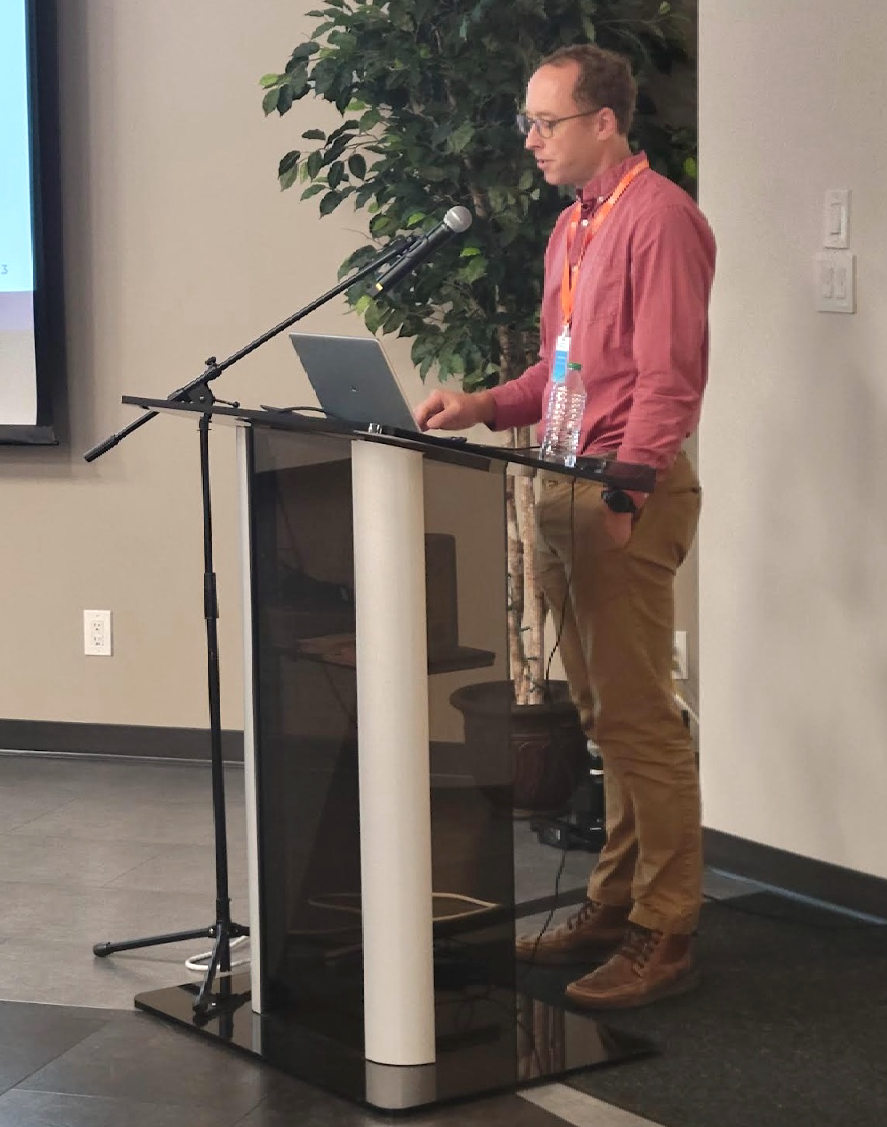
| NCST Researchers Presented at the International Cycling Safety Conference in Knoxville, TN | | Dr. Dillon Fitch-Polse (UC Davis) presenting at the International Cycling Safety Conference | | In November 2026, NCST leadership and researchers Drs. Susan Handy, Kari Watkins, and Dillon Fitch-Polse attended the 14th Annual International Cycling Safety Conference in Knoxville, TN. It was only the second time the conference had been held in the United States; the first was in Davis, CA in 2017. NCST was an aluminum-level conference sponsor, reflecting its commitment to safer streets and connection to the conference’s primary sponsor, the Center for Pedestrian and Bicyclist Safety. The NCST team presented research on using commercial multi-object computer vision tracking systems to detect near misses and evaluate counts and speeds. They also moderated sessions on youth and child cycling safety and safety work in the Global South, which are topics of particular interest to these researchers. | | In-Progress Research Highlights | | |
Implementing an Advanced Open-Source Activity-Based Travel Demand Model to Support Rural Transportation Planning and Policy Decisions
Greg Rowangould | University of Vermont
| | Activity-based travel demand models (ABMs) offer substantial improvements over the aggregate, trip-based travel demand models (TDMs) used by most regional and state transportation agencies to support transportation planning and policy decisions. ABMs allow for integration with a wide range of other models, such as those for simulating changes in land use, vehicle adoption, and population levels, which allows agencies to evaluate policy and planning scenarios that are difficult to assess with conventional TDMs. Despite their advantages, the complexity of ABMs has constrained their adoption to all but the largest metropolitan areas, often with support from academic researchers. This project will implement a statewide ABM in Vermont and perform a case study to demonstrate the unique capabilities of ABMs to inform transportation decision-making. The first phase of this project, model setup and testing, has been completed. The second phase, calibration and validation of the model, is now underway and should be completed in late 2027. This work will be the first implementation of a full ABM at a statewide level and its first implementation in a rural context. | Learn more about this project: | |
|
New Travel Insights from Cell Phone GPS Data
John Krumm and Cyrus Shahabi | University of Southern California
| | Building and operating an effective transportation system requires deep insight into how people travel, including infrequent long-term trips, route choices, and how different groups use their transit options. Currently available transportation data analytics packages omit travel insights that are important for transportation research and planning efficient transit, such as long-term patterns of life, route selection, and demographically stratified travel behavior. This project is building an open-source software application programming interface (API) that will deliver these important travel insights from cell phone GPS data. Unlike commercially available packages, the API will be transparent and flexible. Once developed, the project will demonstrate the API on three mobility insights that are not possible with commercial packages. The project is currently wrapping up initial research for the API functions and is beginning to encapsulate them into a coherent API. The project is planned to wrap up in early summer 2027. | | |
Sensor-informed Generative Digital Twin: High-fidelity Simulation for Sustainable Transportation and Policy Validation
Hang Qiu, Eunjeong Hyeon, Guoyuan Wu, and Ioannis Karamouzas | University of California, Riverside
| | Understanding the behaviors of vehicles and other traffic participants at busy urban intersections is critical for transportation planning and policymaking. Unfortunately, such understanding often comes only after a large investment in implementation and deployment, and many complex interactions occur too infrequently to be captured through post-deployment monitoring. This project will develop a sensor-informed generative digital twin that integrates real-world data from the Riverside Innovation Corridor’s sensor network. By continuously integrating real-time sensory inputs, the platform can be used to simulate rare and challenging transportation scenarios and dynamics, serving as a decision-support tool for transportation planning, policy evaluation, and infrastructure design. The project has developed two tools so far: SplatAnywhere, a tool for building 3D street-scene models from publicly available Google Street View panoramas without dedicated site capture, and LegoCarla, a distributed simulation framework that decouples and distributes computing tasks across machines to accelerate multi-agent simulation. The team will continue to test and refine these tools, and develop the digital twin platform. The project is planned to wrap up in early summer 2027. | | The National Center for Sustainable Transportation is a consortium of leading universities committed to advancing a sustainable transportation system through cutting-edge research, direct policy engagement, and education of our future leaders. Consortium members: University of California, Davis; California State University, Long Beach; Georgia Institute of Technology; Texas Southern University; University of California, Riverside; University of Southern California; and University of Vermont. | | | | |