Winter & Spring 2025 Newsletter | | 11th Annual NCST Capitol Hill Research Briefing | | On January 8th, the NCST hosted its 11th Annual Capitol Hill Research Briefing in the Rayburn House Office Building in Washington, DC. UC Davis and University of Vermont researchers presented to more than 60 congressional staffers, academics from international universities and across the US, and representatives from the private sector. The NCST also coordinated meetings with seven congressional offices to share research highlights from the past year and hear about the transportation policy priorities of congressional members. | | Congratulations to our 2024 Dissertation Grant and Fellowship Awardees! | | |
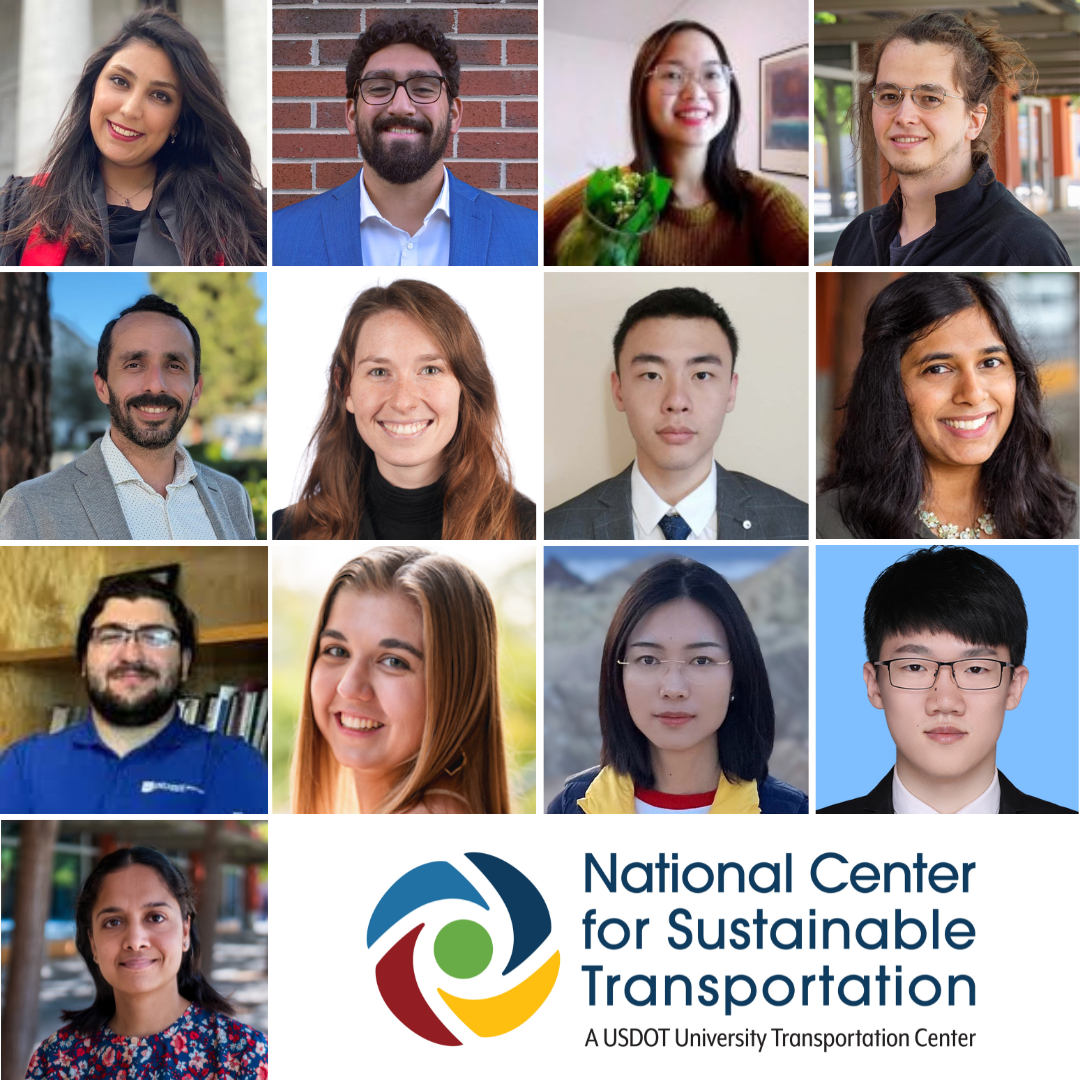
Our Georgia Tech, UC Davis, and UC Riverside awardees are conducting research on transportation cybersecurity, environmental resilience, road safety, and more.
| | Pop Quiz #1! On the five-tier Safe Systems Pyramid, are lower tiers more or less effective at improving public health? | |
Student Spotlight:
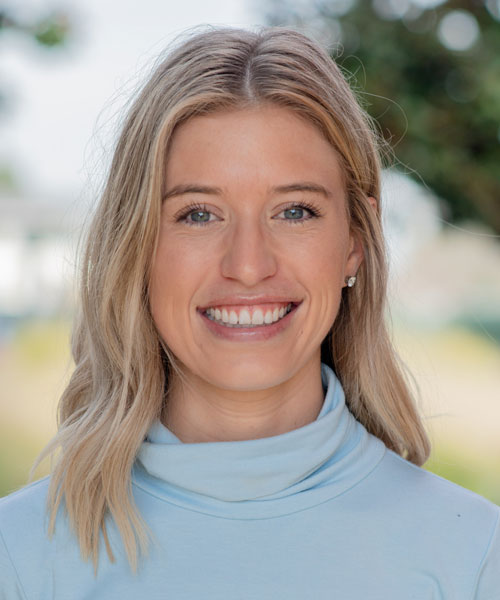
Sarah Dennis
| | |
Meet Sarah Dennis, a recent Civil Engineering Ph.D. recipient from the University of California, Davis and NCST’s 2024 Outstanding Student of the Year!
In her recent research, Sarah developed models to quantify the public health impacts of trucks at the vehicle, regional, and state levels. As a culminating model, her dissertation is a first-of-its-kind mobile source reduced complexity air quality model. This model can quantify community-level morbidity and mortality outcomes of different transportation projects impacting vehicle miles traveled from passenger cars and heavy-duty trucks.
In 2021, Sarah was awarded Best Teaching Assistant for the UC Davis Department of Civil and Environmental Engineering. Sarah is currently working as a postdoctoral researcher in the Urban Freight Lab at the University of Washington.
Congratulations on your achievements, Sarah!
| | |
Save the date: May 28th at 10:00 AM PDT
Webinar: Truck Fleet Management Under Limited and Uncertain Charging Infrastructure Availability
Petros Ioannou | A.V. 'Bal' Balakrishnan Chair and Professor of Electrical and Computer Engineering, University of Southern California
Kanok Boriboonsomsin | Research Engineer and Associate Director, College of Engineering – Center for Environmental Research and Technology, UC Riverside
| | |
Webinar: Using High Performance Computing to Understand Extreme Weather Impacts on Transit Riders
Dr. Huiying "Fizzy" Fan | Research Engineer at Georgia Institute of Technology
| | Dr. Fizzy Fan’s research investigates the relationship between differing physical needs, weather conditions, and travel behavior, offering valuable insights to help planners address the adverse effects of extreme weather and improve mobility for all. In this webinar, Dr. Fan presented findings from her innovative modeling techniques and the application of high-performance computing to assess the impacts of extreme weather on communities. | | The California Concrete Pavement Conference | | This NCST-sponsored event was California's first conference on the design and construction of sustainable long-life concrete pavement. The conference featured industry professionals, researchers, policymakers, and industry stakeholders. Over the event’s two days, speakers shared innovations in and best practices for durable and sustainable concrete pavements. In addition, the conference included the 2024 Southwest Concrete Pavement Association Concrete Paving Award ceremony and guided tours of the Sustainable Concrete Lab2Slab Initiative at the University of California Pavement Research Center led by UC Davis’ Dr. John Harvey and Dr. Somayeh Nassiri. | |
Pop Quiz #2! Which of the following did NCST researchers find in their investigation of last-mile, e-commerce distribution strategies?
| | a. Crowdsourcing last-mile delivery can be cost-effective | | b. Collection-point pickups can resist demand uncertainty | | c. Drones perform better than terrestrial delivery robots in last-mile operations | | | Recently Completed Research | | |
Improving Public Safety Through Spatial Synthesis, Mapping, Modeling, and Performance Analysis of Emergency Evacuation Routes in California Localities
Dr. Miguel Jaller, Dr. James H. Thorne, Dr. Daniel Rivera-Royero, Jason Whitney, Alexander Kenichi Hu, & Ayush Saha | University of California, Davis
| | |
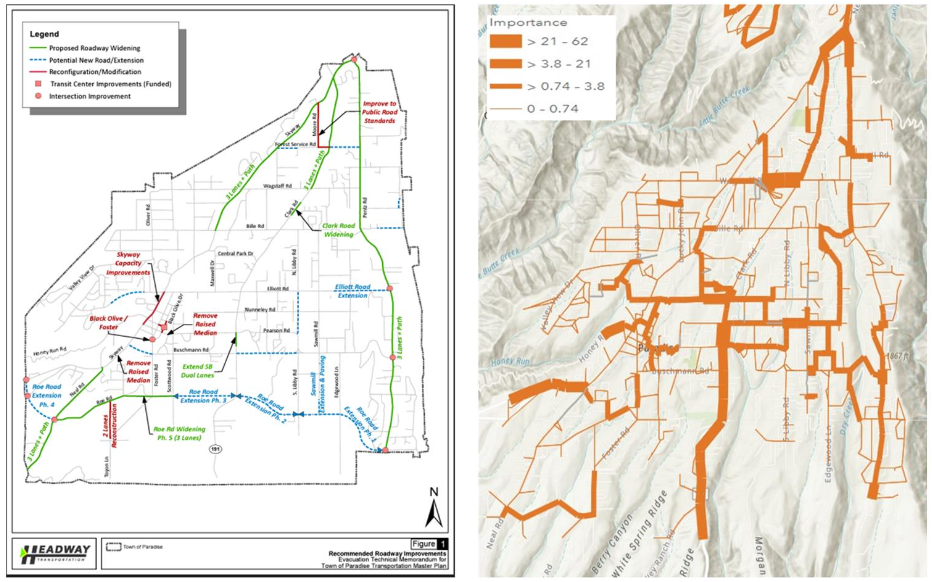
Wildfires present a major public safety concern. Evacuation is one disaster management strategy that can become complex when wildfire information is only available on short notice, especially given the population density of wildland-urban interface areas. This project analyzed public safety, specifically during evacuation events, through mapping, modeling, and analyzing the performance of the road network that supports emergency evacuation processes, and the expected evacuation performance. This analysis helps assess evacuation routes and their impact on the population’s evacuation ability, and can inform infrastructure investment priorities.
| |
|
Exploring the Induced Travel Effects from Minor Arterials, Auxiliary Lanes, and Interchanges
Dr. Jamey Volker, Dr. Keuntae Kim, & Kevin Hernandez Rios | University of California, Davis
| | |
While induced travel research has focused on major roadways, previous literature reviews have found limited empirical evidence as to the relative magnitude of the induced travel effect of expanding minor arterials, collector streets, and local roads. This project conducted a systematic literature review on the induced travel effects of minor arterials, auxiliary lanes, and interchanges (including simple on/off ramps), finding that the empirical literature remains limited with respect to auxiliary lanes and interchanges. Going forward, the report suggests avenues for future research to help close these research gaps.
| | |
Synthetic Fleet Generation and Vehicle Assignment to Synthetic Households for Regional and Sub-regional Sustainability Analysis
Hongyu Lu, Dr. Michael O. Rodgers, & Dr. Randall Guensler | Georgia Institute of Technology
| | |
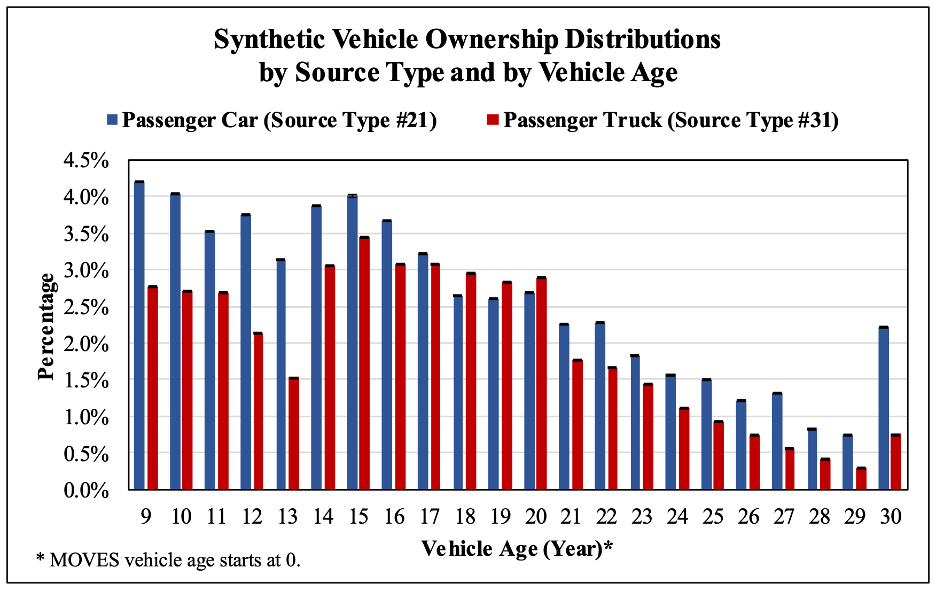
Current vehicle pollutant models often depend on travel demand model outputs because large-scale on-road activity and household trip data are difficult to collect. However, existing travel demand models do not integrate detailed vehicle fleet specifications. This means that the models do not account for fleet composition differences by time of day, among other things. This research develope a modeling framework to generate synthetic vehicle fleets, for use with synthetic household modeling, by integrating travel demand model outputs, licensed household marketing demographics data, and vehicle registration data.
| | |
The Safe Systems Pyramid
UC Davis researchers describe a new framework for prioritizing transportation safety policies, called the Safe Systems Pyramid, improving upon traditional frameworks that neglect public health principles.
| | |
NCST Leadership Council member Emily Warren appointed Deputy Secretary for Innovative Mobility Solutions at the California State Transportation Agency
On March 19, 2025, Governor Newsom announced the appointment of Emily Warren as Deputy Secretary for Innovative Mobility Solutions at the California State Transportation Agency. Warren is currently a member of the NCST Leadership Council and the UCLA Institute of Transportation Studies Advisory Board. Throughout her career, Warren has held high ranking positions in the private and public sector, including at Fontinalis Partners LLC, Evercharge, Embark Trucks, Lyft, and the University of Pennsylvania. Congratulations to Emily on her well deserved appointment!
| | The National Center for Sustainable Transportation is a consortium of leading universities committed to advancing an environmentally sustainable transportation system through cutting-edge research, direct policy engagement, and education of our future leaders. Consortium members: University of California, Davis; California State University, Long Beach; Georgia Institute of Technology; Texas Southern University; University of California, Riverside; University of Southern California; and University of Vermont. | | | | |