|
History Detectives: Voting Rights Unit
Book 2: "The Declaration of Independence and James Forten"
| If you wish to unsubscribe only from this daily #VRABlackHistory series but not the Transformative Justice Coalition's regular newsletters, then please email carnwine@tjcoalition.org. Today, February 1st, this #VRABlackHistory series will include 3 articles and every day in Black History Month will include two articles (one for kids and one for adults). | |
#VRABlackHistory 2026
#America250
| Disclaimer: Non-historical Images were generated or generated with and edited using Adobe’s AI tools, who paid artists to train their AI. We would love an artist for this series! Reach out to carnwine@tjcoalition.org if interested | | |
1776, Philadelphia
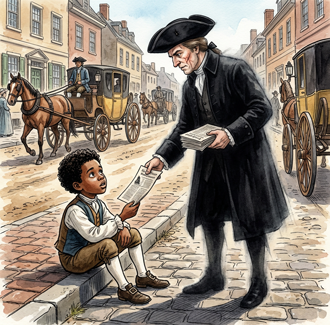
“There’s no children allowed.” The man talking, that appeared to be passing out pamphlets at Quaker’s African School, seemed nice- but very strange. It was strange he was there. And his smile was offputting, not quite right. He wore dark clothes, and a dark hat that cast a shadow over his face. The coat was closed and his tall figure seemed to be both there and not there- like a shadow fading in the light that you somehow noticed. The man also had a bitter scar on his right cheek.
But a 10-year-old James Fortune didn’t seem to notice the strange appearance. His mind was on something else. Usually curious, right now he had no curiosity. The man had handed him a pamphlet. It stated no children were allowed at the State House Yard to hear the Declaration of Independence be read. “There’s no children allowed?” He could feel his heart sink. What was the point of his mother encouraging his book-learning when he had to read such words? James sulked- he was so looking forward to hearing the founding document of their new nation. Almost as much as he wanted to work in the ship yard and be like his father. After his father died two years ago, his mother insisted he go to school to learn to read, write, and do math. From James’ perspective, his father had been educated, but worked mainly with his skills as a sail maker- so why did James have to go to school? A few blocks from his house is where the Second Continental Congress met and drafted the Declaration- and he was barred from hearing it? Is it because he was a Negro, of African descent, even though he was free? Was it just because he was a child? At least hearing the document, maybe he could be useful. Lost in his thoughts, James didn’t even notice the strange man disappear into a horse-drawn carriage with a rather pleased smile forming over the ugly scar.
| | |
****
2026, History Detectives: Voting Rights Unit Headquarters
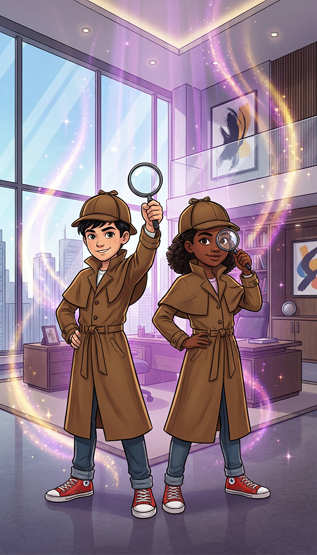
“This is a top secret kid-run agency. Parents can’t know, or else who’d ever allow their child to travel back in time?!” 12-year old Abraham told Imani.
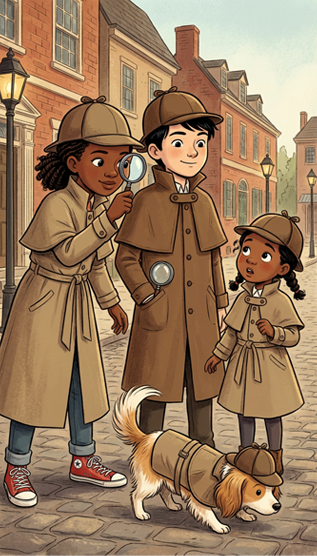
“Right! Do you really think Mother would let you or I time travel to 1776?” Hope smiled, as she dragged her snooping younger sister Imani with her throughout the enormous headquarters. “So you can’t tell her or anyone!” Hope’s dog, Prince, barked in agreement.
“So, you are both ‘History Detectives’, and there’s this bad guy named The Twister, and now we have to…to go back IN TIME to 1776 because of a10-year-old boy and America 250?” Imani tried to piece it all together. “What does this have to do with us?”
| |
“We can’t let The Twister twist the founding of the United States- not at any time and especially not in 2026, the 250th Anniversary of the signing of the Declaration of Independence. The Twister is ALWAYS trying to impede progress! We have to go back to 1776 Philadelphia because James Forten, as he later changed his last name from ‘Fortune’, is supposed to hear one of the first public readings of the Declaration of Independence.” Abraham explained. Abraham was looking at his magnifying glass as he talked. He looked at Hope and gasped, showing Hope his magnifying glass. “Hope, according to the mission data, time is already changing because for some reason James is not there to hear the Declaration of Independence be read!”
To Imani, the magnifying glass he held looked ordinary. This puzzled her more. Maybe she really shouldn’t of followed her sister through an odd light. She was only 8 and her sister was only 12- what could they do if a villain was twisting time? And why was it up to them anyways?! What did history or this James kid have to do with her?
| | |
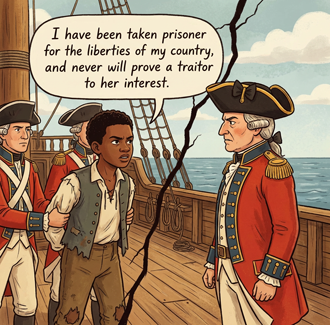
“Yeah! You’re right, Abraham! Time is changing!” Hope exclaimed worriedly. “If James at 10-years-old doesn’t hear the reading today, he won’t be considered one of America’s ‘Black Founders’! When he’s 15, he won’t fight against the British on the side of America in the American Revolutionary War. James is supposed to believe in the cause of American independence so much that he even has his freedom taken away for 8 months by the British after declaring ‘I have been taken prisoner for the liberties of my country, and never will prove a traitor to her interest.’! We ain’t got no time to waste!”
| | |
Hope pulled out her magnifying glass, still holding her sister’s hand- and did Hope’s dog Prince have one paw on a magnifying glass too?! Hope and Abraham spoke in unison to their magnifying glasses as Prince barked along: “Take us to the time coordinates!” A shimmering light surrounded the kids. Before Imani could ask another question, she felt a rush. Squeezing her sister’s hand, she closed her eyes tightly.
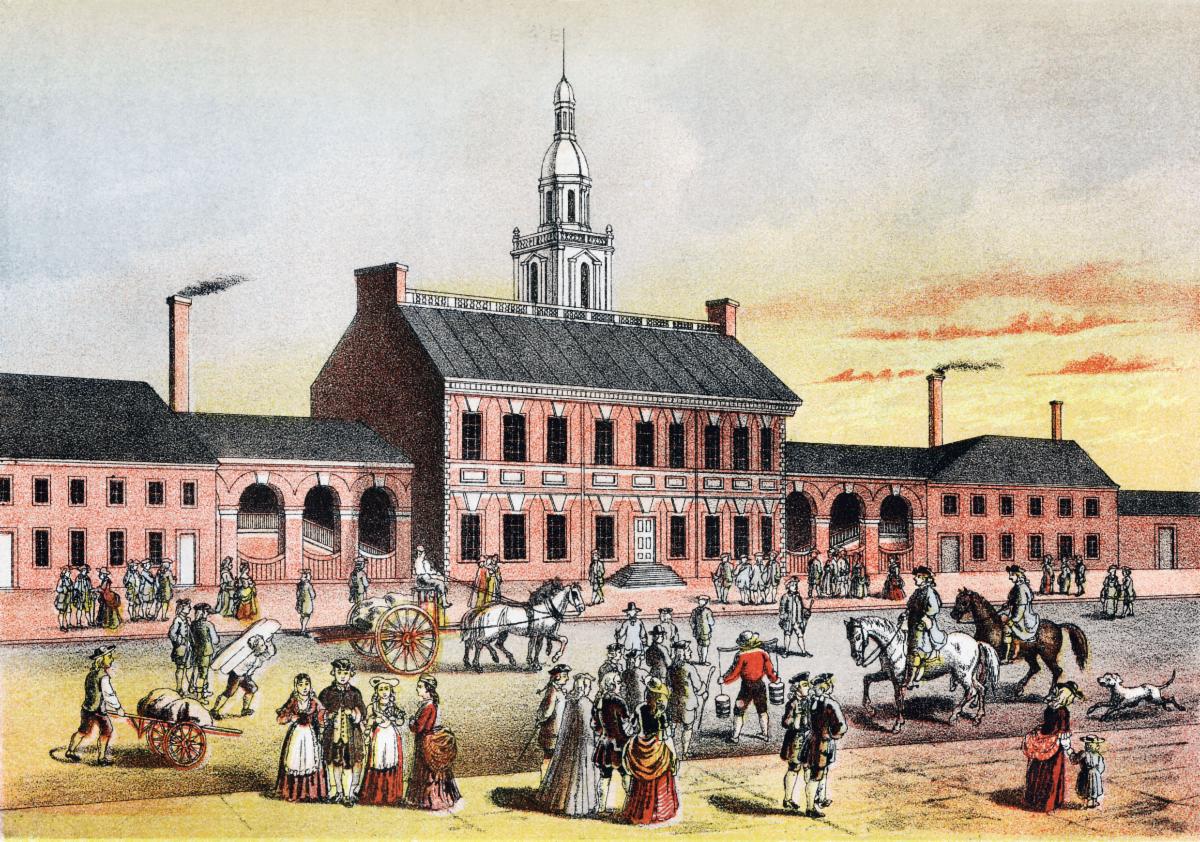
| | Not generated with AI: No Tories Need Apply. Independence Hall in Philadelphia after British forces abandoned the city. (North Wind Picture Archives/Alamy Stock Photo) | | “Come on!” Hope tugged at her sister’s hand suddenly. Imani opened her eyes. She gasped as she looked around. They were outside! The roads were made of dirt. The buildings were made with brick. Dust kicked up behind horse-drawn carriages. Women wore fancy dresses and big hats. There was a buzz and the smell of horses in the air. Where was she? Was she really in 1776 Philadelphia?! She realized she had a long brown coat and a detective hat on just like her sister and Abraham. When did she put these on?! | | |
Hope saw Imani looking at her outfit and laughed. “You need the coat and hat on- not just because we’re detectives, but because they keep us invisible to everyone except who we don’t want to be invisible to. Otherwise, it would be dangerous for us to be back in time as two Black kids.”
“There’s a lot of people- I don’t see James! We better find him- another thing has changed- Now, in 1813, James no longer uses the arguments of the Declaration of Independence to stop a law requiring free African migrants to register with Pennsylvania! The Twister definitely changed something, and we need to figure out what and get time back on track!” Abraham says. "Without his arguments, the law passes!"
“Prince, track!” Hope commands. BARK! Prince- Imani just noticed he also had a hat and coat on?- barked suddenly and ran up to a dark-skinned child, gently panting and nudging to let the child know he was friendly.
| | |
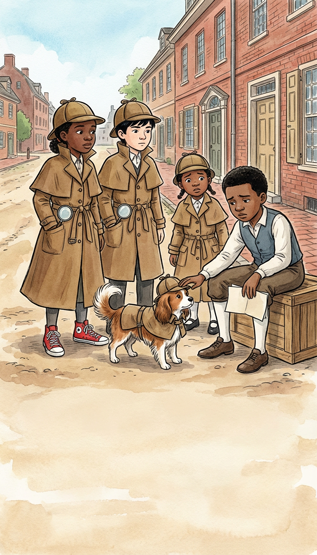
“Oh, is this your dog?” Asked the boy as they approached. Thanks to Prince, they knew the boy was James Forten. James seemed sad.
Hope was about to respond but before she could Imani asked James, “Why are you sad?” Hope shot Imani a look- her sister was always curious and asking questions, but she wasn’t even supposed to be on this mission!
| |
| |  | “I’m sick of book-learning- I want to be useful.” James answered Imani, making Hope look at him too. Hope had not expected him to answer so easily. He must’ve been really sad. Maybe her sister was useful. “My family needs money. My Dad passed away, and I want to work at the ship yard like I started to since I was 8.” Imani looked at herself- how was this kid working since he was her age?! “But a man gave me this.” James continued, handing them a pamphlet. “Can you read?” James asked. Imani wondered why she wouldn’t be able to read. “This pamphlet says there are no children allowed at the State Yard House to hear the Declaration of Independence be read. I really wanted to go. I understand very few Negro kids get to go to school, and I’m lucky to be able to read. You see, my Mom used to be a slave and she waited until she was free to have my sister and I so we would also be free. She thinks book-learning is sooo important- but what’s the point when I can’t even go to a reading of a document so important? I sure am not going to stress my kids out like this!” James sighed. “I’m just a child. I guess I can’t make a difference to my family after all.”
| | |
“Who gave you this?” Hope took the pamphlet and looked at it with her magnifying glass. She noticed some gold dust. Time Crystals! “What did the person look like?”
“What does it matter? All I know is he was a White man with a scar on his face.” James said.
Hope and Abraham both looked at each other. “The Twister!” They said in unison. The Twoster always had an ugly scar, but could take the form of anyone.
Just then, their magnifying glasses vibrated, and as Imani continued to talk to James, Hope and Abraham stepped away for a moment to look at their not-so-ordinary magnifying glasses.
| |
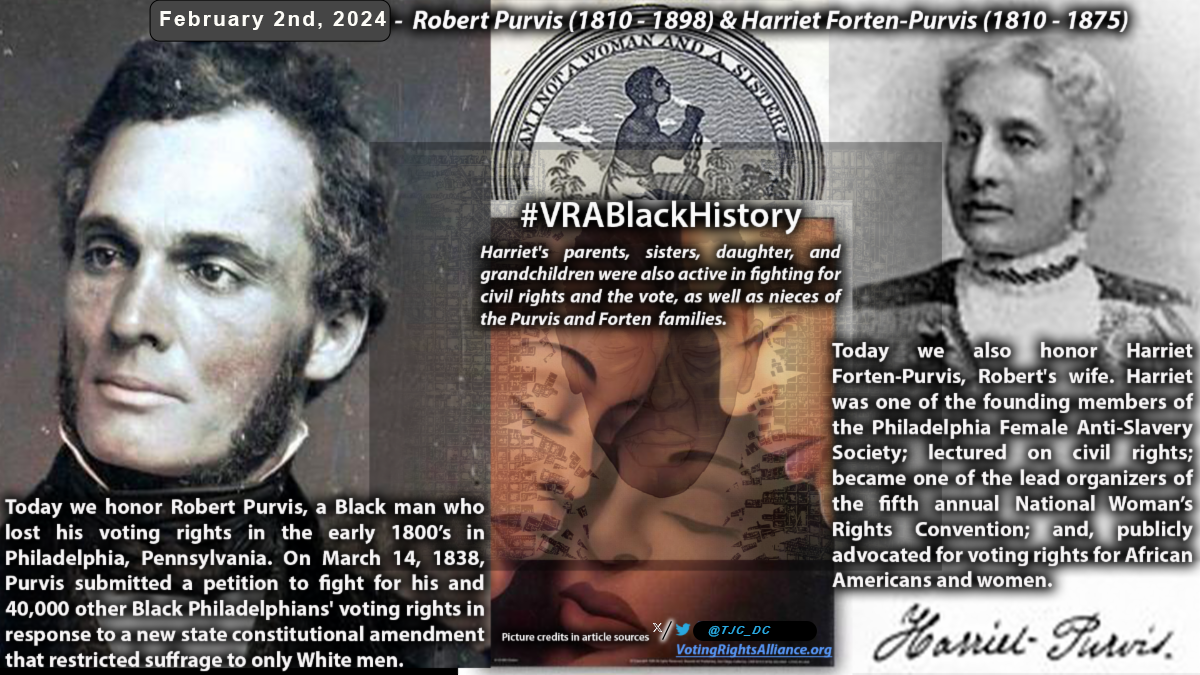
“Oh no! James is supposed to teach his children, Harriet and Margaretta Forten, to be abolitionists who fought against slavery. Because of this, Harriet would eventually form the Philadelphia Female Anti-Slavery Society, organize boycotts of slave labor products, and protest segregation- which is when they wanted White people and Black people to be separate even after slavery was abolished. She also would fight for women’s right to vote. Her and her sister Margaretta became one of the lead organizers of the fifth annual National Women’s Rights Convention. In 1866, Harriet helped form the American Equal Rights Association, working with Sojourner Truth and Sarah Remond. And her daughter and grandchildren and the nieces of the family also fought for the right to vote! But if James feels like he doesn’t matter and isn’t inspired when he hears the Declaration of Independence, he’ll never raise them to fight for freedom!” Hope said, looking at Abraham worried.
| |
“The Twister?” James asked Imani after the other two stepped away. James wondered who the three were. It was odd to see a White boy and two African girls hanging out. “Ya’ll belong to him?”
Instead of responding, and not really knowing how to respond, Imani asked James, “what’s so important about this Decoration of Independence anyways?”
“The Declaration of Independence. It was just signed right here in Philadelphia by representatives of all thirteen colonies- just a couple blocks from my house. It’s said that we’ve declared we're no longer under British control. I wanted to learn more about it.” Just talking about the Declaration of Independence made James excited- he almost wanted to sneak in to hear it, but didn’t want to bring trouble.
| | |
Abraham and Hope stepped back to James. “I just heard children are allowed at the reading. You should always investigate for yourself when something doesn’t sound right! We’re headed there now to also hear the reading- come with us.” Abraham said, sounding friendly enough.
This did give James a good excuse. So, James walked with them to the State Yard House, and indeed other children were there. When he turned around to thank the kids who had told him the truth, he didn’t know where they had gone. Hope, Abraham, Imani, and Prince had made themselves invisible to even James, now that their mission was complete.
Before James had too much time to think on where the strange kids had gone, he heard the man at the front begin to read:
| | |
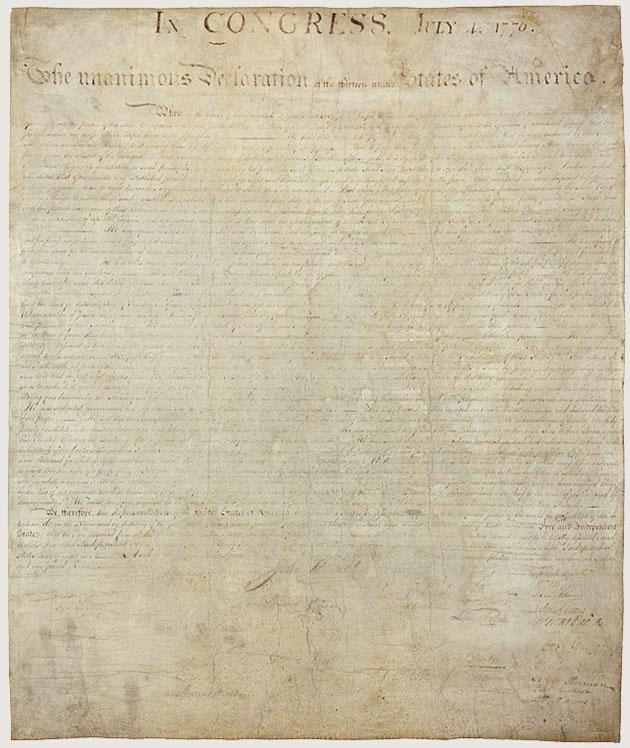
“In Congress, July 4, 1776.
The unanimous Declaration of the thirteen united States of America, When in the Course of human events, it becomes necessary for one people to dissolve the political bands which have connected them with another, and to assume among the powers of the earth, the separate and equal station to which the Laws of Nature and of Nature's God entitle them, a decent respect to the opinions of mankind requires that they should declare the causes which impel them to the separation.
We hold these truths to be self-evident, that all men are created equal, that they are endowed by their Creator with certain unalienable Rights, that among these are Life, Liberty and the pursuit of Happiness…"
| |
As James listened, he clung to every word, something stirred deep in his soul. It was as if a fire in him was sparked. He knew this moment, on this hot day and in this crowded room, hearing the beginning of the new nation, would forever change his life.
Imani smiled as they saw James so happy now. Imani still didn’t know a lot of things- but she did know she seemed to make a difference today.
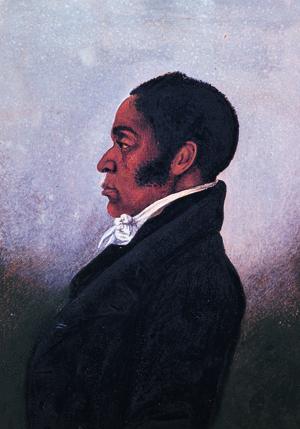
| | | “Look- the timeline is being restored!” Hope pointed at her magnifying glass, and showed her sister. Imani saw for the first time that the magnifying glass wasn’t ordinary. She pointed the lens at James and saw the life of the 10 year old boy that was currently soaking up every word of the Declaration being read. In the future, James Forten finished school and looked proud to do so. Then he began working at the ship yard- Imani was glad he got to work where he wanted. He was even hired by the person who his father had worked for. She saw other White sailors become jealous of him, since he worked so hard he became second in command. She was shocked to see his boss owned slaves, yet also told those men bullying him that they were welcome to work elsewhere! That boss even sold the shipping business to him! James became very very successful from his sailing business, revolutionizing how sails were made. He used those profits to make investments into real estate and loaned money. Even though his crew was racially diverse, White sailors would often come to him because the quality of work was so great. | | Not generated with AI: James Forten, unidentified artist, ca. 1818, watercolor (Leon Gardiner Collection 151. Historical Society of Pennsylvania) | | Imani could see that at every big moment in James’ life, he would remember being there at the reading of the Declaration of Independence, and believed in freedom so much that above all else he wanted to become an American citizen in a country that never allowed him to be one. Instead, James ensured everyone around him would pay him respect even though he was a Black man in a very, very racist time period. He would not tolerate any disrespect- towards himself or his fellow people of African descent. He even refused any business for ships that transported slaves. His “book-learning” proved important too: he would end up writing a lot of work and legal arguments that would influence politicians. He used the Declaration of Independence as the reasons for his arguments. Even his service to America rather than the British made him be talked of as an example of how Black people were not unuseful like many White people of the time liked to think. He would die at age 75- which was quite old in 1842- and Imani saw he had a HUGE parade honoring him. She even saw two White people with accents visiting Philadelphia during the parade, talking about how unusual it was for a Black man to be honored by both Black and White people and such a large amount of people. And his life and ideas then set the stage for his ancestors. Even Frederick Douglass would quote James Forten! | |
“Wowww…” Imani said as she handed the magnifying glass back to her sister. She couldn’t believe the boy she had just met would end up doing all of that. She decided she wanted to learn more about what being a History Detective was all about.
“I won’t tell Mommy if I get to go with you next time too!” She bargained.
Hope shook her head and sighed, but agreed. A purple and gold light suddenly surrounded Imani again. As Imani looked around one last time at 1776 Philadelphia, she suddenly got a chill and saw a shadowy figure with an ugly scar, scowling at her. She wanted to tell her sister about it- as this figure looked out of place- but was pulled away back to 2026 before she could say a word.
| | Keep an eye on your email tomorrow, February 2nd, for the next #VRABlackHistory 2026 "History Detectives: Voting Rights Unit" article and read the adult counterpart article to learn about the Voting Rights Activists surrounding the Constitution and the First Amendment! | | | |
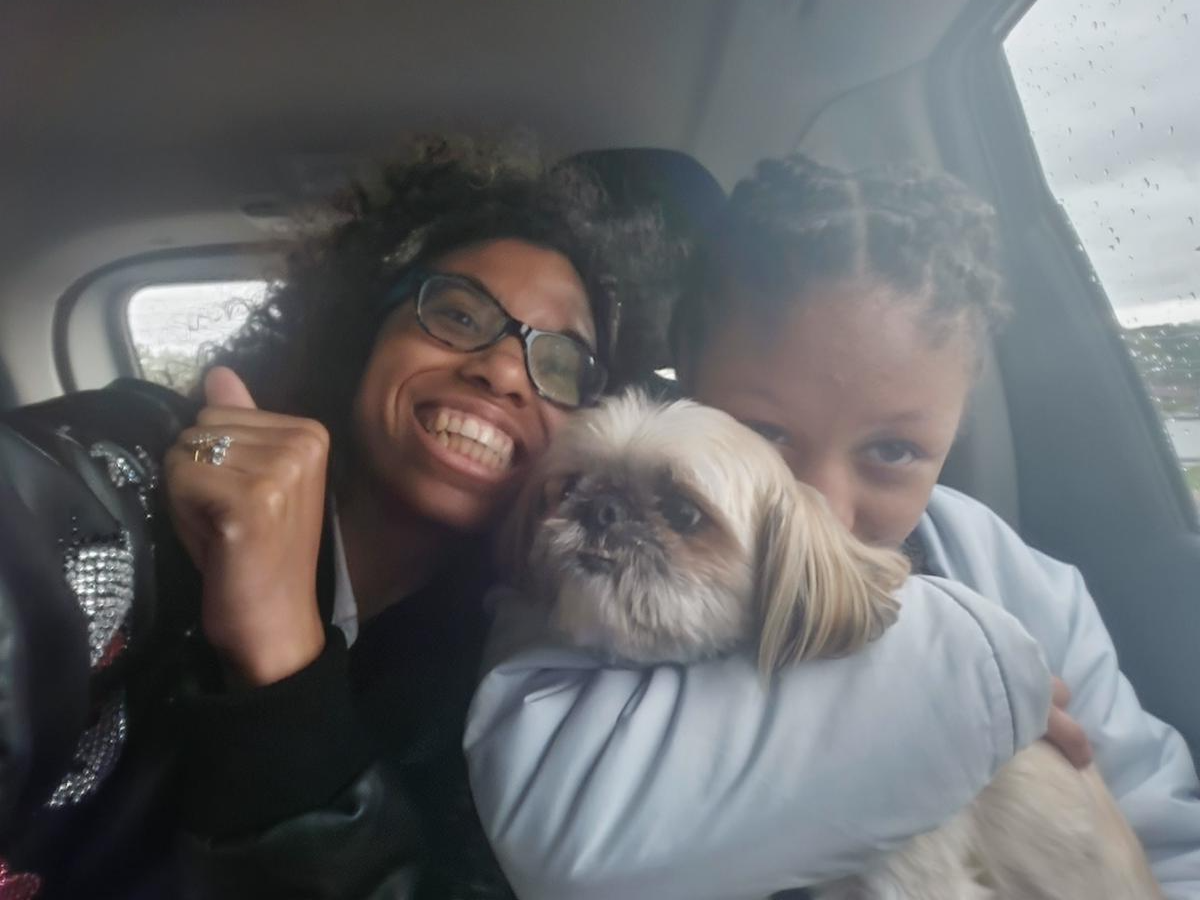
By: Caitlyn Arnwine (formerly Caitlyn Cobb and her daughter, Hope Grace. This was written in 2026 with a complete source list at the bottom.
© 2026 Transformative Justice Coalition. All rights reserved.
© 2026 Caitlyn Arnwine and Hope Cobb. All rights reserved.
Feel free to publish on your social media outlets and teach these lessons, with credit given to the Transformative Justice Coalition. Please let us know if you do share the series so we can publicly recognize and thank you. Be sure to send any publications to carnwine@tjcoalition.org so we can repost!
We encourage everyone to share this series to your networks and on social media under the hashtag #VRABlackHistory and to use this series for school projects. You can also tweet us @TJC_DC to share your own facts or connections to this history.
Others can sign up for the daily articles at VotingRightsAlliance.org.
| | Disclaimer: Image was generated with Adobe’s AI tools, who paid artists to train their AI. We would love an artist for this series! Reach out to carnwine@tjcoalition.org if interested | | Click the buttons below to share this article to your social networks: | | |
HAPPY BLACK HISTORY MONTH!
We hope you enjoy our #VRABlackHistory Series 2026
From the Transformative Justice Coalition and the Voting Rights Alliance
Please note, if you'd like to opt out from only the upcoming daily Black History Month Voting Rights Alliance #VRABlackHistory series, please email carnwine@tjcoalition.org. Unsubscribing at the bottom of this email unsubscribes you to all Transformers, not just from this special February Series.
| | |
INTRODUCING: History Detectives
The Transformative Justice Coalition and the Voting Rights Alliance, in honor of Black History Month, are continuing the annual tradition of our daily special series devoted to sharing the legacies and stories of the sheroes, heroes, and events in the fight for Black suffrage. This series was created in 2017 and will introduce all new original articles this year- with a twist.
The 2026 #VRABlackHistory Series will center around the United States’ 250th Anniversary of the signing of the Declaration of Independence. It will also center around teaching kids the Black History voting rights advocacy that surrounds the United States Constitution and its amendments, as well as different forms of government, with a new children’s series: “History Detectives”. This will be a series parents, guardians, teachers, and siblings can read to the children in their lives, with a lesson guide which includes what each story will cover as well as a short fun quiz.
The “History Detectives” Series follows three kids, Hope – aged 12-, Abraham – aged 12-, and Imani- aged 8-, as well as their dog Prince, as they work in a secret kid detective agency aimed at helping figures or events in history stay on track anytime there’s an anomaly caused by “The Twister”, a villain who twists time with the goal of impeding progress, like a tornado tearing through and erasing history.
The “History Detectives” article draft attached has not only been put through the Dale-Chall Readability Test, giving an average of a 4th through 6th grade reading level; but, has also been tested with children, and is made with input from the author's soon-to-be 14-year-old daughter to ensure it’s engaging for kids. And did you know the author is also pregnant, due in February?! That makes this series all the more timely!
But we didn't forget about the adults! Each of the “History Detectives: Voting Rights Unit” articles (aside from this prologue) will also be paired with a counterpart article for adults to read. The adult counterparts will filter out the children’s story, and dive deeper into the historical figures or events the “History Detectives” article covered.
In addition to these daily newsletters all February long, this series also incorporates daily social media posts; an interactive calendar; and, website blog posts to spread the word broadly.
| | |
References
A Gentleman of Color—Google Books. (n.d.). Retrieved from https://www.google.com/books/edition/A_Gentleman_of_Color/kzXCm37xFR4C?bshm=rime/1&gbpv=1&kptab=editions
African Americans’ campaign for citizenship rights, selections from speeches, petitions, editorials, convention declarations, etc., 1810s-1865. (n.d.). Retrieved from https://nationalhumanitiescenter.org/pds/maai/identity/text9/citizenshipselections.pdf
Black Founders Big Idea 3: African American Freedom and Community, 1780-1813.
(n.d.). Retrieved from https://www.amrevmuseum.org/black-founders-big-idea-3-african-american-freedom-and-community-1780-1813
James Forten and American Freedom | Gilder Lehrman Institute of American History. (n.d.). Retrieved from https://www.gilderlehrman.org/history-resources/essays/james-forten-and-american-freedom
Lapsansky, P., & Newman, R. S. (2008). Black founders: The free black community in the early republic. Library Company of Philadelphia.
Today we honor Robert Purvis & Harriet Forten-Purvis #VRABlackHistory 2024. (n.d.). Transformative Justice Coalition. Retrieved from https://myemail.constantcontact.com/Today-we-honor-Robert-Purvis---Harriet-Forten-Purvis--VRABlackHistory-2024.html?soid=1122865384673&aid=uARuUd5b7_k
| | | | |