|
History Detectives: Voting Rights Unit
Book 4: "The Case of the Supposed-To-Be-Missing Ship, Part 2"
Teaching about Robert Smalls, Joseph Rainey,
The Second Amendment, and The Third Amendment
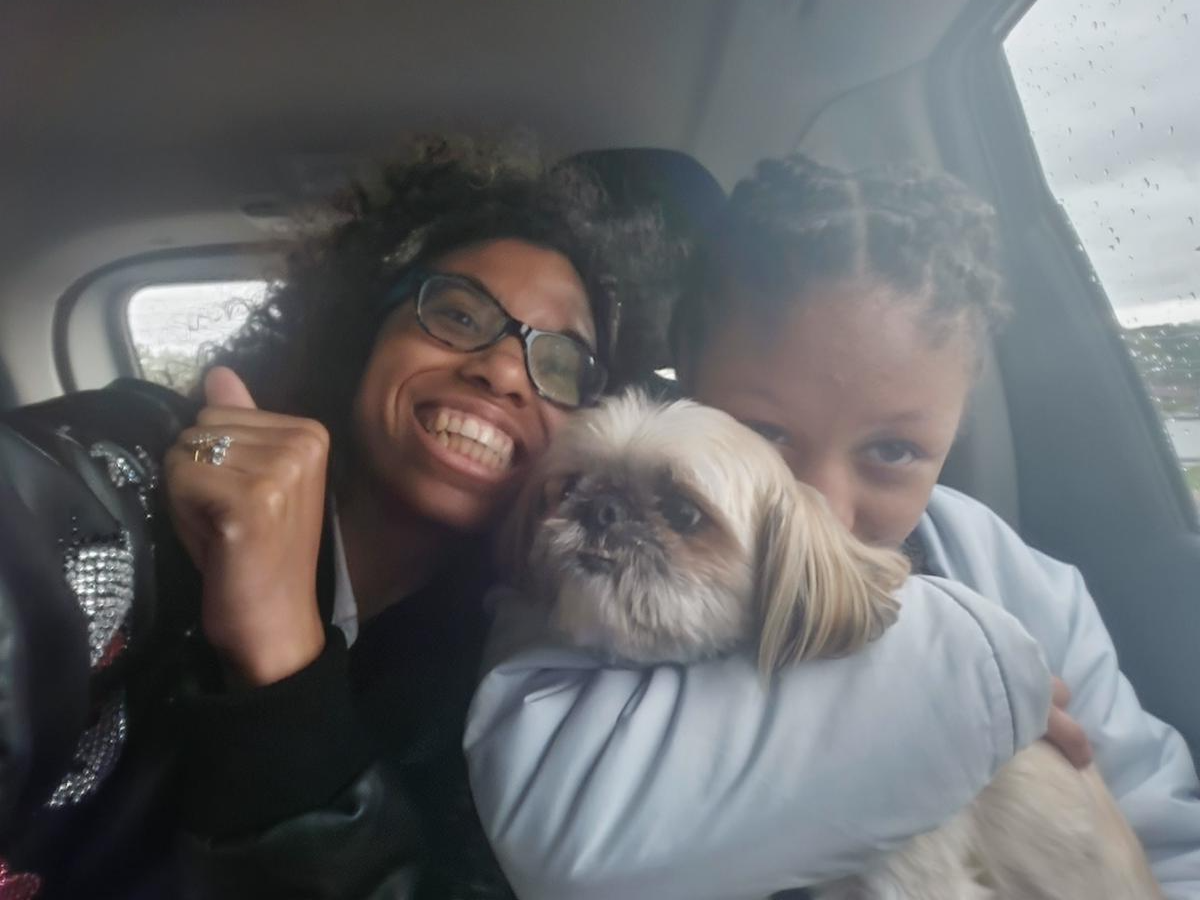
By: Caitlyn Arnwine (formerly Caitlyn Cobb and her 13-year-old daughter, Hope Grace. This was written in 2026 with a complete source list at the bottom. © 2026 Transformative Justice Coalition. All rights reserved. © 2026 Caitlyn Arnwine and Hope Cobb. All rights reserved.
| If you wish to unsubscribe only from this daily #VRABlackHistory series but not the Transformative Justice Coalition's regular newsletters, then please email carnwine@tjcoalition.org. Today, February 1st, this #VRABlackHistory series will include 3 articles and every day in Black History Month will include two articles (one for kids and one for adults). | |
#VRABlackHistory 2026
#America250
| |
Disclaimer: Non-historical Images were generated or generated with and edited using Adobe’s AI tools, who paid artists to train their AI, therefore the clothes and hairstyles in the images may not be consistent.
We would love an artist for this series! Reach out to carnwine@tjcoalition.org if interested
| | |
May 12th, 1862. Charleston, South Carolina. Charleston Harbor. The CSS Planter ship.
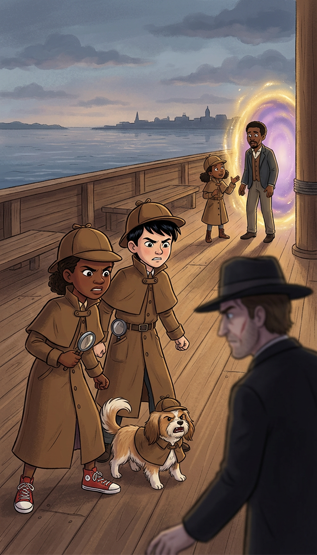
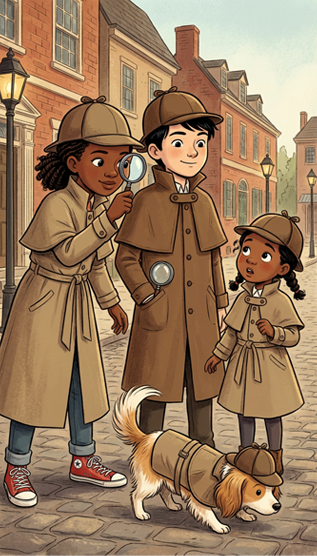
Imani, Hope, Abraham, and Hope's dog, Prince, all fell against the side of a ship. Startled, a 23-year-old named Robert Smalls looked at the two Black kids, a White kid, and a small white and brown dog who had appeared from a flash of light and all wore brimmed hats and long brown coats. His heart pounded- where had they come from?
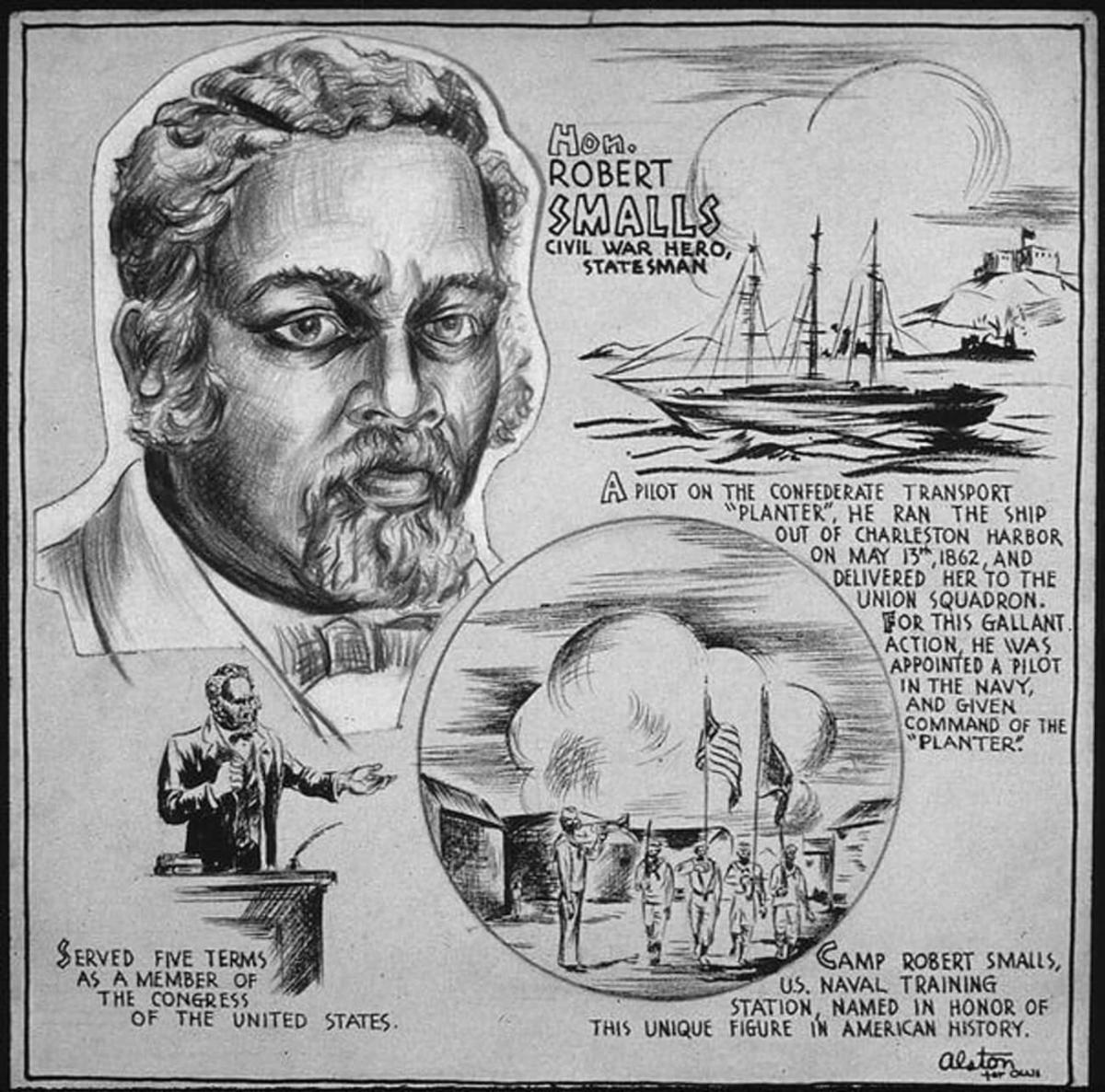
He looked around- it didn't appear anyone else seemed to notice the disturbance. It was more than that though- he was waiting for all his White captors to be off the ship. Every day he waited to see if he would be left alone. Robert Smalls was an enslaved man. The United States Civil War was raging on between The North, who called themselves the Union, and The South, who called themselves The Confederacy. He and other Black people were unable to serve in the army, a direct violation of their Second Amendment rights. And one of the main issues dividing the nation was whether or not he, and the 4 million other enslaved Black people and their future children, would be free or not. The Union didn't want slavery to expand. The Confederacy wanted slavery to expand and stay. To fight with the Union would mean to fight to be free. Currently, the Confederacy was winning- and if it stayed the course, he and four million others would continue to be enslaved, and worse.
| | |
But Robert Smalls knew how to steer a ship. He knew how to pretend to be the Captain. He knew what whistles to blow to get past certain areas and not raise suspicion. He was often on this ship. He had learned all these secret codes the Confederates were using to win The War. And he knew how to surrender the ship containing many powerful guns to the Union. He would secure freedom for himself, his family, and others, and also deliver the ship straight to the Union.
Except, it was against the Confederate's rules for him to be alone on the ship. All he needed was the opening. And, tonight, all three of the White sailors who were normally watching him and the ship had left for some reason. The only problem was that there appeared, out of nowhere, a White man he had never seen before, now sitting on the ship, staring at him. He had a nasty scar and didn't seem to belong. And, now, these three kids and a dog had just appeared as well.
What surprised him even more was how the two older kids suddenly got up and looked at the White man with the scar who looked back at them.
"We're History Detectives- and we're here to help you take this ship!" The littlest Black girl whispered to Robert. He wondered how she knew of the plan, and why the White boy would also help him.
| | Hope didn't notice her little sister possibly blowing their cover by talking to Robert of the future. She was focused in front of her, just like Abraham and Prince were. Standing in front of them was The Twister! He looked just as surprised to see them. But his scar gave him away, no matter who he shapeshifted into across time. | | |
"Well, well, well- come to restore history, History Detectives?" The Twister mocked. "As long as I'm on this ship, Robert Smalls will never deliver it to The Union." The Twister's eyes narrowed. His voice sounded distorted. From all of his meddling in time, The Twister seemed less and less human-like. It was like he was becoming an evil ghost.
"We've stopped you every time- and we'll stop you again!" Hope said boldly.
"You're not going to erase history and stop progress this time!" Abraham echoed.
GRRR! BARK! Prince growled and barked in agreement.
| |
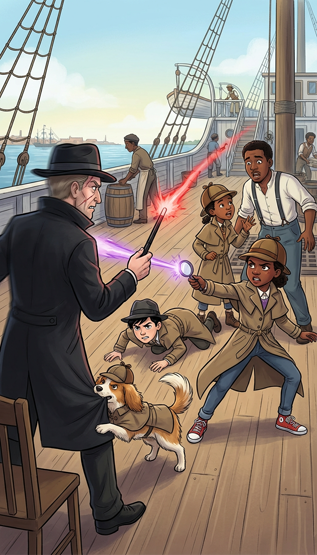
Before The Twister could speak, Hope shot a purple beam from her magnifying glass at The Twister. The Twister dodged it and ran towards Hope and Abraham. The kids jumped out of the way, each doing a tumble, and landing on their feet as they glared.
The Twister pulled out a long black wand, and shot a red beam at Abraham's magnifying glass. Abraham dove out of the way as Hope wasted no time shooting another beam at The Twister.
Prince ran forward and growled, biting The Twisters coat. The Twister tried to get the dog off him, kicking and moving. Abraham shot a purple beam at The Twister, causing The Twister to duck to avoid it. Robert Smalls and Imani were amazed the beams weren't causing any damage to the ship. Robert looked around- still astonished that no one seemed to notice what was happening.
| | |
When The Twister ducked, Prince grabbed The Twister's black wand and began to run off the ship. The Twister needed that wand. He looked back at Robert Smalls and then back at the dog. The Twister decided he had no choice but to chase the dog.
"Good boy, Prince!" Hope called out as she followed them too.
"Time to go, Imani!" Abraham called as he also began to run off the ship.
Imani looked at Robert Smalls. "Now is your chance! Hurry and take the ship! The others won't be back tonight!" Imani then ran off.
Robert looked around again, and no one seemed to have noticed. "Did you see any of that?" He asked someone, who looked at him confused. "Nevermind- I have a plan." Robert Smalls decided this must be his chance to take the ship- and to never talk about what he saw again.
| | |
Off the ship, The Twister wrestled his wand out of Prince's mouth. He glared at the kids as the ship began to pull away. He twisted the black wand into two parts and threw down some red and black dust. "July 15th, 1876, Washington, D.C., U.S. Capitol." The Twister disappeared in a cloud of dust.
Abraham had been writing down the date and place. Hope spoke into her magnifying glass with the History Detective Headquarters. "Miss Barbara! Robert Smalls has now taken the ship, as he was supposed to. We had a fight with The Twister- and he's now gone to July 15th, 1876, Washington D.C., the U.S. Capitol! We have to go there right away- we don't know why he went there though!" Abraham spoke into Hope's magnifying glass.
| |
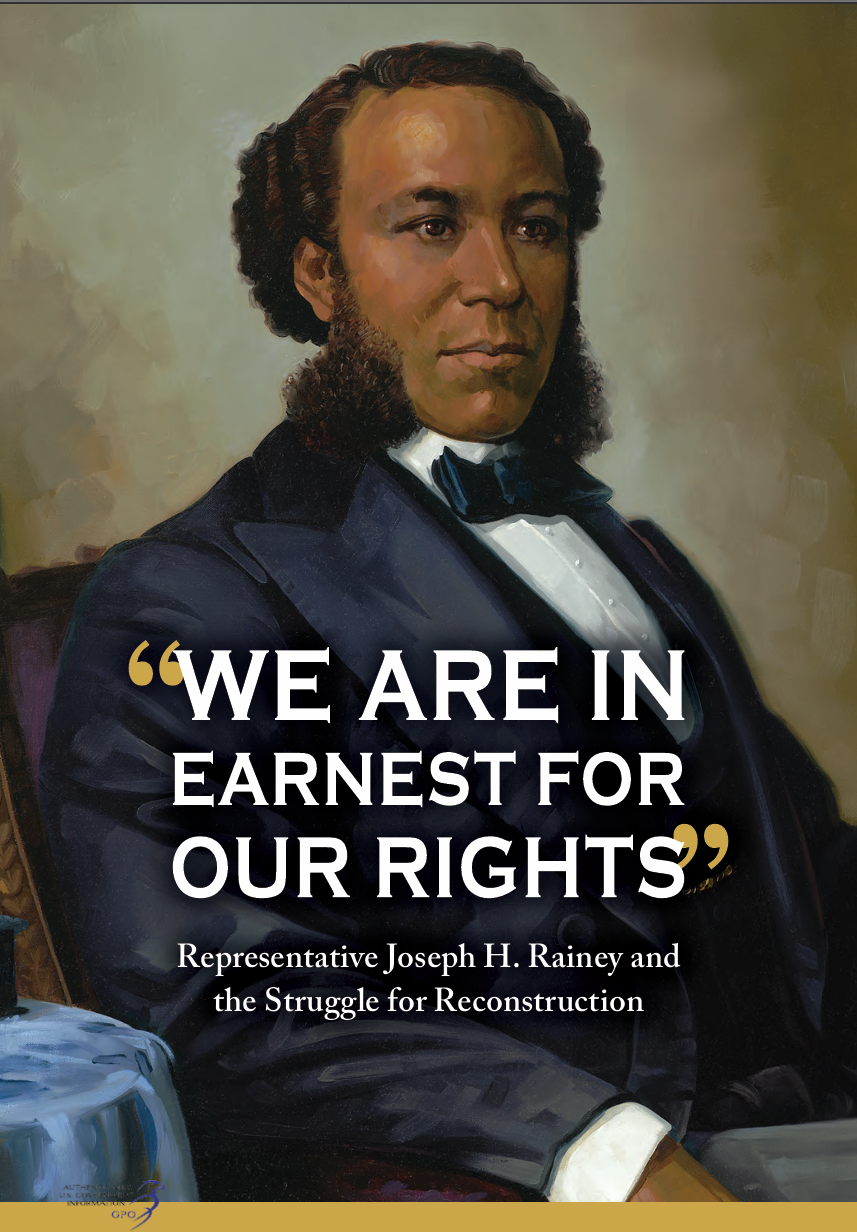
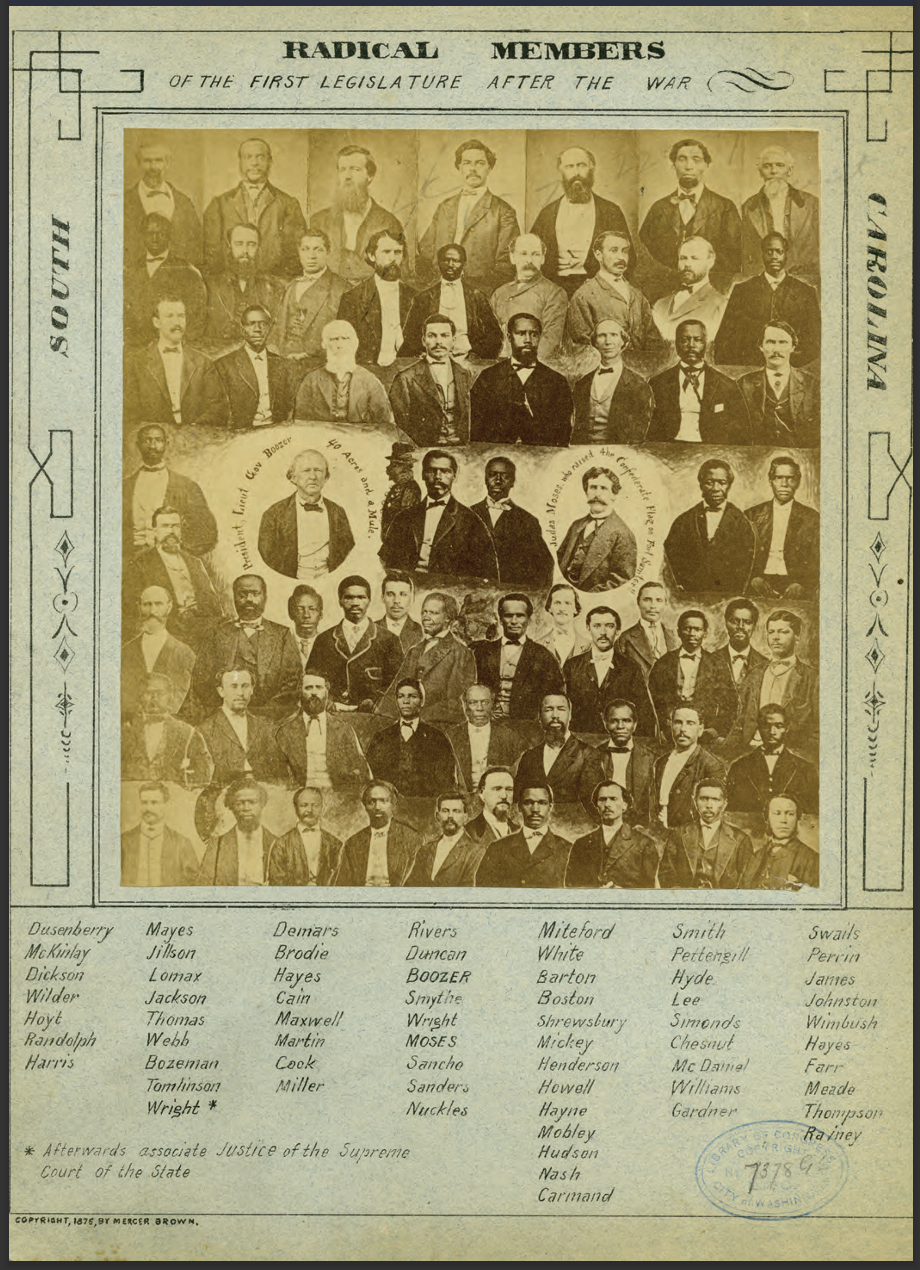
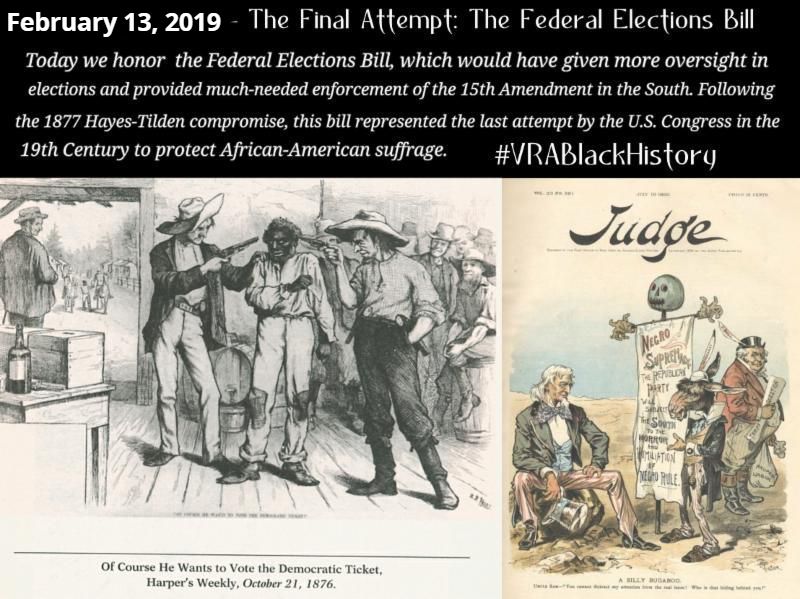
 | | "I know why!" Miss Barbara said. "On July 15th, 1876, Robert Smalls is about to give a speech about a tragic event called the Hamburg Massacre. His colleague Joseph Rainey ensures Smalls gets to speak. He delivers a passionate speech to keep troops in the South- at this time, the Confederacy has lost the war. All the Confederates were pardoned and their voting rights restored. Because of this, many ex-Confederate generals were elected to positions. During this time, since the Union won, slavery was abolished and four million Black people were now free, and then Black men were given rights to vote through the 14th and 15th Amendments. But still, former Confederates were against this and tried to stop newly freed enslaved people from exercising their rights. They often did this through violence and other tactics that made the voting process unfair- like using tissue paper to submit lots of votes. If a county had more votes submitted than the population, then the poll workers were blind folded and threw out the extra votes."
|
| | | But, if ballots were stuffed in for a particular candidate, then they were the first ones counted. That meant votes that should've been counted by individual people voting only once were thrown out. Additionally, on March 27th, 1876, the United States Supreme Court decided in U.S. v Cruikshank that the Second Amendment - 'A well regulated Militia, being necessary to the security of a free State, the right of the people to keep and bear Arms, shall not be infringed.' - only restricted the federal government from taking guns away from Black people, and that the Fourteenth Amendment only protected people from state action, not private violence. This meant that private mobs, like the Ku Klux Klan, also known as the KKK, could legally disarm Black citizens and be violent. Also during this time, the Third Amendment - 'No Soldier shall, in time of peace be quartered in any house, without the consent of the Owner, nor in time of war, but in a manner to be prescribed by law.'- was also interpreted, and still is today, as preventing the government from sending the military against its citizens. So, armed citizen groups were treated as more trustworthy. But because the former Confederate States refused to let Black people be a part of the political process, troops had been deployed to ensure fairness. Former Confederates didn't like this.
|
| | | Now we come to July 15th, 1876. Earlier that month, a local Black militia in Hamburg, South Carolina was having a parade in celebration of American independence. But, two White farmers attempted to drive their carriage through the parade to demand they be allowed to pass through, even though there was room to drive next to the parade. Eventually, the Black militia - Company A, Eighteenth Regiment National Guard- agreed. But that wasn't enough for the White farmers, and they took the National Guard regiment to court, saying they shouldn't be armed. But the Milita refused because of their 2nd Amendment rights and that they were legally organized. So, the farmers gathered a group from a White rifle club and others- growing to over 1,500 White men. They opened fire and executed about 25 of the 40 Black militia. This was being ignored by the Congress. So, Robert Smalls spoke about this in Congress and forced the massacre to be a part of the official record. And while it did not stop more violence, and the troops were withdrawn when Rutherford B. Hayes became president; it did inspire and greatly influence future President James Garfield. President James Garfield became a champion for civil rights and voting rights, and although his time as President was unfortunately cut short, he did appoint Blanche K. Bruce, the first Black man to serve a full term in the Senate, as the Register of the U.S. Treasury. The Twister must be trying to stop Congressman Robert Smalls from speaking!"
| | Keep an eye on your email tomorrow for more History Detectives and the adult counterpart article! | |  | | | |
By: Caitlyn Arnwine (formerly Caitlyn Cobb and her daughter, Hope Grace. This was written in 2026 with a complete source list at the bottom.
© 2026 Transformative Justice Coalition. All rights reserved.
© 2026 Caitlyn Arnwine and Hope Cobb. All rights reserved.
Feel free to publish on your social media outlets and teach these lessons, with credit given to the Transformative Justice Coalition. Please let us know if you do share the series so we can publicly recognize and thank you. Be sure to send any publications to carnwine@tjcoalition.org so we can repost!
We encourage everyone to share this series to your networks and on social media under the hashtag #VRABlackHistory and to use this series for school projects. You can also tweet us @TJC_DC to share your own facts or connections to this history.
Others can sign up for the daily articles at VotingRightsAlliance.org.
| | Disclaimer: Image was generated with Adobe’s AI tools, who paid artists to train their AI. We would love an artist for this series! Reach out to carnwine@tjcoalition.org if interested | | Click the buttons below to share this article to your social networks: | | |
HAPPY BLACK HISTORY MONTH!
We hope you enjoy our #VRABlackHistory Series 2026
From the Transformative Justice Coalition and the Voting Rights Alliance
Please note, if you'd like to opt out from only the upcoming daily Black History Month Voting Rights Alliance #VRABlackHistory series, please email carnwine@tjcoalition.org. Unsubscribing at the bottom of this email unsubscribes you to all Transformers, not just from this special February Series.
| | |
INTRODUCING: History Detectives
The Transformative Justice Coalition and the Voting Rights Alliance, in honor of Black History Month, are continuing the annual tradition of our daily special series devoted to sharing the legacies and stories of the sheroes, heroes, and events in the fight for Black suffrage. This series was created in 2017 and will introduce all new original articles this year- with a twist.
The 2026 #VRABlackHistory Series will center around the United States’ 250th Anniversary of the signing of the Declaration of Independence. It will also center around teaching kids the Black History voting rights advocacy that surrounds the United States Constitution and its amendments, as well as different forms of government, with a new children’s series: “History Detectives”. This will be a series parents, guardians, teachers, and siblings can read to the children in their lives, with a lesson guide which includes what each story will cover as well as a short fun quiz.
The “History Detectives” Series follows three kids, Hope – aged 12-, Abraham – aged 12-, and Imani- aged 8-, as well as their dog Prince, as they work in a secret kid detective agency aimed at helping figures or events in history stay on track anytime there’s an anomaly caused by “The Twister”, a villain who twists time with the goal of impeding progress, like a tornado tearing through and erasing history.
The “History Detectives” article draft attached has not only been put through the Dale-Chall Readability Test, giving an average of a 4th through 6th grade reading level; but, has also been tested with children, and is made with input from the author's soon-to-be 14-year-old daughter to ensure it’s engaging for kids. And did you know the author is also pregnant, due in February?! That makes this series all the more timely!
But we didn't forget about the adults! Each of the “History Detectives: Voting Rights Unit” articles (aside from this prologue) will also be paired with a counterpart article for adults to read. The adult counterparts will filter out the children’s story, and dive deeper into the historical figures or events the “History Detectives” article covered.
In addition to these daily newsletters all February long, this series also incorporates daily social media posts; an interactive calendar; and, website blog posts to spread the word broadly.
| | | | |