SEPTEMBER 2024


"The only important thing is to follow Nature."

-Carl Jung

In today's hectic world, we often forget to stop and appreciate the natural beauty that surrounds us. Exposing people to Nature expands their horizons, and gives them a sense of being part of something much larger than themselves.

Part of Soarin' Hawk's mission is to educate people about the importance of raptors in our world. We are always happy to have the opportunity to visit schools, classrooms, libraries, nursing homes, and more, to teach people of all ages about raptors.

To learn more about our education programs, call 260-341-0541, or visit the Educational Programs page on our web site.

OUT & ABOUT


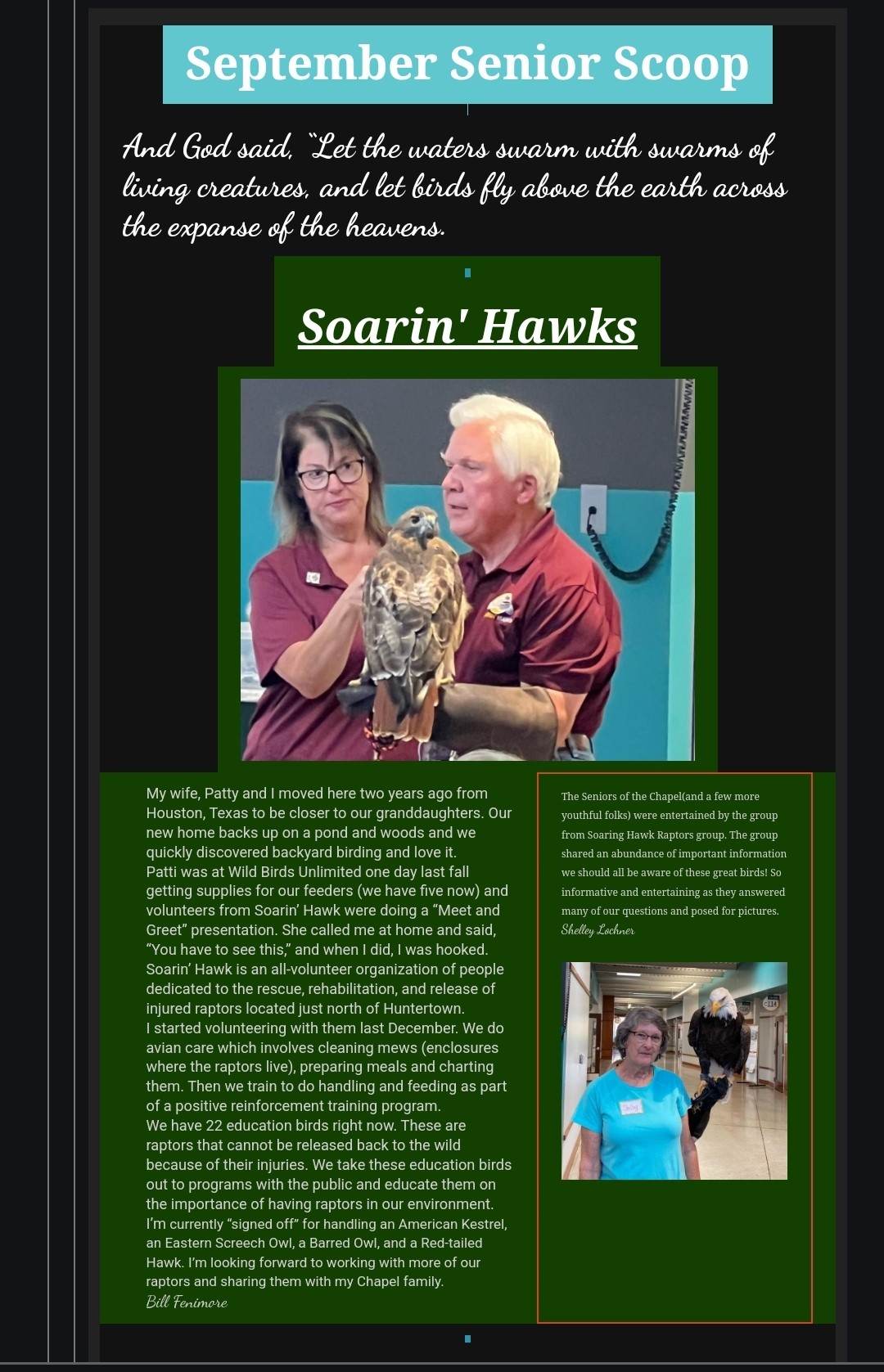
Last month, Soarin' Hawk visited The Chapel in Fort Wayne for a program arranged by volunteer Bill Fenimore. After the program, Bill reported that attendees enjoyed the program and were mightily impressed with the birds, so much so that they included our visit in their newsletter!

(To view the article more comfortably, right click on the image and choose "open in a new tab.")

THIS IS WHY

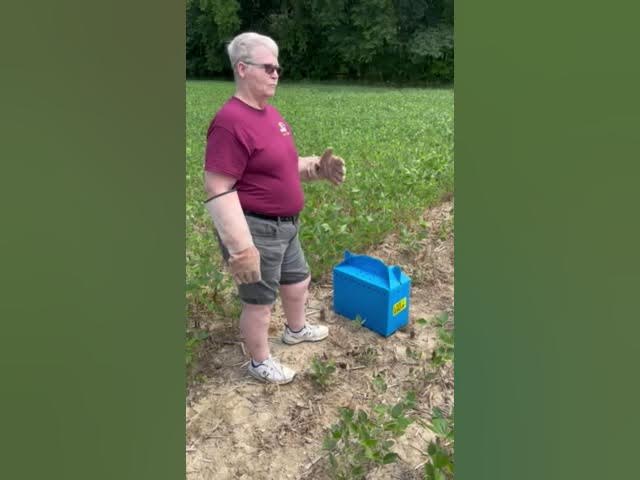
Release of Red-tailed Hawk Right Purple on August 4. Click here

ONE MORE MONTH 'TIL THE HAWK-TION!


MARK YOUR CALENDARS

OCTOBER 5!

(If you have new or gently used items you'd like to donate to our online auction, please email ssoarinlynne@gmail.com)


HAZARDS FOR RAPTORS


Raptors, also known as birds of prey, play a critical role in maintaining ecological balance by controlling populations of small mammals and other animals. Their hunting prowess and high position in the food chain contribute to the health of the ecosystem; however, raptors face numerous hazards that threaten their survival and overall well-being.


In their natural habitat, raptors encounter various hazards such as exposure to toxic substances, competition for food, and predation by larger birds. These dangers can significantly affect their population and reproductive success. Additionally, human activities further amplify these challenges.


Human-Caused Threats

Habitat loss due to urbanization and agricultural expansion.


Poisoning from pest control measures targeting other species. (Raptors are great at helping control the rodent population, but the poisons used to kill rodents also kill the raptors and other animals that eat the rodents. A family of barn owls will eat 3000 mice per year. Using poison that results in killing the barn owls ultimately increases rodent population.)


Collisions with vehicles, power lines, and buildings.


Use of lead fishing tackle and ammunition. (One piece of lead the size of a grain of rice will kill a bald eagle. Please switch to no-lead.)


Climate change also poses significant risks to raptor populations by altering their habitats and affecting food availability. Shifts in weather patterns can disrupt breeding cycles and migration routes, leading to population decline.


Conservation Efforts

Various conservation strategies are being implemented to mitigate hazards faced by raptors, including creating protected areas, regulating hunting practices, and promoting public awareness campaigns. Collaborative efforts among government agencies, conservation organizations, and the public are essential for the success of these initiatives.


The California Condor, once near extinction, has seen population recovery through intensive breeding programs.


The Peregrine Falcon is another success story, attributed to banning harmful pesticides.


Such case studies illustrate the importance of targeted interventions that address specific hazards.


ai-assisted, just for

RAPTOR ID


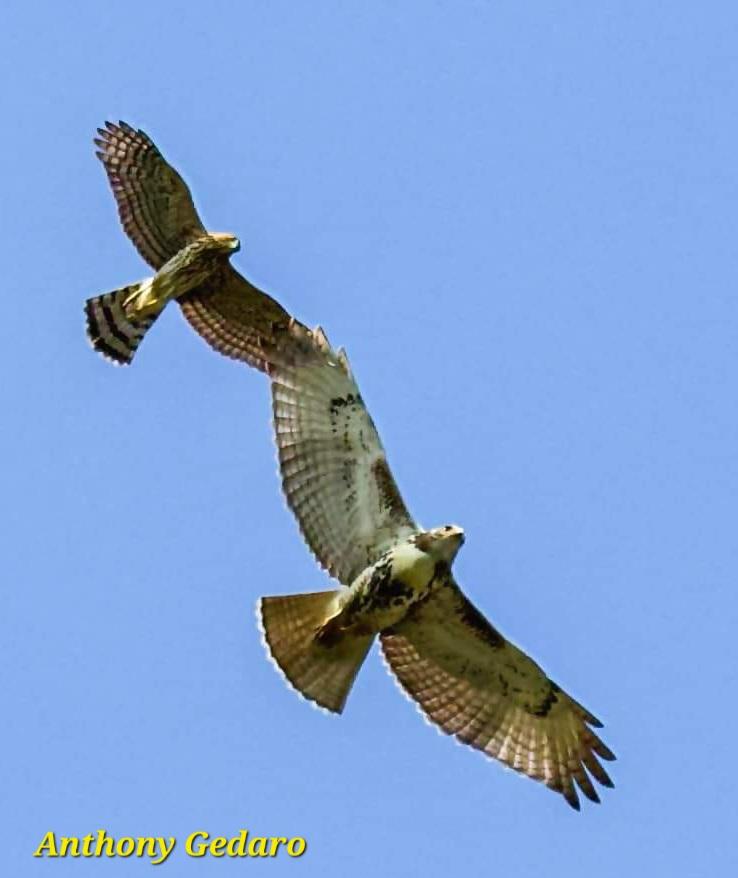
Size of a Cooper's Hawk, compared to a Red-Tailed Hawk. Quite a difference!

JOIN US!

by Gigi Stewart

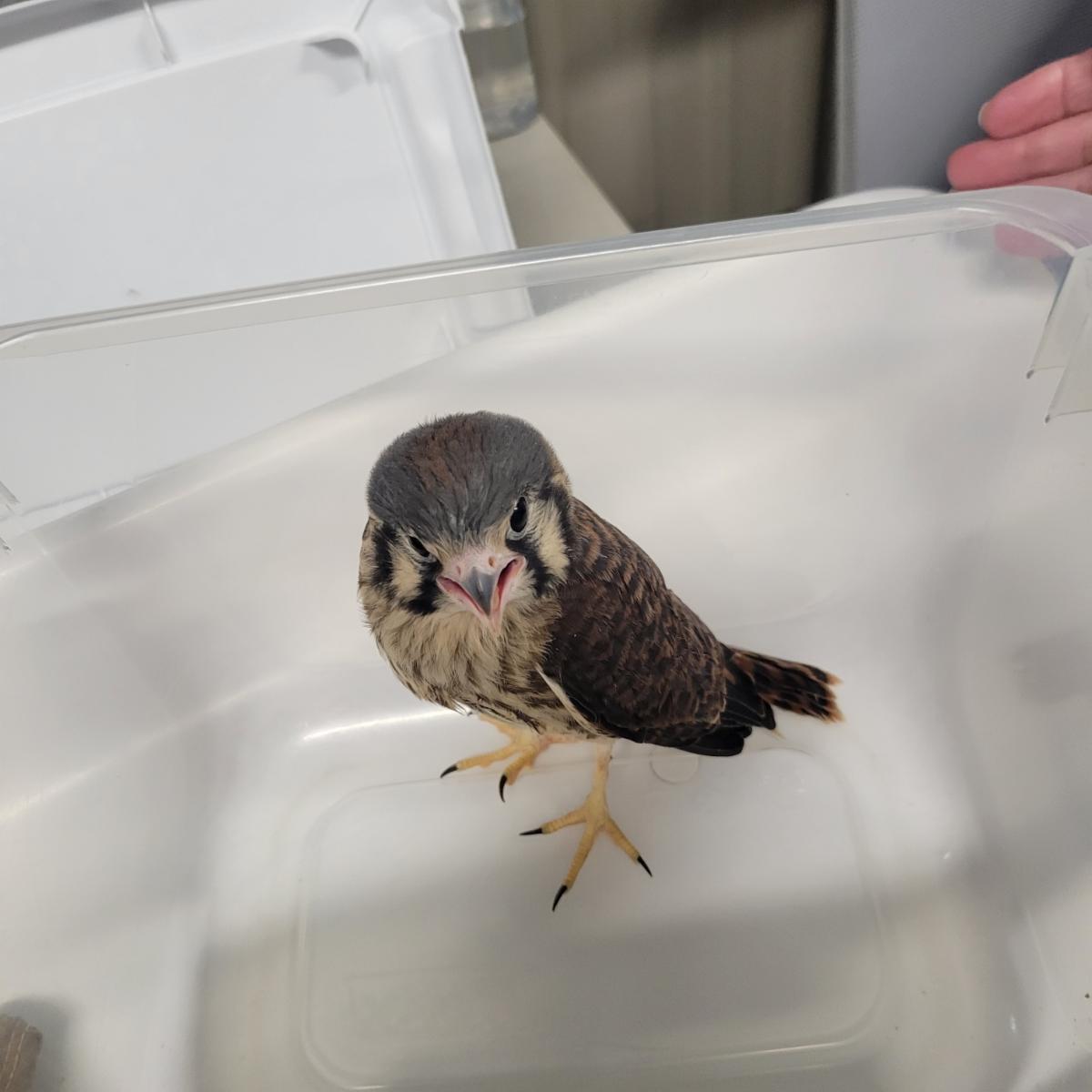
Baby season is pretty much over. Now we're getting the juvenile birds who haven't figured out how to hunt and feed themselves. When a young bird can't hunt, they don't eat, so they quickly become emaciated and weak, which makes them more vulnerable to predators, parasites, and car strikes. We refer to these birds as "young and dumb," and we have several of them in our ICU right now.


So, there's still plenty to do! You can share in the wonder of helping raptors if you become a Soarin' Hawk volunteer! There are many rewarding jobs to choose from, and lots of really great people to work with. Please contact our volunteer coordinator, Gigi Stewart, at gigi.stewart@soarinhawk.org. She can tell you when the next orientation is, so you can come and see what we do.


Help us help the birds! Click Here to Donate!
Meet the Birds! Attend a Presentation! Click here for Schedule

We have lots of education programs coming up, in and around Fort Wayne. Come and see the birds up close, and learn about raptors, and how you can help them thrive!

CELEBRATING GENEROSITY


Many thanks also to all of you who have been donating fish!


Thanks to their Community Rewards Program, Soarin' Hawk receives quarterly donations from Kroger. We thank Kroger for their generosity, and thank you all for signing up to have a percentage of your total grocery bill donated to Soarin' Hawk (at no cost to you!). Want to know how to make Soarin' Hawk your designated charity at Kroger?

Click Here.


P.S. Many employers will match funds donated to non-profits by employees. Ask your employer to see if they do! Make your donation to Soarin' Hawk go even farther! We also receive donations through Network for Good.


Many, many thanks for all your donations!

ALL CREATURES


Subscribe to the Soarin' Hawk newsletter! Click here.


Thanks to people like you, we were able to rescue, rehabilitate, and release this beautiful Great Horned Owl, who came to us starving and emaciated. After a few weeks in our facility, he was released, to continue life in the wild. Won't you make a donation, so we can help others like him? No contribution is too small!


Your donation is tax deductible.

Click here to help!

SOARIN' HAWK RAPTOR REHAB

260-241-0134

info@soarinhawk.org

www.soarinhawk.org

Connect with us

Facebook  Instagram