Sasakawa USA Newsletter December Highlights | | |
Included in this issue of the newsletter:
- Message from Sasakawa USA's Chairman Satohiro Akimoto
December Activities
- US-Japan NEXT Alliance Initiative: AI Study Trip to Japan
- Washington Kenkyu Group: Discussion with Dr. Jennifer Kavanagh
- Japan US Military Program (JUMP): JUMP New Orleans
- Policy Briefing: Discussion with Dr. Shawn Harding
Publications
- Commentary & Analysis: "Japan’s Growing International Security Cooperation in Defense Procurement: What Does it Portend for the U.S.-Japan Alliance?" by Dr. Shawn Harding
Upcoming Events
- Japan US Military Program (JUMP): Upcoming JUMP Engagements in Early 2026
- Soft Power Series: Beyond the Table: Food, Culture, and Connection Between Japan and the U.S. with Ms. Masako Morishita
Announcements
- Sasakawa USA Holiday Lunch
| | Message from Sasakawa USA's Chairman Satohiro Akimoto | |
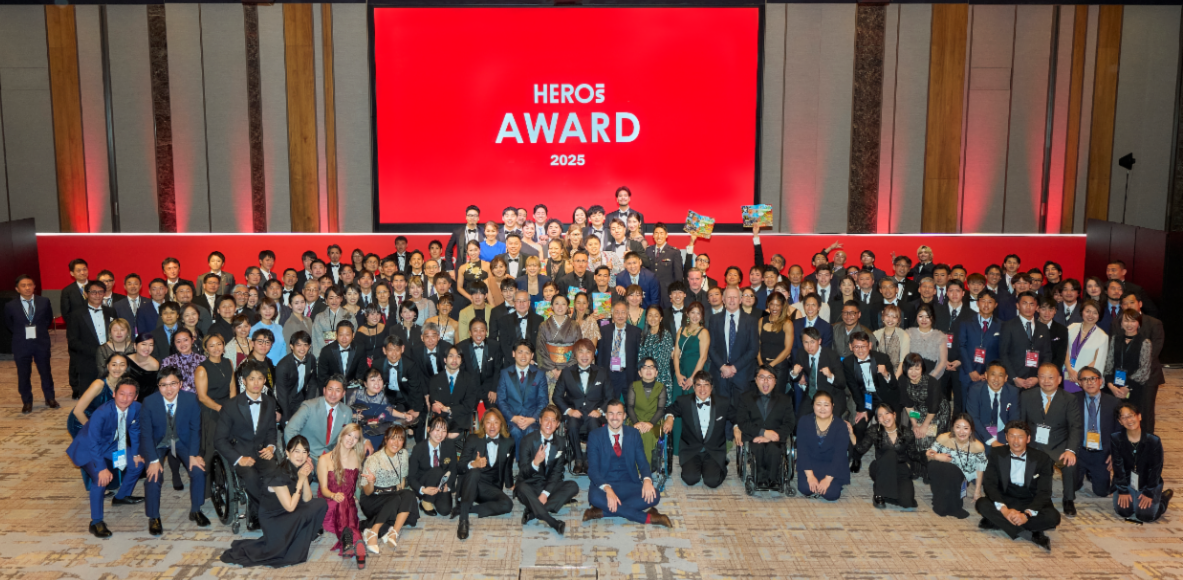
I had the honor of attending the “HEROs AWARD 2025” ceremony on December 15 in Tokyo. It was produced by “HEROs – Sportsmanship for the Future,” a project by The Nippon Foundation. The project uses the power of athletes and their sportsmanship to promote socially conscious activities that create a better society for the next generation. Mr. Junpei Sasakawa, President of The Nippon Foundation, who started the project nine years ago, aspires to harness the power of sports, which transcend political, economic and social differences, to help children make their hopes and dreams come true, which in turn creates a better society for following generations. In order to achieve this goal, the Nippon Foundation helps athletes learn how to contribute to society through classes provided by “HEROs Academy” and realize actual community activities through financial, networking, and communication support provided by “HEROs ACTION.”
Two athletes and two groups received awards at “HEROs AWARD 2025”.
World Peace through the Culture of “Respect” in Sumo
Sho Hakuho, the Mongolian-born former Grand Champion of sumo, has been trying to instill the spirit of peace and the beauty of the Japanese culture in the mind of children through sumo. He believes the culture of sumo begins with and ends with respect to the opponent, which is represented in the symbolic gesture of rei (bowing). Hakuho launched the Hakuho Sumo Tournament for grade school and junior high school students in 2010, when he was still actively engaged in professional sumo. Although the Hakuho Sumo Tournament started on a small scale with his own pocket money, over 1,100 grade school and junior high school students participated in the tournament held in February 2025. The proceeds were sent to help children in Ukraine and the Noto area.
Community Revitalization through “Total Conditioning”
Megumi Ikeda, a former member of the all-Japan fencing team, left the sport, when she was competing at the international level due to breast cancer. She initially struggled but eventually beat the disease because of “total conditioning of the body and the mind” which she attained as an athlete. She started her project to revitalize the local community through “total conditioning of the body and the mind” in everyday activities of regular people, across generations and different walks of life, in her home prefecture of Yamagata. She collaborates with other athletes and people from different professions to invite children from within Yamagata and across Japan to participate in annual rice-planting in the muddy fields to appreciate the beauty of Yamagata.
Overcoming Sports Education Disparity through Digital Guidance
The “AI Smart Coach,” a project of the SoftBank Group, aims to mitigate the disparity in sports education arising from the lack or insufficient guidance at schools particularly in rural areas. The app will provide digital guidance service and instructive videos to help students learn skills in various sports, such as baseball, soccer, basketball, volleyball, and other Olympic sports. Initially the “AI Smart Coach” had many trials and errors, however eventually it has become capable of giving the most effective guidance to students taking advantage of the vast data accumulated over the years. The “AI Smart Coach” now aims to reach beyond schools, such as providing digital guidance catering to the needs of different generations of people.
Providing Support to Disaster-Afflicted Areas Through the 47 Prefectural Soccer Network
The Japan national soccer team has been competing in the last 8 World Cup. Japan holds the 18th spot in the FIFA ranking. The national team is supported by talents trained in various parts of Japan through the national network of the various soccer associations across all 47 prefectures. The Japan Football Association has been supporting children in local communities afflicted by natural disasters through the local network of soccer associations. The information and knowledge, which the local soccer associations have accumulated, are shared and utilized by rescue organizations and athletes, who are willing to help children, in a timely and effective fashion. For example, through the 47 Prefectural Soccer Network, 574 athletes had 153 visits reaching out to 14,495 children in the Noto area after the major earthquake in January 2024. The spirit of the 47 Prefectural Soccer Network, as presented by Hajime Moriyasu, the head coach of the national team at the award ceremony, is “You can always crawl back and move forward.”
The “HEROs” project was launched in 2017 by Junpei Sasakawa, President of Nippon Foundation. He was a soccer player in his school days and holds the strong belief that sports have power to unite people across race, ethnicity, nationality, religion, and region at the fundamental human level. The project encourages Japanese athletes to develop a sense of social consciousness and make contributions to society through what they have learned through sports. The “HEROs AWARD 2025” presented a platform for a wide range of athletes to exchange ideas about how they can give back to communities utilizing the skills and name-recognition, which they had attained as athletes.
Sasakawa Peace Foundation USA plans to work with the Nippon Foundation to connect the U.S. and Japan by bringing the “HEROs” ambassadors to the U.S. to share their experiences with American people in the framework of Sasakawa USA’s Soft Power Series in 2026. Sasakawa Peace Foundation USA plans to reach out to local communities in the U.S. for such opportunities at the grassroots level, as well.
Photo: HEROs AWARD 2025 recipients and attendees.
| | US-Japan NEXT Alliance Initiative: AI Study Trip to Japan | | |
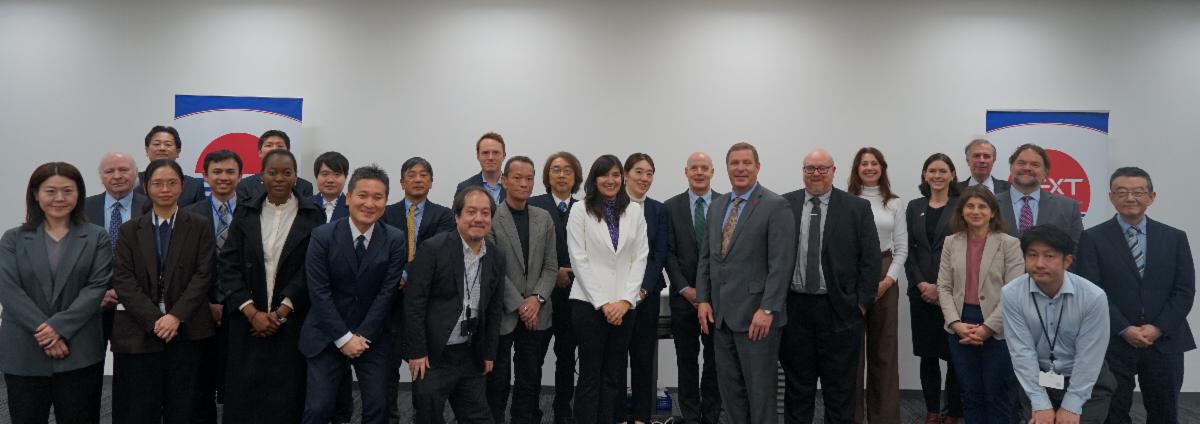
From December 10-12, US-Japan NEXT Alliance Initiative senior director James Schoff led a six-person delegation of U.S. AI and technology collaboration experts with backgrounds in academia, civil society, and government to meet with counterparts in Tokyo. The purpose of the trip was to discuss ways to bolster bilateral U.S.-Japan cooperation on AI safety and security policy making, and technology development from a national security perspective. The members of the delegation included Matt Chessen of RAND, Marissa Dotter of MITRE, Nidhi Kalra of RAND, Dimitri Kusnezov of the Nuclear Threat Initiative, Michael Goldman of Lawrence Livermore National Laboratory, and Douglas Rake of Racke Strategies.
The delegation met with policy makers and AI researchers in Japan’s government, private sector, research institutes and the US Embassy to discuss strategic approaches and develop joint initiatives for advancing AI safety security. In addition, Sasakawa USA organized a bilateral workshop on “physical” AI security (for autonomous systems), cooperated with NICT to host a workshop on cybersecurity and AI, and convened a public event on “The Next AI Security Challenge: U.S.-Japan Perspectives on Risks from Frontier AI” in partnership with the University of Tokyo’s Research Center for Advanced Science and Technology (RCAST).
Photo: Sasakawa USA's AI Study Trip delegation joins other experts at NICT workshop on “Cyber Misuse Risks for AI Systems”.
| | |
Washington Kenkyu Group:
Discussion with Dr. Jennifer Kavanagh
| | |
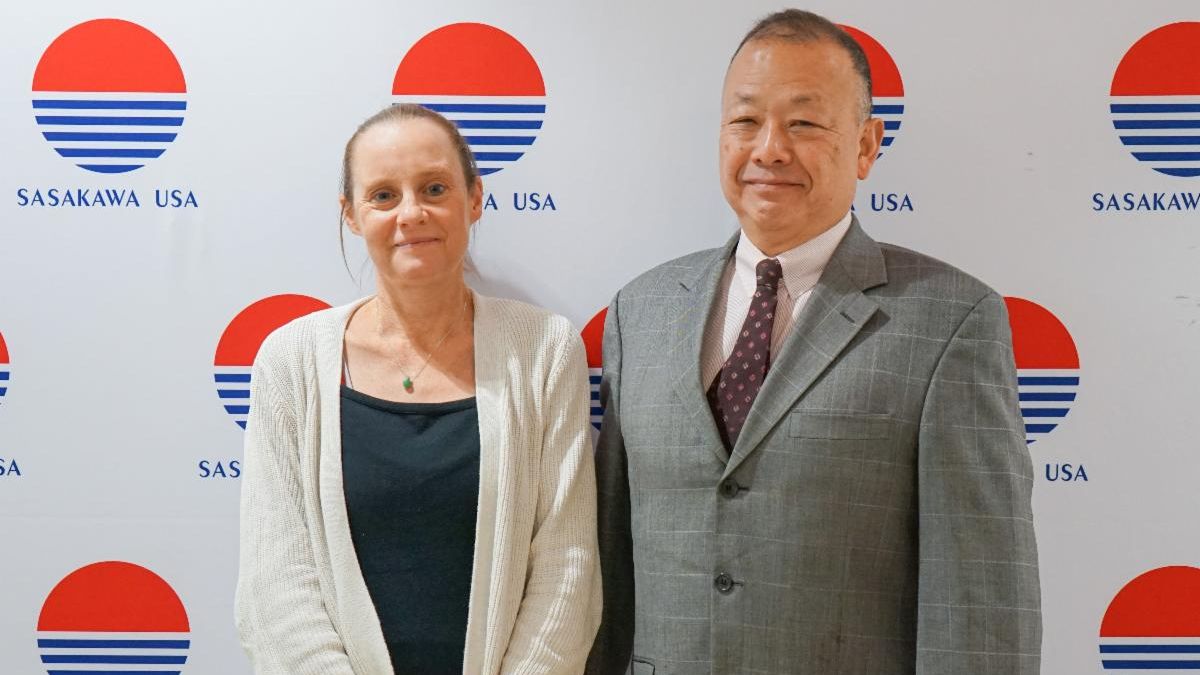
On December 1, Sasakawa USA hosted Dr. Jennifer Kavanagh, a senior fellow and director of military analysis at Defense Priorities, for a Washington Kenkyu Group discussion on the current state and future of U.S. military power in the Indo-Pacific. A self-described “restrainer,” Dr. Kavanagh argued that the U.S. “Pivot to Asia” has largely failed to materialize in military terms and that dominance in the region does not serve U.S. interests. Dr. Kavanagh also noted that the United States should pursue gradual force retrenchment from the region and shift toward allies’ self-sufficiency, even if that means accepting reduced political leverage against China or friendly nuclear proliferation. Her remarks were followed by a lively discussion with participants on various topics, including when the United States might have missed its last opportunity to sustain dominance, how restrainers view the ongoing Japan-China diplomatic row, and whether China seeks global hegemony.
Photo (L-R): Dr. Jennifer Kavanagh, Dr. Satohiro Akimoto
| | Japan US Military Program (JUMP): JUMP New Orleans | | |
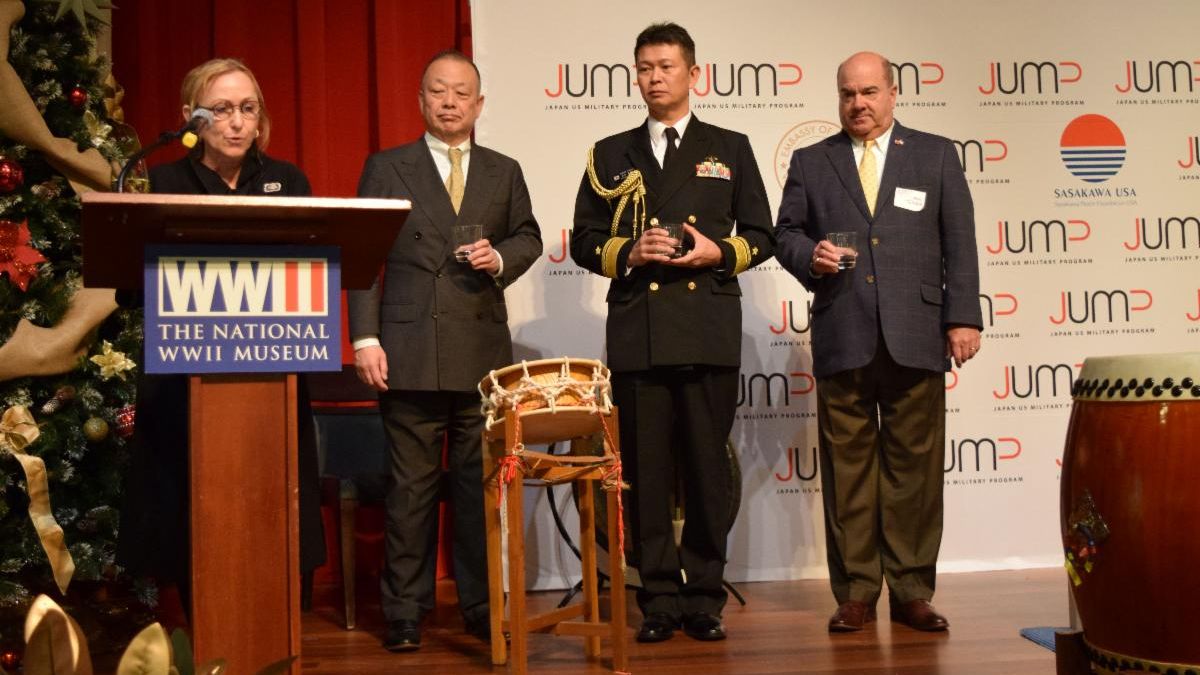
On December 4, Sasakawa USA held a Japan US Military Program (JUMP) event in New Orleans, Louisiana in partnership with the Embassy of Japan and the Japan Society of New Orleans (JSNO). Rear Admiral Takaaki Hayamizu, defense and naval attaché at the Embassy of Japan, provided keynote remarks where he discussed the growth and strengthening of the U.S.-Japan security alliance since its founding. In addition, the event featured a musical performance by the New Orleans Magnolia Taiko, a local taiko (Japanese drum) group. Additional speakers included Mr. Mike Turner, president of JSNO, Dr. Satohiro Akimoto, chairman and president, Sasakawa USA, and The Hon. Donna Fraiche, honorary consul of Japan in New Orleans, who, among other topics, all touched on the theme of friendship between the U.S. and Japan in their remarks. This JUMP event was hosted at the National World War II Museum in New Orleans, and it featured a crowd of both active duty and retired U.S. servicemembers from Louisiana as well as members of JSNO.
JUMP is made possible by financial support from the Embassy of Japan. This material is distributed by Sasakawa Peace Foundation USA on behalf of the Embassy of Japan. Additional information is available at the Department of Justice, Washington, DC.
Photo (L-R): Hon. Donna Fraiche, Dr. Satohiro Akimoto, Rear Adm. Takaaki Hayamizu, Mr. Mike Turner
| | Policy Briefing: Discussion with Dr. Shawn Harding | | |
On December 12, Sasakawa USA hosted a Policy Briefing event featuring Dr. Shawn Harding, non-resident scholar, U.S.-Japan NEXT Alliance Initiative at Sasakawa USA, and visiting fellow at the Edwin O. Reischauer Center for East Asian Studies.
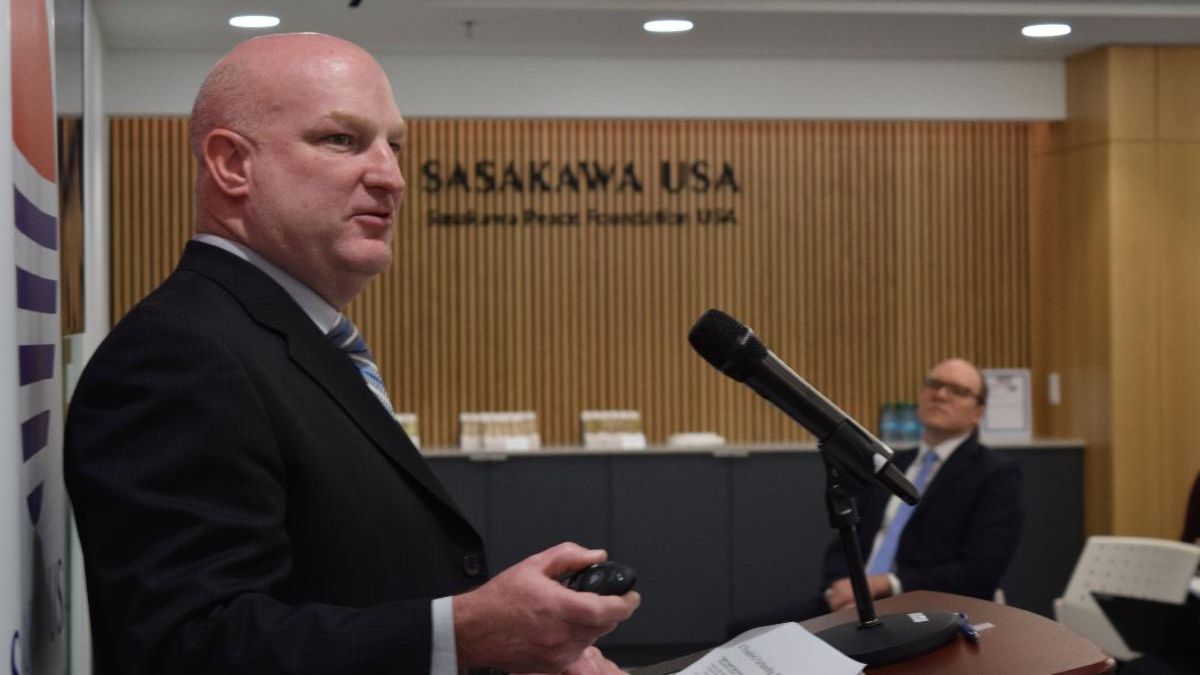
For his remarks, Dr. Harding drew on research he conducted as a Sasakawa USA U.S.-Japan Research Exchange fellow during a study trip to Tokyo in May 2025. In his presentation, Dr. Harding outlined Japan’s defense equipment and technology cooperation with the United States and other partners. After briefly covering the history of Japan’s co-production and co-development of defense equipment with the United States, Dr. Harding explained the recent expansion Japan’s defense cooperation with additional security partners on defense procurement, the drivers behind this trend, and how it may affect the U.S.-Japan security relationship moving forward. A lively Q&A with the audience followed Dr. Harding’s presentation, with Mr. Luke Collin, principal, The Asia Group, filling the role of moderator.
Photo: Dr. Shawn Harding giving presentation at Policy Briefing event.
| | |
Commentary & Analysis:
"Japan’s Growing International Security Cooperation in Defense Procurement: What Does it Portend for the U.S.-Japan Alliance?" by Dr. Shawn Harding
| | |
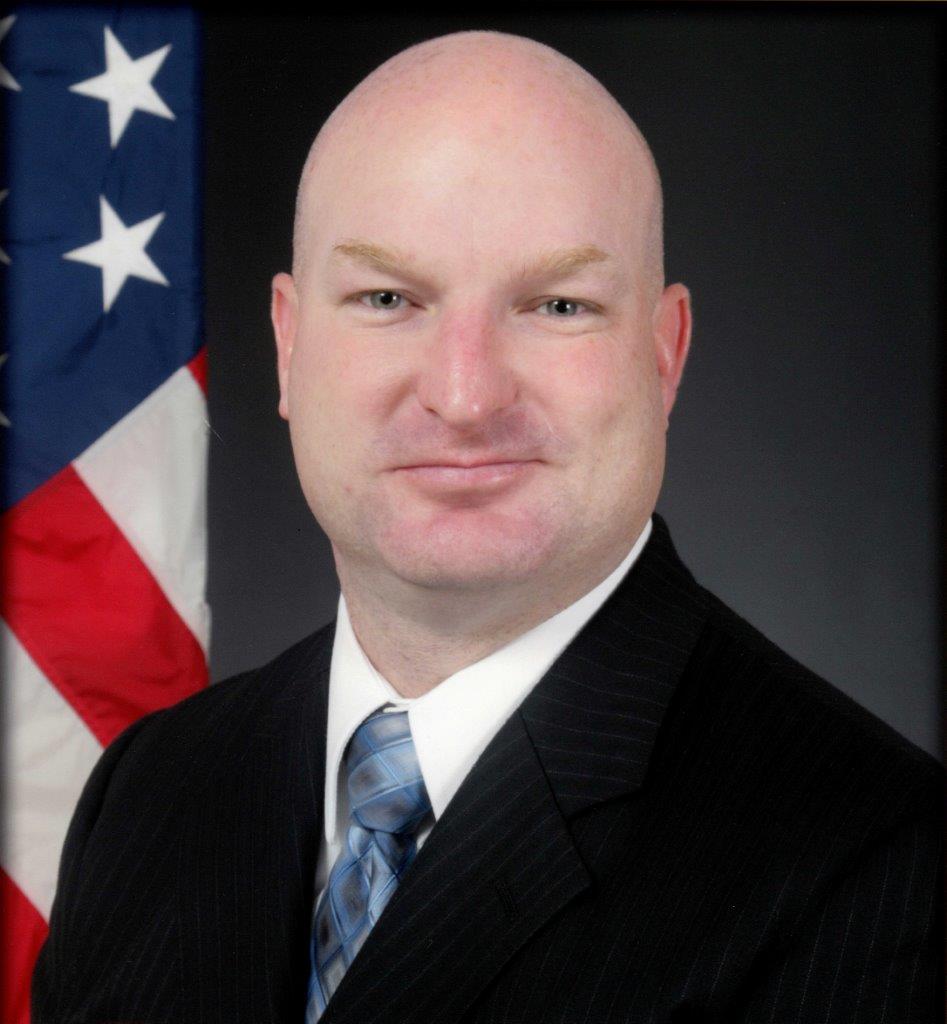
Dr. Shawn Harding, Non-Resident Scholar at the U.S.-Japan NEXT Alliance Initiative at Sasakawa Peace Foundation USA, has authored a new publication, “Japan’s Growing International Security Cooperation in Defense Procurement: What Does it Portend for the U.S.-Japan Alliance?” as a part of his participation in a week-long Sasakawa USA U.S.-Japan Research Exchange program to Japan in May of 2025.
His paper reflects the insights he gained from his various meetings with U.S.-Japan security experts in Tokyo, as well as from those he met at the DSEI conference in Chiba, and highlights how the U.S. and Japan are managing diversification amid shifting global power dynamics in the Indo-Pacific region, as well as how strengthening defense and security cooperation remains essential to maintaining the stability of the region.
Photo: Dr. Shawn Harding
| | |
Japan US Military Program (JUMP):
Upcoming JUMP Engagements in Early 2026
| | |
Sasakawa USA’s Japan U.S. Military Program (JUMP), in partnership with the Embassy of Japan, will host a series of events in early 2026 highlighting the importance of the U.S.-Japan alliance for those serving within the broader framework of peace and security in the Indo-Pacific, as well as veterans and their families. These programs will take place at Maxwell Air Force Base, Marine Corps Base Quantico, Naval Base San Diego, Virginia Military Institute, and in Washington, DC for the JUMP Annual Dinner.
Across these events, distinguished current and retired service members of the U.S. Armed Forces and Japan Self-Defense Forces will share perspectives on the evolving security environment, alliance cooperation, and the importance of sustained people-to-people ties.
JUMP is made possible by financial support from the Embassy of Japan. This material is distributed by Sasakawa Peace Foundation USA on behalf of the Embassy of Japan. Additional information is available at the Department of Justice, Washington, DC.
Photo: JUMP logo
| | |
Soft Power Series:
Beyond the Table: Food, Culture, and Connection Between Japan and the U.S. with Ms. Masako Morishita
| | |
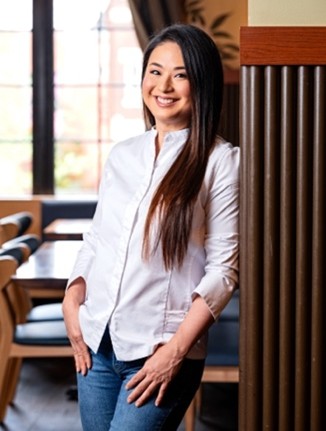
In January, Sasakawa USA will host the next installment in its Soft Power Series, Beyond the Table: Food, Culture, and Connection Between Japan and the U.S., featuring Ms. Masako Morishita, executive chef of Perry’s Restaurant. Since moving to Washington, D.C., Ms. Morishita has shared Japanese culture through her creative blend of traditional dishes and contemporary influences. Her culinary achievements include preparing a luncheon for former Prime Minister Fumio Kishida’s official visit to the United States. As a woman and immigrant succeeding in the American restaurant industry, she exemplifies Japan’s soft power through food, hospitality, and community. In this program, Ms. Morishita will reflect on her journey, her creative process, and the role of cuisine as a bridge between cultures. Her remarks will be followed by a discussion with Dr. Satohiro Akimoto and Ms. Kaede Ishidate of Sasakawa USA.
Photo: Ms. Masako Morishita (photo by Scott Suchman)
| | Sasakawa USA Holiday Lunch | | |
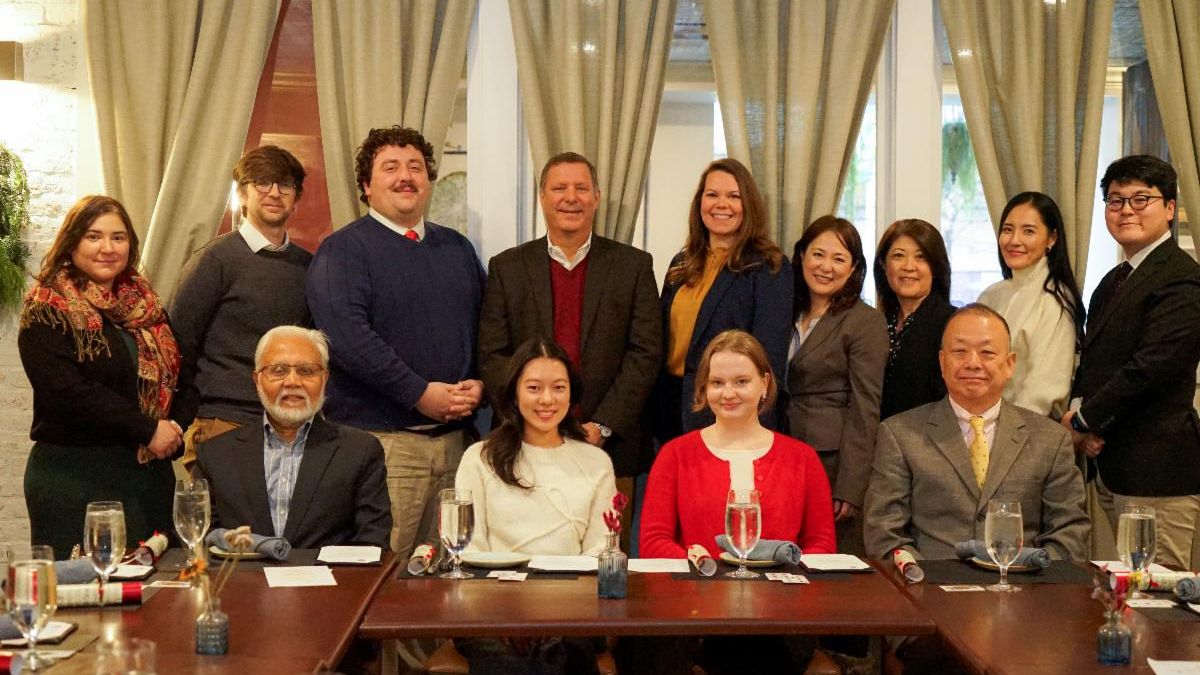
This month, Sasakawa USA staff gathered for a holiday lunch to reflect on the past year and express appreciation for everyone who has supported our work. We were also joined by Dr. Amit Roy, chair of the Sasakawa Africa Association, with whom we share our office. We are grateful to Sasakawa USA’s Administrative Team for organizing the lunch and to Equinox co-owners and founders, executive chef Todd Gray and Ms. Ellen Kassoff, for their warm hospitality in hosting us.
Most of all, we extend our thanks to our readers, partners, and friends for your continued interest and engagement with our programs in 2025. We look forward to further strengthening the U.S.-Japan relationship and sharing new initiatives with you in the year ahead!
Photo: Sasakawa USA Staff and Dr. Amit Roy
| | |
Sasakawa Peace Foundation USA
1819 L Street, NW, Suite 300
Washington, DC 20036
+1.202.296.6694
| | | | |