Sasakawa USA Newsletter October Highlights | |
|
Included in this issue of the newsletter:
- Message from Sasakawa USA's Chairman Satohiro Akimoto
October Activities
- US-Japan NEXT Alliance Initiative: NEXT Alliance Conference (NAC) Focuses on Command and Control (C2) Modernization
- US-Japan NEXT Alliance Initiative: Hosts Public Panel Discussion on Command and Control (C2) Modernization
- Japan U.S. Military Program (JUMP): JUMP Honolulu
- Informal Security Dialogue
- Rising Indo-Pacific Security Experts (RISE): Event with Lieutenant General Koichi Isobe
- Sasakawa USA Women's Advancement Network (SWAN): Event on Women, Peace and Security (WPS) in the U.S.-Japan Alliance
-
Sasakawa USA and United States-Japan Foundation: Event for Ms. Mireya Solis' New Book Japan's Quiet Leadership: Reshaping the Indo-Pacific
Recaps
-
Policy Briefing: Returning of Yosegaki Hinomaru to Where They Belong
External Engagements/Events
- JET Alumni Association of the United States of America (JETAAUSA): Chapter Grant Event with JETAA Southern California
- Mt. Fuji Dialogue: Mr. Jim Schoff on Technology and National Security Panel
Publications
- US-Japan NEXT Alliance Initiative: U.S.-Japan Economic Security Coordination Update (Mr. Jacobs)
- Sasakawa USA Emerging Experts Delegation (SEED): 2023 SEED Delegate Publications on WPS (Dr. Smith and CMD Agraviador)
Upcoming Activities
- Networking & Presentations: Congressional Alumni Luncheon with Minister Tomoaki Ishigaki
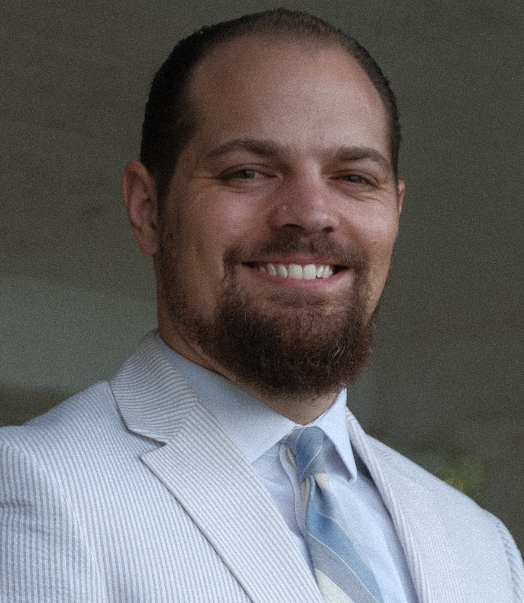
- US-Japan NEXT Alliance Initiative: Cybersecurity Roundtable with Ms. Mihoko Matsubara and Mr. Taro Hashimoto
- Japan U.S. Military Program (JUMP): JUMP West Point
- Engagements in DC with General Koichiro Bansho
Announcements
- New Program Officer: Ms. Fumiyo Layman
| |
Message from Sasakawa USA's Chairman Satohiro Akimoto | |
|
The Republic of Palau (Palau) is an island country located in the Micronesia subregion of Oceania in the Pacific Ocean. The country consists of approximately 350 islands, which connects the western Caroline Islands archipelago, and has a total population estimated to be around 20,000. Most of Palau’s islands are uninhabited except for ten islands. The beautiful southern Pacific Ocean surrounds the entire nation in pristine condition. Palau is widely known as one of the best scuba diving and snorkeling havens in the world. In fact, Palau has made conscious efforts to preserve the region’s nature. In 2005, Palau called on regional countries to establish the Micronesia Challenge to conserve 30 percent of nearshore coastal waters and 20 percent of forestland by 2020. In 2012, UNESCO designated Palau’s Rock Islands a World Heritage Site. However, Palau does not exist in natural paradise detached from the geopolitical reality of global competition. On the contrary, global competition historically has deeply affected Palau.
In 1710, Palau was first “discovered” by a Jesuit expedition, and then British East India traders followed and became regular visitors. Palau later became part of the Spanish East Indies headquartered in the Philippines. When the Spanish Empire’s finances became unsustainable, Spain sold Palau in the German-Spanish Treaty of 1899.
Japan annexed Palau following Germany’s defeat in World War I, as part of the South Seas Mandate established by the League of Nations. Japan saw Palau as central to its regional strategy and placed its Nanyo-cho, the Territorial Government of the South Seas, in Koror. Many Japanese moved to Koror and transformed Palau’s society and industries in mining, fishery, and agriculture. According to the Embassy of Japan in Palau, there were 15,000 Japanese living in Palau in 1938.
Following Japan’s defeat in World War II, the United States took over administration of Palau as part of the Trusteeship Agreement for the Trust Territory of the Pacific Islands under United Nations Security Council Resolution 21 in 1947. Later, Palau decided not to join the proposed Federated States of Micronesia in 1978, adopting a new constitution and established its own government as the Republic of Palau in 1981. Then, in 1993, Palau signed a Compact of Free Association with the U.S., which grants the U.S. military access to Palau in exchange for economic and security assistance. The Compact of Free Association with the U.S. went into effect in 1994, and Palau became independent that same year.
In the post-war period, Palau and Japan have maintained a close relationship. Some of the old Japanese-built infrastructure is still in use today, such as the building used for the Territorial Government of the South Seas, now Palau’s Supreme Court, and Palau Nippon Stadium for baseball. In addition, Japan funded major infrastructure projects, such as construction of the Koror-Babeldaob Bridge and expansion of Roman Tmetuchl International Airport. The Nippon Foundation works closely with Palau in the areas of environmentally conscious tourism by providing passenger boats and preservation of maritime security by providing patrol boats and training of its operators.
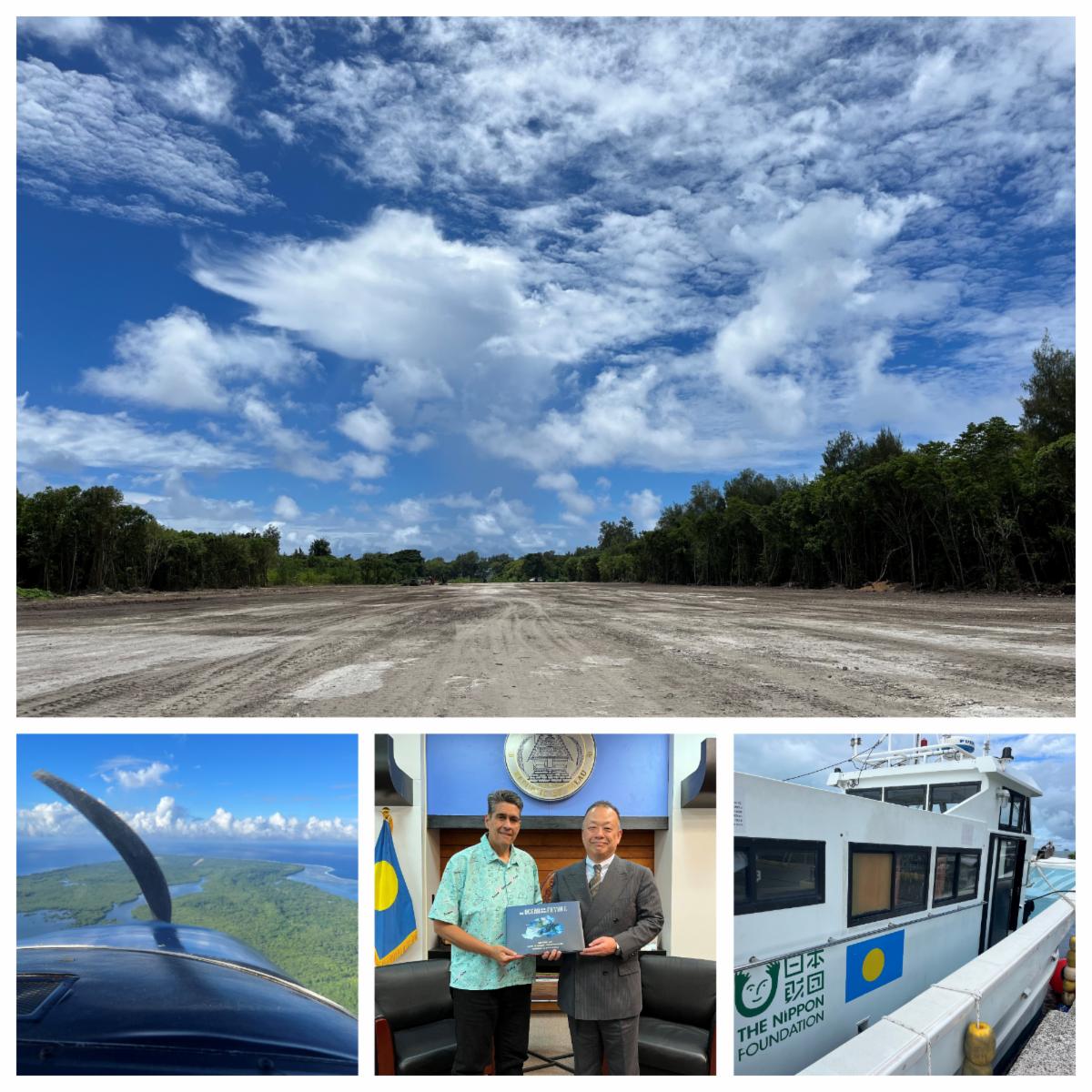
In recent years, the U.S. has begun serious efforts to re-engage Palau together with other Pacific Island nations to maintain peace and stability under the rule of law. U.S. military involvement with Palau, under the Compact of Free Association, historically had been minimal, such as limited Coast Guard patrols, even though Palau has no independent military forces. However, U.S. military involvement is quickly changing. For example, on the island of Peleliu, the U.S. is expanding an old Japanese military airfield for its military use with seventy military personnel and heavy machinery, according to locals. Additionally, a new U.S. Tactical Mobile Over-the-Horizon Radar base is being built in Palau to boost early-warning capabilities for the western Pacific.
It is worth noting the deepening military ties with the U.S., combined with Palau’s position of maintaining diplomatic relations with Taiwan, has made some Palauans uneasy as they think it will make Palau's national security more vulnerable being directly caught between U.S.–China competition. As a matter of fact, China has been raising economic pressure on Palau by severely reducing the number of Chinese tourists after it failed to persuade Palau to switch its diplomatic ties from Taiwan to China.
The U.S. and Palau agreed in May 2023 to extend special economic arrangements underpinned by the Compact of Free Association, although U.S. Congress must approve the extension. Political turmoil in the U.S. Congress has raised questions in Palau about the reliability of the U.S. commitment. President Surangel Whipps expressed disappointment in the lack of U.S. Congressional action in an interview with Voice of America (VOA) on October 11, 2023: “Our Congress ratified it (the extension) in July, and we were hoping that on October 1, the U.S. Congress would do the same, because that’s when it’s supposed to be implemented.”
The U.S. and Japan, which recognize Palau’s strategic importance in maintaining power balance in the Pacific Islands region, have much to offer in terms of diplomacy, national security, economy, and society. What Palau needs is consistent and sustained relations reflecting not only views of geopolitical competition among larger nations, but also interest in Palau's local viewpoints.
| |
|
Top photo: Expansion of the old Japanese airstrip by the U.S. military on the island of Peleliu in the Republic of Palau
Bottom left photo: Ariel view of the airstrip expansion on the island of Peleliu
Bottom middle photo: Republic of Palau President Surangel Whipps, Jr., and Dr. Satohiro Akimoto
Bottom right photo: Passenger boat, provided by the Nippon Foundation, that connects the islands of Peleliu and Koror
| |
US-Japan NEXT Alliance Initiative: NEXT Alliance Conference (NAC) Focuses on C2 Modernization | |
|
The US-Japan NEXT Alliance Initiative held the third NEXT Alliance Conference (NAC) in both DC and Annapolis from October 27-29. Its focus, building upon the Spring NAC in Tokyo, further explored beneficial adjustments to future U.S.-Japan command and control (C2) relationships in response to new security challenges. The U.S. and Japan delegations began discussions with briefings from U.S. government officials on current alliance initiatives and the status of Mission Partner Environment deployment. The participants then traveled to Annapolis, MD, for a two-day bilateral workshop that explored the status of C2 modernization efforts and potential areas for improvement, as well as keynote presentations on “contested logistics” and the role of functional commands vis-à-vis INDOPACOM. Participants included active and retired government officials and military personnel, scholars, and private sector representatives from the two countries. Senior Director Jim Schoff extends his deepest thanks to all participants for their meaningful contributions to the conference. The NEXT team will be publishing a final report on C2 modernization and planning the next NAC on economic security in Tokyo both in March 2024.
Photo: NEXT Alliance Conference (NAC) participants
| |
US-Japan NEXT Alliance Initiative: Hosts Public Panel Discussion on Command and Control Modernization | |
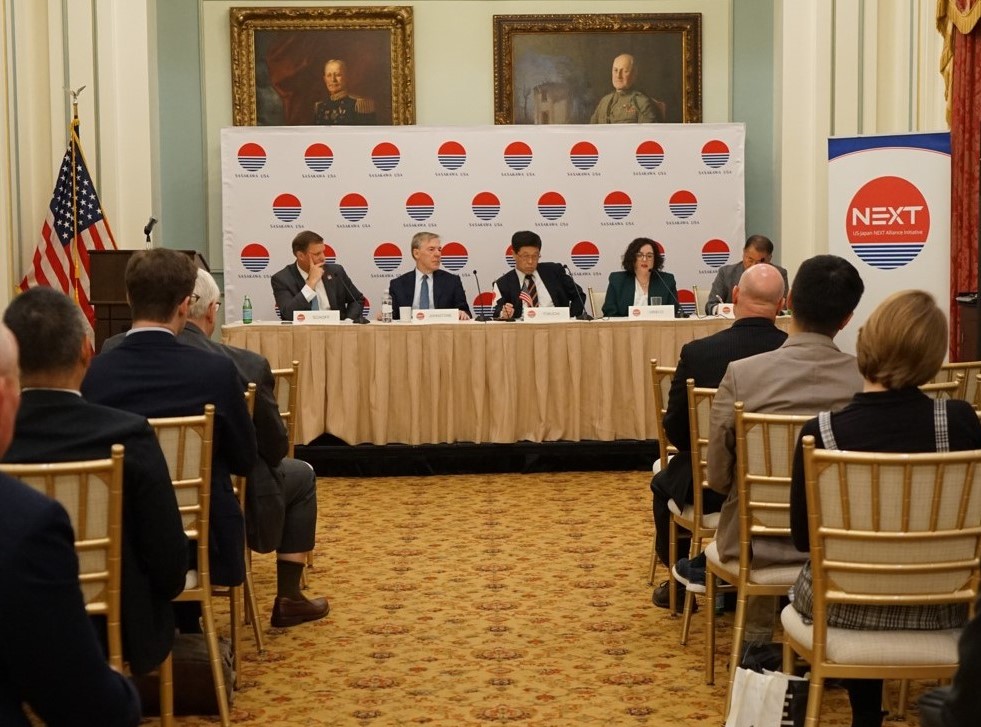 |  | The NEXT Alliance Initiative held a public event on October 30 following its third NEXT Alliance Conference (NAC) which convened in DC and Annapolis from October 27-29. The NAC focused on exploring beneficial adjustments to future U.S.-Japan command and control (C2) relationships, and the event featured NAC participants discussing outcomes of the conference and sharing their ideas for alliance C2 modernization. This included an idea for bolstering U.S. Forces Japan (USFJ or a “NewSFJ”) with additional staff and command authorities in order to be a more effective partner for Japan’s new Permanent Joint Headquarters in 2025. Mr. Jim Schoff, senior director at Sasakawa USA, led the panel discussion alongside Dr. Kelly Grieco, senior fellow at the Stimson Center, Mr. Chris Johnstone, Japan chair at CSIS, Lt. Gen. (Ret.) Sadamasa Oue (JASDF), and Mr. Hideshi Tokuchi, president of the Research Institute for Peace and Security (RIPS). An audience of over 40 people participated in the event, which was held at The Army and Navy Club in Washington.
Photo: NEXT Alliance Initiative public event at The Army and Navy Club in Washington, DC
| |
Japan U.S. Military Program (JUMP): JUMP Honolulu | |
|
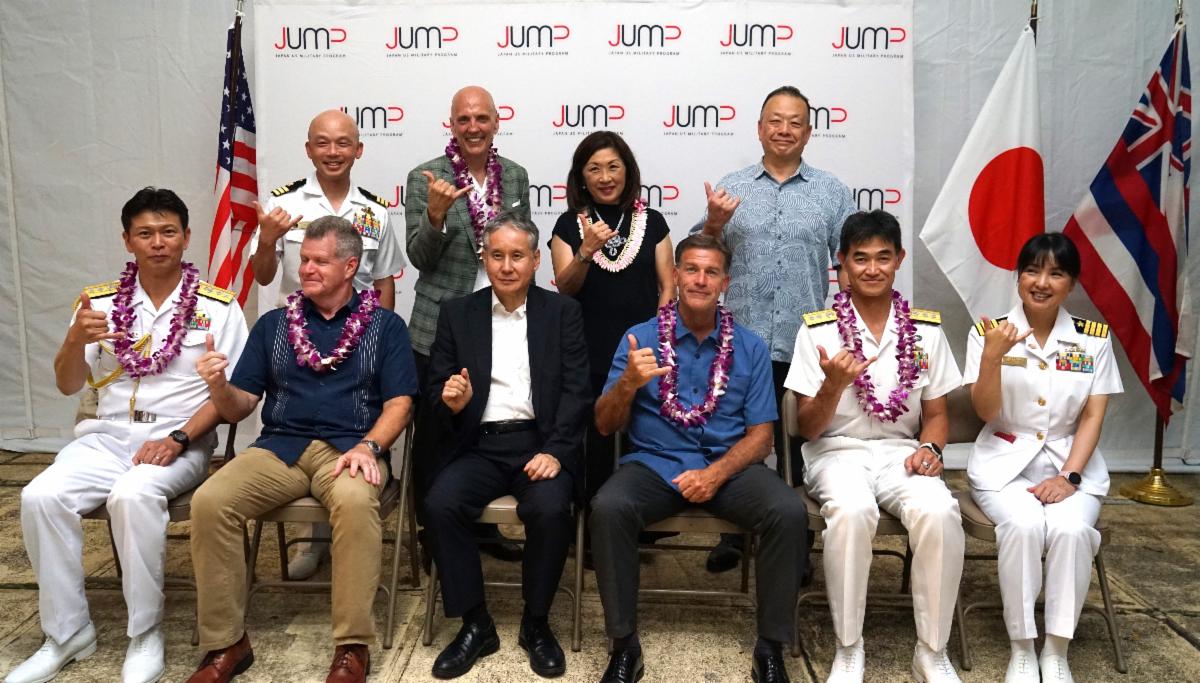
On October 5, Sasakawa USA’s Japan-U.S. Military Program (JUMP) held an event in Honolulu, Hawaii in partnership with the Japan-America Society of Hawaii, the National Association of Japan-America Societies, the Consulate-General of Japan in Honolulu, and the Embassy of Japan in the United States. This event featured remarks on the need to strengthen the U.S.-Japan alliance through increased exchange and cooperation by Admiral John C. Aquilino (USN), Commander, U.S. Indo-Pacific Command; Rear Admiral Takaaki Hayamizu (JMSDF), Defense and Naval Attaché, Embassy of Japan; Rear Admiral Yasushige Konno (JMSDF), Commanding Officer, Japan Training Squadron; and Mr. Yoshinori Kodama, Consul-General of Japan in Honolulu. JUMP Honolulu was held at the residence of the consul-general of Japan in Honolulu and was attended by American servicemembers and civilians, as well as members of the Japan Training Squadron of newly commissioned officers in the Japan Maritime Self-Defense Force.
Photo (front row, left to right): Rear Admiral Takaaki Hayamizu (JMSDF), Admiral Samuel Paparo (USN), Consul-General of Japan Yoshinori Kodama, Admiral John Aquilino (USN), Rear Admiral Yasushige Konno (JMSDF), Captain Miho Otani (JMSDF)
| |
Informal Security Dialogue | |
|
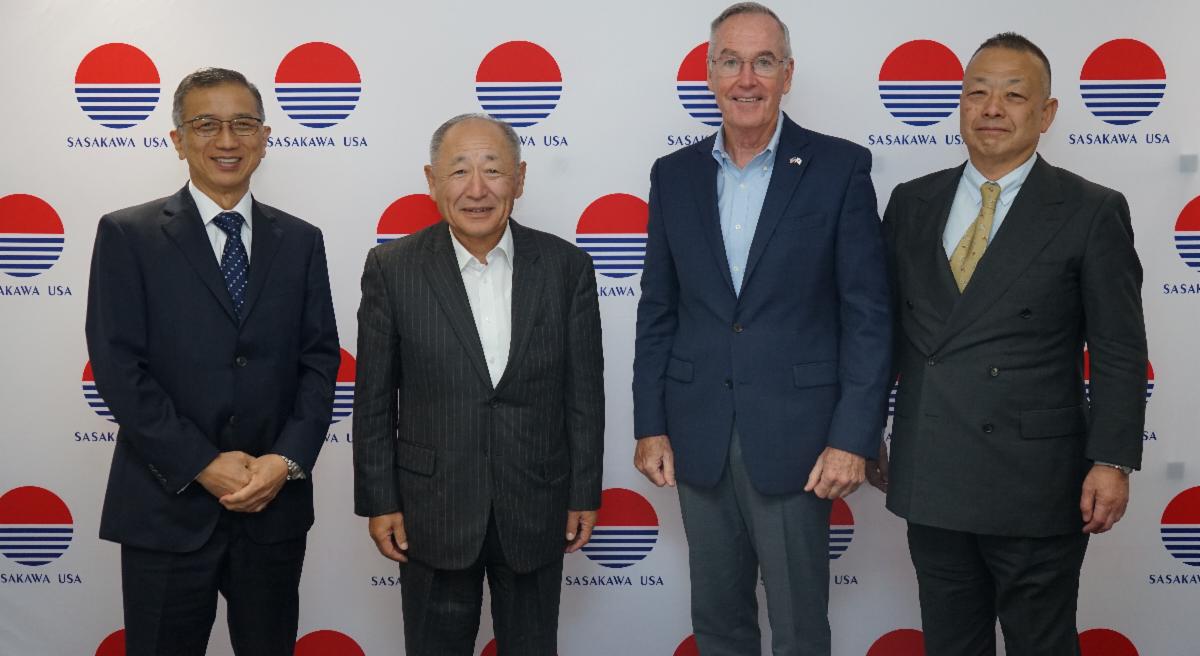
On October 17, Sasakawa USA held an informal discussion on the U.S.-Japan security alliance among high-ranking former military leaders from the United States and Japan. Dr. Satohiro Akimoto, president and chairman of Sasakawa USA, convened a meeting consisting of General Joseph Dunford (USMC, Ret.), former chairman of the Joint Chiefs of Staff; Admiral Katsutoshi Kawano (JMSDF, Ret.), former chief of staff of the Joint Staff of the Japan Self-Defense Forces; and Lieutenant General Koichi Isobe (JGSDF, Ret.), former commander of the Eastern Army of Japan. Together, they identified and discussed major strategic issues for the U.S. and Japan to effectively deal with dramatic geopolitical changes in the Indo-Pacific region.
Photo (left to right): Lieutenant General Koichi Isobe (JGSDF, Ret.), Admiral Katsutoshi Kawano (JMSDF, Ret.), General Joseph Dunford (UMCS, Ret.), and Dr. Satohiro Akimoto
| |
Rising Indo-Pacific Security Experts (RISE): Event with Lieutenant General Koichi Isobe | |
|
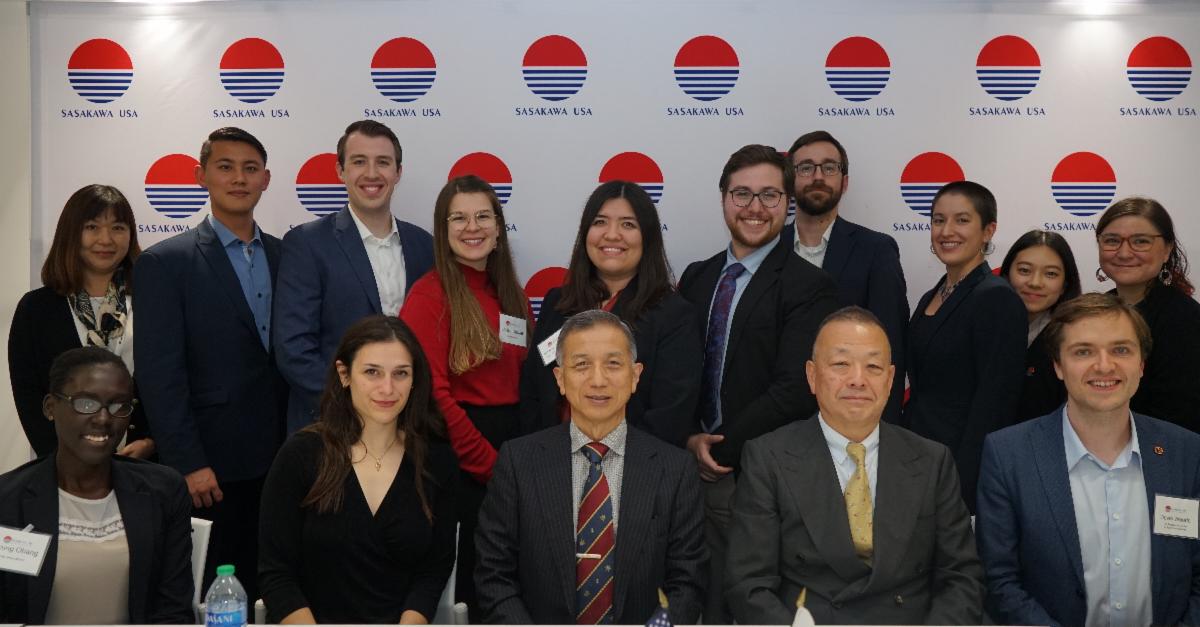
On October 26, Sasakawa USA welcomed LTG Koichi Isobe, 37th commander of the Eastern Army of the JGSDF (Retired) from 2013-2015, to speak at a Rising Indo-Pacific Security Experts (RISE) event. Dr. Satohiro Akimoto, chairman and president of Sasakawa Peace Foundation USA, served as moderator for the event.
After participating in several Sasakawa USA meetings over the past few weeks, LTG Isobe graciously returned to speak in this iteration of RISE, where he spoke on the geopolitical landscape of Northeast Asia and the U.S.-Japan alliance. In his talks, he touched on changes in and the development of Japan’s National Security Strategy, as well on what lessons can be learned from the ongoing Russo-Ukrainian war, and how they could be applied to the Taiwan Strait issue.
Photo (front row, center): Lieutenant General Koichi Isobe and Dr. Satohiro Akimoto with RISE participants
| |
Sasakawa USA Women's Advancement Network (SWAN): Event on Women, Peace and Security (WPS) in the U.S.-Japan Alliance | |
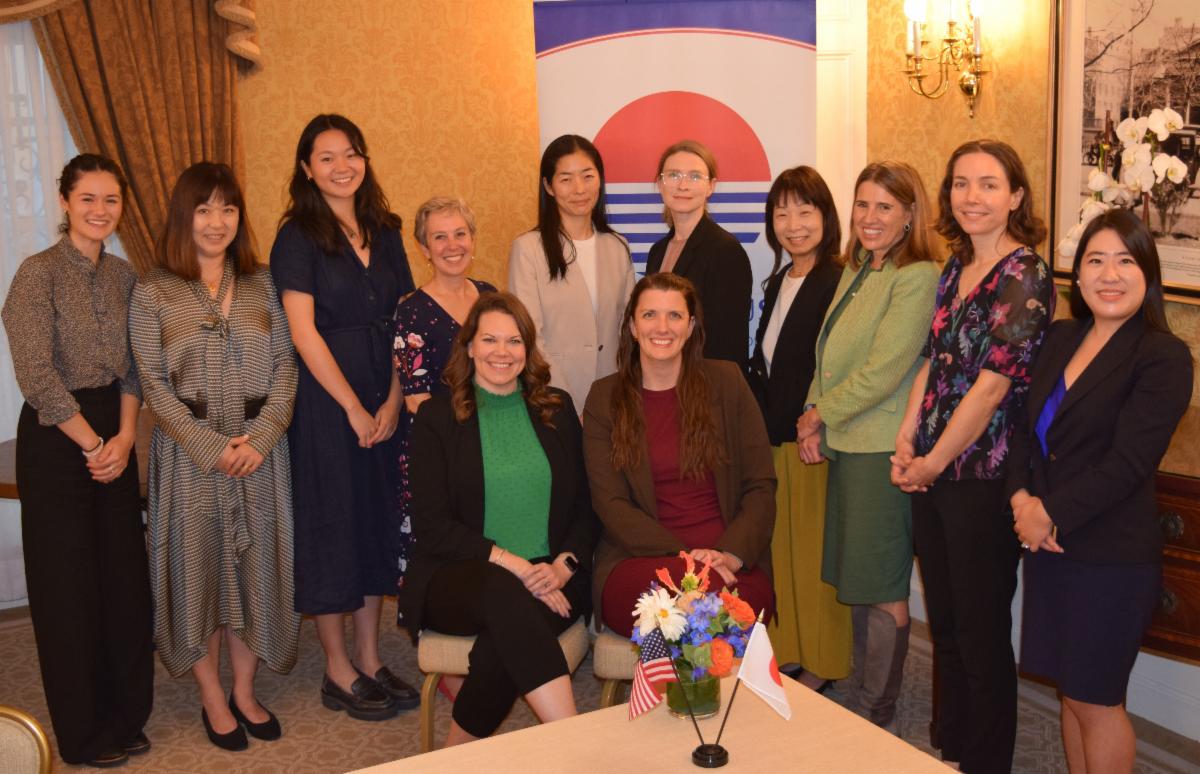
On October 30, Sasakawa USA hosted the roundtable, “Women, Peace and Security: A New Path for U.S.-Japan Collaboration,” featuring remarks by Ms. Erin Cooper, acting director for international humanitarian policy at the Department of Defense, and Ms. Shanti Shoji, director of programs at Sasakawa USA.
In July, Ms. Shoji led a delegation of eight American Women, Peace and Security (WPS) experts to Tokyo for engagements to gain insights into Japan’s work on WPS and establish and strengthen existing networks for U.S.-Japan collaboration on WPS. Ms. Cooper, who in addition to her work at the DoD is the associate director for Our Secure Future of the One Earth Future Foundation, was one of those delegates who traveled to Japan. In this event, Ms. Shoji and Ms. Cooper provided an overview of WPS and explained its core principles and how it fits into the institutional landscape of U.S.-Japan relations. Their remarks were followed by an engaging discussion with participants representing think tanks, universities, media, federal agencies, and the private sector.
Photo (back row, left to right): Ms. Isabelle Burke, Ms. Fumiyo Layman, Ms. Christina Lu, Dr. Sonya Finley, Ms. Mika Takagi, Ms. Sara Harriger, Dr. Masami Onoda, Ms. Emma Chanlett-Avery, Ms. Mirna Galic, Ms. Jenny Kai (front row, left to right): Ms. Shanti Shoji, Ms. Erin Cooper
| |
Sasakawa USA and United States-Japan Foundation: Event for Ms. Mireya Solís' New Book Japan's Quiet Leadership: Reshaping the Indo-Pacific | |
|
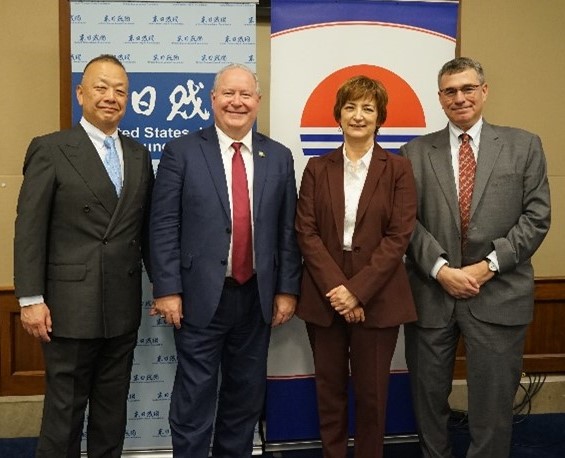
On October 16, the United States-Japan Foundation and Sasakawa USA co-hosted a discussion with Dr. Mireya Solís, director of the Center for East Asia Policy Studies at Brookings Institution on her most recent book, Japan’s Quiet Leadership: Reshaping the Indo-Pacific (Brookings Press, September 2023). Honorable Larry Bucshon, MD (R-IN) provided welcome remarks, followed by an introduction of Dr. Solís by Dr. Satohiro Akimoto, chairman and president of Sasakawa USA. Mr. Jake M. Schlesinger, president and CEO of the United States-Japan Foundation, served as moderator for the event.
In her book, Dr. Solís addresses the question of why and how Japan has emerged from the “lost decades” unscathed from the populist wave and a far more consequential actor in the geopolitics of the Indo-Pacific. During the event, Dr. Solís shared insights from her new book while engaging in a discussion with Mr. Schlesinger regarding how Japan has stepped into a position of active leadership in the Indo-Pacific as an advocate of free trade, democracy, and the rule of law. Dr. Solís also discussed how Japan’s influence matters to U.S. strategy in the region as the security environment and supply chain resilience become increasingly challenging issues. Members of the audience engaged Dr. Solís in robust dialogue during the Q&A session, expanding the scope of the conversation by touching on topics such as addressing existing gaps between U.S. and Japan policies, as well as areas of cooperation to further tap into to promote shared interests and goals.
Photo (left to right): Dr. Satohiro Akimoto, the Hon. Larry Bucshon, Dr. Mireya Solís, and Mr. Jake M. Schlesinger
| |
Policy Briefing: Returning of Yosegaki Hinomaru to Where They Belong | |
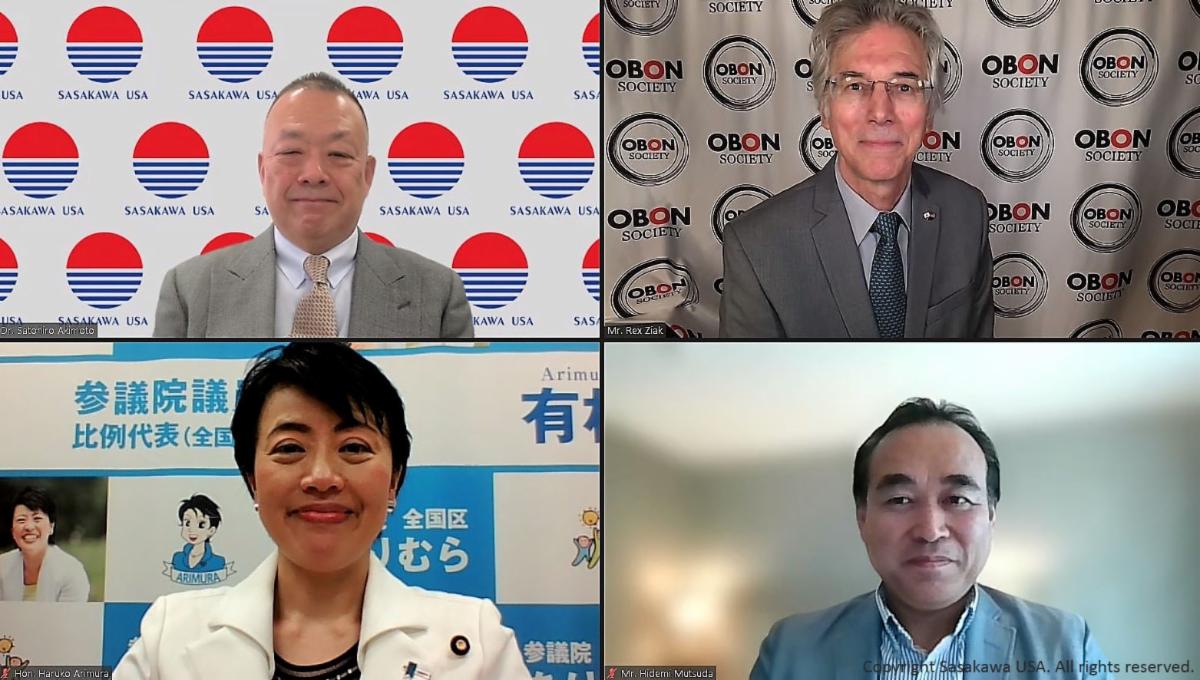 | | The written recap and video recording of Sasakawa USA’s virtual policy briefing, “Returning of Yosegaki Hinomaru to Where They Belong,” are now available on Sasakawa USA's website. This event featured remarks by Mr. Rex Ziak, co-founder of the Obon Society, who spoke about a story of healing, reconciliation, and new connection between the U.S. and Japan through the flag returning ceremony held at the USS Lexington Museum in July. Following his remarks, the Honorable Haruko Arimura, member of the House of Councillors of Japan, provided commentary on the returning of the flag from Japan’s perspective. Mr. Hidemi Mutsuda, grandson of Mr. Shigeyoshi Mutsuda to whom the Yosegaki Hinomaru belonged, provided a brief reflection about attending the Yosegaki Hinomaru return ceremony in Japan and conveyed appreciation to everyone involved in the flag's return. Dr. Satohiro Akimoto, chairman and president of Sasakawa USA, moderated the Q&A session following their remarks. The video recording and recap of the event are available on Sasakawa USA's website here.
Photos (clockwise from top left): Dr. Satohiro Akimoto, Mr. Rex Ziak, Mr. Hidemi Mutsuda, and the Honorable Haruko Arimura
| |
External Engagements/Events | |
JET Alumni Association of the United States of America (JETAAUSA): Chapter Grant Event with JETAA Southern California | |
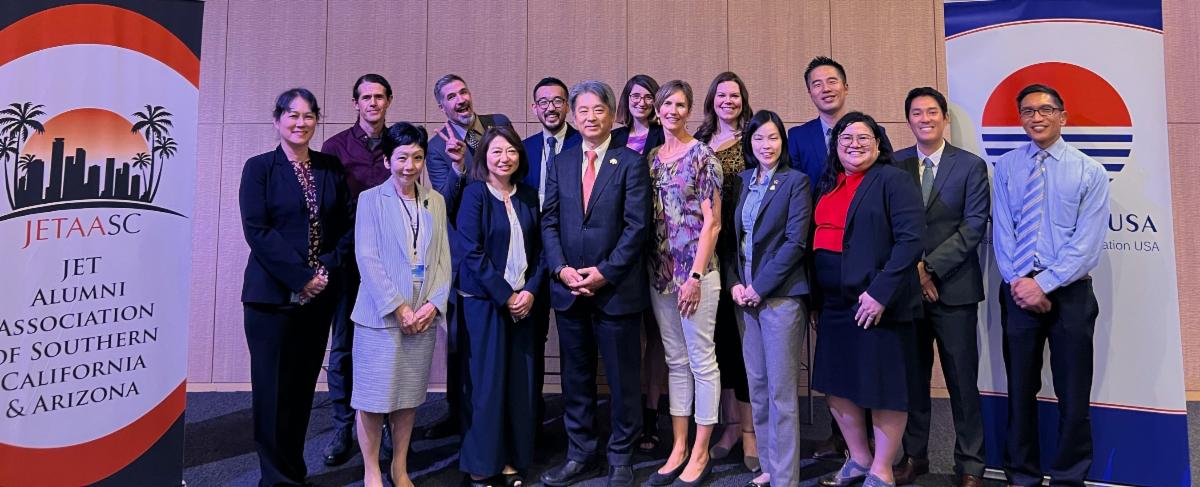 | |
On October 14, Sasakawa USA’s Director of Programs Ms. Shanti Shoji attended the JET Alumni Association of Southern California’s Career Development Seminar and Networking Event at the Japan House in Los Angeles. This event was made possible with funding from the Sasakawa USA-USJETAA chapter grant program and brought together JETAASC members and friends of the Japan Exchange and Teaching (JET) Program who listened to a panel of experienced JET alumni share their insights on how to leverage JET Program skills and experiences in one's career. The panelists included Ms. Rebecca Guttentag, localization producer at Riot Games; Mr. Tim Harms, producer at Harms Way Films; Mr. Takeshi Yamagishi, general manager at Quick USA; and Mr. Charles Lin, user interface designer at Kingyorker Enterprise Co., Ltd. Following the panel discussion, attendees and speakers networked and facilitated more in-depth discussions on JET alumni fields of work including entertainment, software, government, finance, and law.
Photo (back row, left to right): Mr. Tim Harms, Mr. Michael Coleman, Mr. Takeshi Yamagishi, Ms. Rebecca Guttentag, Ms. Shanti Shoji, Mr. Charles Lin (front row, left to right): Ms. Mary Wakabayashi, Ms. Yuko Kaifu, Madam Sone, Consul General Kenko Sone, Ms. Jessyca Livingston, Ms. Christine Chow, Ms. Maria Venezuela, Mr. Adrian Teng-Amnuay, and Mr. Mark Juloya
| |
Mt. Fuji Dialogue: Mr. Jim Schoff on Technology and National Security Panel | |
|
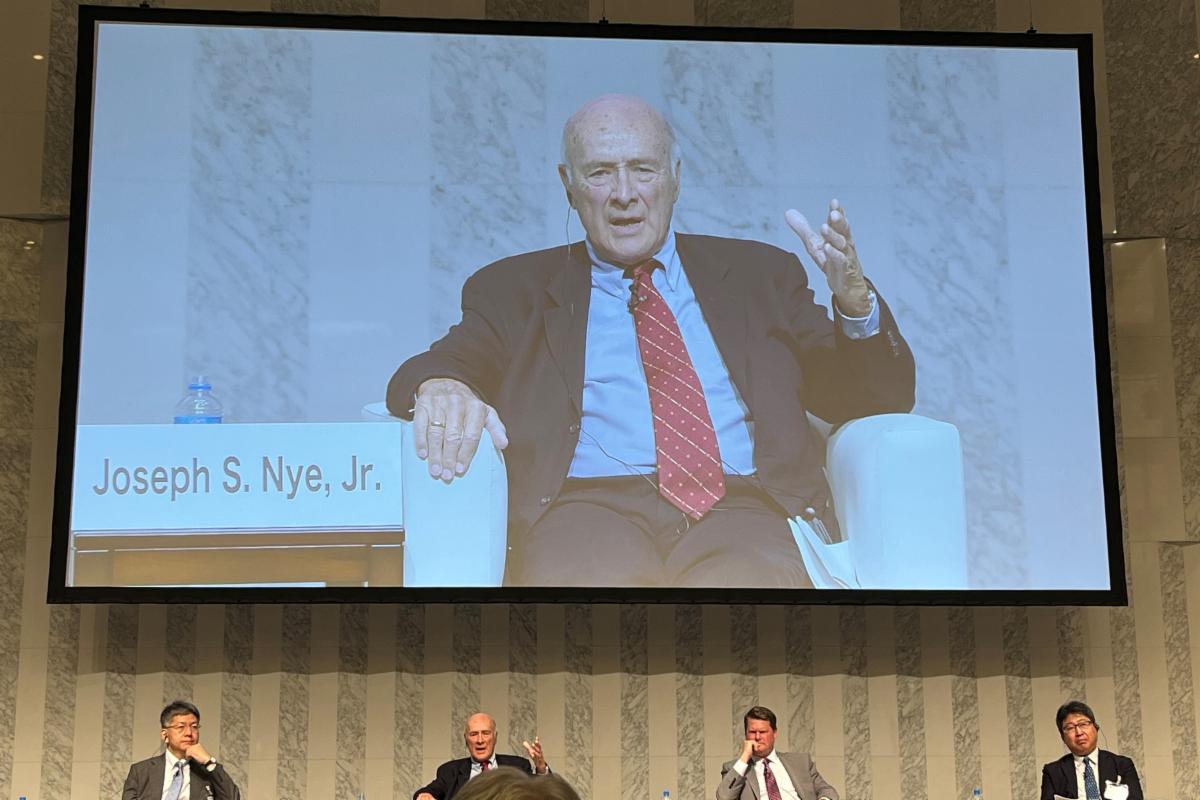
U.S. and Japanese foreign policy specialists and business executives, together with government officials and military officers from both countries, convened in Tokyo for the tenth annual Mount Fuji Dialogue on October 21. Among the panel discussions about various current foreign and economic security challenges confronting the U.S. and Japan, NEXT Alliance Initiative Senior Director Mr. Jim Schoff served as lead commentator for a dialogue on challenges and opportunities related to applied R&D collaboration in emerging and dual-use technologies. The panel featured business executives from NEC Corporation and Northrop Grumman, as well as an official from Japan’s National Security Secretariat and Dr. William Schneider of the Hudson Institute. The Mt. Fuji Dialogue is organized by the Japan Center for Economic Research with support from the Japan Institute of International Affairs.
Photo (center): Dr. Joseph S. Nye, Jr., and Secretary Randall Schriver, both Sasakawa USA Advisory Committee Members, spoke on a panel at the Mt. Fuji Dialogue.
| |
|
Sasakawa USA Emerging Experts Delegation (SEED):
2023 SEED Delegate Publications on WPS (Dr. Smith and CDR Agraviador)
| |
|
From July 24-28, eight American Women, Peace and Security (WPS) experts traveled to Tokyo to deepen their understanding of how WPS can be integrated into the institutional framework of the U.S.-Japan alliance to promote stronger, more equitable societies for all. The full report on the 2023 SEED trip is available on our website here.
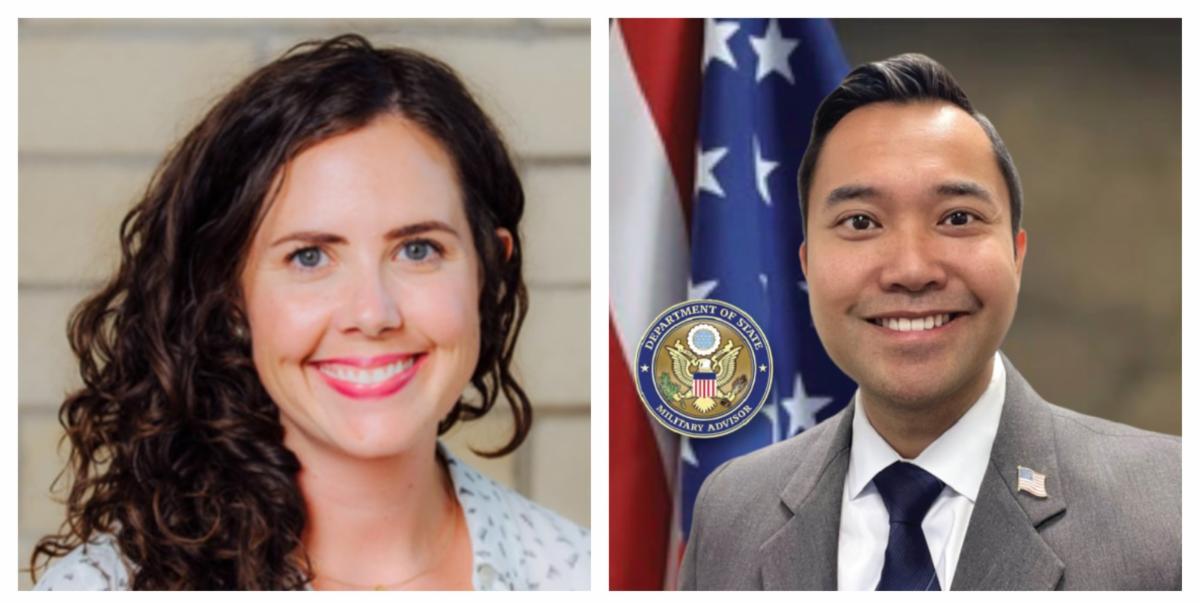
The next installments in the series of post-trip publications written by our 2023 delegates are now available online. In her paper “Seeds & Solidarity: Lessons and Insights from the 2023 Sasakawa USA Emerging Experts Delegation on Women, Peace and Security,” Dr. Jessica Smith, research and policy director at the Georgetown Institute for Women, Peace and Security, reflects on the progress made in advancing WPS since the U.S. and Japan produced their first respective National Action Plans and looks to the future to envision U.S.-Japan cooperation on WPS. In “Honoring the Legacy of Disaster Prevention Month in Japan Through the Lens of Women, Peace and Security,” Commander Andre Agraviador, senior military advisor in the Secretary’s Office of Global Women’s Issues, U.S. Department of State) examines WPS within the framework of Japan’s Disaster Response and Recovery (DRR) policies and initiatives. He sheds light on the way in which Japan is a global leader in setting DRR best practices—particularly with regard to how it accounts for women’s unique needs and perspectives in disaster situations—and elaborates on how Japan can advance WPS integration by maintaining its current trajectory in the DRR space and collaborating with the United States. Additional SEED publications will be posted on our website in the coming weeks.
Photos: Dr. Jessica Smith and Commander Andre Agraviador
| |
US-Japan NEXT Alliance Initiative: U.S.-Japan Economic Security Coordination Update (Mr. Jacobs) | |
|
The NEXT Alliance Initiative published an article by Non-Resident Scholar Mr. Erik Jacobs entitled, “U.S.-Japan Economic Security Coordination Update” on October 4. In this piece, Mr. Jacobs reviewed recent alliance activities across the economic security spectrum, particularly those related to technology development and supply chain resiliency. He explains how better coordination between both countries on policy would help meet adversarial challenges in the Indo-Pacific. The paper is published alongside NEXT’s other works on digital transformation and economic security. To read Mr. Jacob’s paper, click here.
Photo: Mr. Erik Jacobs
| |
Networking & Presentations: Congressional Alumni Luncheon with Minister Tomoaki Ishigaki | |
|
On November 2, Sasakawa USA will host its first ever "Congressional Alumni Luncheon" with the support of the Congressional Section at the Embassy of Japan, featuring Minister Tomoaki Ishigaki, who is in charge of congressional affairs at the Embassy of Japan in the United States.
Minister Ishigaki will discuss the importance of the U.S.-Japan alliance and update congressional staffers on today’s pressing issues in the Indo-Pacific region that affect the alliance. This luncheon also will provide staffers from various Sasakawa USA congressional programs the opportunity to re-connect and network, in order to foster stronger bi-partisan cooperation on bi-lateral policy.
Participants will include alumni of Sasakawa USA’s Congressional Program on U.S.-Japan Relations and the Indo-Pacific (CPUSJ) and Congressional Study Group on Japan (CSGJ).
Photo: Minister Tomoaki Ishigaki
| |
US-Japan NEXT Alliance Initiative: Cybersecurity Roundtable with Ms. Mihoko Matsubara and Mr. Taro Hashimoto | |
|
The NEXT Alliance Initiative will host a private hybrid roundtable discussion as part of our U.S.-Japan Cybersecurity “Alliance Mapping” series on November 3. The discussion will feature Ms. Mihoko Matsubara, chief cybersecurity strategist at NTT Corporation, and Mr. Taro Hashimoto, also from NTT and currently a visiting fellow at CSIS in Washington. Ms. Matsubara will discuss the urgent need to enhance Japan-U.S. threat hunting collaboration and Mr. Hashimoto will talk about Active Cyber Defense (ACD) from a Japanese industry viewpoint. This event series brings together knowledgeable government officials, analysts, and private sector representatives from both countries to discuss alliance cybersecurity infrastructure and potential ways to improve it.
| |
Japan U.S. Military Program (JUMP): JUMP West Point | |
|
On November 13, Sasakawa USA’s Japan-U.S. Military Program will hold an event at the United States Military Academy at West Point on "The Importance of the U.S.-Japan Security Alliance in the Indo-Pacific." The event will include a panel featuring Colonel Satoshi Masaka, military attaché at the Embassy of Japan; Major Peter Mitchell, instructor of defense and strategic studies; Mr. James Schoff, senior director of the US-Japan NEXT Alliance Initiative at Sasakawa USA; and Major Ei Ikenouchi (JGSDF), liaison officer for the Japan Ground Self-Defense Force.
| |
Engagements in DC with General Koichiro Bansho | |
|
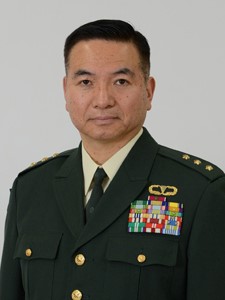
Sasakawa USA is honored to announce that it has invited Lieutenant General Koichiro Bansho, former commanding general of the Japan Self-Defense Forces' Western Army (Ret.), to Washington, D.C., this November.
As the 20th anniversary of the JSDF’s deployment to Iraq approaches, Lieutenant General Bansho will speak on the significance this deployment had to the JSDF, to politicians and the general populace of Japan, as well as to the U.S.-Japan military alliance.
During his time in Washington, LTG Bansho will meet with a variety of U.S.-Japan experts, as well as participate in several Sasakawa USA programs, including a Washington Kenkyu Group, a Policy Briefing luncheon, and a Rising Indo-Pacific Experts event, to share his experience and thoughts on this historic deployment.
Photo: Lieutenant General Koichiro Bansho
| |
New Program Officer: Ms. Fumiyo Layman | |
|
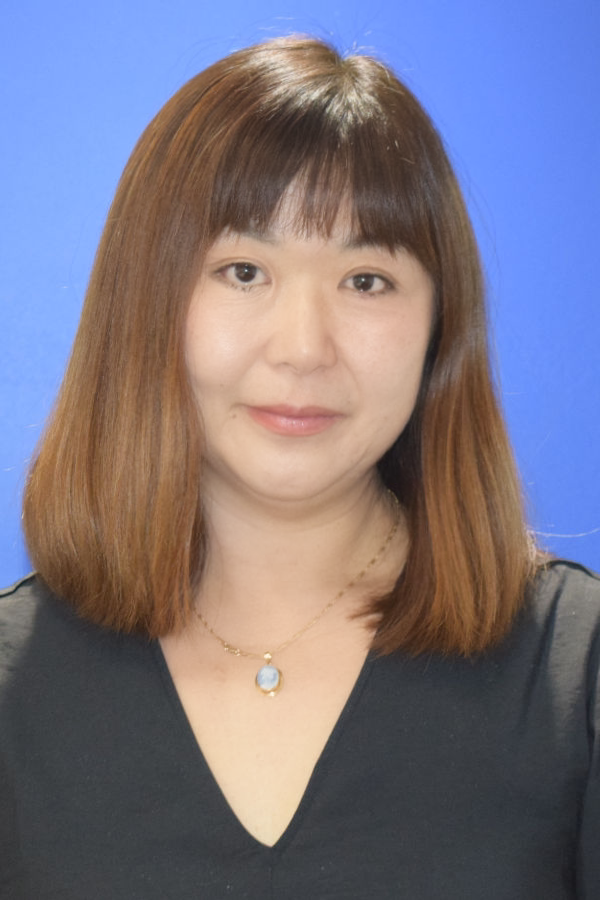
Sasakawa USA would like to introduce Ms. Fumiyo Layman who joined our organization as a program officer in September. In her new role, Ms. Layman will work on grant management, program development and expansion, as well as corporate communications.
Ms. Layman began her career at the Nippon Foundation in Tokyo and previously worked for the Council on Foundations in Washington, DC. She brings with her experience advising Japanese companies on corporate social responsibility programs in Hong Kong and Beijing, including conducting research on the role of technology and philanthropy in China.
Ms. Layman completed graduate studies at the University of California San Diego as a Japanese Ministry of Education, Culture, Sports, Science and Technology (Monbukagakushō) scholar and served as an international fellow at the International Center on Philanthropy and Civil Society at the City University of New York. She earned a master of engineering in econometrics from Tokyo Institute of Technology and bachelor of arts in policy management from Keio University.
Sasakawa USA is delighted to welcome Ms. Layman to the team and believes she will further our vision of strengthening the U.S. and Japan relationship.
Photo: Ms. Fumiyo Layman
| |
|
Sasakawa Peace Foundation USA
1819 L Street, NW
Suite 300
Washington, DC 20036
202.296.6694
www.spfusa.org
| | | | |