The APSAC Commission for Racial Justice 4-Part Training on Contemporary Challenges Facing Black Youth Continues!

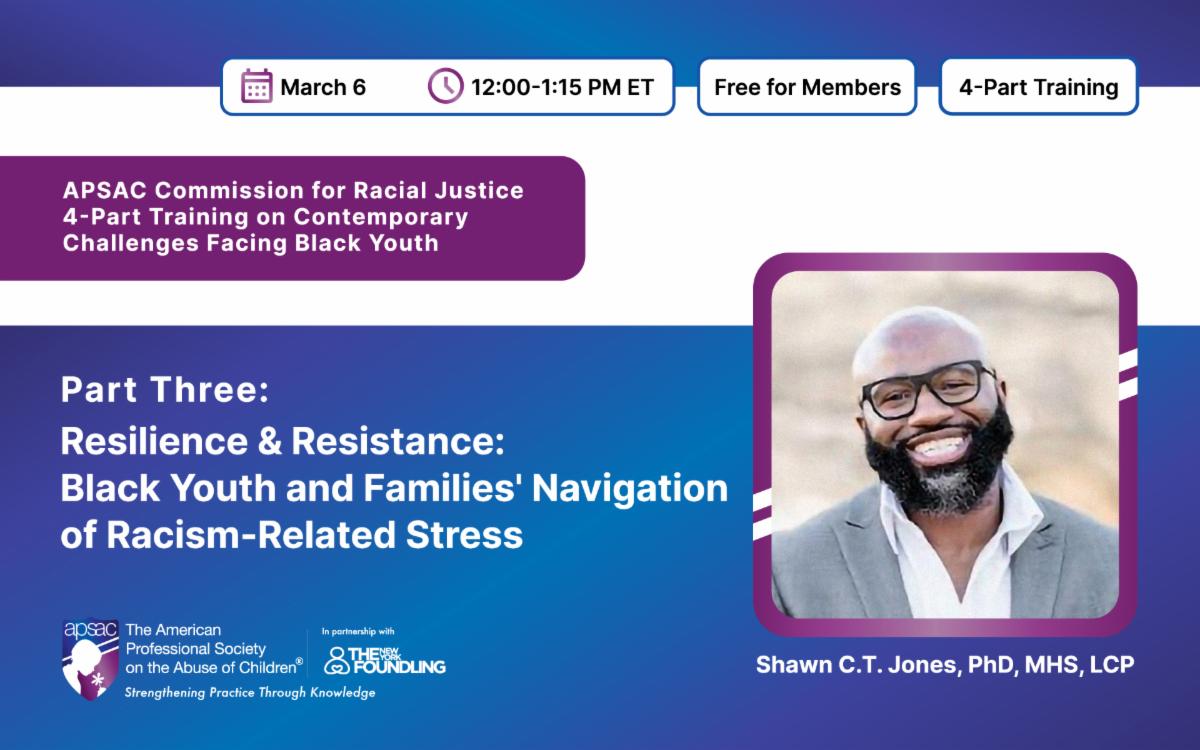
Keniston (1978) asserted that Black youth are “the most endangered children in our society.” Indeed, Black children and teenagers are exposed to myriad adversities, particularly those that emanate from the legacy of racism in this country. Yet, despite deficit-oriented narratives concerning them, Black youth—and their families—have continued to demonstrate remarkable psychosocial resilience. This resilience is cultivated drawing upon racial-ethnic protective factors (REPFs) within Black families, including racial socialization and racial identity. In this presentation, conceptual and empirical work on mechanisms undergirding the salutary benefit of REPFs for Black youth and caregivers will be discussed. This presentation will conclude with a discussion of ongoing and future research, which seeks to imagine novel ways that resistance from racism-related stress can support the psychosocial health of Black youth. 

March 6 | 12:00 - 1:15 PM ET | Register Here
 

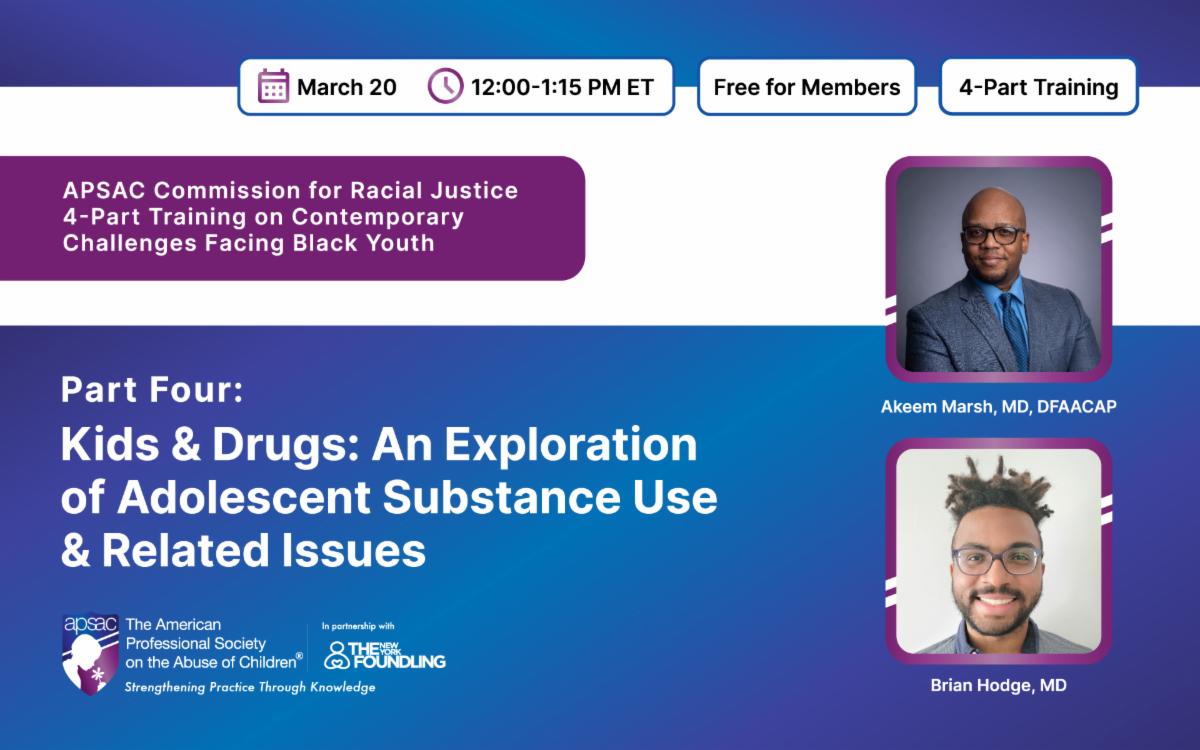
In the United States, drugs generally are a major public health burden as a source of morbidity, mortality, family disruption, and criminalization. Substance use in particular, typically beginning during adolescence, has historically been viewed as a “character flaw” rather than a mental health issue. In large part due to stigma along with poor education, and general lack of society’s prioritization of youth, we are facing the unprecedented circumstance of increasing adolescent overdose deaths over the past several years, despite an overall decrease in prevalence. There exists a complex array of circumstances that may lead to substance use and related disorders, but childhood trauma appears to be the often overlooked underlying thread. This workshop will focus on exploring various associated components of adolescent substance use including some prominent risk factors, the role of trauma, underlying biology, societal implications, and pathophysiology. Upon completion, participants will understand the inextricable link between traumatic stress and substance use, and be able to tailor their assessments and treatments more appropriately for patients with substance use disorders. 

March 20 | 12:00 - 1:15 PM ET | Register Here
 
Register for the 2024 Colloquium Here

Did you know these interesting facts about New Orleans?


#1 New Orleans is known as the birthplace of jazz. This used to be debated by other cities such as New York and Chicago; however, it was settled in 1978 after the publication of Historian Don Marquis’ book, “In Search of Buddy Bolden: First Man of Jazz.”


#2 The French brought coffee with them as they began to settle along the Gulf Coast and the Mississippi River in the 1700s. During the American Civil War, there was a coffee shortage so New Orleans Creoles began mixing chicory, the root of the endive plant, with coffee to increase the supply.

The Acadians (Cajuns) from Nova Scotia, Canada brought other French customs, such as the beignet, to Louisiana in the 18th century. Chicory-blended coffee and beignets are still served in New Orleans today at Café Du Monde and other restaurants around the city.


#3 The po-boy sandwich originated in 1929 at the Martin Brothers’ French Market and Coffee Stand in New Orleans when the Electric Street Railway employees went on strike, and the Martin brothers gave away sandwiches to the strikers.

 When a striker came by to get a sandwich, the Martin brothers would call out, “here comes another poor boy.” That’s how this New Orleans classic became known as the “poor boy” and was later abridged to “po-boy.”


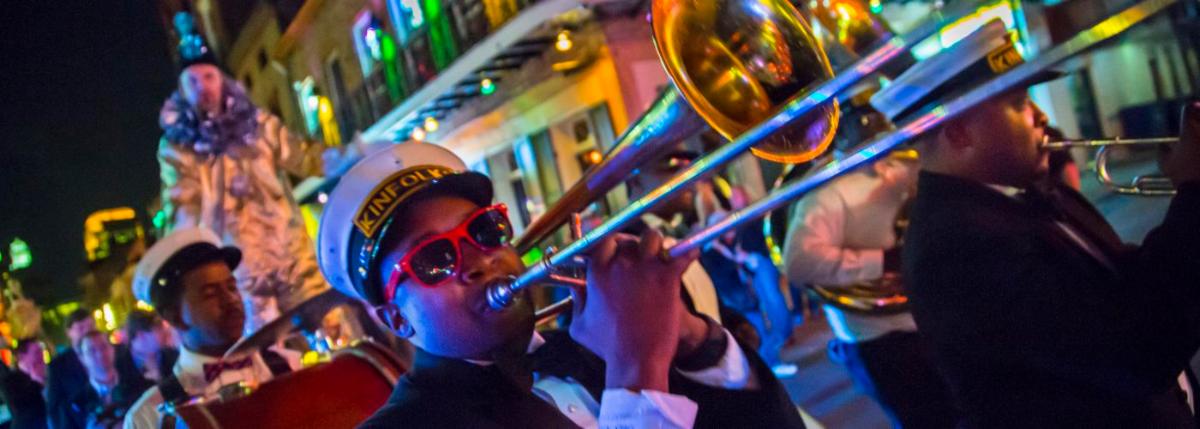
#4 The Second Line tradition was brought to New Orleans by enslaved Africans, where it became a processional ritual for Africans in America.

The Second Line's style of traditional dance, in which participants dance and walk along in a free-form style with parasols and handkerchiefs, is called "second-lining". The "main line" or "first line" is the front section of the parade, including the band and hosts, with the “second line” consisting of people who follow the band to enjoy the music, dance, and engage with the community. Today, second lines are part of the cultural heritage of New Orleans, and they can be found on any street in the city as well as at funerals, weddings, and other big gatherings.


*Information and image courtesy of neworleans.com


Register for The New York Foundling & APSAC Webinar Series on Controversial Topics | Continues March 27, 2024


Register for APSAC Commission for Racial Justice 4-Part Training on Contemporary Challenges Facing Black Youth | Part Three: March 6, 2024


Register for The New York Foundling & APSAC Comprehensive Online 8-Week Course: Understanding Child Neglect & Supporting Families | Thursdays March 7 - April 25, 2024

APSAC asks that you forward this email to your colleagues and network in hopes they find these opportunities valuable and useful.


If you are a member and would like APSAC to consider announcing your event in future monthly previews, please email info@apsac.org.Thank you for all that you do. 

 
LinkedIn Share on LinkedIn
Facebook  LinkedIn  Twitter  Web  YouTube