The APSAC Commission for Racial Justice 4-Part Training on Contemporary Challenges Facing Black Youth Continues!

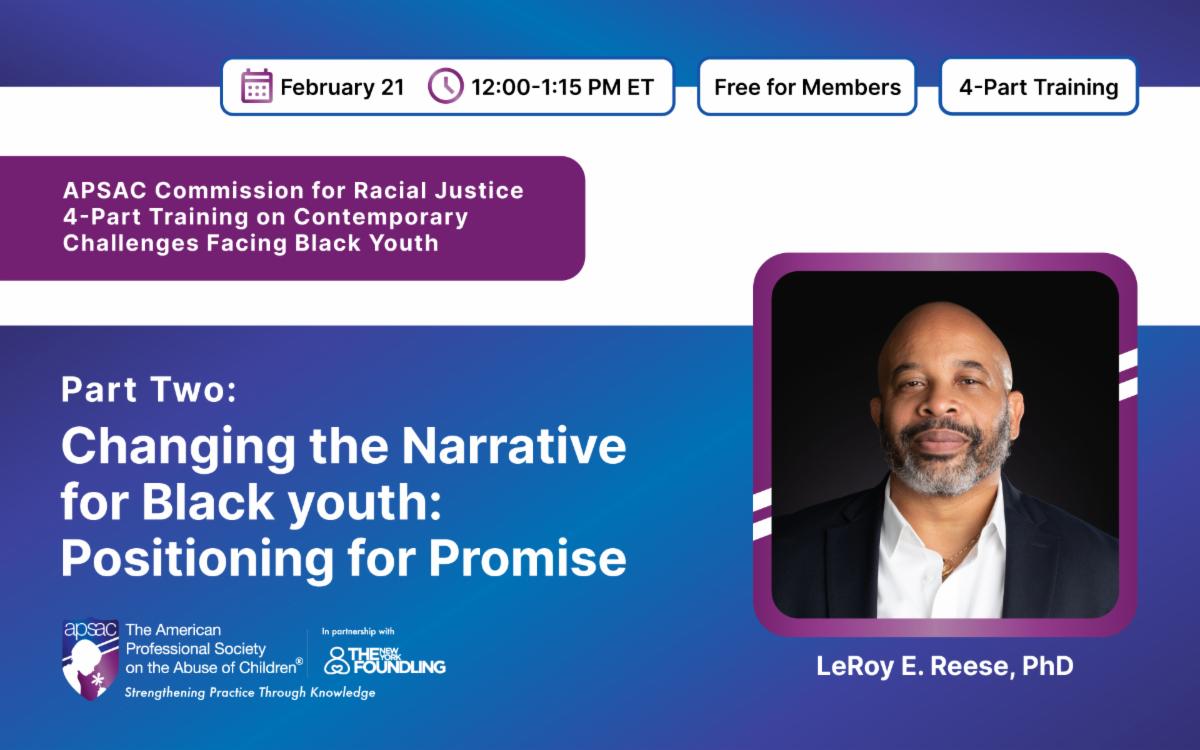
Chronic observations about disparities in health, educational underachievement and employment opportunities for Black youth combined with the impact of the school to prison pipeline and the overrepresentation of Black males in juvenile and adult detention centers have created a too oft dim perspective about the potential of Black youth. This narrative obfuscates the positive potential Black youth represent, most importantly to these youth and how they often view their circumstances and options.

The societal narrative and resulting action plan impinging on the lived experiences of Black youth and Black males in particular has limited their opportunities to express their tremendous potential. In this webinar we offer a different and actionable narrative premised on the assumption positive potential and possibility, not deficit. Transcending a siloed approach, we examine the role of intersectionality across silos that allows for the re-emergence of positive positioning for Black male youth. 

February 21 | 12:00 - 1:15 PM ET | Register Here 
 

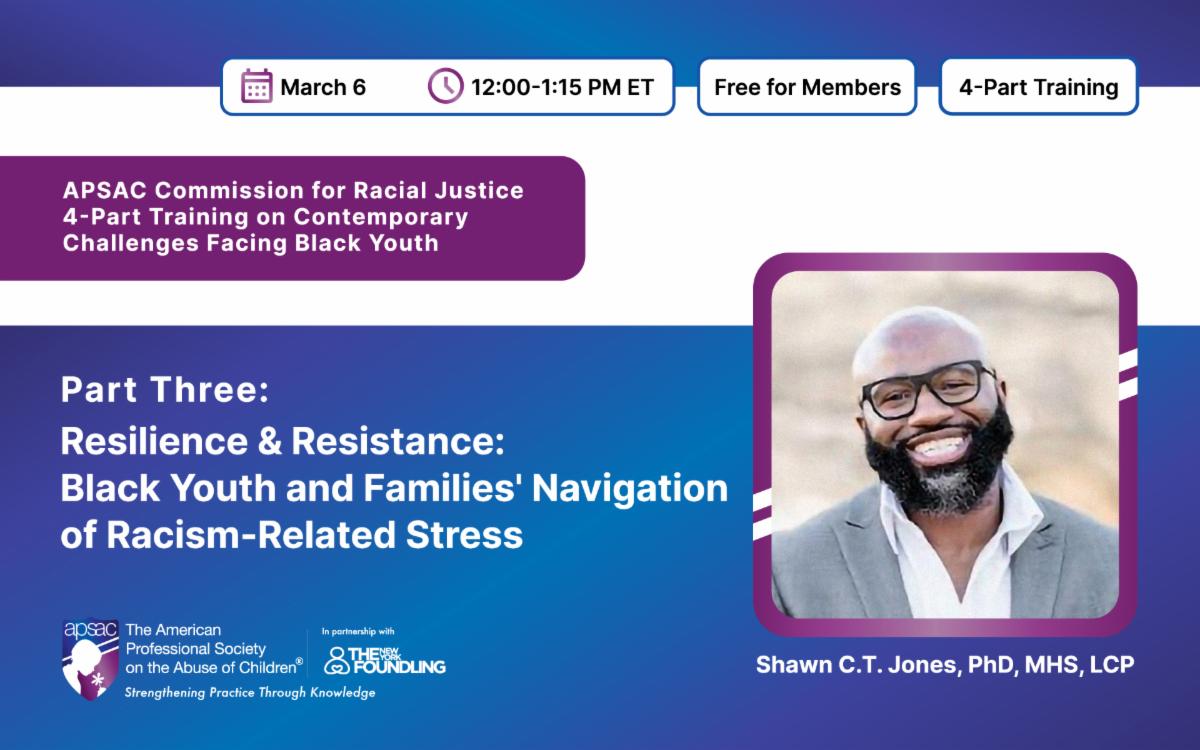
Keniston (1978) asserted that Black youth are “the most endangered children in our society.” Indeed, Black children and teenagers are exposed to myriad adversities, particularly those that emanate from the legacy of racism in this country. Yet, despite deficit-oriented narratives concerning them, Black youth—and their families—have continued to demonstrate remarkable psychosocial resilience. This resilience is cultivated drawing upon racial-ethnic protective factors (REPFs) within Black families, including racial socialization and racial identity. In this presentation, conceptual and empirical work on mechanisms undergirding the salutary benefit of REPFs for Black youth and caregivers will be discussed. This presentation will conclude with a discussion of ongoing and future research, which seeks to imagine novel ways that resistance from racism-related stress can support the psychosocial health of Black youth. 

March 6 | 12:00 - 1:15 PM ET | Register Here
 

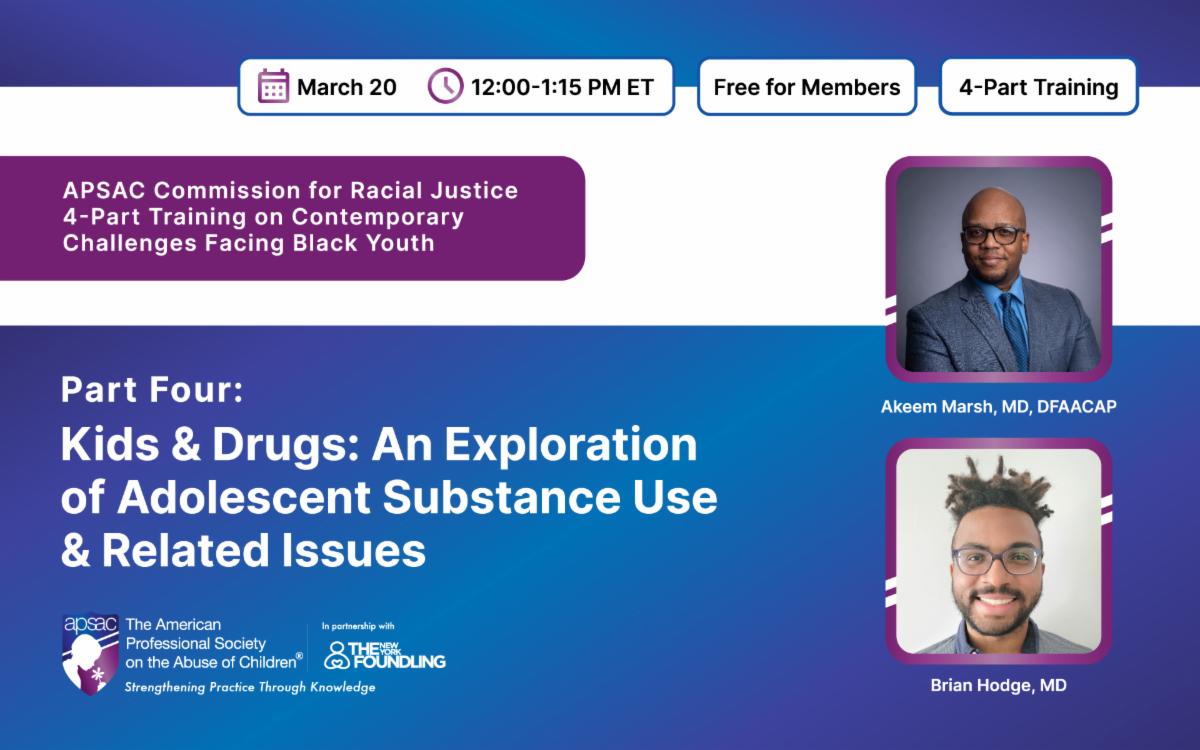
In the United States, drugs generally are a major public health burden as a source of morbidity, mortality, family disruption, and criminalization. Substance use in particular, typically beginning during adolescence, has historically been viewed as a “character flaw” rather than a mental health issue. In large part due to stigma along with poor education, and general lack of society’s prioritization of youth, we are facing the unprecedented circumstance of increasing adolescent overdose deaths over the past several years, despite an overall decrease in prevalence. There exists a complex array of circumstances that may lead to substance use and related disorders, but childhood trauma appears to be the often overlooked underlying thread. This workshop will focus on exploring various associated components of adolescent substance use including some prominent risk factors, the role of trauma, underlying biology, societal implications, and pathophysiology. Upon completion, participants will understand the inextricable link between traumatic stress and substance use, and be able to tailor their assessments and treatments more appropriately for patients with substance use disorders. 

March 20 | 12:00 - 1:15 PM ET | Register Here
 

Register for APSAC-NY | Assessing False Allegations of Child Sexual Abuse and Issues Regarding Recantation | TODAY February 15, 2024


Register for APSAC Commission for Racial Justice 4-Part Training on Contemporary Challenges Facing Black Youth | Part Two: February 21, 2024


Register for The New York Foundling & APSAC Comprehensive Online 8-Week Course: Understanding Child Neglect & Supporting Families | Thursdays, March 7 - April 25, 2024

APSAC asks that you forward this email to your colleagues and network in hopes they find these opportunities valuable and useful.


If you are a member and would like APSAC to consider announcing your event in future monthly previews, please email info@apsac.org.Thank you for all that you do. 

 
LinkedIn Share on LinkedIn
Facebook  LinkedIn  Twitter  Web  YouTube