|
|
|
|
 |
Advancing research to maximize the productivity, sustainability and competitiveness
of the American grape industries.
|
|
|
|
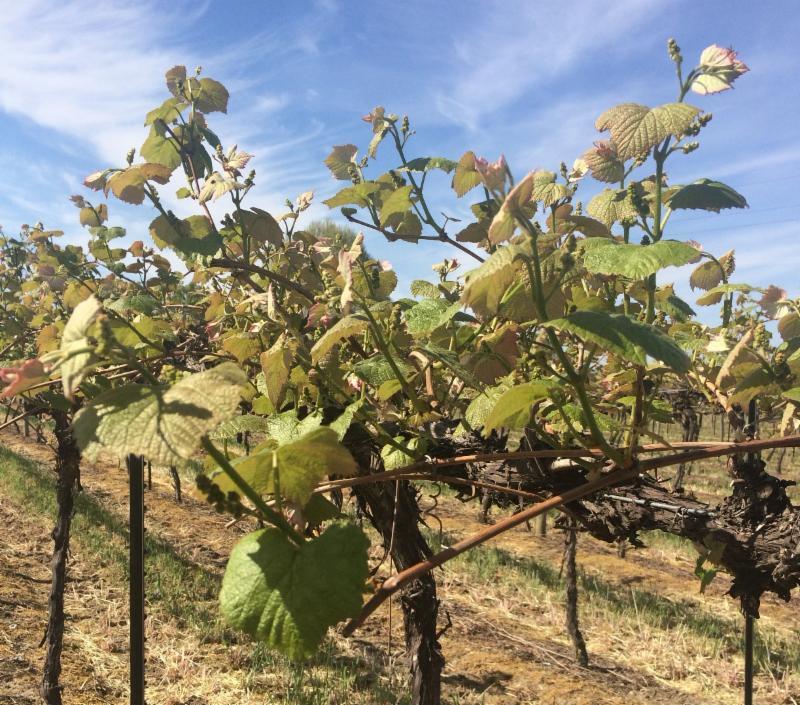
A Concord vine in Washington State
|
SCIENTISTS ARE PEOPLE, TOO
|
|
In March, we lost one of the most renowned and beloved scientists of our time. Stephen Hawking was a theoretical physicist and cosmologist who toured the farthest reaches of the galaxy from the confines of a wheelchair...and brought the world along for the ride. He was that rare breed of scientist who was as gifted in his discipline and he was in what we, in agriculture, call extension and outreach. He loved physics as much as he adored "bending our minds with the implications of new discoveries," as one interviewer said. He could make even the least mathematically inclined among us understand--and care about--the fate of stars and laws of universe.
|
|
|
|
The passing of Stephen Hawking was felt far and wide, across the news and social media. The fact that the loss touched so many people underscores a critical point that's often overlooked: Scientists are people, too.
Of course, scientists are not typically viewed as social butterflies. But some say that Stephen Hawking's brilliance was aided by his
deep connection to his peers.
The degenerative nerve disease that led to his use of a wheelchair and, eventually, computerized voice synthesizer, may actually have helped him avoid the isolation that can envelope scientists. Says Marika Taylor, a theoretical physicist who once was Hawking's graduate student: he had to rely on his collaborators to help flesh out his ideas. "His physics family," she adds, "was very important to him."
Grant funding programs like the USDA's Specialty Crop Research Initiative (SCRI) encourage that kind of collegiality by requiring that researchers work together across disciplines and beyond their own departments and academic institutions. And events like the National Viticulture & Enology Extension Leadership Conference (NVEELC), coming up in May, provide an opportunity for people in similar roles to share best-practices and learn from one another. It is this sense of collaboration that NGRA seeks to help cultivate, too, as we bring together all commodity sectors from grape-growing regions across the country to solve our industry's most pressing questions.
We are committed to bringing the grape industry together in a shared belief in a future made more promising through science.
"Scientists have become the bearers of the torch of discovery in our quest for knowledge," Stephen Hawking once said. And we all have a part to play in that quest-whether as a researcher, extension agent, industry collaborator, vineyard manager, producer, consumer or organizational administrator, like me, who helps to keep the flame alive and growing. And we owe a debt to the memory of Professor Hawking who reminded us of the human side of science.
|
|
|
|
|
NIFA 2017 ANNUAL REPORT RELEASED
Check out the
2017 annual report for the USDA's National Institute for Food & Agriculture (NIFA), released this month. "Solving 21st century food systems challenges will require revolutionary, transdisciplinary approaches, and require that farm productivity and profitability are promoted," writes Director Sonny Ramaswamy. "The 2017 Annual Report from NIFA includes compelling examples of the many NIFA-funded research, extension, and education outcomes."
Also: New NIFA NPL for Plant Systems-Protection
Welcome to Dr. Tesfa Mengistu, who joins NIFA's Institute of Food Production and Sustainability's Division of Plant Systems - Protection as a national program leader in plant pathology. Dr. Mengistu was most recently at the University of Florida, where he did both teaching and extension work. His research there focused on understanding the molecular and genetic basis of nematode plant interactions with the aim of developing and implementing effective, sustainable and environmentally safe management strategies.
|
|
FUNDING RENEWED FOR MULTI-STATE WINE GRAPES PROJECT
Congrats to the
USDA-NIFA-funded multi-state project, Evaluating and Improving Wine Grapes,
which has been renewed through 2022. Seeking to find the best grapes for U.S. growers and wine producers, researchers at 25 land-grant universities and the USDA-ARS are testing the potential of traditional, new and neglected varieties to produce high-quality wines in states across the nation. Already, they've identified promising grape varieties and set up a database to store and share their findings. It's the first coordinated effort to improve wine grapes for American growers.
|
|
NGRA BOARD MEMBER NAT DIBUDUO HONORED
|
|
RESEARCHERS RECOGNIZED
We love to see researchers recognized for their important work.
- Microbiologist Ellie Butz, was recognized with a Lifetime Achievement Award at this month's Eastern Winery Exposition. Ellie is retired from Purdue University, served on the board of ASEV and has many other honors to her credit.
- Virologist Bob Martin, courtesy faculty in the Oregon State University College of Agricultural Sciences, and supervisory research plant pathologist for the USDA-ARS, received the Outstanding Industry Leadership Award, presented at the Oregon Wine Symposium.
- The New York Wine & Grape Foundation presented its Research Award to Marilyn Konopka, Director of Product Development at Constellation Brands, at its Unity Banquet at B.E.V. NY.
Congratulations to all!
|
NVEELC REGISTRATION ENDS MAY 4
Registration continues for the
National Viticulture & Enology Extension Leadership Conference (NVEELC) 2018.
Join us
May 20-22, 2018, when NVEELC 2018 unfolds in Prosser, WA--the heart of Washington Wine Country--hosted by Washington State University Viticulture Extension. The agenda is packed with professional development, site visits, best-practice-sharing and networking with other extension and outreach colleagues. Thanks to funding from sponsors California Association of Winegrape Growers, California Table Grape Commission, E&J Gallo, J. Lohr Vineyards & Wines, Oregon Vineyard Supply, Ste. Michelle Wine Estates, Washington State University, Washington State University and NGRA, tickets are just $100. Deadline to register is May 4 and the hotel room block closes even earlier, on April 18. Sign up today!
|
CATCH WASHINGTON'S WAVE SEMINAR APRIL 4
Don't miss your chance to see one of the best examples of state-funded research in action! The Washington Wine Commission's Washington Advancements in Viticulture and Enology (WAVE) seminar takes place next Wednesday, April 4. Click to reserve your seat!
|
|
USDA RESEARCH FUNDING INCREASED IN FY2018
The headline in research this month was the Consolidated Appropriations Act (or Omnibus) approved by Congress on March 22, and signed into law on March 23. It gave a
"slight but meaningful boost"
to the USDA's agriculture appropriations and the agencies the grape industries rely on to help improve our quality and competitiveness through science. The bill guides spending through September 30, 2018.
Among the winners in the Omnibus was the
Agricultural Research Service (ARS),
the USDA's in-house research agency, which received an additional $33 million, a nearly 3% increase, for a total budget of $1.2 billion. And the
Animal and Plant Health Inspection Service (APHIS)
received an allocation of
nearly $70 million.
Specifically, $63.5 million goes toward efforts to prevent the introduction and spread of invasive pests and diseases, and support the supply of clean plant stock. Another $6 million goes to the National Clean Plant Network's efforts in 18 states, including $1.2 million for the tree fruit, grape and hop programs in Prosser, WA, and $14.2 million for rapid response to invasive pests like the Asian gypsy moth, European cherry fruit fly, spotted lanternfly and others; and $851,184 for surveys of grape pests and diseases, and support of the Grapevine Nursery Stock Certificate Programs.
The Act also increased funding for the USDA's
National Institute for Food and Agriculture (NIFA)
by $53 million, or about 3.46%, to a total of $1.59 billion. Included in that figure is an additional $25 million for the
Agriculture and Food Research Initiative (AFRI),
NIFA's flagship grant program. The increase (6.7%) brings the AFRI program total to $400 million, which is a far cry from the $700 million goal for AFRI once set by Congress.
It should be noted that
the research programs at the
National Science Foundation
(an independent federal agency, not part of the USDA) also received a roughly 5% increase to $6.3 billion. The foundation focuses on basic research, and partners
with NIFA on the
Innovations at the Nexus of Food, Energy, and Water (INFEWS) program, noted below.
These increases fall short of what the grape industries would like to see for federal research funding. Still, they continue a trend of increasing funding for ag research overall, which is good news in itself--at least until fiscal year 2019, which begins October 1.
|
|
NEXT VITISGEN2 WEBINAR APRIL 19
The NGRA-supported SCRI project, VItisGen2, is holding its second webinar, "Automated Evaluation of Grape Breeding Progeny to Reduce the Phenotyping Bottleneck," on April 19. Four representatives from the project team will discuss their work developing methods of more rapidly and objectively screening mapping populations to streamline the process of associating plant traits with genetic markers. Get details and register here!
|
|
GRANT PROGRAMS NOW OPEN
The following grant programs are now accepting applications:
Deadline: Tuesday, May 8, 2018
Estimated Total Program Funding: $8.1 million
Estimated Total Program Funding:
$72.1 million
Deadline:
Thursday, May 24, 2018
Deadline: Friday, May 25, 2018
Estimated Total Program Funding: $4,800,000
Deadline: Wednesday, September 26, 2018
Estimated Total Program Funding: $34 million
|
March 20, 2018 │ Western Farm Press
At the at the 2018 Ag Biotech Summit, leading thinkers weighed in on soil health. Among the emerging resources and ideas shared was this notion: "incentives are a must to reward farmers for taking steps to improve soil health."
March 26, 2018 │ Science
Lessons in seeking dollars for research come from scientists trying crowdfunding. "(This) was one of the first times when I was forced to explain my project in layman's terms," says a successful fundraiser on
Experiment.com
, a for-profit website that retains 8% of funds raised. "For most of (my) Ph.D., I was really down in the weeds. It was so nice to take a step back and think about how this affects the broader community."
March 22, 2018 │ Lodi Winegrape Commission Blog
"Managing grape powdery mildew is an intricate dance with mother nature, and she likes to change the steps without warning," writes Walt Mahafee, USDA-ARS, Corvallis, OR, in a guest post on the
Lodi Winegrowers
Blog. "Thus, it is very easy to get out of sync with her. Last year, she changed a lot of steps."
March 20, 2018 │ Science
When you ask children to "draw a scientist," what gender comes to their minds? Increasingly, the person a kid draws is a woman--especially if a girl is holding the crayon.
March 20, 2018 │ Science
Scientists genetically engineered strains of brewer's yeast by adding DNA that carries the genetic
blueprints for producing linalool and geraniol, molecules that are key parts of the hop flavor profile. Voila, a hoppy beer without the hops!
March 16, 2018 │ Science
If you're applying for a grant with the
National Science Foundation (NSF),
you'll want to demonstrate that your project is "in the national interest." The chairman of the U.S. House of Representatives science committee, Lamar Smith (R-TX), wants to be sure the U.S. is funding research on computing and the physical sciences, fields in which other countries are threatening U.S. global leadership.
|
Corvallis, OR
Prosser, WA
June 22, 2018
NGRA Mid-Year Board Meeting
Monterey, CA
July 9-11, 2018
Find all upcoming events
on the NGWI website.
|
|
|
|