|
|
|
|
 |
Advancing research to maximize the productivity, sustainability and competitiveness
of the American grape industries.
|
|
|
NGWI is 15 years old this year! Since our founding in 2003, we've established a track record of success aligning national research priorities across wine grapes, table grapes, juice grapes and raisins, and helping to ensure the industry's most critical projects get done. As we enter the next phase of organizational life, I invite you to get to know us better.
|
|
|
|
First
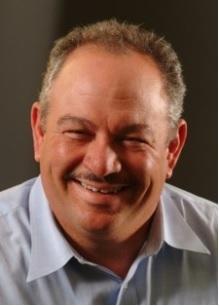 ,
meet our new Board Chair, Tony Stephen
(shown at left). Elected at our Annual Meeting of Members on January 26, Tony is Chairman of the Board of the American Vineyard Foundation and Chief Planning Officer for Scheid Vineyards. He takes the helm with re-elected officers Vice Chair Rick Stark (Sun-Maid Raisin Growers of California) and Secretary/Treasurer Dan Martinez (Martinez Orchards). Eleven Commodity Sector, Regional and At-Large Representatives signed on for new three-year terms at the January meeting, too.
See all our newly re-elected leaders
and/or
check out the complete list of NGWI Board members.
Now,
download our new overview presentation and see how well you know NGWI. Get a refresh on our mission and values, organizational structure, research support process, and more. Learn what research we've been instrumental in getting organized and funded, and just how much support we've generated, dollar-wise, over the last 15 years. See how many folks you recognize throughout the slides (!), then educate others about who we are and what we do.
NGWI is a vibrant, action-oriented organization seeking to advance our industry through research--and we're only getting better! Wish us a happy birthday by inviting others to join our cause. We look forward to the next 15 years!
|
|
|
|
|
SAVE THE DATE FOR NVEELC 2018
If you serve in an extension or outreach role in the United States, the
National Viticulture & Enology Extension Leadership Conference (NVEELC)
is an event you can't afford to miss! Save the date
for
May 20-22, 2018
, when NVEELC 2018 unfolds in Prosser, WA--the heart of Washington Wine Country--hosted by Washington State University
Viticulture Extension
. Check out the agenda, which is packed with professional development, site visits, best-practice-sharing
and networking with other extension and outreach colleagues. Stay tuned--event registration will open soon. NGWI is a proud sponsor of NVEELC.
|
|
USDA CHIEF CALLS FOR TECHNOLOGICAL INNOVATION
In the "Report to the President of the United States from the Task Force on Agriculture and Rural Prosperity," U.S. Secretary of Agriculture and Chair of the Task Force Sonny Perdue provides a roadmap to promote agriculture and rural prosperity in America. The report is organized in five "calls to action" around e-Connectivity, Quality of Life, Rural Workforce, Technological Innovation and Economic Development. Call to Action #4, Harnessing Technological Innovation, includes recommendations for precision agriculture and biotechnology (including genome editing and genomic selection) and the regulation thereof.
See pages 30-34 in the full report.
|
|
RICH SMITH AWARD PRESENTED TO PETE DOWNS
The award recognizes one industry colleague each year who emulates the passion, commitment and collaboration of the late Rich Smith (Paraiso Vineyards and Smith Family Wines). NGWI is proud to collaborate with the Smith Family, WineAmerica and Winegrape Growers of America to create the Rich Smith Award and to continue to celebrate Rich's legacy of service. Congratulations to Pete Downs!
|
|
NEW DEAN NAMED FOR WSU'S AGRICULTURAL COLLEGE
Congratulations to André-Denis Wright, incoming dean of
Washington State University
's College of Agricultural, Human and Natural Resource Science, which houses the enviable Viticulture & Enology Program.
Dean Wright's appointment is effective June 1.
Learn more about the new dean.
|
SUSTAINABLE WINEGROWING LEADERS SOUGHT
|
CLIFF OHMART RETIRES
Sustainability pioneer Cliff Ohmart retired this month. Cliff authored the LODI RULES program, which paved the way for the sustainability movement in California's wine industry, and he was instrumental in the formation of NGWI, too.
Read more in this tribute
from
the Lodi Winegrape Commission
.
|
|
2017 PD RESEARCH PROJECT REPORTS ONLINE
The California Department of Food and Agriculture (CDFA) Pierce's Disease Control Program
'
s
2017 progress report
is now available online.
The 278-report covers topics from PD-resistant grapevines to pest control programs and includes research on other vineyard pests.
|
|
NGWI RESEARCH PRIORITIES APPROVED
In 2017, NGWI refreshed our research themes to include four broad areas: genetics and grapevine improvement, integrated production systems, natural resources and environment, and extension and outreach. Now, thanks to the efforts of the 39 members of our Research Theme Committees, we now have an
approved set of research priorities and platforms
within and across these areas, ratified last week.
For the first time ever, the NGWI research priorities include a shortlist of top-line to-do's across all grape and wine sectors nationwide. They are:
- Advance our understanding of gene function and linkage to important traits
- Identify, establish and maintain high-performing, disease-free plant materials
- Develop integrated models for the utilization of key natural resources at the vineyard-block level, including water, nutrients and sunlight
- Build improved mechanization and automation systems to enhance labor efficiency
- Improve pest and disease detection, modeling and control systems
- Strengthen and support extension and outreach for viticulture and enology in America
From these big, broad ideas to more granular "streams and themes," our new priorities and platforms will guide our thinking around grape projects to develop, pursue and support in 2018 and beyond.
Check them out!
|
|
NEW GRANT OPPORTUNITIES ANNOUNCED
- Collaborative Robotics: The National Robotics Initiative (NRI-2.0) program, a partnership between USDA's National Institute of Food and Agriculture (NIFA), the National Science Foundation, Department of Defense and Department of Energy, is funding $7 million in grants to research the development and use of collaborative robots. There are two proposal deadlines: February 5 and 20. See full details.
- Crop Breeding & Functional Genomics: A new grant program jointly funded by the National Science Foundation Biological Sciences Directorate, NIFA and the UK's Biotechnology and Biological Sciences Research Council makes available $8 million for Early Concept Grants for Exploratory Research (EAGERs) to fuel significant advances in crop breeding. Summary letters are due March 14. See full details.
- Organic Agriculture: This year, NIFA's Organic Transitions (ORG) program is making available $3.8 million in funding to address critical issues related to organic agriculture. The deadline for applications is March 29. See full details.
- Women and Minorities in Science: A total of $400,000 in grants is available for research and extension projects that have robust collaborations to increase the participation of women and underrepresented minorities from rural areas in science, technology, engineering, and mathematics fields that are relevant to USDA priorities. Deadline is March 28. See full details.
|
January 18, 2018 │ The New York Times
NASA scientists rank 2017 as the second-warmest year on record, behind 2016. What made the numbers unexpected was that last year had no El Niño, a Pacific weather pattern that's usually linked to record-setting heat.
January 17, 2018 │ Science
How climate change could affect another beloved agricultural product.
January 16, 2018 │ Science
In the wake of recent failures to replicate published scientific work, aka the "reproducibility crisis," a new report from the
Royal Netherlands Academy of Arts and Sciences
calls for fundamental changes to how science is conducted and published. It focuses on the life sciences, medicine and psychology, but recommends that all scientific disciplines assess the reproducibility of their results. One committee member also suggests that 5 to 10% of research funding be spent on replication studies.
When asked, "what do you do?" the answer isn't farmer or grower. AgTech Expo speaker John Ellis says "You are a technologist who has chosen to deliver farm products."
|
February 6-8, 2018
February 9-10, 2018
Baltimore, MD
February 20, 2018
Washington, DC
February 22-24, 2018
Irving, TX
February 22-24, 2018
February 28-March 2, 2018
B.E.V. NY
Henrietta, NY
June 18-21, 2018
Monterey, CA
July 9-11, 2018
July 17-18, 2018
Napa, CA
Find all upcoming events
on the NGWI website.
|
|
|
|