|
|
Public Health Emergency Preparedness Update
|
|
The Latest Updates on News and Events in Public Health Emergency Preparedness
|
|
|
NIHB Tribal Public Health Emergency Preparedness & Response Website
T
he National Indian Health Board Tribal Public Health Emergency Preparedness and Response (PHEPR) website is now live. Visit the website to find information on PHEPR event, news, resources and other updates. The website will be continuously updated so keep checking regularly. Learn more about the
PHEPR project
at NIHB.
|
Centers for Disease Control & Prevention Online Technical Resource and Assistance Center (On-TRAC)
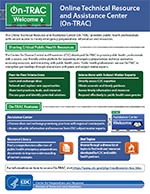
CDC developed the
Online Technical Resource and Assistance Center (On-TRAC)
to provide health departments with a secure, user-friendly platform for requesting technical assistance from CDC subject matter experts on public health preparedness. In addition to tools and resources to support CDC’s 15
public health preparedness capabilities
,
On-TRAC now offers answers to frequently asked questions, enhanced search engine capacity, expanded peer-to-peer exchanges (with regional workspaces), and more than 400 new resources.
State, local, Tribal, and territorial public health professionals must be registered to access On-TRAC. Instructions for existing SAMS (Secure Access Management System) account holders as well as how to request a SAMS account are included below.
New and Existing CDC SAMS Users
If you are a public health professional and need access to On-TRAC, please register for a SAMS account. If you are an existing SAMS user make sure you check the box at the top of the completed form.
- To register, complete and submit the CDC SAMS registration form
- Check the On-TRAC box when completing the form.
- Submit the CDC SAMS registration form to dslritsupport@cdc.gov.
- After submitting the registration form, you will receive an activation email.
- Activate your SAMS Account, and log into On-TRAC here.
|
Substance Abuse and Mental Health Services Administration (SAMHSA) Disaster Technical Assistance Center (DTAC)
SAMHSA DTAC helps states, U.S. territories, Tribes, and local providers plan for and respond to behavioral health needs after a disaster. More information about DTAC and resources available
here
.
|
Medical Reserve Corp (MRC)
The
Medical Reserve Corps (MRC)
is a national network of volunteers, organized locally to improve the health and safety of their communities. MRC volunteers include medical and public health professionals, as well as community members without healthcare backgrounds. MRC units engage these volunteers to strengthen public health, improve emergency response capabilities and build community resiliency. They prepare for and respond to natural disasters, such as wildfires, hurricanes, tornadoes, blizzards, and floods, as well as other emergencies affecting public health, such as disease outbreaks. Some examples of activities that MRC volunteers participate in and support include:
- Emergency Preparedness and Response Trainings
- Emergency Sheltering
- Vaccination Clinics
- Disaster Medical Support & Disaster Risk Reduction
- Outreach to Underserved Community Members
|
Capability Update Initiative Briefing: Public Health Emergency Preparedness and Response Capabilities
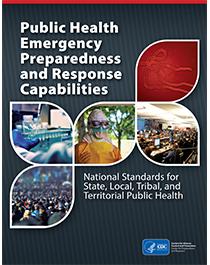
The National Indian Health Board (NIHB) hosted a webinar on the Public Health Emergency Preparedness and Response Capabilities. The purpose of the webinar was to provide public health professionals and their partners with an initial working knowledge of the Center for Disease Control and Prevention (CDC) capability update initiative for emergency preparedness and response and how it applies in practice.
Recording and slides available.
|
Strengthening Tribal Public Health Emergency Preparedness in Washington State
The National Indian Health Board (NIHB) hosted a webinar on Public Health Emergency Preparedness and Response in Tribal Communities on Wednesday, January 30, 2019. The American Indian Health Commission (AIHC) for Washington State discussed the work being conducted in Washington to strengthen Tribes capacity to prepare, respond, and recover from emergencies/disaster
s.
Recording and slides available.
|
|
Partnership with Native Americans Brings Added Support to Tribal Communities with Disaster Preparedness Handbook
Partnership With Native Americans
(PWNA), a nonprofit serving immediate needs and supporting long-term solutions for Native Americans living in reservation communities,
is collaborating with Preparedness Matters
to raise awareness about the realities of disaster aid on the reservations and distributing
The Native Family Disaster Preparedness Handbook
to reservation partners in the Northern Plains. The handbook provides culturally relevant guidance and tips for reservation-based families and Tribes on how to prepare for and respond to disasters.
Read more
.
|
|
Disaster Planning and Preparedness and People With Serious Mental Illness
In 2017,
about 11.2 million U.S. adults
(4.5 percent) experienced a serious mental illness (SMI).
SMI
is a diagnosable mental, behavioral, or emotional disorder that substantially interferes with or limits one or more major life activities. SMIs include bipolar disorder, major depression, and schizophrenia.
Just as with all people, individuals with SMI and serious emotional disturbance (SED) may have limited reaction to a disaster or they may have a heightened reaction. This may include features that we see in anyone involved with a disaster such as heightened anxiety, irritability, sleep disturbance, sense of hopelessness, or inability to participate in healing community responses. Additionally, persons with SMI and SED may experience worsening in the features of their underlying mental illness or any co-occurring physical conditions. This is particularly true if the treatment they usually receive that helps to manage their symptoms is unavailable and there is a disruption in the continuity of care. These factors make it important for state and local agencies and disaster planners to include programs and activities that meet the needs of people with SMI. The following resources can help you find ways to include people with SMI in disaster planning and preparation efforts.
Read more
.
|
|
Planning and Partnerships: Coordinating Rural Resources for Emergency Preparedness and Response
Earthquakes, hurricanes, floods, tornadoes, fires, and ice storms continually test the mettle and preparation of rural healthcare providers. According to the
United Nations Office for Disaster Risk Reduction
, the United States ranks second only to China of
countries with natural disasters
. And those are just the natural ones. Equally damaging in their own way are the man-made disasters, such as cyber-attacks, active shooters, and bioterrorism events.
Read more
.
|
|
SAVE THE DATE
: Tribal Public Heath Emergency Preparedness & Response Stakeholder Call
Monday, April 22, 2019 at 2:00-3:00 pm EST
The National Indian Health Board (NIHB) will hold the first of two stakeholder telephone meetings on Monday, April 22, 2019. The purpose of the calls is to identify emergency preparedness and response program lessons learned, best practices and strategies that can be shared with Indian Country. More information and registration to come.
|
|
10th Annual National Tribal Public Health Summit
May 13-15, 2019, Albuquerque Convention Center
Please join The National Indian Health Board (NIHB) for the 10th Annual National Tribal Public Health Summit (TPHS) May13-15, 2019 in Albuquerque, New Mexico at the Albuquerque Convention Center.
The National Tribal Public Health Summit is a premiere Indian public health event that attracts over 500 Tribal public health professionals, elected leaders, advocates, researchers, and community-based service providers.
This year’s Summit will feature dynamic national speakers, interactive workshops and roundtable discussions, a welcome reception, the annual Special Diabetes Program for Indians poster session, a morning fitness event, culture night, as well as the presentation of the 2019 Native Public Health Innovation awards!
Summit Tracks
- Health Promotion and Disease Prevention
- Public Health Policy, Infrastructure and Systems
- Substance Misuse and Behavioral Health
- Environmental Health and Climate Change
- Emergency Preparedness and Emerging Issues in Public Health
|
|
2019 6th Annual National Joint Tribal Emergency Management Conference
August 21-23, 2019, Green Bay, WI
Northwest Tribal Emergency Management Council (NWTEMC) has announced that registration is now open for the 2019 6th Annual National Tribal Emergency Management Conference to be held August 19th - 23rd, 2019. Pre-Conference Training will be available on the dates of August 19th and 20th, followed by two and a half days of presentations.
Register available here
.
|
|
Public Health Emergency Preparedness & Response Listserv
Do you work on Tribal emergency preparedness and response? Is emergency management important for your Tribe? NIHB is currently creating a listserv, which will offer resources and activities for learning, networking, and information sharing related to Tribal public health emergency preparedness and response. Activities may include webinars, articles, and an in-person summit.
Share Your Emergency Preparedness and Response Work
NIHB loves spotlighting Tribal champions! If your Tribe has conducted, or is currently working on, public health emergency preparedness and response work of any type, NIHB would love to hear from you. NIHB is currently looking for Tribes to spotlight in articles and webinars. Sharing your information lifts up your work as an example and also allows other Tribes to learn from you.
If you are interested in sharing your work or expertise on a webinar or a spotlight article, email Courtney Wheeler a
t
cwheeler@nihb.org.
Looking Forward to Future Activities
NIHB is looking forward to several other future activities for the PHEPR initiative. These activities include:
- NIHB Tribal Public Health & Emergency Preparedness Summit
- Details coming soon!
- Providing additional resources and informational webinars and articles
- If you're not already on NIHB's public health emergency preparedness and response mailing list, sign up here.
- You may also want to sign up for the Public Health Broadcast here
If you have any questions about the Public Health Emergency Preparedness and Response Initiative at NIHB, contact Courtney Wheeler at
cwheeler@nihb.org
or 202-507-4081.
|
|
National Indian Health Board | 202-507-4070 |
nihb.org
|
|
|
|
|
|
|