|
NIPFC January 2026 Blast
| | Hello again! In this month's blast, we are thrilled to release the 20th episode of our podcast series, Let's Have a Conversation, with a team from Solano County Child Welfare Services in Northern California. In this episode, they describe their approach to combat disproportional representation of Black and Native American youth in their child welfare system. We also include in this blast a summary of the presentations NIPFC made to the Beyond the Bench conference in Los Angeles, held by the Judicial Council of California. Finally, we share a few recent articles about some seemingly positive trends about becoming a more kin-first system in a number of locations in the United States. We wanted to provide context that highlights the optimism while grounding the work in the needed practice beyond talking points and narrative trends.
| |
New Podcast Episode of Let's Have a Conversation with Solano County Child Welfare Services
| |
"Episode 20: Solano County Child Welfare Services"
NIPFC’s latest episode of Let’s Have a Conversation showcases the work of Solano County Child Welfare Services and their Race, Equity, Diversity, and Inclusion (REDI) program. This episode features:
- Neely Carpenter McElroy, MSW, Deputy Director
- Rhonda Smith, MSW, Social Services Administrator
- Laura-Alexis Harvey, LCSW, Social Worker III, Continuous Quality Improvement
- Ed Watts, Social Worker III
- Jessica Pryce, Ph.D., MSW; Writer; Research Professor, Florida State University; Chief Strategist, Florida Institute for Child Welfare’s Alliance for Workforce Enhancement
The conversation details the culture-changing work that Solano County has done to create an environment that promotes justice and healing for families served. This work is also building opportunity and safety for staff and leaders to inquire, learn, and challenge approaches that may be furthering agency-centered business-as-usual practices which have led to injustice and traumatization. We believe this to be one of the more innovative and groundbreaking approaches in child welfare systems nationwide, transforming a system that once prioritized protecting children from their families into one that strengthens family engagement.
Listen to the new episode here.
| | |
Beyond the Bench 2025:
Coming Together Again to Support Children, Families & Communities
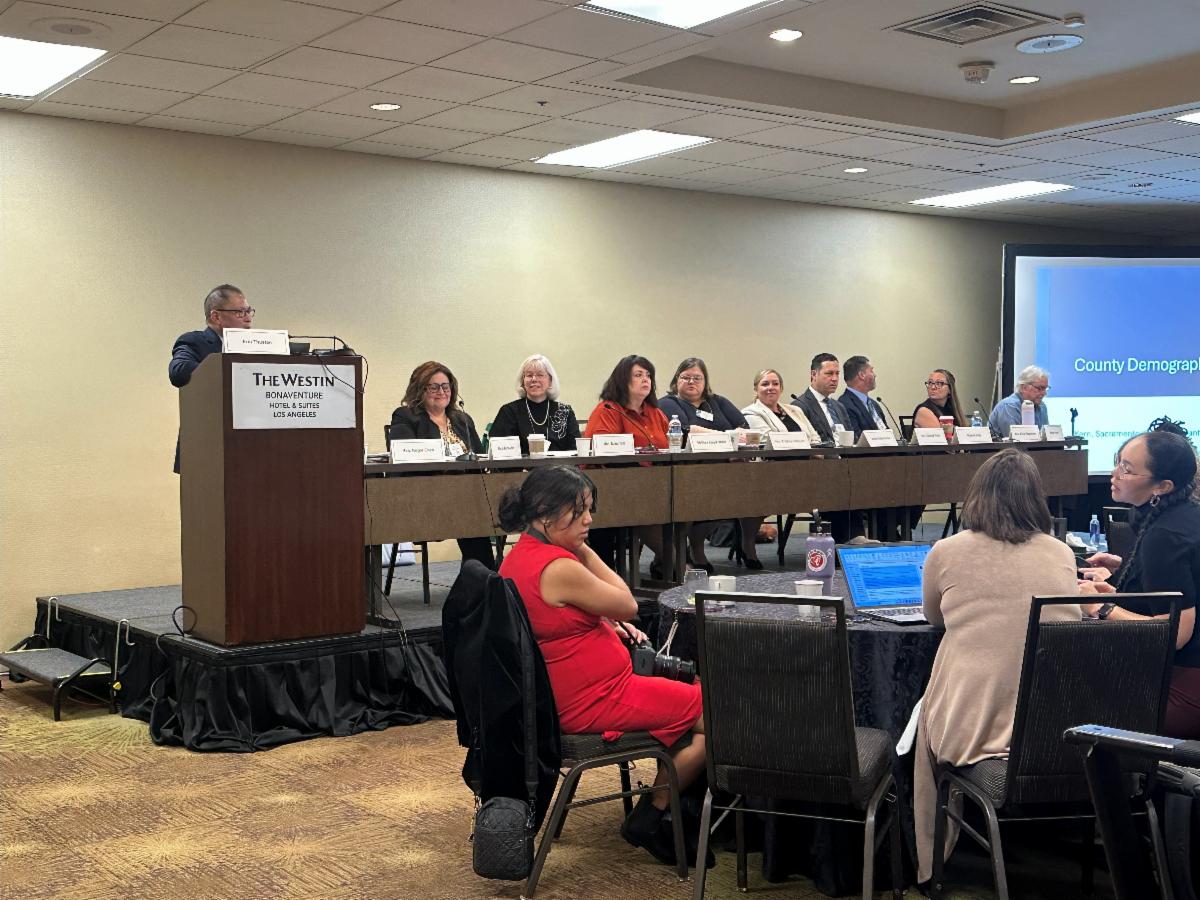
We noted in our November blast that NIPFC was slated to provide 3 presentations to the Judicial Council of California's Beyond the Bench conference in Los Angeles in lNovember. The workshops were well received, and one was highlighted in this article by the Judicial Council. This conference brought together more than 1,000 professionals across courts, child welfare, & community systems, all working toward better outcomes for families. In addition to participating in a featured panel, NIPFC leaders & Seneca partners led multiple sessions focused on advancing kin-first, family-centered practice.
-
Bob Friend, NIPFC Director, joined judicial & systems leaders to discuss how California is aligning child-serving systems around a shared kin-first culture.
-
Mike Mertz, NIPFC Training Director, facilitated a session on building relational wealth, highlighting strategies that help attorneys center relationships & prevent youth from aging out without meaningful connections.
-
Kelly Beck, NIPFC Trainer, co-led a session on relative placement advocacy & family-finding requirements, emphasizing accountability & the role of courts in strengthening a kin-first system.
Read the full article to learn more about the event & NIPFC’s role in shaping permanency-focused practice here.
| | Positive Trends in Kin-First Work | | |
Finally, we wanted to both share and comment on a few articles (linked below) highlighting some positive news from a kin-first perspective across the country. These articles summarily cite fewer intakes into the system and declining mortality resulting from abuse, without an increase in hotline reports from children who remained with their families.
No one article, sets of articles, or research can be truly definitive. We will never know the detail of families’ lives that were impacted or could have been impacted by child welfare involvement or court oversight. There remains back and forth conversations on social platforms arguing the benefits and risks of a kin-first approach, often citing a particular story to justify a perspective.
From NIPFC’s viewpoint, we won’t try to prognosticate transformative events that can impact community, regional, or national opinions about what “should” occur. What we do assert is the following:
-
The evidence is incontrovertible that generally young people are better off in their families—throughout the course of human history. The need during this century to generate volumes of evidence to justify what cultures and communities have known for thousands of years stems from the assumptions of a system built upon the belief that its purpose was to protect children from their families.
- The evidence is also clear that Black and Brown families have been over-surveilled and subjected to unwanted or unnecessary child welfare/court oversight as compared to other families with similar circumstances and histories.
- Poverty creates vulnerability among families’ well-being, and is often mistaken for neglect.
- Brain and body research can now identify the impact of toxic stress on children who were separated and isolated from their families, potentially damaging their short- and long-term health.
- Beyond placement, connections, and even "legal permanency," what makes the difference in young people's long-term health and well-being is establishing enduring networks to support relational permanency, to advocate for them in care, and to ensure safety and well-being post-care in a legal permanent relationship.
This evidence cannot be ignored as we move forward to improve how we serve families in need. It also does not mean that every child should live in their own family.
However, it is imperative that we:
- diligently conduct safety practices which do not disappear, marginalize, or defame parents and kin;
-
recognize that the single factor most closely associated with positive outcomes for children is meaningful, lifelong connections to family;
- welcome, value, and include these family experts in all planning and decision-making about the present and future of their young people; and
- prioritize networks, relationships/relational permanency as a necessary precondition to stable living and legal permanency (note the absence of the term placement in this language—"placement" is a systemic need, not a need for a young person).
Ultimately, when we consistently utilize and sustain this just practice for both families and the workforce, we can shift from professionals making decisions based on facilitated scripts or thinly-sliced algorithmic data that de-prioritize the presence of families. Instead, we can shift toward valuing and including family experts in collectively making just decisions that are in concert with these values, which are sustaining for the communities we serve and the workforce that provides the service.
Let’s focus on establishing the consistency of this practice and move away from criticism and arguments that use an example as evidence to justify a particular perspective. Let’s examine how well we are forging and increasing alignment across all system partners to prioritize lasting relationships and networks over short term “placement” results. Let’s improve the quality and quantity of engagement with families and reduce the influence of “professional” knowledge that lacks any true engagement with families.
Articles for further insight:
To learn more about the Family Network Building approach, please go to familypermanency.org
| | |
Connect with NIPFC
NIPFC Website
familypermanency.org
- Visit our website to find more information about NIPFC, trainings and consultations offered, SenecaSearch services, and a library of our publications and resources
LinkedIn
linkedin.com/in/nipfc
- Follow us to receive updates on what's happening in the field of permanency and NIPFC news and progress
- Meet other agencies in the field
Subscribe to Our Podcast
Let's Have A Conversation
- Subscribe and automatically receive new episodes and updates to your phone on your preferred listening platform
-
Listen to episodes whenever and wherever you go
Subscribe to Our Blast
If you received this newsletter from someone else and would like to receive our next blast to your e-mail, sign up here
| | | | |