Emerging Safety Concerns
Over the past two years, the Disaster & Terrorism Branch (DTB) has added training programs addressing secondary crime in disasters. Secondary crimes such as fraud, exploitation, looting and even interpersonal offenses like domestic violence and human trafficking, can and do increase in the wake of disasters when many people may be the most vulnerable. Working with partners, the DTB has presented this information at larger conferences, and has added content in this area to the basic
Personal Safety for Disaster Behavioral Health Workers course. One area of exploitation growing in prevalence has yet to be addressed in these programs; that of Cyber Safety.
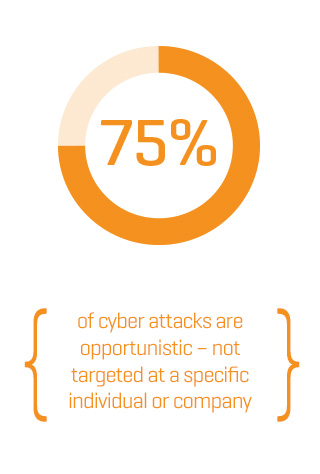
Like secondary crimes in disaster, cybercrime is often opportunistic-it targets the vulnerable. Worldwide, cybercrime now results in a greater financial cost than the black market in marijuana, cocaine and heroin combined. As the fastest growing type of crime, it is important that we begin to incorporate this risk into our discussion of other threats to our safety. Let's start here with basic cyber safety for the crisis counselor.
Cyber safety and security is an expansive topic that includes both behavior and technology. For our purposes, we will limit this discussion to behavior, and for now, the key concepts of
Stop. Think. Connect. More on cyber safety will be include in our live and web-based training programs, but applying these concepts now can have an immediate impact on your level of safety and security.
Cyber Safety 101
In March 2013, a teenage girl was murdered while home alone in Tulsa. A few hours before she died, she tweeted, "Have the house to myself everybody gone." Sometimes, we share too much information online. Announcing you're home alone to the general public is not a good idea. Simply searching Twitter for the phrase "I'm home alone" can provide a predator with a list of potential targets with just a few clicks. While this is an extreme example, people often share too much information (TMI) via their social media accounts and online in general. Posting vacations pictures is a wonderful way to let friends and family know that you're having a blast at the beach, but it can also let others less friendly know that your home may be empty for the next few days. Think twice about what your share and who may see it. TMI can be a killer.
A great example of how easily information about
you can be gathered and put to use can be seen in the
Dave the Psychic video (
https://www.youtube.co/watch?v=F7pYHN9iC9I) seen on YouTube. Dave, pretended to be a psychic recording a program for TV lures people passing on the street of a city in Belgium to participate in his program. With his mystic powers, Dave provides incredibly accurate information about each participant: the color of their vehicle, the price of the home their selling, their best friend's name, and lots of very personal and professional information that can be turned against them by a scammer. Dave later reveals that in real time a team of co-conspirators was scanning the web and searching the participant's social media accounts to feed very personal and precise information to Dave via an earpiece. In the hands of someone practiced in deception, that information can easily become a weapon.
Stop.Think.Connect.
The Stop.Think.Connect. Campaign is a national public awareness campaign created by the U.S. Department of Homeland Security. The program is aimed at increasing the understanding of cyber threats and empowering the American public to be safer and more secure online. Cybersecurity is a shared responsibility. We each have to do our part to keep ourselves and the Internet safe. When we all take simple steps to be safer online, it makes using the Internet a more secure experience for everyone.
Following this three-step model can significantly increase your safety online:
Stop: Before you use the Internet, take time to understand the risks and learn how to spot potential problems.
Think: Take a moment to be certain the path ahead is clear. Consider how your actions online could impact your safety, or your family's.
Connect: Enjoy the Internet with greater confidence, knowing you've taken the right steps to safeguard yourself and your computer.
Other helpful tips from Stop.Think.Connect. include:
- Keep a clean machine: Keep your software up to date and your Internet-connected devices free from malware and infections.
- Own your online presence: Set your privacy and security settings so you share at your comfort level and be savvy about your online reputation.
- Lock it up: Lock and password protect your computer, cell phone and other devices.
For more about the cyber safety and the Stop.Think.Connect. campaign visit http://www.stcguide.com

Cyber threats are currently considered the number one danger to national security. All of us are vulnerable. Being the victim of a hacked email account can be embarrassing and disruptive, but hacking into your financial or health records can be devastating. While we are thinking about our personal safety in the field, let's start including cyber safety into our overall personal protection plans. Let's be safe of the streets and smarter online.