|
What timing. A great question just popped up on my email and I'm going to share this exchange with you.
Greetings,
Just watched part 3. Curious as to why Klipsch went with a 12” over the 15” in the new La Scala? A couple of friends who heard them said that they lack the punch that the older ones had and were left a little disappointed
Love your speakers
Thanks,
Shawn
Here's my reply:
Hi Shawn,
I too was disappointed in the AL6 La Scalas when I heard them.
It's less of a horn speaker than it used to be and that is disappointing to me. I like horn speakers and I want that sound. Live music and instruments exhibit certain sound characteristics that horn speakers replicate better than any other topology.
I would prefer not to have the vices that have historically come with the horn speaker sound though. Colorations, harshness, glare, edgi-ness, poor integration of components, and lack of frequency bandwidth. Over the decades some of us have tolerated those vices to get to the good stuff and others buy Wilson Audio or B&W speakers.
I can think of two approaches to reduce or eliminate horn speaker vices.
One - Have less horn sound (less of a bad thing is good). The problem with this approach is that it gives us less of the good that we love about horns.
Or, use higher quality parts, higher quality cabinets, properly designed and built horn lenses, and careful tuning to preserve all the things we love about horn speakers. In other words, a true advancement of the craft of designing and building horn speakers.
I prefer the latter.
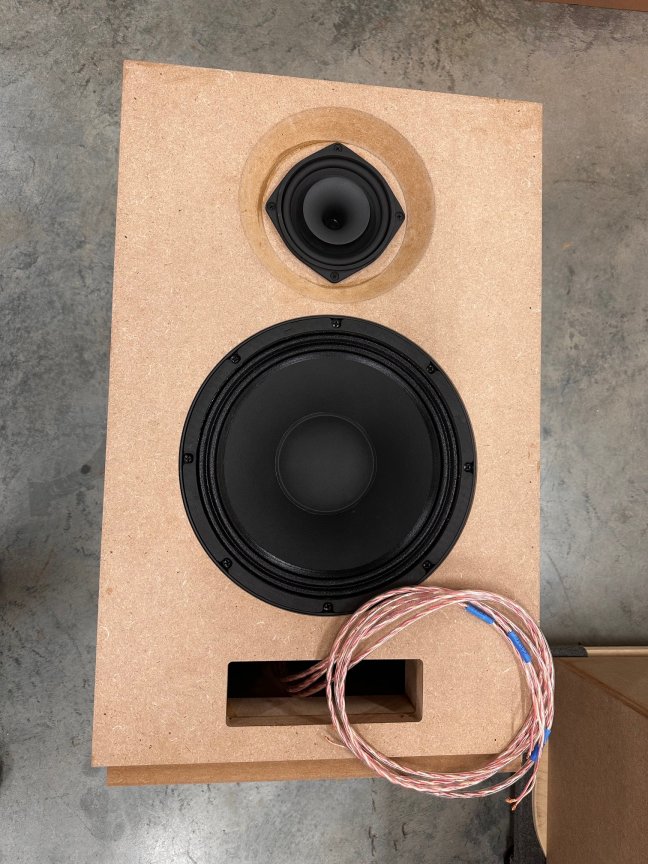
The reason for the 12" woofer in the AL6 is because the chamber is now ported. Klipsch was able to keep the same size chamber (and speaker cabinet) by using a 12" woofer and the ports. Had they kept the 15" woofer and ported it, the chamber would need to grow in size, which would have required a completely new design for a larger La Scala. Sealed 15" chamber is about equal in size to 12" ported.
The AL6 sounds 'polite' to me.
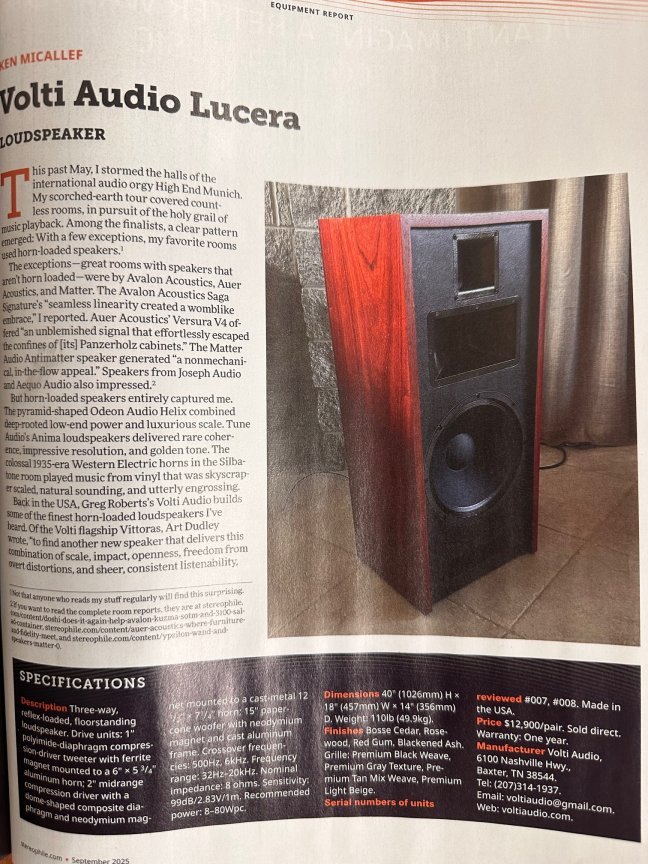
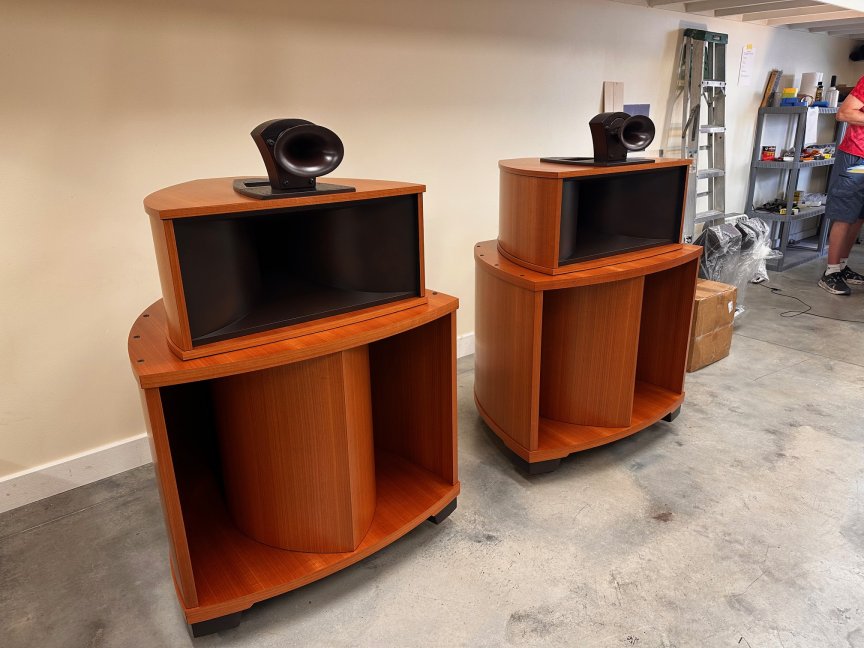
I think the switch to a 12" woofer and ported chamber in the AL6 is clever, and has deeper bass extension than before. However I think it lacks 'drive'. By contrast, the Volti Audio bass horn of the Vittora retains the drive and punch, while offering similar bass extension. It's bigger and much more expensive too. Two different approaches - one that waters down the bass horn sound and the other propping up what we love about bass horns.
The switch to the tiny midrange horn in the AL6 is perplexing to me. It does offer less coloration and harshness than the K401, and is supposed to offer even coverage in a listening room. However, I think it lacks dynamics and directivity, two things that are very important when trying replicate those characteristics of sound that live instruments and live events have. By contrast, Volti Audio midrange has the controlled directivity and wide dynamic range that we expect from a midrange horn - while also sounding effortless and free of fatigue. Two different approaches.
Klipsch likes to say they are "Keepers Of The Sound". I think they are the "Changers Of The Sound".
The more changes Klipsch makes, the more polite they make their speakers, the more un-horn-like they make their speakers, and the more they sell - the better it is for Volti Audio! Klipsch is helping me set my designs apart. I will continue to move forward with the art of designing and building horn speakers, the Volti Audio way.
Regards,
Greg Roberts
Volti Audio
|