|
NLBMDA Washington Update:
A Landmark Housing Win and a
Compressed Fall Agenda
| | As Congress Leaves Washington, NLBMDA Reviews First-Half Progress and the Road Ahead | | |
As Congress begins its August state work period, lawmakers are leaving Washington after delivering a significant legislative victory for the residential construction industry. The enactment of the 21st Century ROAD to Housing Act marks the most consequential federal housing legislation in decades and the culmination of sustained advocacy by NLBMDA, its members, and a broad coalition of housing and construction trades organizations.
The August break also arrives at a consequential point in the congressional calendar. When lawmakers return in September, they will have only a few weeks in Washington before departing to campaign ahead of the November 3 midterm elections. The House is scheduled to hold its final pre-election votes on October 1, while the Senate is scheduled to leave after October 2. Both chambers return November 9, leaving much of the remaining legislative agenda to a potentially busy lame-duck session.
| A Landmark Housing Victory | |
On July 11, the 21st Century ROAD to Housing Act became Public Law 119-101, completing a legislative journey that included overwhelming bipartisan passage in both chambers. The House approved the final legislation by a vote of 358-32 on June 23.
ROAD represents a major shift in the federal government’s approach to housing affordability. Rather than relying on a single program, the law includes dozens of provisions intended to increase housing supply, modernize federal programs, reduce unnecessary development delays, expand access to financing, and strengthen rural, manufactured, and affordable housing. It also directs federal agencies to identify land-use and zoning practices that can support additional housing production while preserving state and local decision-making.
NLBMDA strongly supported the legislation throughout the congressional process. Dealers raised the housing shortage directly with lawmakers during NLBMDA’s Legislative Conference, participated in grassroots outreach, and reinforced the connection between federal housing policy and the businesses that supply the lumber, building materials, and expertise needed to construct and rehabilitate existing homes.
Passage, however, is only the beginning. Federal agencies must now develop guidance, conduct studies, establish pilot programs, and implement the law’s numerous reforms. Some initiatives will also require Congress to provide funding through the annual appropriations process. NLBMDA will closely track implementation and continue emphasizing policies that translate statutory reforms into measurable increases in housing production.
|
Building Support for the Neighborhood Homes Investment Act
| |
Although ROAD represents substantial progress, additional federal action will be needed to address the shortage of attainable homes, particularly in communities where the cost of construction or rehabilitation exceeds the property’s expected market value.
NLBMDA continues to advocate for the bipartisan Neighborhood Homes Investment Act, or NHIA. Introduced as H.R. 2854 by Representatives Mike Kelly and John Larson and as S. 1686 by Senators Todd Young and Mark Warner, the legislation would create a federal tax credit to support the construction and substantial rehabilitation of owner-occupied homes in qualifying communities.
NLBMDA members advocated for NHIA during the 2026 Legislative Conference and NLBMDA staff continues to meet with House and Senate offices to build support and awareness for the legislation.
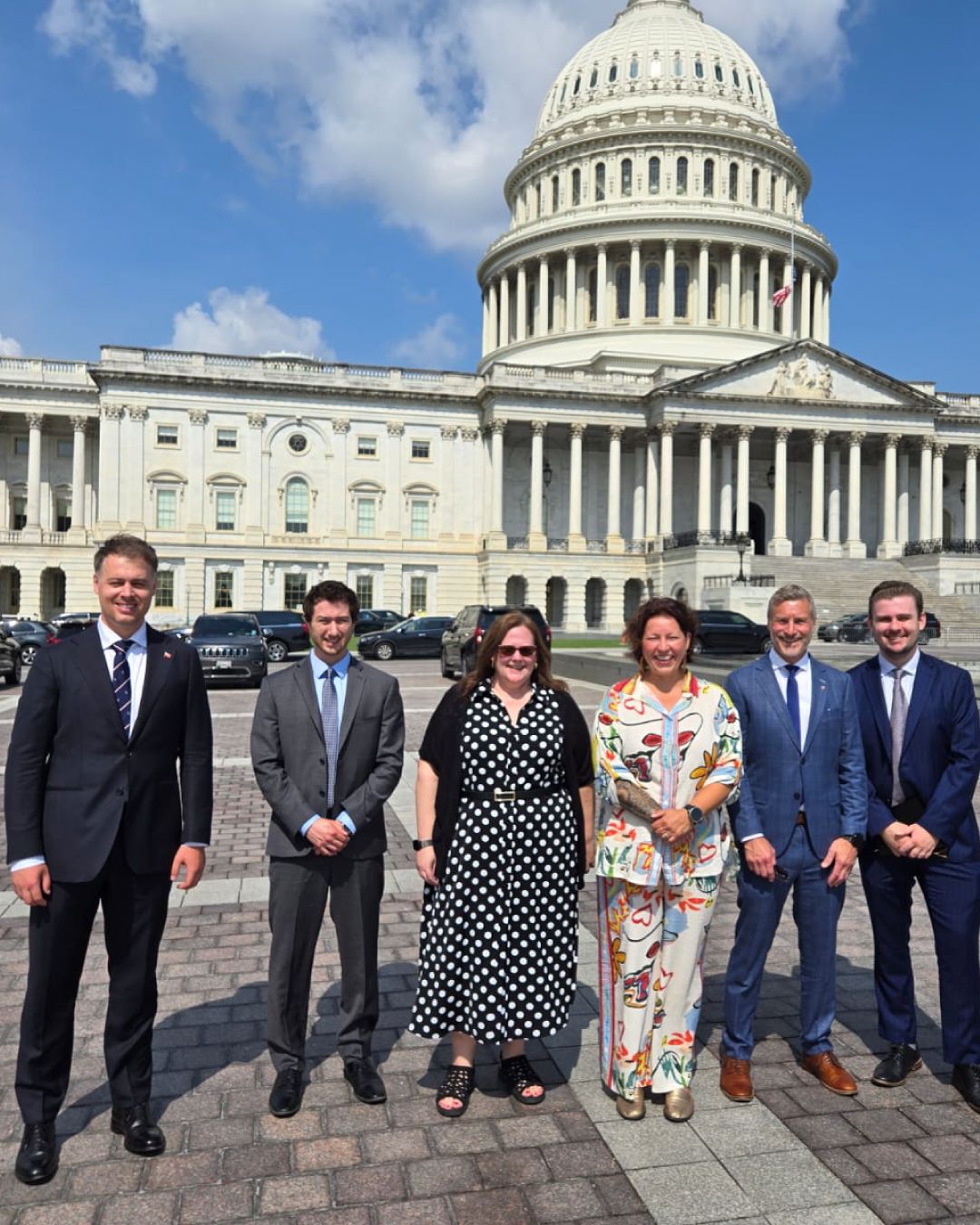
Right: This June, NLBMDA joined the Neighborhood Homes Coalition on Capitol Hill to urge Congress to pass the Neighborhood Homes Investment Act. NHIA would create a federal tax credit to help close the “value gap” that often prevents the construction and rehabilitation of affordable starter homes in communities that need new investment.
| Federal Heat Regulations Remain Under Consideration | |
Workplace heat remains a major regulatory priority for the Department of Labor. OSHA has not finalized its proposed national heat illness prevention standard, which would establish new requirements for employers related to heat exposure assessments, written plans, employee training, acclimatization, water, rest breaks, and emergency response procedures.
NLBMDA supports protecting employees from heat-related illness but continues to advocate for a practical, flexible approach that recognizes regional climate differences, existing workplace safety practices, and the substantial differences between indoor facilities, outdoor yards, delivery operations, and construction sites. A prescriptive, one-size-fits-all regulation could impose significant administrative burdens without necessarily improving safety.
Even without a final rule, dealers should review their current heat illness prevention practices, including access to drinking water, opportunities for rest and shade, acclimatization procedures, employee training, emergency response plans, and documentation.
| Trade Policy and Building Material Costs | |
Trade policy continues to affect the cost and availability of lumber and other building materials. Since October 2025, most imported softwood lumber has been subject to a 10 percent tariff imposed under Section 232 of the Trade Expansion Act. The tariff applies in addition to other applicable duties.
Canadian softwood lumber also remains subject to longstanding antidumping and countervailing duties. Based on the most recent final administrative review, the combined cash deposit rate for most Canadian producers is approximately 35 percent. Preliminary results released during the current review suggest that rate could decline, but the preliminary rates are not yet in effect and remain subject to change before the Department of Commerce issues its final determination.
In July, the administration announced a yet-to-be-enacted additional 50 percent tariff on certain Canadian products under Section 338 of the Tariff Act of 1930. Products already subject to Section 232 tariffs, including softwood lumber, were excluded from that additional tariff.
NLBMDA supports fair and enforceable trade rules but remains concerned about the cumulative effect of tariffs and duties on housing affordability, material costs, and supply-chain planning. NLBMDA will continue urging policymakers to consider the downstream effects of trade actions on independent dealers, builders, remodelers, and homebuyers.
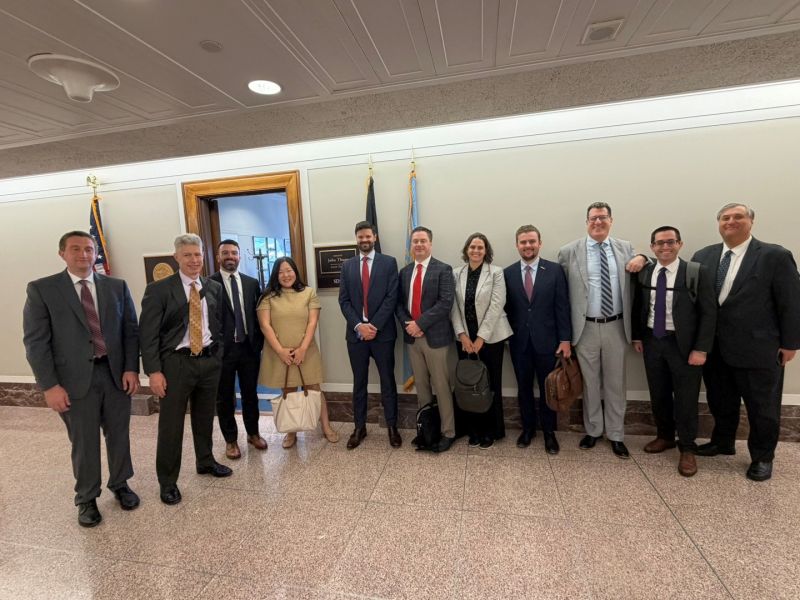
Right: In July, NLBMDA joined Supply-Build Canada and forest-products industry partners on Capitol Hill to educate congressional offices about the important differences among lumber species and explain why builders and dealers depend on a stable, diverse North American product supply to meet construction needs, avoid disruptions and support housing affordability.
| Highway Reauthorization and Federal Weight Limits | | |
Congress must also address the looming expiration of the current surface transportation authorization. Programs authorized by the Infrastructure Investment and Jobs Act expire September 30, creating pressure for lawmakers either to enact a new multiyear highway bill or approve a temporary extension.
In May, the House Transportation and Infrastructure Committee approved the bipartisan BUILD America 250 Act, H.R. 8870, by a vote of 62-2. The five-year reauthorization legislation would provide continued investment in highways, bridges, freight networks, transit, rail, and other surface transportation programs. The bill still requires action by the full House, while the Senate continues its own reauthorization work.
Advancing a NLBMDA policy priority, the committee adopted a voluntary pilot program allowing participating states to permit six-axle trucks weighing up to 91,000 pounds on the Interstate Highway System. Current federal law generally limits trucks to 80,000 pounds regardless of whether an additional axle is used. The proposal would run for 10 years and would be limited to 10 participating states.
The narrow fall calendar makes enactment of a full surface transportation bill before September 30 difficult. Congress may need to approve a temporary extension while negotiations continue, with final action potentially moving into the lame-duck session or the next Congress.
| Midterm Elections Shape the Remaining Calendar | |
Republicans currently hold a narrow House majority, with 218 Republicans, 212 Democrats, one independent, and four vacancies. Republicans also hold a 53-seat Senate majority.
Current national polling gives Democrats a modest advantage on the generic congressional ballot, making control of the closely divided House highly competitive. In the Senate, Democrats would need a net gain of four seats to secure a majority, and the mix of seats on the ballot gives Republicans a structural advantage, although several individual races remain competitive in Alaska, Michigan, Maine, North Carolina, Ohio, Texas, and Georgia. Neither chamber’s outcome is settled, and candidate quality, turnout, economic conditions, and late campaign developments could materially change the political environment before November.
The approaching elections will make it difficult for Congress to address politically contentious legislation before November. Leadership is likely to prioritize must-pass bills and measures with broad bipartisan support during the limited September session. Government funding remains one such priority. The House has approved a continuing resolution extending funding through December 4, while Senate leaders have advanced a bipartisan alternative extending funding through December 11. The chambers will need to resolve those differences, but either approach would shift final appropriations decisions into the lame-duck session.
Other potential lame-duck priorities include annual defense legislation, a surface transportation extension or final reauthorization bill, outstanding tax provisions, and additional bipartisan measures that have already advanced through committee. The election results could influence those negotiations. A change in party control may encourage the outgoing majority to complete unfinished business, while a continuation of the current alignment could lead lawmakers to postpone more polarizing bills until 2027.
| The Road Ahead & Other Priorities NLBMDA Is Advancing | |
ROAD’s enactment demonstrates what sustained member engagement, coalition advocacy, and bipartisan outreach can accomplish. NLBMDA will now turn its attention to ensuring the law is implemented effectively while continuing to advocate for NHIA, practical workplace regulations, predictable trade policy, providing input on Congress’s next long-term highway bill, swipe fee reform, and workforce development.
During the August state work period, NLBMDA members have an important opportunity to reinforce those priorities by meeting with lawmakers, hosting facility tours, and explaining how federal policy decisions affect their employees, customers, and communities. With only a short September session and a potentially consequential lame duck remaining, NLBMDA will continue engaging congressional offices and federal agencies to ensure that the voice of the LBM industry remains front and center.
Additionally, NLBMDA continues to support the Credit Card Competition Act, which was reintroduced in January by Senators Roger Marshall and Dick Durbin and in the House by Representatives Lance Gooden and Zoe Lofgren. The legislation would require the largest credit card-issuing banks to enable at least two unaffiliated payment networks on their cards, including an alternative to Visa and Mastercard.
Workforce development also remains central to NLBMDA’s advocacy. Labor shortages throughout construction, trucking, manufacturing, and the skilled trades can delay projects, constrain dealer operations, and increase housing costs. NLBMDA will continue supporting apprenticeships, industry-recognized training programs, community and technical colleges, and legislation that prepares workers for careers in our industry.
| | For questions, please reach out to NLBMDA’s Government Affairs Coordinator, Matthew Delaney at mdelaney@dealer.org | |
Special Thanks to our Federal Advocacy Sponsors | | | | |