March 9, 2026 • View in browser | | NLBMDA Weekly is our newsletter covering everything from the latest activity in Washington to updates from our members. This is the premier source of federal legislative, regulatory, and industry news for NLBMDA members. | | Congress Advances Comprehensive Housing Package Toward Passage | | |
Throughout last week, the U.S. Senate held a series of procedural votes advancing the 21st Century ROAD to Housing Act, a consolidated legislative package that merges provisions from the Senate’s ROAD to Housing Act and the House’s Housing for the 21st Century Act. The current legislation reflects substantial alignment between the chambers, incorporating 21 of the 25 provisions from the House legislation and 36 of the 40 provisions contained in the Senate’s original bill. Among the additions is Section 901, new language not included in either chamber’s prior proposal, which would prohibit certain acquisitions of single-family homes by “large institutional investors.” Under the bill, a large institutional investor is defined as a corporation that owns at least 350 single-family homes. The provision reflects a priority of the White House and aligns with a January 2026 executive order directing federal housing agencies to ensure that relevant federal programs do not approve, insure, guarantee, securitize, or otherwise facilitate the sale of single-family homes to institutional investors. While fewer than one percent of homes purchased in 2025 were acquired by institutional investors meeting the bill’s threshold, the presence of these entities is more concentrated in certain metropolitan markets, where their activity has raised concerns about competition for entry-level housing among families seeking to purchase homes.
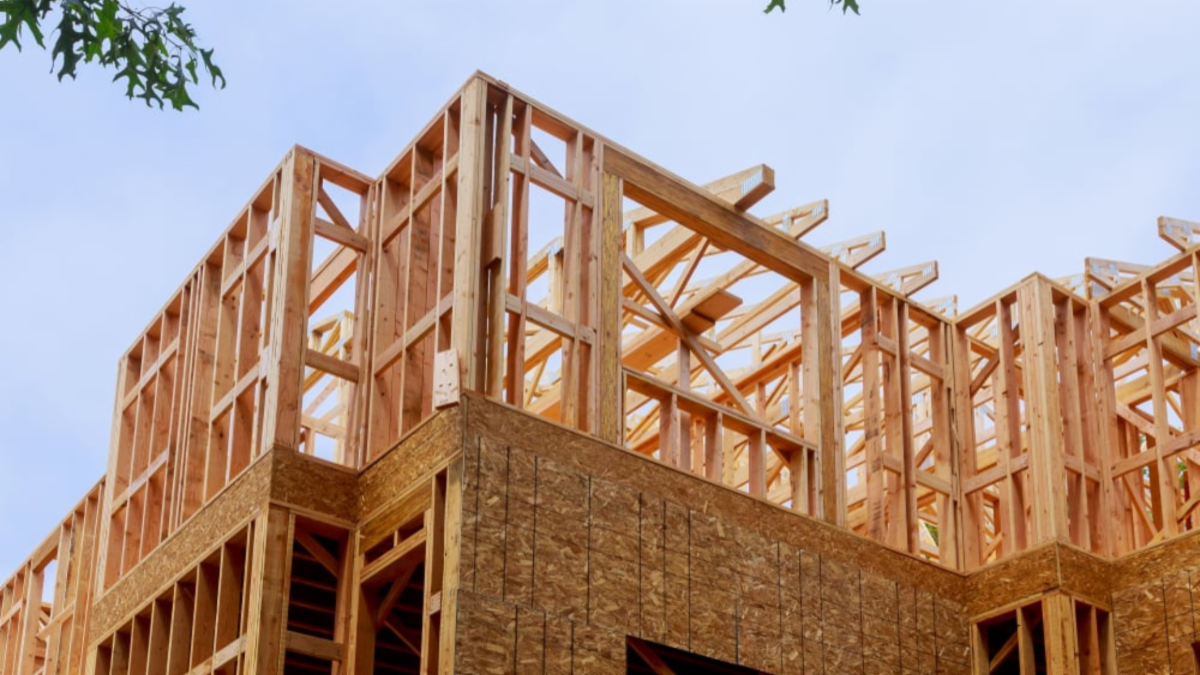
Also included in the most recent package is a new restriction affecting single-family rental housing, requiring that newly constructed rental homes be sold within seven years of completion. This housing model, commonly referred to as built-to-rent (BTR), represents a rapidly expanding segment of the single-family construction market. Today, BTR homes account for roughly 7 percent of new single-family housing supply, and production has accelerated significantly, with nearly ten times as many BTR units completed in 2024 as were built a decade earlier. In a housing market shaped by elevated mortgage rates and median new home prices exceeding $400,000, BTR properties have increasingly served as an intermediate step between renting and homeownership while also channeling substantial private capital into new residential development. As currently drafted, however, the provision would require BTR investors to sell these homes to an individual buyer within 7 years regardless of prevailing market conditions. In practice, this could compel investors to divest properties at a loss, creating a disincentive for future investment in new housing production. As Congress moves closer to advancing what could become the most consequential federal housing package in decades, NLBMDA is actively engaging with Senate and House lawmakers to encourage refinement of this provision, ensuring that the final legislation strengthens housing availability without inadvertently constraining the development of new supply. The Senate is expected to hold a final vote on the legislation this week, after which the measure will return to the U.S. House for final consideration.
| | Representative Marie Gluesenkamp Perez (WA-03) to Speak at the 2026 Spring Meeting & Legislative Conference | |
Representative Marie Gluesenkamp Perez (WA-03) will speak at the 2026 Spring Meeting & Legislative Conference, bringing her perspective as a small business owner and independent voice for Southwest Washington to this year’s program. A fifth-generation Washingtonian and former co-owner of an auto repair and machine shop, Rep. Gluesenkamp Perez understands firsthand the challenges facing small businesses and working families.
In Congress, she is focused on strengthening local economies, supporting small businesses, and advancing practical solutions for communities like those represented by NLBMDA members. She has also been a leader on workforce development in the building trades, including her work on the CONSTRUCTS Act, legislation aimed at strengthening career and technical education and expanding pathways into skilled construction jobs. Rep. Gluesenkamp Perez currently serves on the House Appropriations Committee and previously served on the House Agriculture Committee and House Small Business Committee, where she worked on issues affecting rural communities, workforce development, and economic growth. Attendees will hear directly from her about the policy priorities shaping today’s landscape in Washington.
Click here to register for the Spring Meeting & Legislative Conference from March 17-18 in Washington, D.C.
| | NLBMDA Joins Sens. Rosen, Coons, Introducing Legislation Establishing Tariff Exclusion Process | |
Last week the National Lumber and Building Material Dealers Association (NLBMDA) announced its support for the Housing Tariff Exclusion Act (S.3943), introduced by Senators Jacky Rosen (D-NV) and Chris Coons (D-DE). The legislation would exempt hundreds of homebuilding material product codes from recently enacted tariffs and establish a streamlined process allowing importers to apply for tariff exclusions on additional materials essential to residential construction. Covered products include lumber and engineered wood products, cement and aggregates, glass and glazing materials, insulation, plastics, adhesives, and other key inputs used throughout the homebuilding supply chain.
The bill would also direct the Department of Commerce to create an expedited exclusion process for homebuilding materials, with decisions issued within 15 days for critical products and 60 days for other covered articles. The legislation does not affect longstanding trade remedies, including antidumping and countervailing duties on Canadian softwood lumber. NLBMDA will continue engaging lawmakers and industry partners on Capitol Hill in the coming months to build support for the legislation and reinforce the importance of stable, predictable trade policy for the materials essential to residential construction.
| | NLBMDA Needs Your Feedback! Take our 5-Minute Survey Today | |
NLBMDA’s advocacy efforts are strongest when they reflect the real priorities of our members. The NLBMDA Advocacy Policy Survey is designed to gauge your company’s advocacy needs and interests at the federal level.
Your input will help shape our legislative strategy, inform regulatory engagement, and ensure we are focused on the issues that matter most to the lumber and building material industry.
Your feedback is confidential and essential to strengthening our collective voice in Washington. Thank you for helping guide NLBMDA’s advocacy efforts.
| | |
Registration is now open for the ProDealer Industry Summit, an exclusive live educational forum designed to advance the growth of lumber and building product dealers, distributors, wholesalers, and their supplier partners. The event will be held at The Westin Michigan Avenue in Chicago and is co-hosted by NLBMDA and HBSDealer.
The summit brings together leaders from across the LBM industry for education, peer collaboration, and strategic discussion focused on strengthening businesses in a competitive marketplace.
| | Thank you to NLBMDA's Federal Advocacy Sponsors! | | |
Lumber and building material dealers and suppliers nationwide are joining NLBMDA in calling on the LBM community to invest in our industry at a critical time for federal advocacy. By becoming a Federal Advocacy Sponsor, your company helps strengthen NLBMDA’s ability to represent the interests of LBM dealers in Washington and ensure the industry’s priorities are heard when key policy decisions are being made. With the support of our sponsors, NLBMDA’s D.C.-based team regularly engages with lawmakers, congressional staff, regulators, and administration officials to advance policies that support a strong housing market and a business-friendly environment.
This Congress, NLBMDA has worked to secure meaningful legislative victories for the industry, including restoring and making permanent key business-friendly tax provisions, expanding pro-housing tax credits to support the construction of hundreds of thousands of new residential units, and securing exemptions that could remove thousands of family-owned businesses from estate tax liability. At the same time, NLBMDA actively monitors new business and labor regulations, pushing back against burdensome mandates and ensuring the voice of LBM dealers is heard before rules are finalized. Federal Advocacy Sponsors make this work possible—helping ensure our industry remains strong, competitive, and well represented in Washington. For more information, contact Jonathan Paine at jonathan@dealer.org
| | Builders Identify Key Long-Term Forces Shaping Housing Demand and Industry Health | |
Results from special questions included in the recent National Association of Home Builders/Wells Fargo Housing Market Index (HMI) survey show that builders expect a mix of demographic, economic and technological forces to shape housing demand and the long-term health of the home building industry over the next decade.
Among the trends builders believe will have a negative impact on housing demand and industry conditions, the most cited were government debt levels (82%), declining fertility rates (78%), the long-term inflation outlook (70%), declining marriage rates (67%) and rising energy costs (61%). At the same time, builders identified several forces they expect to have a positive impact, including an aging housing stock (73%), work-from-home trends (65%), artificial intelligence (52%), modular and panelized construction (45%) and an aging population (39%).
“Builders are clearly thinking beyond the short-term outlook and focusing on the forces that will shape housing demand for years to come,” said Robert Dietz, chief economist at the National Association of Home Builders. While demographic shifts and fiscal pressures present challenges, builders also see opportunities tied to evolving work patterns, new technologies and the need to modernize the nation’s housing stock.
| | Key Inflation Data and Housing Reports Set to Shape Economic Outlook This Week | |
A series of key inflation reports and housing indicators expected this week could help shape the broader economic outlook as policymakers weigh future interest rate decisions. According to a report highlighted by Yahoo Finance, two major inflation measures will be released ahead of the next meeting of the Federal Reserve, providing fresh insight into the trajectory of consumer prices and the cost of living.
The latest data has offered mixed signals on inflation. The February Consumer Price Index is scheduled for release following a softer-than-expected January report, while the January Personal Consumption Expenditures Price Index will follow a December reading that came in above forecasts. Policymakers remain divided on whether additional interest rate cuts will be necessary after holding rates steady at their most recent meeting. At the same time, several housing market indicators—including existing-home sales and housing starts—are expected this week as buyer activity continues to face affordability challenges.
| | Courts Begin Determining Tariff Refunds After Supreme Court Ruling | | |
Federal courts have begun addressing the next phase of litigation following the U.S. Supreme Court’s February decision striking down tariffs imposed under the International Emergency Economic Powers Act (IEEPA). In Learning Resources, Inc. v. Trump, the Court ruled that IEEPA does not authorize the president to impose tariffs, finding that such actions exceed the statute’s delegated authority.
On Friday, officials from U.S. Customs and Border Protection (CBP) told the U.S. Court of International Trade that the agency will need roughly 45 days to develop a new automated system capable of processing refunds. The system is intended to handle the unprecedented scale of the repayments, which could total approximately $166 billion across more than 330,000 importers.
As litigation continues, the courts will determine the scope, timing, and mechanics of the refund process, an outcome that could have major implications for importers and the broader supply chains. NLBMDA will continue to closely monitor developments and keep members informed as further guidance emerges on how any potential refunds may be administered.
| | U.S. Economy Loses 92,000 Jobs in February as Hiring Slows Across Key Industries | | The U.S. economy lost 92,000 jobs in February, according to the latest Employment Situation report from the U.S. Bureau of Labor Statistics, while the unemployment rate held steady at 4.4 percent. Construction employment declined by 11,000 jobs, manufacturing employment fell by 12,000, and employment in mining and logging declined by 2,000 over the month. Despite the monthly declines, broader labor market indicators remained relatively stable. Average hourly earnings for private-sector employees increased by 15 cents to $37.32, representing 3.8 percent growth over the past year, while the average workweek remained unchanged at 34.3 hours. Overall, the report suggests a cooling but still stable labor market as policymakers and businesses continue monitoring economic conditions in the months ahead. | | President Trump Addresses Joint Session of Congress at State of the Union Address | | |
On February 24, President Trump delivered the State of the Union address to a joint session of Congress, outlining the administration’s assessment of current economic conditions and domestic policy priorities for the year ahead. The speech lasted approximately one hour and forty-seven minutes, making it the longest State of the Union address on record. During the address, housing affordability and homeownership were referenced within the broader discussion of inflation and household costs. The president noted declining mortgage rates and referenced the impact of housing costs on American households.
The address also highlighted housing market dynamics involving competition between prospective homebuyers and large institutional investors. The president referenced a January executive order intended to restrict large investment firms from acquiring single-family homes at scale through certain federally connected housing channels and called on Congress to codify the policy. While the address touched on housing affordability and market access, it included relatively few detailed legislative proposals for Congress to consider ahead of the upcoming midterm election cycle.
| | LBM Advantage hails 'record-breaking' buying show | | |
LBM Advantage hosted its 2026 Annual Buying Show March 2–4 at the Gaylord Opryland Resort & Convention Center, drawing record attendance from independent lumber and building material dealers and vendor partners across the country.
Educational programming included panel discussions on yard operations and technology, giving members the opportunity to hear directly from their peers about best practices, operational challenges and real-world solutions. The event also featured a session on artificial intelligence and its practical applications for LBM dealers, presented by Toolbx.
| | Orgill surveys the 2026 business landscape | | |
At its recent Dealer Market in Orlando, HBSDealer spoke with Orgill decision-makers on a range of topics to get a sense of how the company is navigating the current environment—and planning for what’s ahead.
Read on for timely insights from:
- Clay Jackson, COO
- Craig Cowart, President of CNRG
- Victor Price, SVP of Logistics
| | Weyerhaeuser Growing Leaders Across the Northwest | | |
Weyerhaeuser employees across the Northwest are stepping into a new generation of leadership development through three powerful state programs: Resource Education and Agriculture Leadership, or REAL, in Oregon and Montana, and AgForestry in Washington.
Though each program is unique, they share a unifying purpose of developing informed, connected and collaborative leaders who can strengthen natural-resource industries from the ground up. Participants build knowledge, experience and valuable cross-industry relationships.
For employee participants, and for Weyerhaeuser at large, the programs also represent something deeper: a tangible investment in leadership and in the long-term resilience of the industries and communities we serve.
| | | | |