April 6, 2026 • View in browser | | NLBMDA Weekly is our newsletter covering everything from the latest activity in Washington to updates from our members. This is the premier source of federal legislative, regulatory, and industry news for NLBMDA members. | |
2025 Credit and Debit Swipe Fees Reach $198.25 Billion In 2025
| |
Credit and debit card interchange fees reached a record $198.25 billion in 2025, according to new data released by Nilson Report, marking a 5.9% increase from 2024 and an approximately 80% rise since the beginning of the decade. The average swipe fee rate for Visa and Mastercard credit cards rose to 2.36% of the transaction amount, continuing an upward trend year over year. Fees associated with the two networks accounted for the majority of total costs, reflecting continued market concentration. For many LBM dealers, swipe fees remain among the highest operating expenses after labor and are often passed on to consumers through higher prices.
The data comes as Congress considers the Credit Card Competition Act of 2026, a bipartisan proposal aimed at increasing network competition and reducing swipe fees. The legislation, endorsed by the White House, would require large issuing banks to enable multiple network routing options, a requirement that generate significant savings for merchants and consumers. NLBMDA continues to lead on this issue in Washington, regularly engaging with House and Senate offices to build bipartisan support for the legislation while partnering with aligned merchant sectors throughout the year, including coordinated advocacy efforts such as swipe fee fly-ins.
While NLBMDA members advanced the Credit Card Competition Act in more than 100 meetings during last month’s fly-in, there are continued opportunities to build on that momentum throughout the year. Dealers can further support this effort by contacting their members of Congress and sharing how rising swipe fees are impacting their businesses.
To assist in these efforts, NLBMDA has updated our swipe fee one-pager with the latest data from the Nilson Report. The updated resource is available here.
| |
White House Adjusts Tariffs on Steel, Aluminum, and Copper Imports
| |
Last week the White House announced changes to Section 232 tariffs on steel, aluminum, and copper that significantly revise how duties are calculated and applied. Beginning today tariffs will be assessed on the full value of imported products rather than only the metal content, replacing the prior methodology. Administration officials indicated the change is intended to address concerns that the previous system allowed importers to undervalue metal inputs and avoid higher duties.
The Proclamation also introduces a tiered tariff structure. Most primary metal products and closely related goods will face a 50% tariff, while many downstream products will be subject to a 25% rate. Certain products are removed from coverage entirely, and some industrial and electrical equipment will receive a temporary reduced rate through 2027. The policy also includes a threshold that excludes products with minimal metal content. The White House states the changes are intended to strengthen enforcement and support domestic metal production.
| | ProDealer of the Year Nominations Extended to Friday! | |
The ProDealer of the Year Award program highlights companies that set the standard for success, innovation, and community engagement. This long-standing tradition spans two centuries, and has honored some of the most respected names in the industry.
Each year, NLBMDA and HBSDealer recognize outstanding industry leaders in two categories:
- ProDealer of the Year – Recognizing a company that demonstrates exceptional growth, innovation, and leadership in the LBM industry.
- Independent ProDealer of the Year – Celebrating a standout dealer with five or fewer locations that exemplifies the values and business acumen of the independent lumberyard sector.
The program relies heavily on the expertise of the industry at large. Do you know a company that deserves to be recognized? Nominations are open now. Submit your entry by April 10 and help us celebrate the best in the industry.
| | |
Registration is now open for the ProDealer Industry Summit, October 5-7 in Chicago, Illinois! Join us for an exclusive live educational forum designed to advance the growth of lumber and building product dealers, distributors, wholesalers, and their supplier partners. The event will be held at The Westin Michigan Avenue in Chicago and is co-hosted by NLBMDA and HBSDealer.
The summit brings together leaders from across the LBM industry for education, peer collaboration, and strategic discussion focused on strengthening businesses in a competitive marketplace.
| |
NLBMDA Recaps 2026 Spring Meeting & Legislative Conference
| |
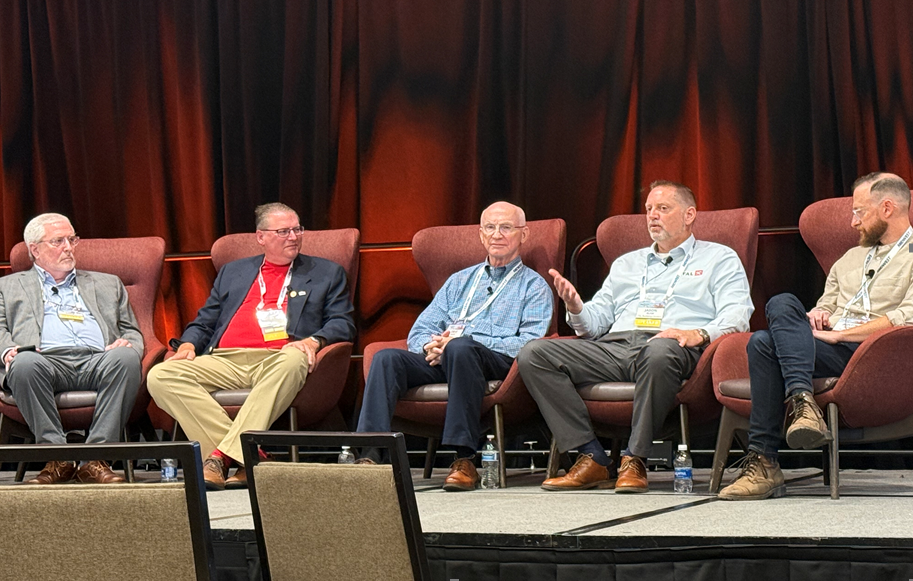
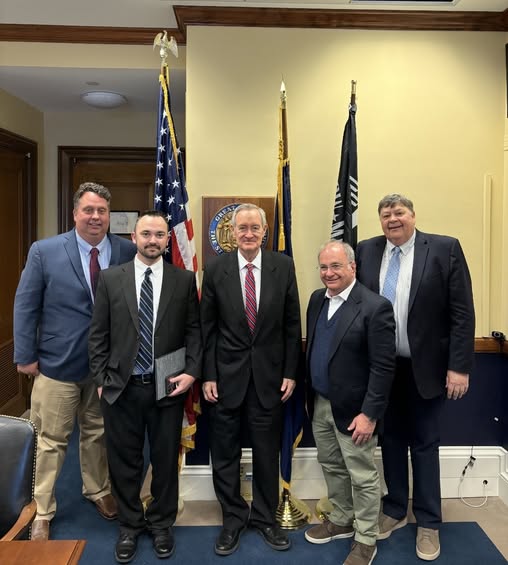
Last month, NLBMDA welcomed more than 60 industry leaders to Washington, D.C. for its 2026 Spring Meeting & Legislative Conference, combining timely policy discussions with direct advocacy on Capitol Hill. Over two days, attendees engaged with congressional staff, federal officials, and industry partners on key priorities including housing supply, workforce development, and swipe fee reform. The conference culminated in more than 100 meetings across 12 states, where members delivered firsthand perspectives on how federal policies impact their businesses. Together, the event reinforced the importance of coordinated, industry-driven advocacy at a pivotal moment for the LBM sector. Read the full recap here.
| | Builders Respond to Affordability Challenges with Buyer Incentives and Innovative Designs | |
During New Homes Month in April, the home building industry is responding to market conditions by constructing homes that balance price and meet modern home buyer needs. According to U.S. Census Bureau and National Association of Realtors data, newly built homes are typically priced at or below existing homes, offering buyers more options in today’s challenging housing market.
“Homeownership remains a cherished ideal for families across the country, and builders are stepping up to make homes attainable,” said NAHB Chairman Bill Owens, a home builder and remodeler from Worthington, Ohio. “We will continue working with policymakers at every level of government to address supply-side challenges and seek regulatory relief that affects housing affordability."
In 2025, a typical existing home sold for 1% more than a newly built home. Since 2022, median new home prices have declined by 5%. Builders are narrowing the price gap by adjusting costs and design. According to a recent NAHB survey, 64% of builders offered sales incentives and 37% cut prices. In addition, the median home size in 2025 was 2,155 square feet, essentially unchanged from 2024. Smaller homes generally improve affordability for buyers.
Looking ahead, builders are increasingly expanding usable living space with patios, front porches and decks, complemented by exterior lighting and landscaping. Builders are also adapting to buyers’ preferences for flexible interiors and modern features.
| |
White House Releases FY 2027 Budget Request
| |
On Friday, the Administration released its FY2027 budget request, outlining funding recommendations to Congress as it begins the appropriations process for the next fiscal year. While Congress is not bound by the proposal and ultimately sets its own funding levels, the request serves as an indicator of the Administration’s priorities and may inform Congressional deliberations.
The proposal includes $73.5 billion in discretionary funding for the Department of Housing and Urban Development (HUD), representing a $10.7 billion (13 percent) decrease from FY2026 enacted levels. The budget also proposes eliminating or reducing several longstanding housing and community development programs, including the Community Development Block Grant (CDBG) and HOME Investment Partnerships Program.
The HOME Investment Partnerships Program provides formula grants to states and localities to support the development, rehabilitation, and preservation of affordable housing for low-income households. While the White House has previously proposed eliminating the program, Congressional appropriators have rejected those efforts, maintaining funding levels largely consistent with prior years.
Outside of housing programs, the request includes a requested $1.5 trillion for the Department of Defense, a 44-percent increase from the FY26 budget which had also set a historic spending record for the department. Lawmakers on the Hill have started negotiations ahead of a Sep. 30th funding deadline.
| | NLBMDA, Coalition Partners Reaffirm Support for Pro-Growth Tax Policy Ahead of Tax Day | |
As Tax Day approaches, NLBMDA joined coalition partners in sending a letter to Congress reaffirmed support for the recently enacted tax package, highlighting its importance to the business community. The coalition emphasized that, absent congressional action, many pass-through businesses would have faced a significant tax increase, underscoring the critical role these entities play in supporting the majority of private-sector employment and generating a substantial share of business income nationwide.
The letter points to several key provisions as central to the bill’s impact, including the permanence of lower marginal rates and the Section 199A deduction, which help maintain parity between pass-through businesses and larger corporations. It also highlights the restoration of full expensing for capital investments, research and development, and interest deductibility as critical tools to drive growth, investment, and job creation. NLBMDA, alongside its partners, expressed appreciation for congressional leadership and reiterated the importance of maintaining a stable, pro-growth tax environment for the LBM industry and broader business community.
| |
Congress Remains in Recess as DHS Funding Lapse Continues; Congressional Leaders Outline Path Forward
| |
Congress remains in recess for a second week in observance of the Easter and Passover holidays, as funding for the Department of Homeland Security (DHS) has now lapsed for 51 days. Since NLBMDA’s last newsletter, the White House issued an executive order directing DHS to continue paying Transportation Security Administration (TSA) personnel during the lapse, a move that has helped restore airport security wait times to near pre-shutdown levels.
In a joint statement last Wednesday, House Speaker Mike Johnson (R-LA) and Senate Majority Leader John Thune (R-SD) indicated that both chambers plan to advance a Senate-passed bill to fund DHS through the end of September, excluding Immigration and Customs Enforcement (ICE) and U.S. Border Patrol. Lawmakers are expected to pursue separate, longer-term funding for those agencies through the budget reconciliation process, which would allow passage in the Senate by a simple majority vote. The scope and full contents of the reconciliation package have not yet been finalized. However, as the legislation is expected to be considered must-pass, the process could present opportunities to advance several NLBMDA priorities. Working in coordination with coalition partners, NLBMDA successfully secured a number of key provisions in last year’s reconciliation package. NLBMDA will continue to closely monitor developments as the bill takes shape.
| |
U.S. Forest Service Announces Reorganization and Headquarters Relocation
| | |
The U.S. Department of Agriculture’s Forest Service has announced a reorganization that includes relocating its headquarters to Salt Lake City, Utah, and shifting to a state-based operational model intended to move decision-making closer to forests and local stakeholders. The plan also consolidates the agency’s research enterprise under a centralized structure in Fort Collins, Colorado, while transitioning administrative functions to a network of regional service centers. According to USDA, the department which oversees the agency, the changes are designed to streamline operations, reduce administrative overlap, and strengthen on-the-ground forest management.
The restructuring includes closing regional offices and consolidating research facilities, part of a broader effort to realign agency resources. Independent reporting indicates dozens of research stations may be affected, with implications for staffing and long-standing partnerships with universities and local entities. Forest Service research supports wildfire mitigation, timber management, and forest health monitoring across approximately 193 million acres of public lands.
| | U.S. Department of Labor Releases March Jobs Report | | |
The U.S. economy added 178,000 jobs in March, while the unemployment rate remained largely unchanged at 4.3 percent, reflecting steady but moderate labor market conditions. Job gains were led by health care, construction (+26,000), and transportation and warehousing (+21,000), while federal government employment declined. Wage growth continued at a moderate pace, with average hourly earnings rising 3.5 percent over the past year.
Revisions to prior months indicate softer job growth than previously reported. February payrolls were revised down to a loss of 133,000 jobs, a larger decline than initially estimated, while January gains were revised up to 160,000. Taken together, revisions reduced previously reported employment by a net 7,000 jobs. The full report can be found here.
| | GAF introduces scholarship for next generation of trade professionals | | Rhoden Roofing, a Wichita-based roofing company, has partnered with GAF to establish the Rhoden Roofing & GAF Promise Scholarship supporting students enrolled in Wichita State University’s Campus of Applied Sciences and Technology (WSU Tech) Construction Technology Program. The scholarships will help to reduce financial barriers for students pursuing careers in roofing and construction, strengthening the pipeline of skilled professionals entering the industry. | | QXO seals the Kodiak deal | | |
QXO, Inc. has completed its acquisition of Kodiak Building Partners from Court Square Capital Partners for approximately $2.25 billion. The move, per QXO, expands its "addressable market to more than $200 billion."
Brad Jacobs, Chairman and Chief Executive Officer of QXO, said, “By acquiring Kodiak, we’re providing our customers with a wider range of product offerings and value-added services. In addition, we expect the deal to be highly accretive to 2026 earnings and we remain on track to achieve our goal of $50 billion in annual revenue.”
Steve Swinney, co-founder of Kodiak and leader of QXO’s new LBM division, added, “Today marks a definitive capstone for Kodiak as we join QXO and become a part of the most exciting company in building products.”
| | LBM Advantage adds board members | |
LBM Advantage has elected two new members to its Board of Directors: Adam Bauer, President and COO of Hawaii's HPM Building Supply, and Greg Goodale, Vice President and Director of Purchasing at Riverhead Building Supply based in Calverton, New York.
Both Bauer and Goodale bring decades of industry experience and leadership to the LBM Advantage board. Their expertise in operations, strategic planning and purchasing will support the cooperative’s mission to provide members with a competitive edge through national programs backed by regional knowledge.
| | Weyerhaeuser unveils plans for Tenn. distribution center | | |
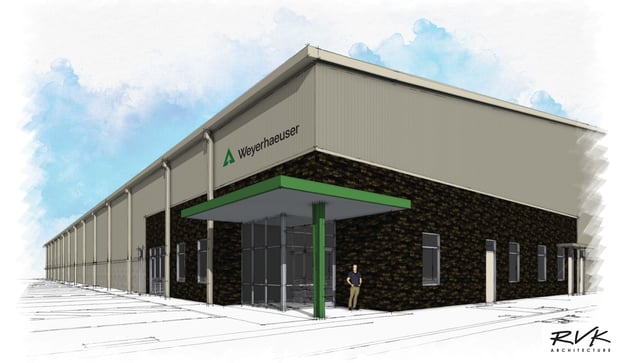
Weyerhaeuser has selected Gallatin, Tennessee, as the location for its 22nd distribution center. This greenfield project will be the company’s first DC in Tennessee.
“This expansion helps us support more dealers throughout the Southeast by delivering products and solutions with improved efficiency and responsiveness,” said Leigh Hudspeth, Weyerhaeuser East Division General Manager. “Weyerhaeuser has a long history of connection in the places where we operate, and we’re excited to be part of Gallatin’s thriving community.”
| | | | |