May 4, 2026 • View in browser | | NLBMDA Weekly is our newsletter covering everything from the latest activity in Washington to updates from our members. This is the premier source of federal legislative, regulatory, and industry news for NLBMDA members. | | NLBMDA Files Comments on Department of Labor Independent Contractor Rulemaking | |
Last week, NLBMDA submitted comments to the U.S. Department of Labor supporting a proposed rule to rescind the 2024 independent contractor standard and return to a more structured framework aligned with longstanding judicial precedent. NLBMDA noted that the prior “totality-of-the-circumstances” approach created uncertainty for employers and workers alike, offering limited guidance on how classification factors should be weighed. NLBMDA has consistently engaged in prior rulemakings, including the 2021 and 2024 rules, advocating for a clear, predictable standard that reflects real-world business practices and provides employers with greater compliance certainty.
In comments, NLBMDA emphasized the importance of independent contractor classification and the flexibility it provides dealers to offer specialized services and manage fluctuating demand throughout the year. Additionally, independent contractors such as framers, electricians, and plumbers represent a significant portion of dealers’ customer base. NLBMDA expressed support for prioritizing factors such as a worker’s opportunity for profit or loss and degree of control while recommending policymakers act to provide long-term stability through congressional action to avoid continued regulatory shifts that could disrupt workforce flexibility and business operations. The Department of Labor will now review submitted comments and is expected to announce a final rule thereafter.
| | NLBMDA Advocacy Recognized as House Advances CTA Reform | |
NLBMDA was recognized on Capitol Hill as the House Financial Services Committee considered H.R. 425, the “Repealing Big Brother Overreach Act,” legislation aimed at codifying recent changes to the Corporate Transparency Act (CTA). As originally enacted, the CTA imposed beneficial ownership information (BOI) reporting requirements on more than 32 million small businesses, including many lumber and building material (LBM) dealers. Following sustained advocacy from NLBMDA and coalition partners, the Financial Crimes Enforcement Network issued an interim final rule significantly narrowing the scope of the law by removing most U.S. companies from reporting requirements and refocusing the framework on higher-risk foreign entities.
H.R. 425 would make these changes permanent, providing long-term regulatory certainty while also requiring the deletion of previously collected data for entities no longer subject to the law. During the hearing, bill sponsor Warren Davidson and Committee Chairman French Hill highlighted the burdens the original rule placed on small businesses, with Davidson entering NLBMDA’s support letter into the congressional record. NLBMDA will continue engaging with lawmakers as the bill advances, reinforcing its focus on reducing unnecessary compliance burdens and ensuring federal regulations remain practical, clearly defined, and workable for dealers.
| | NLBMDA Participates in Washington Trade Roundtable with Québec Premier | |
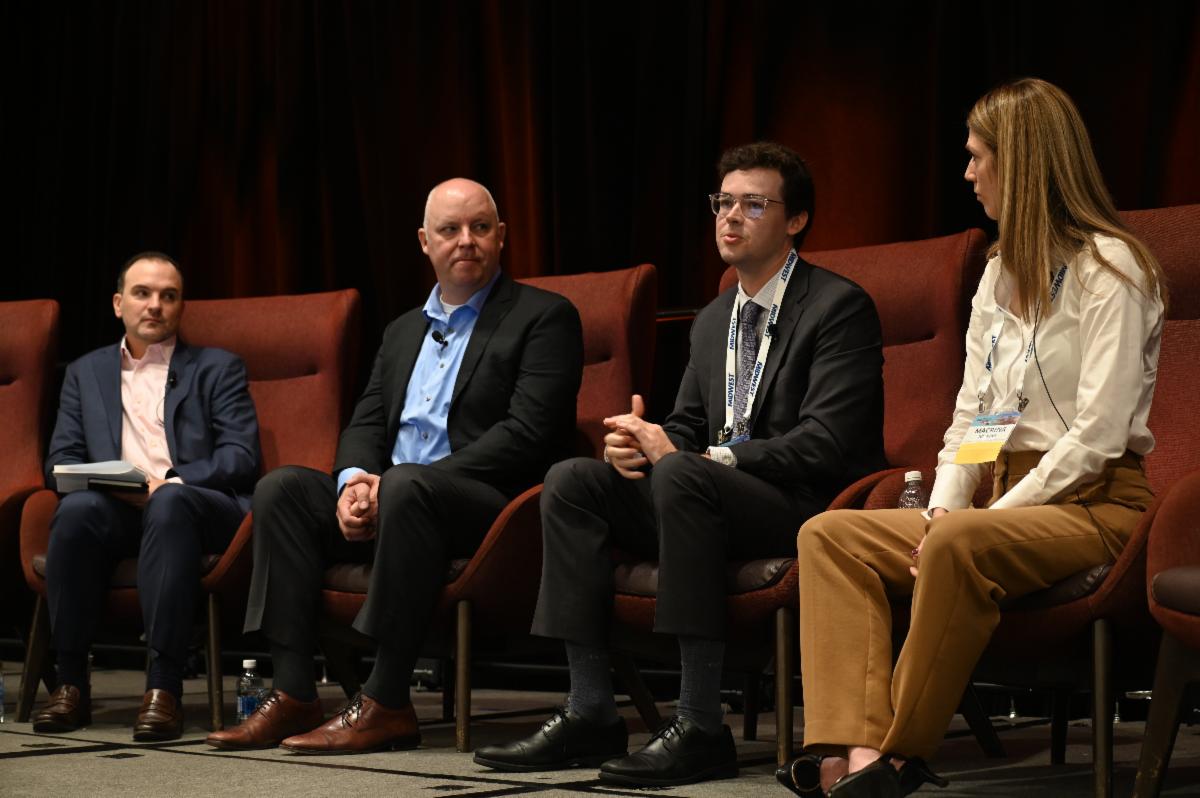
NLBMDA President & CEO Jonathan Paine recently welcomed Québec Premier Christine Fréchette to Washington for a roundtable discussion with industry leaders focused on cross-border trade and economic cooperation. The discussion highlighted the importance of maintaining a stable and predictable U.S.-Canada trade framework, particularly for the lumber and building materials sector, which depends on deeply integrated supply chains. Participants also underscored the need for continued engagement to address ongoing trade challenges, including tariffs, and to support long-term economic growth and housing supply. NLBMDA will continue working with policymakers and international partners to advance these priorities.
Read the full recap for additional details.
| | |
Registration is now open for the ProDealer Industry Summit, October 5-7 in Chicago, Illinois! Join us for an exclusive live educational forum designed to advance the growth of lumber and building product dealers, distributors, wholesalers, and their supplier partners. The event will be held at The Westin Michigan Avenue in Chicago and is co-hosted by NLBMDA and HBSDealer.
The summit brings together leaders from across the LBM industry for education, peer collaboration, and strategic discussion focused on strengthening businesses in a competitive marketplace.
| | Study Shows Profitability for Remodelers Reaching Highest Level in Nearly 30 Years | |
According to the 2026 edition of the National Association of Homebuilders’ (NAHB) Remodelers’ Cost of Doing Business Study, profitability for residential remodelers peaked in 2024, reaching its highest level in nearly 30 years. According to NAHB’s study, the average net profit margin for remodelers was 6.3% in 2024, the highest since 1996 and up sharply from a 3% average net profit margin in 2011. An average gross profit margin of 29.9% was five percentage points higher than in 2021, when the metric sank to a record low of 24.9%. Officials say the improvement was due in large part to a significant reduction in trade contractor costs, which dropped from 36% of revenue in 2021 to 30% in 2024. In addition to increased demand for their services, professional remodelers have also focused more on best practices in business management and accounting, NAHB officials say.
Survey data show remodelers’ balance sheets expanded significantly in 2024, with average total assets up 34% ($668,000) compared to 2021 ($497,000). But perhaps more importantly, officials say the data clearly point to remodelers increasingly deleveraging their businesses in the last decade. In 2015, 68% of remodelers’ assets were financed through debt. By 2021, that share was down to 49%, where it remained essentially unchanged in 2024 (50%). Remodelers are using more of their own capital to run their companies, as illustrated by their equity share rising from 33% in 2015 to 50% in 2024.
Economic uncertainty doesn’t just impact the remodeling market. Rising building material costs and interest rates are what NAHB researchers attribute to the decline in builder sentiment.
| | Baby Boomers Remain Largest Share of Home Buyers as First-Time Buying Falls to Record Low | |
Baby Boomers continued to dominate the housing market this year, making up 42% of all buyers and 55% of all sellers, according to NAR’s 2026 Home Buyers and Sellers Generational Trends report. Meanwhile, first-time buyers fell to just 21%—the lowest share since tracking began in 1981—highlighting the steep affordability and inventory challenges facing younger households. Millennials, once the largest buying cohort, saw their overall share slip again, though older Millennials stood out as high-earning move‑up buyers purchasing the largest homes. Gen Z, still a small but growing segment, is reshaping traditional buying patterns, with many purchasing homes before marriage or children and showing the highest shares of single female buyers and unmarried couples.
Multigenerational home purchases declined to 14% overall, though motivations such as caring for aging parents and cost savings remain strong. Sellers across generations typically stayed in their homes for 11 years, with Boomers moving less frequently but with greater financial flexibility. Despite shifting generational dynamics, one constant remains: buyers and sellers overwhelmingly rely on real estate professionals. This year, 88% of buyers and 91% of sellers worked with an agent, and satisfaction levels remained exceptionally high, with more than nine in ten saying they would use their agent again or recommend them to others.
| | Congress Votes to End Record-Setting Department of Homeland Security Shutdown | |
Last week, the House and Senate reached agreement and passed a negotiated funding measure to fully fund the Department of Homeland Security (DHS), excluding appropriations for U.S. Border Patrol and U.S. Immigration and Customs Enforcement (ICE). The agreement brings an end to a 76-day shutdown, the longest appropriations lapse in history, which created significant operational uncertainty across DHS and its partner agencies and brought Congressional activity to a near halt. During the lapse in funding, DHS employees continued to receive pay through a White House executive order that redirected existing federal funds to cover payroll. However, that temporary authority was only available through the end of April, adding pressure on lawmakers to reach a resolution. The passage of this measure restores funding stability for DHS operations while setting the stage for continued debate over longer-term appropriations and border security funding priorities.
Congressional Republicans are now pursuing funding for Border Patrol and Immigration and Customs Enforcement (ICE) through the budget reconciliation process, a procedural mechanism that allows legislation to advance in the Senate by a simple majority, bypassing the traditional 60-vote filibuster threshold. Funding for the Department of Homeland Security (DHS) is currently secured through the end of the fiscal year on September 30, 2026. Lawmakers are now targeting the end of this month to pass an additional funding measure specifically for immigration-related DHS agencies.
| | NLBMDA Sends Letter of Support for New Senate Heat Standards Bill | |
Last week, Sens. Mike Crapo (R-ID), Jim Risch (R-ID), and Bill Cassidy (R-LA) introduced the Heat Workforce Standards Act of 2026, legislation that would halt a pending rulemaking from the previous administration aimed at establishing new, stringent, and prescriptive federal standards for how employers protect workers from occupational heat exposure. The legislation serves as a companion to H.R. 6213, an identical House measure that has gained support from more than 40 cosponsors. NLBMDA has engaged directly with the bill’s lead sponsor in the House and actively supported efforts to advance a Senate companion, culminating in the introduction of this legislation.
Through multiple comment opportunities, NLBMDA conveyed its concerns with the proposed rulemaking, highlighting its inflexible and, in some cases, unworkable requirements that would increase compliance costs for LBM dealers. Last week, NLBMDA joined more than 50 trade associations representing nearly every sector of the U.S. economy in a coalition letter supporting the Heat Workforce Standards Act. The letter underscores broad industry concerns that the proposed OSHA heat standard would impose a one-size-fits-all regulatory framework, layering significant new compliance obligations on employers without adequately accounting for regional climate differences or existing workplace safety practices. NLBMDA will continue to work with congressional partners and OSHA to ensure that any federal approach to workplace heat safety remains flexible, practical, and reflective of real-world industry operations.
| | Federal Reserve Holds Interest Rates Steady At April FOMC Meeting | |
At its April meeting, the Federal Open Market Committee (FOMC) voted to hold the federal funds rate steady, maintaining its current policy stance as it continues to evaluate inflation trends, labor market conditions, and broader economic conditions. The decision reflects the Federal Reserve’s ongoing effort to balance moderating inflation with still-resilient economic activity, while signaling a continued data-dependent approach to any future rate adjustments.
The April meeting is also expected to mark the final FOMC meeting chaired by Jerome Powell, who has led the central bank since 2018. Earlier this year, the White House announced Kevin Warsh as his intended successor. Warsh, a former member of the Federal Reserve Board of Governors, has emphasized the importance of central bank independence, though his leadership could present a potential shift in monetary policy direction. Fed observers have noted that his tenure may create additional space for rate reductions over time, aligning with calls from the White House over the past year for a more accommodative interest rate environment. Powell is expected to remain on the Board of Governors, providing continuity during the leadership transition.
| | Swipe Fee Legislation Passes Colorado State Senate | |
On Friday, the Colorado State Senate voted 18-17 in favor of SB-134, legislation that would prohibit banks and credit card issuers from charging interchange (swipe) fees on sales tax paid by retailers. The bill addresses a longstanding concern for retailers. Under the current payments system, swipe fees typically ranging from roughly 2% to 3.5% are applied to the full transaction amount, including sales tax that businesses simply collect and remit to the state. By excluding sales tax from the fee calculation, the legislation would lower operating costs for merchants and ensure interchange fees are assessed only on the value of the goods sold.
Having passed the Colorado Senate, the legislation now moves to the Colorado House for further consideration and a final vote. Complementing ongoing federal efforts such as the Credit Card Competition Act, which NLBMDA is actively advancing to reduce the swipe fees dealers pay, more than a dozen state legislatures are currently considering similar reforms, with Illinois recently enacting a law that prohibits interchange fees on sales tax. The Colorado bill faced a series of procedural votes driven by opposition but ultimately cleared each hurdle and secured passage. Passage of the legislation through the Senate marks a significant victory for Colorado LBM dealers. NLBMDA will continue to closely monitor state-level efforts to rein in swipe fees and keep dealers informed of opportunities to engage.
| | U.S. Department of Housing and Urban Development Rolls Back Building Code Requirements | |
The U.S. Department of Housing and Urban Development (HUD) and the U.S. Department of Agriculture (USDA) have issued a joint final determination rescinding a 2024 policy that required new homes financed through FHA and USDA-backed mortgages to comply with the 2021 International Energy Conservation Code (IECC). The agencies had previously delayed implementation, including extending the compliance deadline to December 31, 2026, while conducting stakeholder outreach. With the rescission, federal housing programs will revert to prior energy efficiency standards.
The 2021 IECC establishes more stringent efficiency requirements for new construction, but adoption has been limited across states, creating compliance challenges in certain markets. Estimates on cost impacts vary, with some analyses suggesting the code could increase construction costs by roughly $9,600 to over $30,000 per home. The rollback is expected to streamline construction and expand eligibility for federally backed financing, reflecting a broader federal focus on balancing energy efficiency goals with the need to increase housing supply and improve affordability in a constrained market.
| | |
Carter Lumber, one of the nation’s largest building materials suppliers, announced the acquisition of Gaster Lumber and Hardware, a three-location building materials supplier serving the Savannah, Georgia, metro area.
This acquisition continues the expansion of Carter Lumber’s footprint in the Southeast, giving the company full coverage across Georgia and adding the area from Hilton Head to northern Florida to its coastal service presence.
| | McCoy's opens another Texas location | | |
McCoy’s Building Supply opened a store in New Caney, Texas, on April 20. The new site, located at 21989 State Highway 242, features 15,000 square feet of inside retail space and a paved, drive-thru lumberyard.
The New Caney store is managed by Matt Daughrity who joined McCoy’s in 2018. Most recently, he was store manager of McCoy’s location in Belton, Texas. “We're here to support homeowners, contractors, and businesses with knowledgeable people, dependable products, and the kind of service that makes a difference in our community,” said Daughrity.
| | LMC Dealers Support the St. Jude Dream Home Project | LMC Dealers build with purpose and intention, going beyond what's expected to serve their customers and communities. Three LMC dealers: Builders' General, Hamilton Building Supply, and Woodhaven Lumber & Millwork, all based in New Jersey, did just that. Together, they contributed to a Dream Home Project in Manasquan, NJ, in partnership with CMM, a Jersey Shore custom home builder, to benefit St. Jude Children's Research Hospital. Once sold, 100% of the proceeds from the 3,500 square foot home will go directly to St. Jude's. All three dealers donated materials that made the build possible, giving CMM everything they needed to bring this home to life. | | | | |