NNA Community Newsletter


August 2026 Issue

  • NNA-CO to Host Virtual ‘Research Ethics in Engaging with Arctic Communities’ Workshop with Cana Uluak Itchuaqiyaq on September 14
  • Invitation to Contribute Slides Highlighting Communication Efforts at NNA Annual Meeting
  • Save the Date: Joint (AC)³ - MOSAiC Conference 2027
  • Follow the Arctic Data Center on LinkedIn
  • Register by September 9 for IARPC Collaborations Mentorship Program - Open to All in the Polar Research Community!
  • NNA Project Highlight - Fresh Eyes on Ice: Connecting Arctic Communities through a Revitalized and Modernized Freshwater Ice Observation Network
  • Upcoming Events

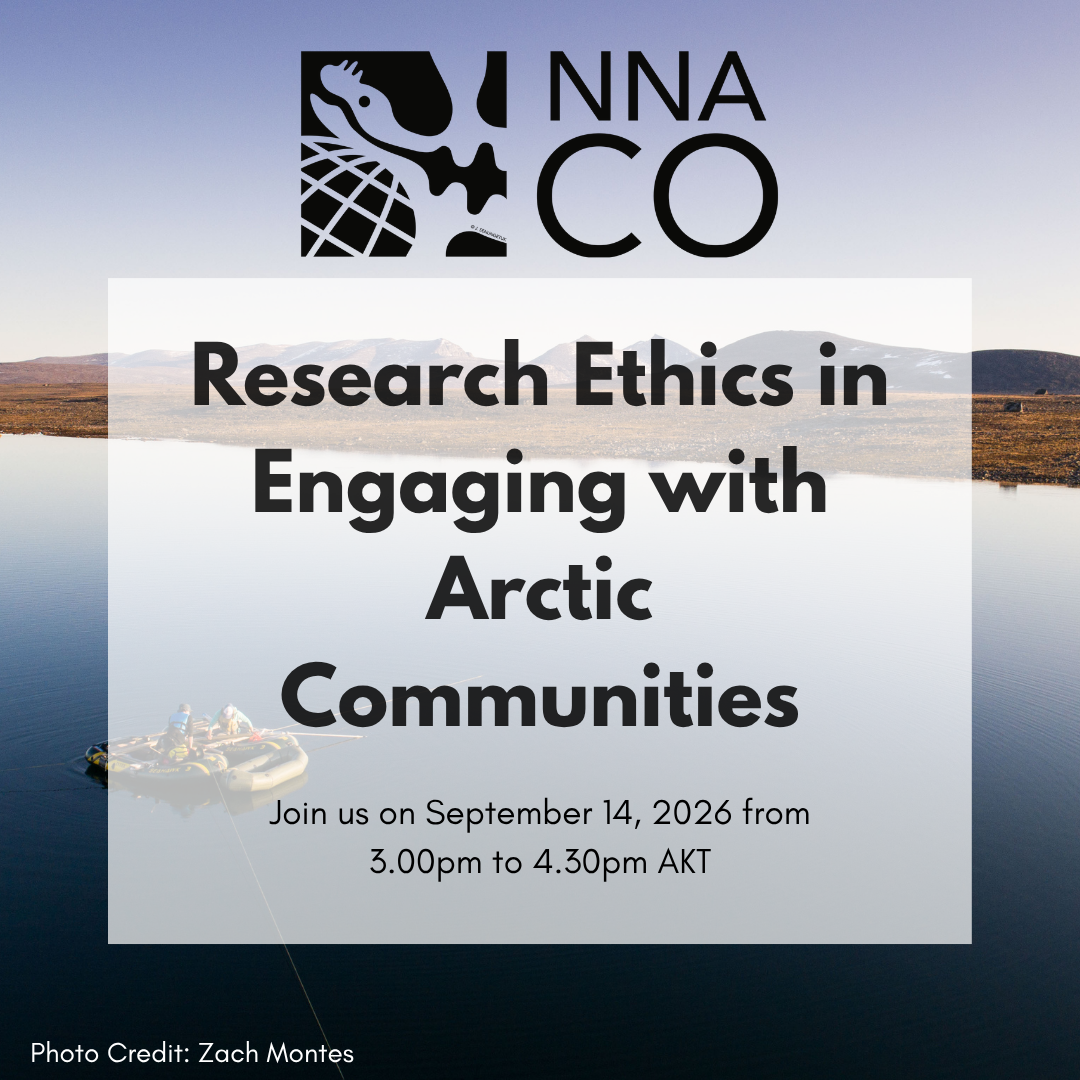
NNA-CO to Host Virtual ‘Research Ethics in Engaging with Arctic Communities’ Workshop with Cana Uluak Itchuaqiyaq on September 14

September 14, 2026 | 3pm AKT / 5pm MT / 7pm ET

The Navigating the New Arctic Community Office is excited to host Cana Uluak Itchuaqiyaq to facilitate a 1.5-hour workshop on conducting equitable research when engaging with Arctic communities. This workshop will explore supporting long-term community capacities and Tribal sovereignty as part of ethical engagement. Cana will also discuss recent fieldwork experiences working with Arctic communities. To register for this event, visit this webpage.


Please reach out to madison.payne@colorado.edu if you have any questions.

Invitation to Contribute Slides Highlighting Communication Efforts at NNA Annual Meeting

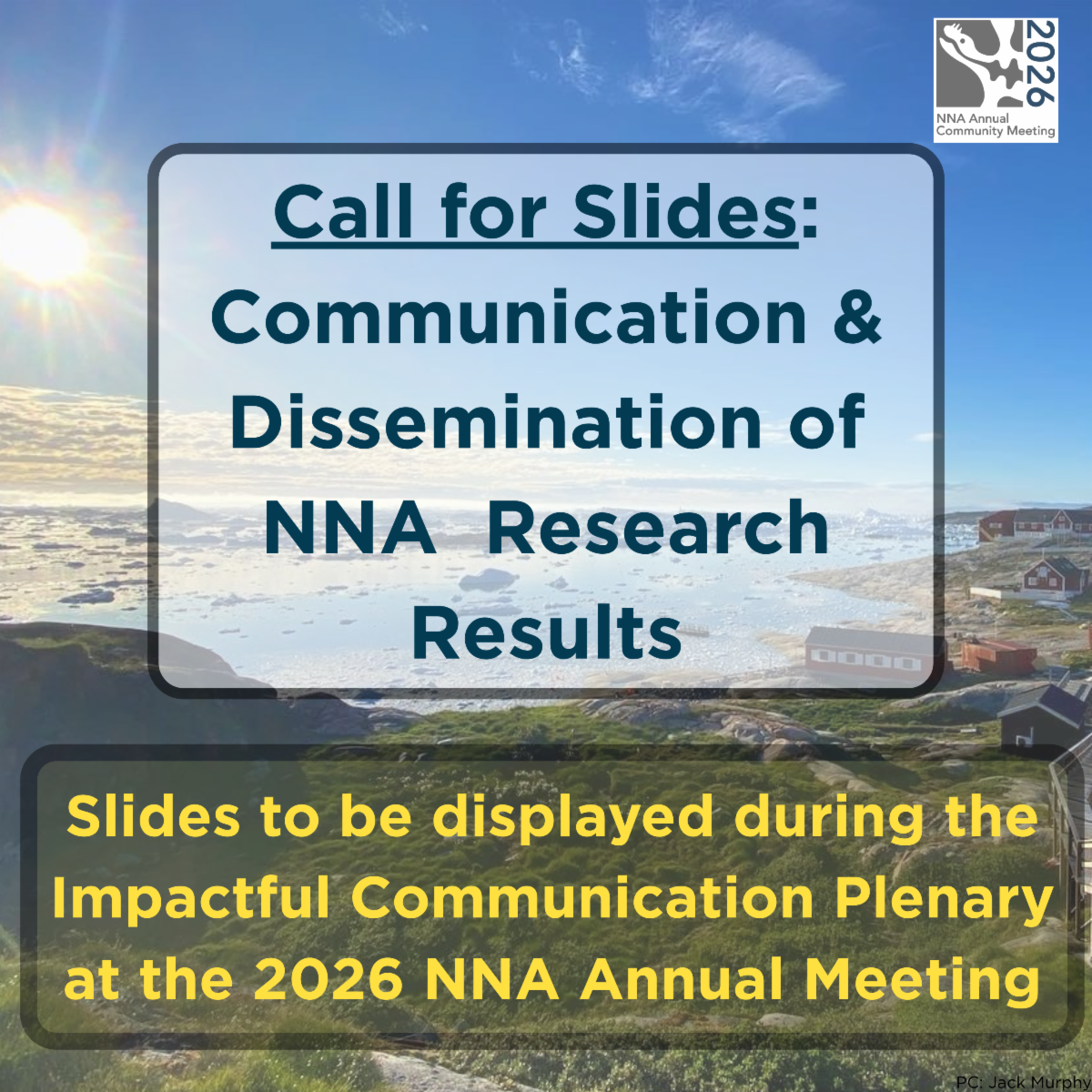
NNA project teams are invited to submit a slide highlighting a communication or dissemination product to be featured during the Impactful Communication and Dissemination of Research Results to Arctic Residents and Decision-makers plenary at the 2026 NNA Annual Community Meeting. 


Slides may highlight how teams have shared research or engaged community partners. Attendance at the Annual Community Meeting is not required to participate. Teams planning to submit a slide can express their interest here. Slides can be submitted through this shared folder, where templates and submission instructions are also available. Submissions are due September 9, 2026. 

Save the Date: Joint (AC)³ - MOSAiC Conference 2027

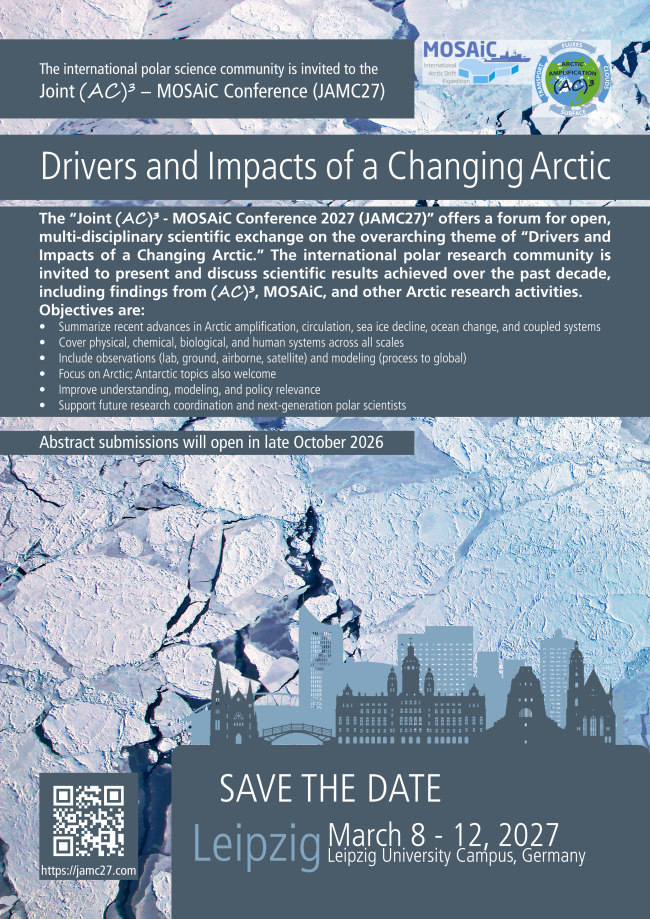
The international polar science community is invited to attend the Joint (AC)³-MOSAIC Conference 2027 (JAMC27) that will take place March 8-12, 2027, at Leipzig University in Germany. This conference will bring together the international polar research community for multidisciplinary scientific exchange under the theme “Drivers and Impacts of a Changing Arctic.” 


Abstract submissions will open in late October 2026. The conference will highlight research across physical, chemical, biological, and human systems, including observations, modeling, Arctic change, and future research coordination. Learn more here. Questions can be directed to Matthew Shupe or Manfred Wendisch.

Follow the Arctic Data Center on LinkedIn

The Arctic Data Center (ADC) has launched a new LinkedIn page! Community members are encouraged to follow the new page for updates, opportunities, resources, and news from ADC and share it with colleagues to receive the latest updates and opportunities from the Center.


The Center’s LinkedIn page is available here. 

Register by September 9 for IARPC Collaborations Mentorship Program - Open to All in the Polar Research Community!

Sign-ups for the 2026-27 season of the IARPC Collaborations Mentorship Program are now open! To register, fill out this google form by September 9, 2026. The program is available to Arctic and Antarctic scientists and members of the research community, and provides career growth and mentoring opportunities to all career levels and paths. Participating researchers and other professionals will be organized into small virtual mentoring circles to discuss career opportunities and issues, learn from and support one another through transition and change, and grow as leaders together. Participants do not need to be scientists or actively researching/publishing to participate in the program. The program will run from October 2026 to May 2027. IARPC and the Polar Science Early Career Community Office (PSECCO) are partnering to offer this program, with support from the United States Association of Polar Early Career Scientists (USAPECS).


More details and the sign-up form are available here.

NNA Project Highlight

Fresh Eyes on Ice: Connecting Arctic Communities through a Revitalized and Modernized Freshwater Ice Observation Network

Observing rivers and lakes throughout long northern winters in Alaska takes a community. Fresh Eyes on Ice collaborates with schools, villages, Indigenous organizations, and state and federal partners to improve public safety, document responses to changing climate, and foster science education. Based at the University of Alaska Fairbanks, scientists with backgrounds in hydrology, social sciences, remote sensing, and community-based monitoring have progressively expanded this freshwater ice monitoring network to over 20 schools and communities across Alaska and Canada since 2019.


Thinning lake ice on the North Slope, prolonged freeze-ups with persistent open-water and dynamic break-ups on western rivers, and increasingly intermittent ice-covers in coastal freshwaters make tracking freshwater conditions essential for the Arctic science community. Dependence on ice for inter-village travel, commerce, and subsistence provides an immediate need for sharing observations more widely, consistently, and sustainably. Working directly with K-12 students in rural villages is providing opportunities to inspire a next generation of observers to become engaged and contribute to actionable community science.

Regular ice thickness and snow depth measurements by school teams provide the core of data collection with other observation opportunities such as drone-based photo collection during freeze-up and break-up. Citizen scientist photos uploaded to social media, NASA’s GLOBE platform, and the FEOI Photo Portal are shared with the National Weather Service and among communities to aid in forecasting and awareness of spring ice-jam flooding. Collaboration with federal (USFWS, NPS, and BLM) scientists has led to more regionally-based understanding of changing ice conditions relative to management and public-safety needs.

Article submitted by Christopher Arp, PI of the Fresh Eyes on Ice: Connecting Arctic Communities through a Revitalized and Modernized Freshwater Ice Observation Network project.


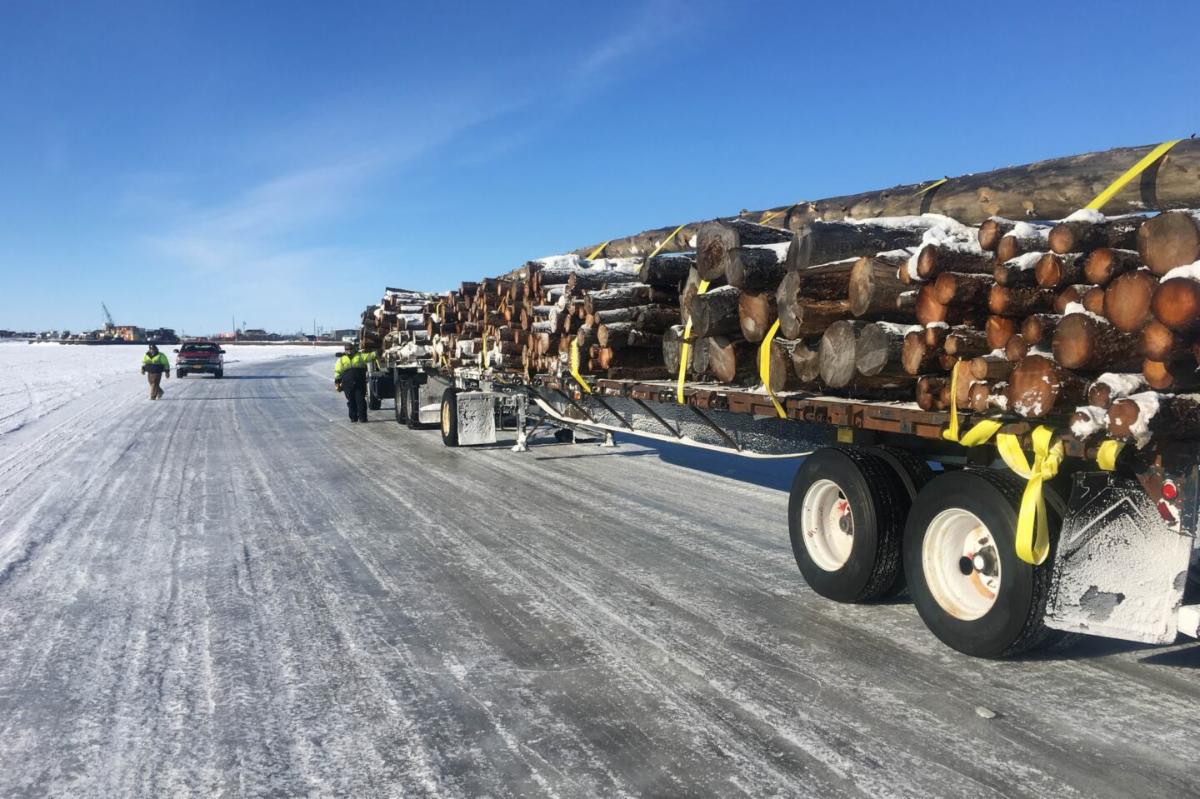
Photo 1: The Kuskokwim River Ice Road connects many riverside communities over the winter to support inter-village travel, subsistence, and commerce (Mark Leary).


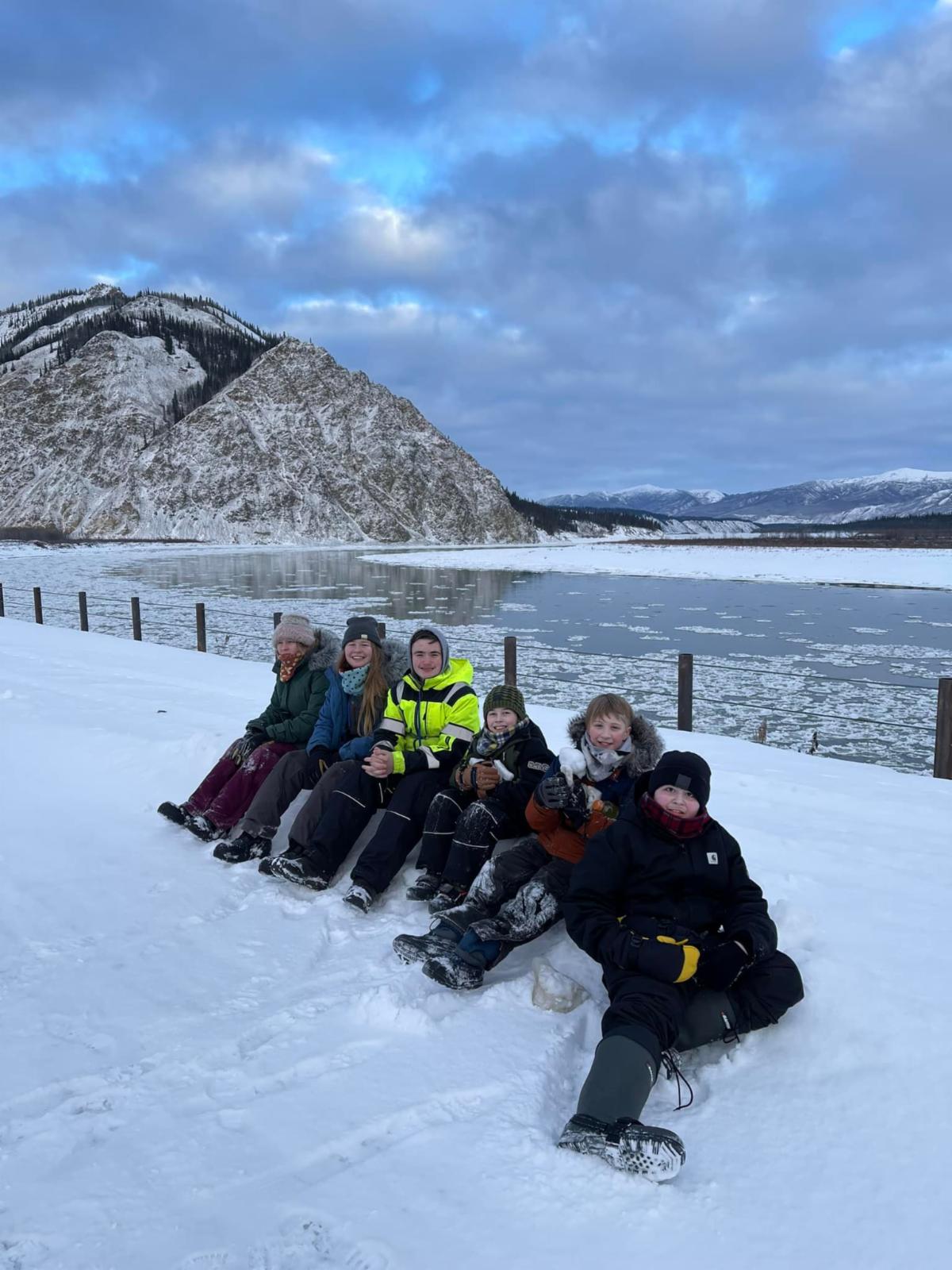
Photo 2: Eagle Community School students posing in front of their Yukon River study site during freeze-up (Kristy Robbins).

Upcoming Events

We welcome submissions for items to be considered for upcoming NNA Community Newsletters or the NNA News page. 

Facebook  X  
Copyright © 2021 CIRES, All rights reserved.

The Navigating the New Arctic Community Office (NNA-CO) is jointly implemented by the University of Colorado Boulder, Alaska Pacific University, and the University of Alaska Fairbanks. The NNA-CO is supported through a cooperative agreement with the U.S. National Science Foundation (Award #2040729). 


Contact us: contact@nna-co.org