NNA Community Newsletter


March 2026 Issue

  • NNA-CO Evaluation Focus Sessions
  • Arctic Data Center - Science Advisory Board Call for Nominations
  • Beyond Doom & Gloom: Teaching & Learning about Climate Change as Polar Scientists
  • Arctic Encounter Summit
  • NNA Project Highlight - Permafrost Discovery Gateway
  • Upcoming Events

NNA-CO Evaluation Focus Sessions

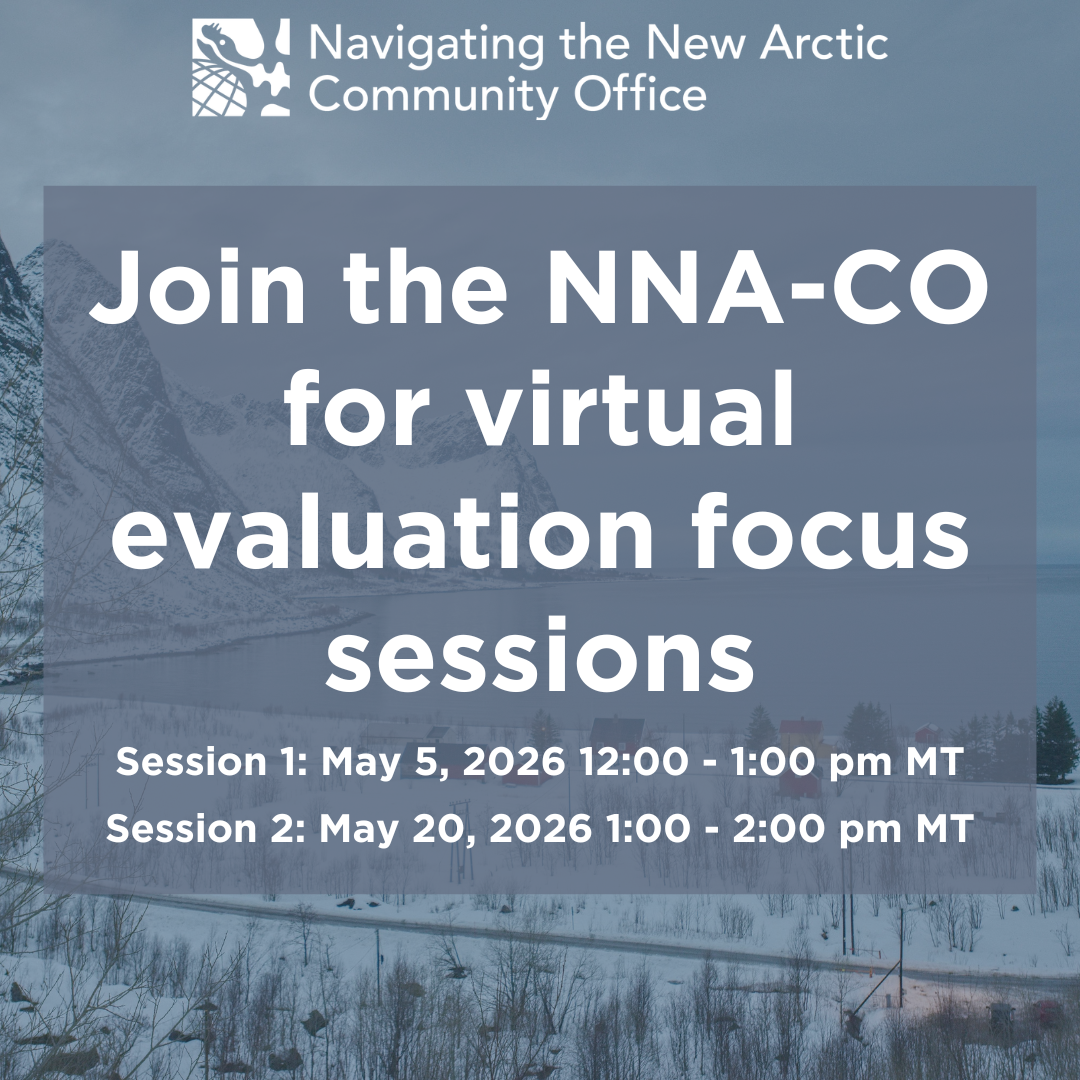
Join the NNA-CO this spring for virtual evaluation focus sessions that will inform the upcoming NNA evaluation and synthesis report. These sessions will consist of an overview of topics, questions, and methods planned for the comprehensive report, as well as time for participants to share and learn from others who are implementing evaluations of NNA-funded projects. 


Session 1: May 5 at 12 MT | Register here

Session 2: May 20 at 1 MT | Register here


Arctic Data Center - Science Advisory Board Call for Nominations

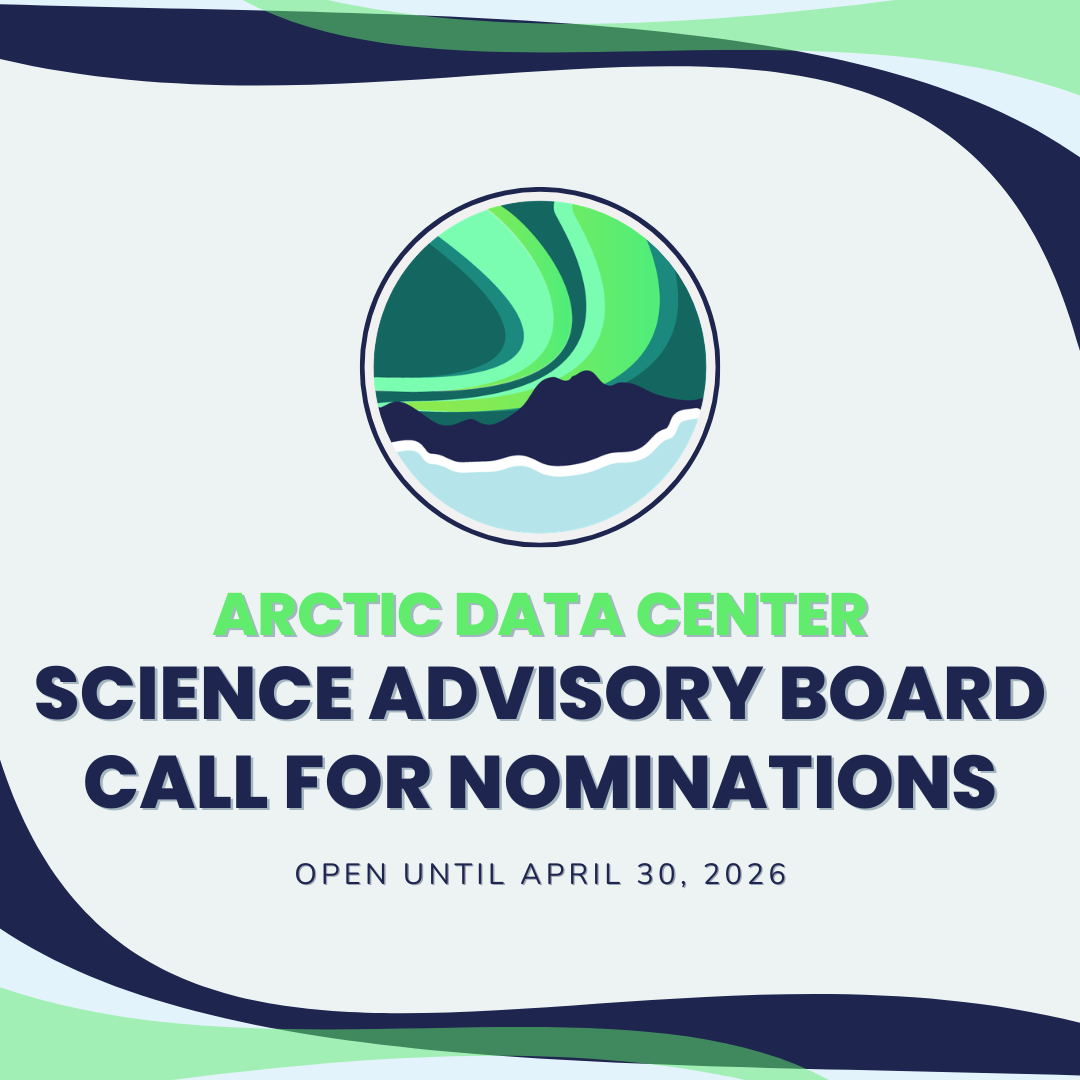
The Arctic Data Center (ADC) is seeking three new members to serve three-year terms on their Science Advisory Board. The Board provides advice and leadership regarding the goals and strategic priorities of the Center. ADC is seeking nominations and self-nominations from any community members that are supported by and impacted by Arctic Data Center operations. Nominate yourself or others here by April 30, 2026.

Beyond Doom and Gloom: Teaching & Learning about Climate Change as Polar Scientists

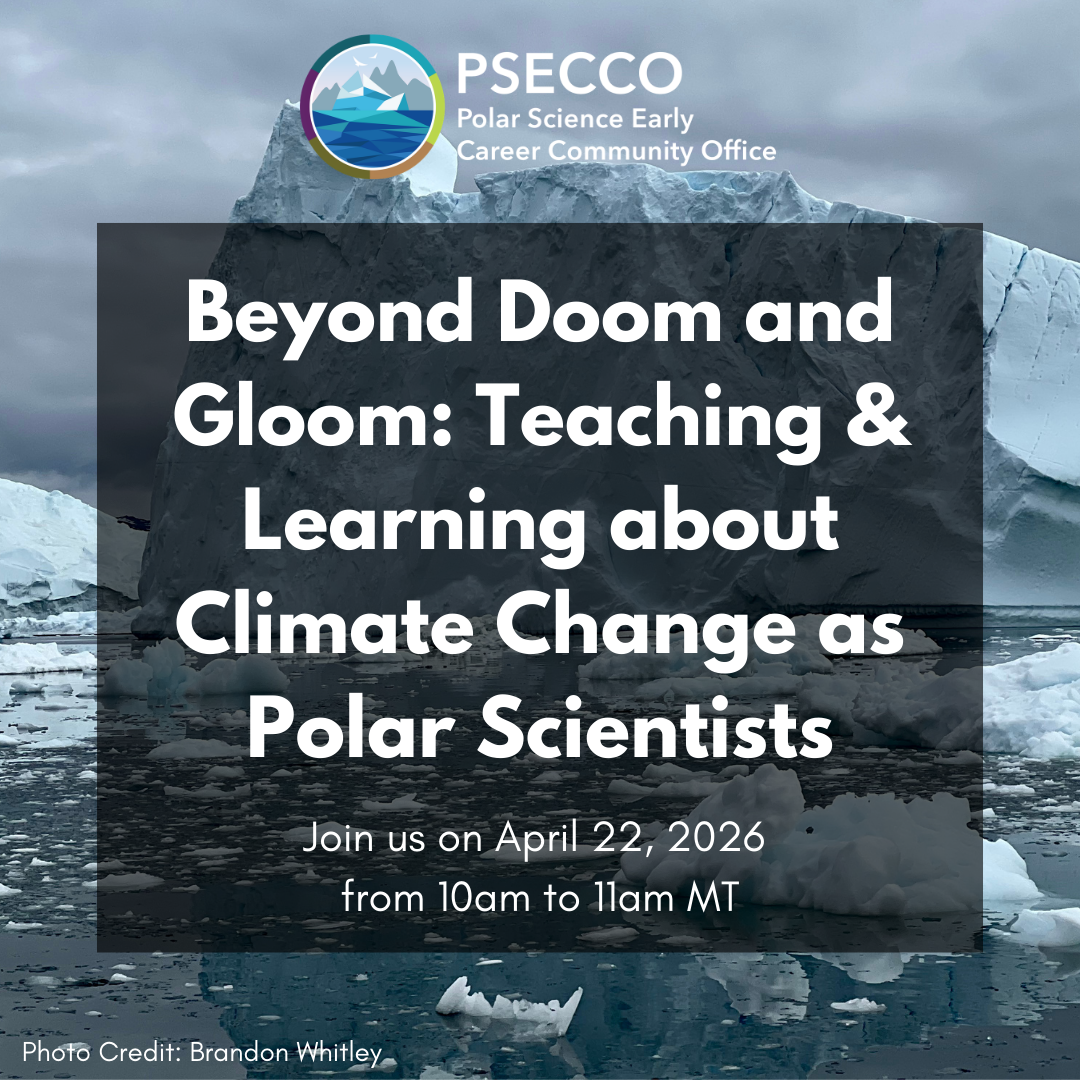
April 22, 2026, 8 am AKT | 10am MT | 12pm ET

Join the Polar Science Early Career Community Office (PSECCO) online for 'Beyond Doom and Gloom: Teaching & Learning about Climate Change as Polar Scientists' on Wednesday, April 22, 2026, 8 am AKT | 10am MT | 12pm ET. PSECCO is excited to host Alicia Christensen from the Cooperative Institute for Research in Environmental Sciences (CIRES) to discuss key strategies for nurturing emotional well-being and empowering polar early career scientists to take positive action in the face of climate change. By employing these strategies, early career scientists can move beyond the feeling of doom and gloom towards a feeling of empowerment. Register here.

Arctic Encounter Summit

April 15-17, 2026 | Anchorage, AK

The Arctic Encounter Summit (AES) is an annual U.S.-based gathering that brings together policymakers, diplomats, Indigenous leaders, researchers, national security officials, and industry representatives to discuss key issues shaping the Arctic. The three-day program includes keynote sessions, expert panels, breakout discussions, reports, and exhibitions, offering a forum to examine regional challenges such as infrastructure, public health, climate research, national security, development, investment, and innovation across the Far North.Register here.

NNA Project Highlight

Permafrost Discovery Gateway

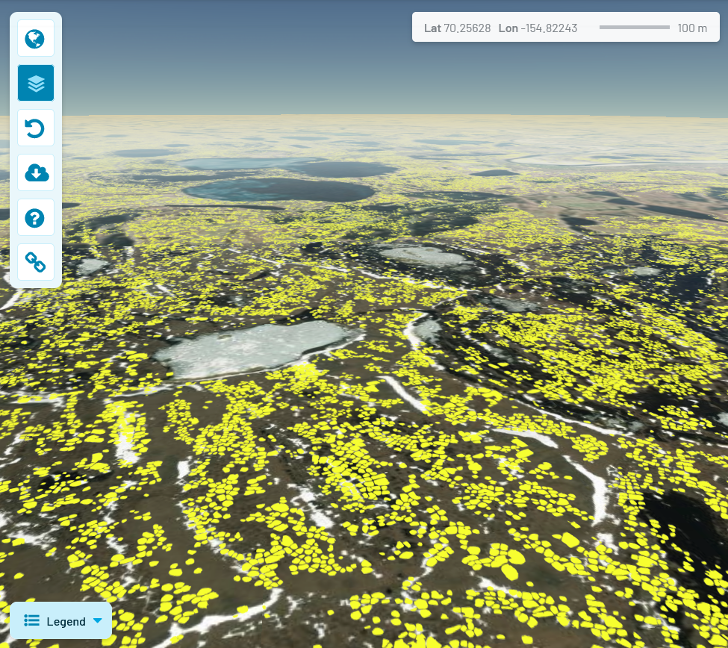
The Permafrost Discovery Gateway (PDG) is an online resource which grants the user access to big geospatial permafrost data derived from satellite imagery. The development team of eight institutions has mapped infrastructure and permafrost features across Alaska and the Arctic, while also building the tools to enable anyone with internet access the ability to explore the maps. The big geospatial data includes buildings, roads, lakes, ponds, retrogressive thaw slumps, and surficial evidence of ice-rich permafrost and ice-wedge degradation. All of PDGs cyberinfrastructure and software is open-source and integrated into the Arctic Data Center (ADC) so that others can build their own portal. 


A feature was implemented in 2025 which includes the partial download of big geospatial data to support analysis in common geospatial softwares. Outreach resources include virtual tours of the permafrost tunnel in Fairbanks and K12 lesson plans based on PDG resources. In regards to upcoming data products, the big data maps will extend to include time series of historical and recent feature detections to further expand the geographically continuous assessment of permafrost thaw across the Arctic. Local field observations provided by the Local Environmental Observers (LEO) Network offer important stories that empower and give life to the big map data. Conversely, the big map data has the potential to inform the initial stages of infrastructure management planning around permafrost hazards.

Figure caption:  A view within the PDG of individually mapped ice-wedge polygons using a deep learning feature detection algorithm applied to high-resolution satellite imagery, which was provided by the Polar Geospatial Center.


Article submitted by: Anna Liljedahl, PI of Permafrost Discovery Gateway

Upcoming Events

  • 2026 NNA Annual Community Meeting
  • September 15-17, 2026
We welcome submissions for items to be considered for upcoming NNA Community Newsletters or the NNA News page. 
Facebook  X  
Copyright © 2021 CIRES, All rights reserved.

The Navigating the New Arctic Community Office (NNA-CO) is jointly implemented by the University of Colorado Boulder, Alaska Pacific University, and the University of Alaska Fairbanks. The NNA-CO is supported through a cooperative agreement with the U.S. National Science Foundation (Award #2040729). 


Contact us: contact@nna-co.org