|
NNA Community Newsletter
November 2026 Issue
| |
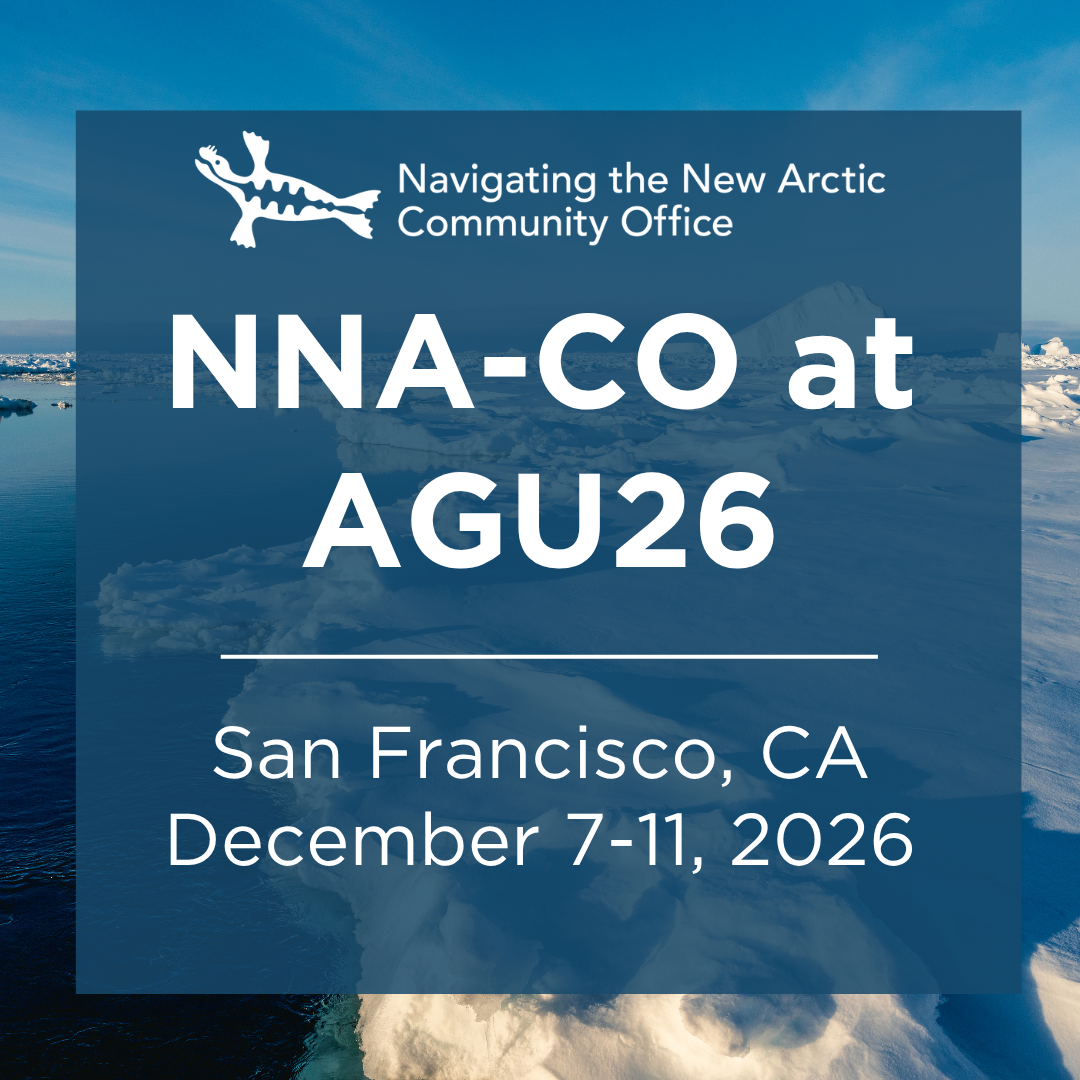
- The NNA-CO at AGU26
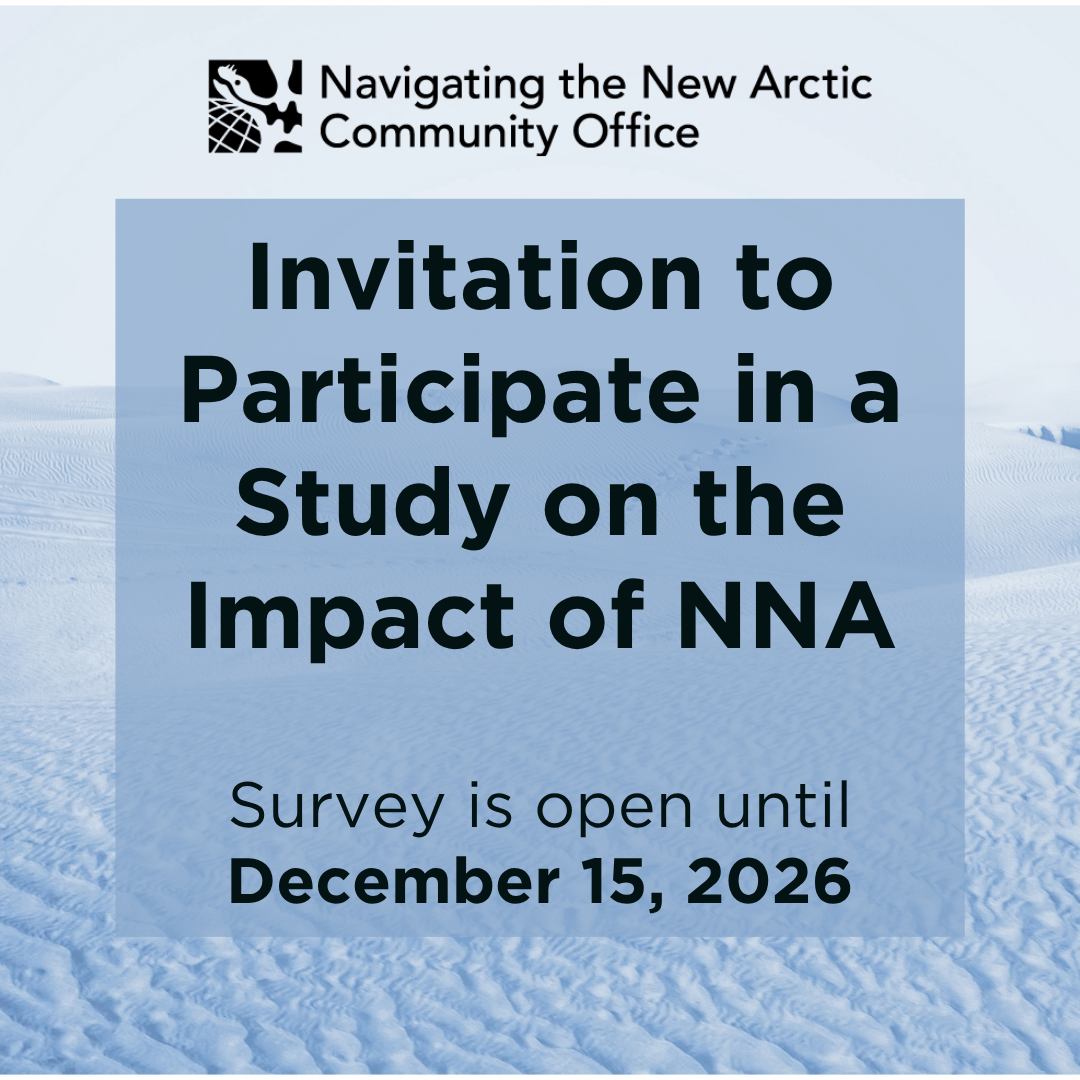
- Your Input is Needed for an Evaluation of the Impact of NNA
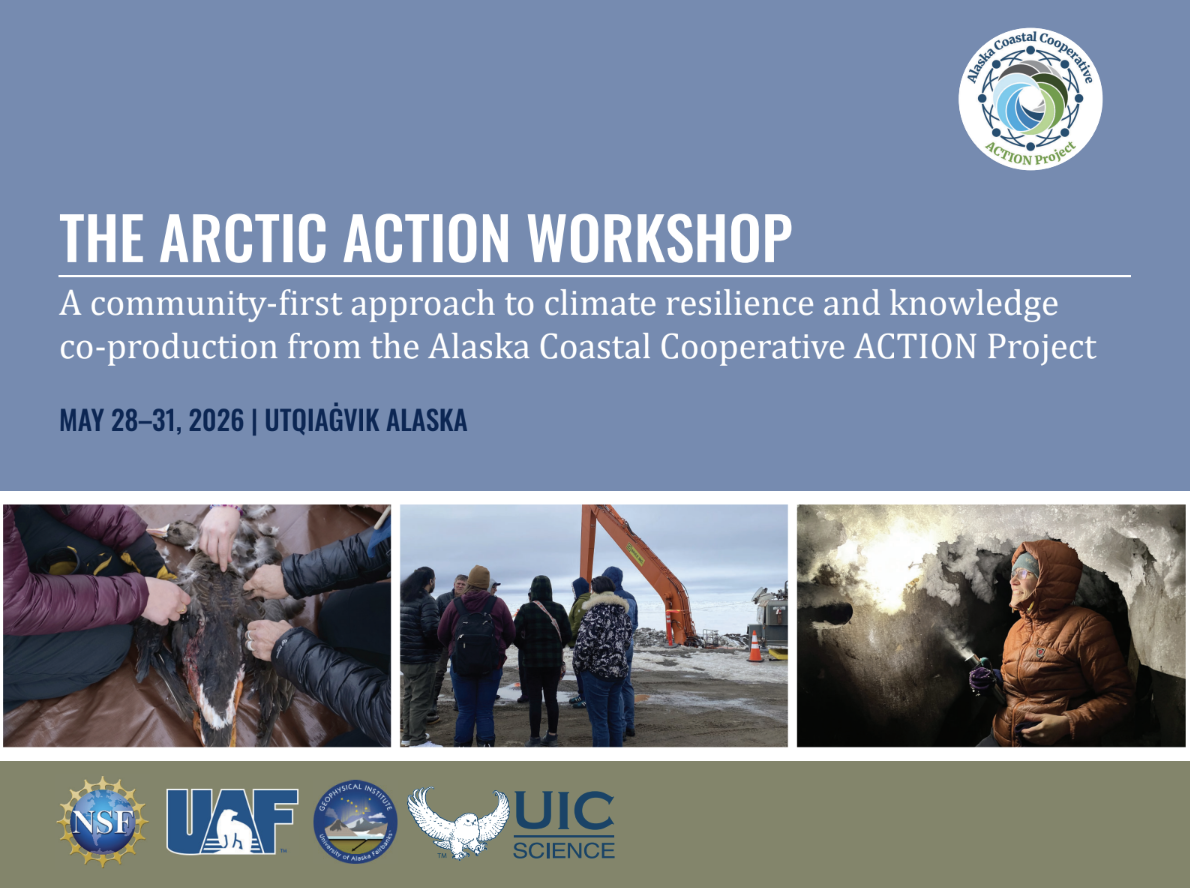
- 2026 Arctic ACTION Workshop Report
- Attend a Social for Polar Early Career Scientists at AGU 2026
- Apply for the Early Career Tundra Award at Toolik Field Station
-
NNA Project Highlight: Tamamta (All of Us): Transforming Western and Indigenous Fisheries and Marine Sciences Together
- Upcoming Events
| | Your Input is Needed for an Evaluation of the Impact of NNA | | |
The NNA-CO is conducting a comprehensive evaluation of the Navigating the New Arctic Initiative to better understand its impact and legacy. Anyone age 18 or older who was part of or closely associated with an NNA-funded project is invited to participate through an online survey, virtual focus group, or individual virtual interview. Findings from the study will help document lessons from NNA and inform future opportunities for convergence and co-production research in the Arctic and beyond.
The survey can be found here. If you would like to participate in a focus group or interview please fill out this form to indicate your interest, and a member of the NNA-CO team will reach out to you about scheduling.
The survey is open through December 15, 2026 and opportunities to participate in virtual focus groups and interviews will continue through the fall and winter. For any questions reach out to noor.johnson@colorado.edu.
| 2026 Arctic ACTION Workshop Report | |
The Alaska Coastal Cooperative for Co-producing Transformative Ideas and Opportunities in the North (ACTION) is a five-year National Science Foundation Navigating the New Arctic (NNA) project led by the University of Alaska Fairbanks that brings together 12 communities across Alaska and the Canadian Arctic. ACTION was established to strengthen community resilience by connecting local priorities with actionable science, meaningful engagement, and workforce development opportunities. As part of this work, a workshop was held May 28-31, 2026 in Utqiaġvik, Alaska where more than 75 participants from Arctic communities, universities, and partner organizations gathered to share important work happening across partnerships and discuss the co-production process. The 2026 Arctic ACTION Workshop Report is now available. The report will be professionally printed in December but is currently available to be viewed online here.
| | Attend a Social for Polar Early Career Scientists at AGU 2026 | | |
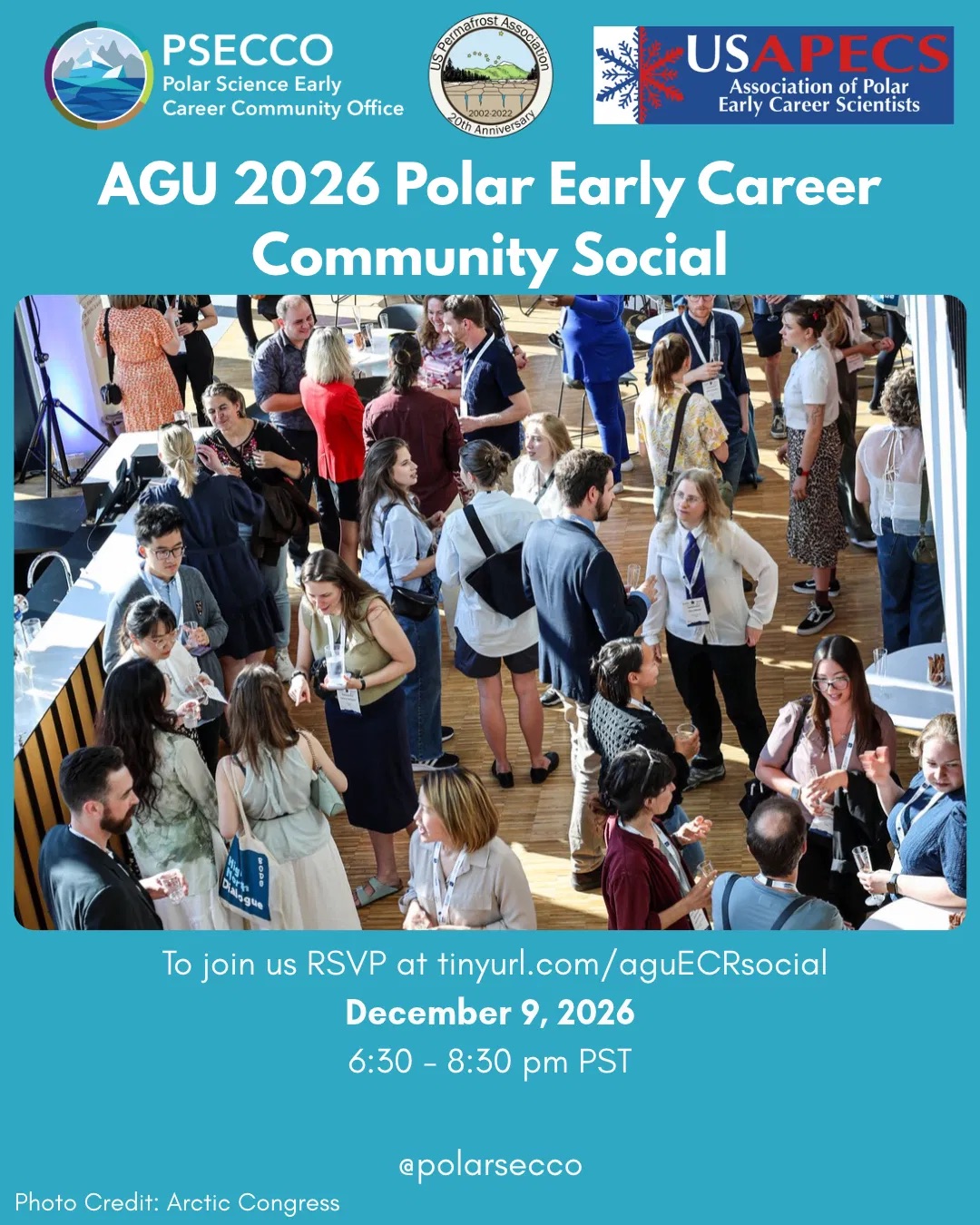
The Polar Science Early Career Community Office (PSECCO), U.S. Association of Polar Early Career Scientists (USAPECS), and U.S. Permafrost Association (USPA) Community Care Committee are co-hosting a social for early career polar researchers and other Arctic, Antarctic and high alpine researchers. The social will take place at AGU26 on Wednesday, December 9, 2026, from 6:30-8:30pm PT. The event will feature short introductions to each of these organizations and how individuals can get involved and be supported by them, and will offer a fun opportunity to network. For more information and to RSVP please visit this link. The venue has capacity for only 100 individuals, granted on a first come, first served basis. Please only RSVP if you are 100% certain you can attend.
| | Apply for the Early Career Tundra Award at Toolik Field Station | | The Toolik Field Station invites students and early career researchers to apply for the Tundra Award for the 2027 field season. This award sponsors independent and original research projects with up to 10 days at Toolik Field Station in Arctic Alaska. The Tundra Award is open to current students and those who have been enrolled in a degree program within the past five years. Applications are due January 15, 2027. For more information, including how to apply, visit the Tundra Award website or contact Haley Dunleavy at 907-474-6407 or uaf-toolik-communication@alaska.edu. | | Tamamta (All of Us): Transforming Western and Indigenous Fisheries and Marine Sciences Together | |
For over 14,000 years, Indigenous Peoples across Alaska have stewarded lands and fisheries through core values of respect, reciprocity, responsibility, and redistribution. However, settler colonialism systematically displaced Indigenous governance in favor of Western extractive management systems designed primarily for industrial exploitation. Consequently, while Alaska’s fisheries are globally celebrated as models of ecological sustainability, Indigenous fishers face persistent access restrictions, systemic marginalization, criminalization, and institutional erasure. This erasure extends deep into higher education, where Indigenous students face cultural alienation and rigid Eurocentric academic paradigms.
To address these inequities, Indigenous scholars and non-Indigenous allies established UAF’s Tamamta Program in 2020. Meaning "all of us" in Yugtun and Sugs’tun, Tamamta provides graduate fellowships that center Indigenous Knowledge Systems alongside Western sciences, decolonize and Indigenize fisheries curricula, and engage Indigenous values and protocols.
| |
Tamamta’s impacts are already reshaping Alaska’s fisheries education, research, and governance systems. The program has supported 19 Indigenous and allied graduate fellows, partnered with over 50 Tribal, agency, and community organizations, and brought together nearly 1,000 participants in transformative racial equity dialogues. As Advisory Council member, Jonathan Samuelson, shared, “Tamamta is where I see change happening in real time. I see it in managers, I see it at different levels; tribal, federal, state ...change is crystalizing through these fellows...”
To learn more and get involved, sign up for the Tamamta newsletter, or explore other meaningful ways to collaborate with and support this transformative work by visiting this website.
Tamamta has been supported by the National Science Foundation (#2022190), the Gordon and Betty Moore Foundation, the Maxwell/Hanrahan Foundation, the Nature Conservancy, and the Sasakawa Peace Foundation.
| |
Article submitted by: Courtney Carothers, PI of the Tamamta (All of Us): Transforming Western and Indigenous Fisheries and Marine Sciences Together project
First photo caption: Tamamta Logo designed by Apay'uq Moore
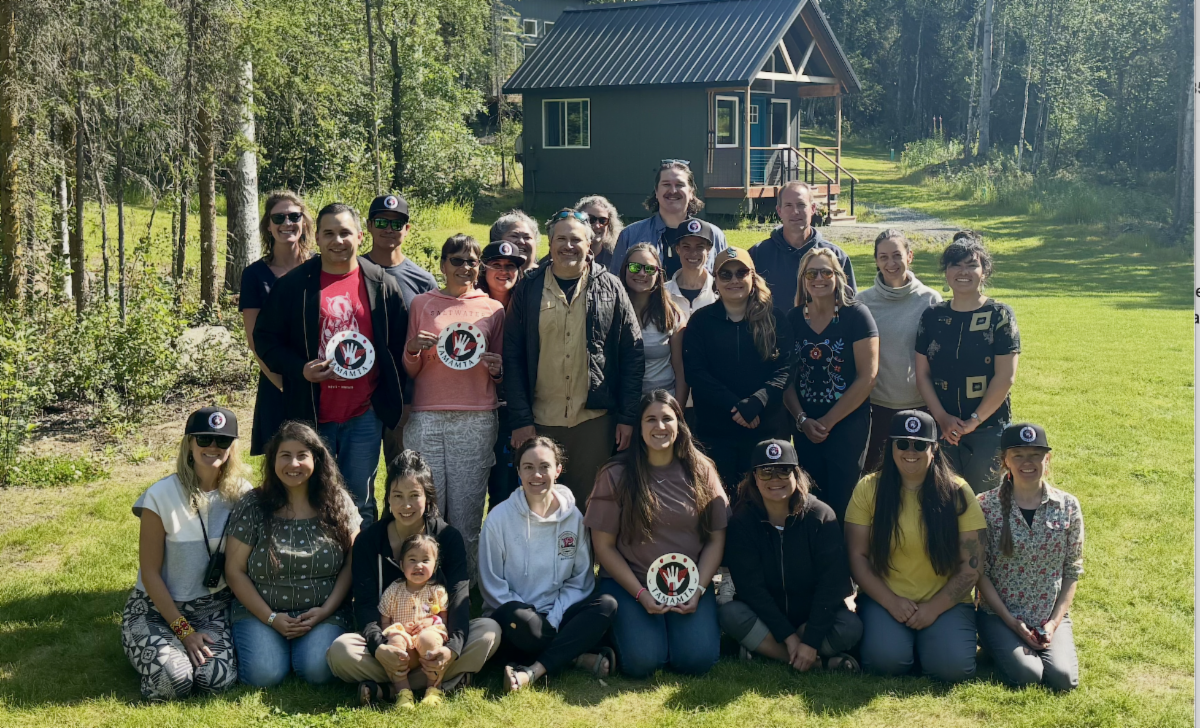
Second photo caption: Tamamta Retreat, Eklutna Lake, August 2026
| |
Copyright © 2021 CIRES, All rights reserved.
The Navigating the New Arctic Community Office (NNA-CO) is jointly implemented by the University of Colorado Boulder, Alaska Pacific University, and the University of Alaska Fairbanks. The NNA-CO is supported through a cooperative agreement with the U.S. National Science Foundation (Award #2040729).
| | | | |