Sasakawa USA Newsletter October Highlights | | |
Included in this issue of the newsletter:
- Message from Sasakawa USA’s Chairman Satohiro Akimoto
October Activities
- Networking the Neighbors of the Philippine Sea: Report Launch Event in Washington, DC
- Networking the Neighbors of the Philippine Sea: Report Outreach in Taipei and Tokyo
- Japan US Military Program (JUMP): JUMP West Point
- Washington Kenkyu Group: Discussion with Dr. Whit Ayres
- JET Alumni Engagement: Career Compass with JETAAPNW
External Engagements
- Sasakawa USA Visits West Coast and Hawai'i Universities
- "A Pacific pivot ahead for Taiwan?” Op-Ed by Mr. Michael Schiffer and Mr. Brian Harding
Upcoming Events
-
U.S.-Japan Research Exchange with Amb. Michael Sfraga
- U.S.-Japan Research Exchange with COL Koki Kawamura
Announcements
- Sasakawa USA Bids Farewell to Ms. Misa Imanaka-Miller
| | Message from Sasakawa USA's Chairman Satohiro Akimoto | | |
Sasakawa USA is delighted to begin the rollout of the policy recommendation report resulting from our Networking the Neighbors of the Philippine Sea program. This report is the culmination of a year-long project that included a conference in Palau in May of this year, followed by continued dialogue among the experts who participated in the program.
I would like to extend my sincere gratitude to Mr. Brian Harding, senior fellow (non-resident) at Sasakawa USA, for playing a leading role, as project director, in the planning and execution of this program in close coordination with our team.
The initial goal of the program was to support democratic countries and regions surrounding the Philippine Sea, which share a commitment to democracy, freedom, and the rule of law, in building stronger connections with one another. Despite the strategic importance of the waters between the First and Second Island Chains, the countries and regions surrounding this vast expanse of ocean have not been sufficiently connected or coordinated in their efforts to promote peace and stability.
There are three main reasons for this disconnect.
First, the sheer geographic scale of the Philippine Sea presents a significant obstacle to regional connectivity. The Philippine Sea, a marginal sea of the western Pacific Ocean, lies east of the Philippine archipelago, south of Japan, and west of the Mariana Islands. As the largest named sea in the world, it covers approximately 5.7 million square kilometers.
Second, traditional geographic frameworks such as East Asia, Southeast Asia, and Oceania make it difficult for the capitals of surrounding countries and regions to adopt a unified approach toward the Philippine Sea. Within many governments, multiple agencies and institutions engage with issues related to the Philippine Sea from different regional and functional perspectives, further complicating policy coordination.
Third, countries and regions, particularly those along the First Island Chain, have traditionally placed greater strategic emphasis on maritime areas to their west rather than to their east. Consequently, the East China Sea, South China Sea, and Sea of Japan have attracted more immediate attention from policymakers and strategists than the Philippine Sea.
Overall, the program achieved its initial objective of connecting countries and regions across the divide that, unfortunately and at an increasingly critical moment, separates the First and Second Island Chains. These connections were built at strategic, analytical, and personal levels. In the process, the program fostered a shared understanding of the Philippine Sea's strategic importance, particularly in light of emerging dynamics that warrant greater collective attention.
Finally, the report presents five broad categories of policy recommendations:
1. Enhancing alliance integration across the First and Second Island Chains;
2. Strengthening maritime cooperation;
3. Countering malign influence and building resilience;
4. Deepening and strengthening Palau-Philippines relations; and
5. Expanding the role of the U.S.-Japan Alliance in the region.
We hope that this report will contribute to greater awareness, cooperation, and policy coordination among the countries and regions connected by the Philippine Sea.
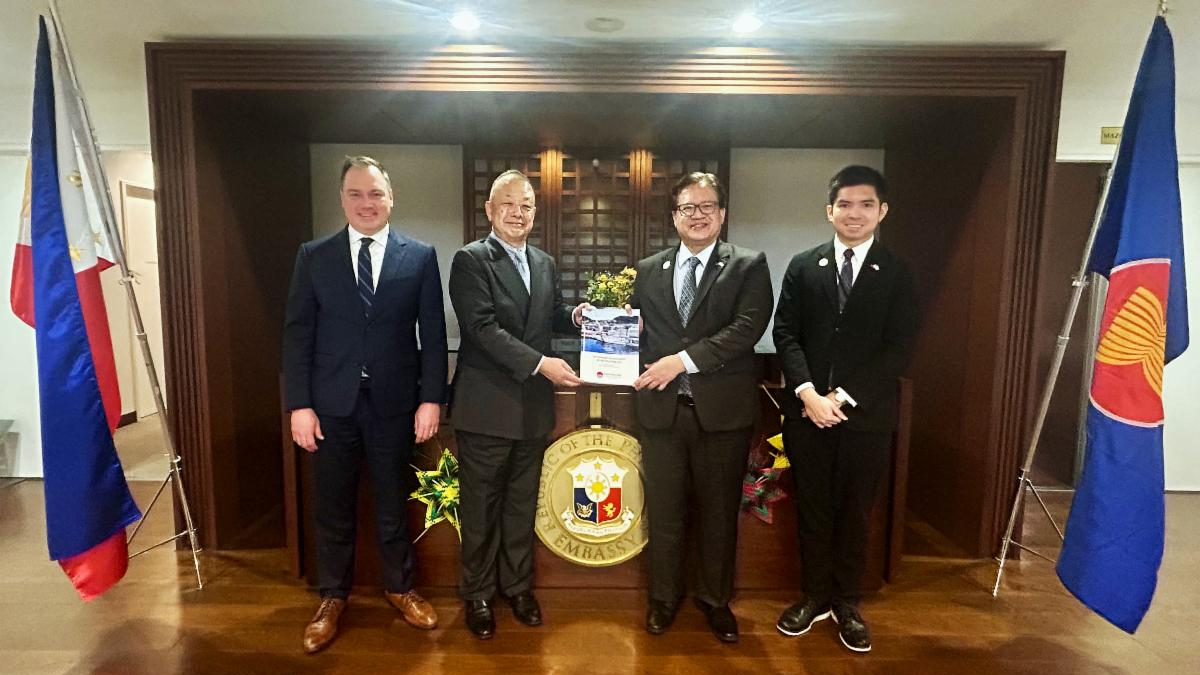
Photo (left to right): Mr. Brian Harding; Dr. Satohiro Akimoto; Mr. Christian L. De Jesus, deputy chief of mission; and Mr. Antonio Emmanuel R. Miranda, vice consul, Embassy of the Republic of the Philippines in Japan
| | Networking the Neighbors of the Philippine Sea:
Report Launch Event in Washington, DC | |
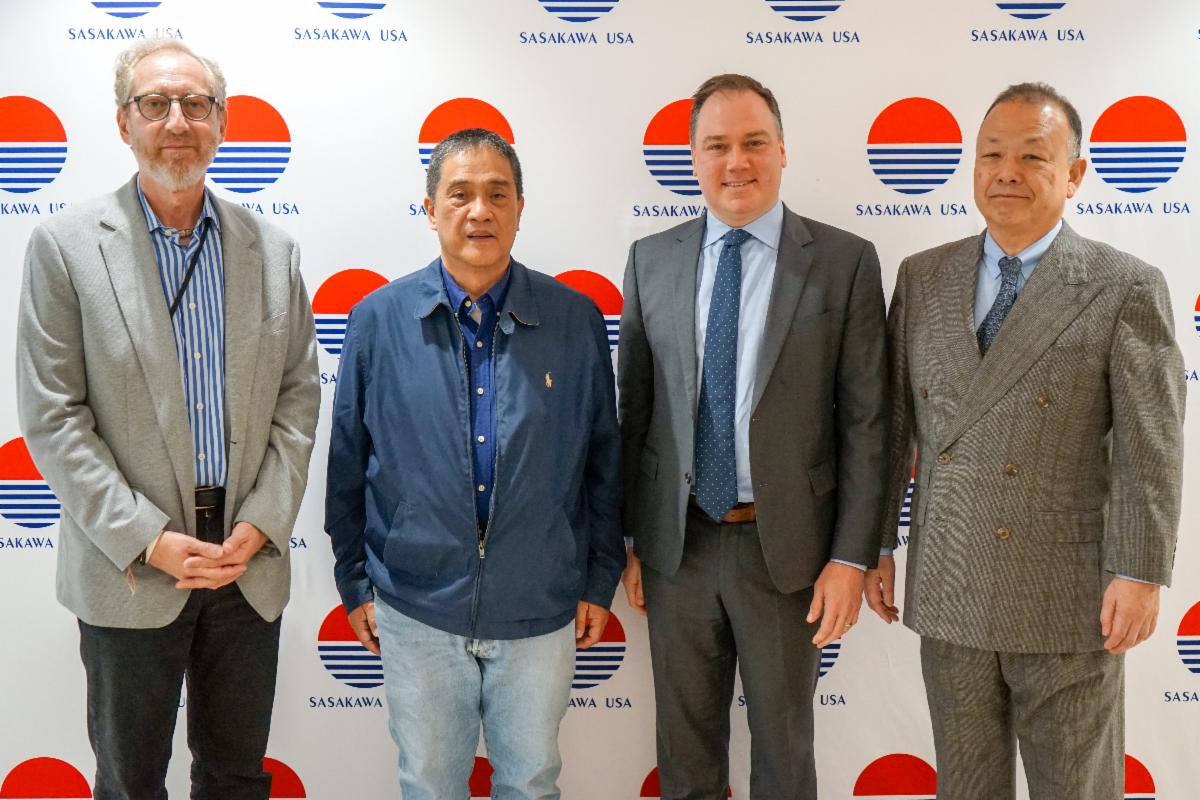
On October 8, Sasakawa USA hosted a report launch of Networking the Neighbors of the Philippine Sea, featuring Mr. Brian Harding, senior fellow (non-resident) and project director, Sasakawa USA, as the speaker; and Dr. Renato Cruz De Castro, distinguished professor at the Department of International Studies, De La Salle University in Manila, and Mr. Michael Schiffer, distinguished senior fellow (non-resident), Sasakawa USA, as commentators. Authored by Mr. Harding, the report culminates a yearlong project led by Mr. Harding and Sasakawa USA, and explores possibilities for closer cooperation among the democratic “Neighbors of the Philippine Sea.” Mr. Harding provided an overview of the project and report, and Dr. De Castro and Mr. Schiffer shared their feedback on the report. The event was moderated by Dr. Satohiro Akimoto, chairman and president, Sasakawa USA.
Photo (left to right): Mr. Michael Schiffer, Dr. Renato Cruz De Castro, Mr. Brian Harding, and Dr. Satohiro Akimoto
| | Networking the Neighbors of the Philippine Sea:
Report Outreach in Taipei and Tokyo | | |
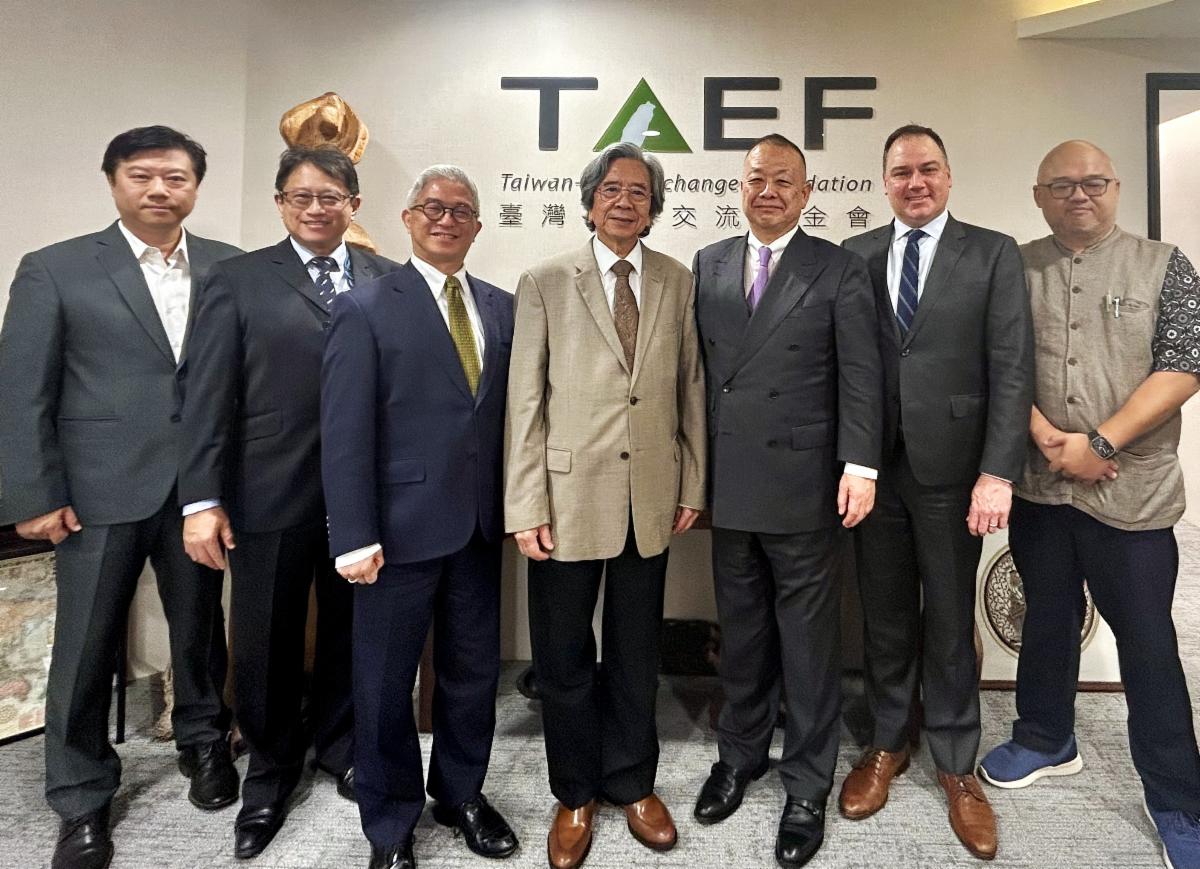
From October 19 to 22, Dr. Satohiro Akimoto, chairman and president, Sasakawa USA, and Mr. Brian Harding, senior fellow (non-resident), Sasakawa USA, conducted a series of briefings and roundtables in Taipei and Tokyo as part of the Networking the Neighbors of the Philippine Sea report’s outreach. In Taipei, they met with the deputy secretary general at the National Security Council; deputy ministers at the Ocean Affairs Council, Ministry of National Defense, and Mainland Affairs Council; in Tokyo, with the Ministry of Foreign Affairs, Ministry of Defense, and Japan International Cooperation Agency (JICA), as well as the Embassy of the Republic of the Philippines in Japan. They also held roundtables and briefings with four leading research institutions: the Taiwan-Asia Exchange Foundation (TAEF), the Prospect Foundation, and Japan’s National Institute for Defense Studies (NIDS).
Photo (left to right): Mr. Wu Jun-zhi, director, Department of China Affairs, Democratic Progressive Party; Dr. Sung Chen-en, deputy minister, Ocean Affairs Council; Dr. Hsu Szu-chien, vice minister, Ministry of National Defense; Dr. Hsiao Hsin-huang, chairman, Taiwan-Asia Exchange Foundation; Dr. Satohiro Akimoto; and Mr. Brian Harding
| | Japan US Military Program (JUMP): JUMP West Point | | |
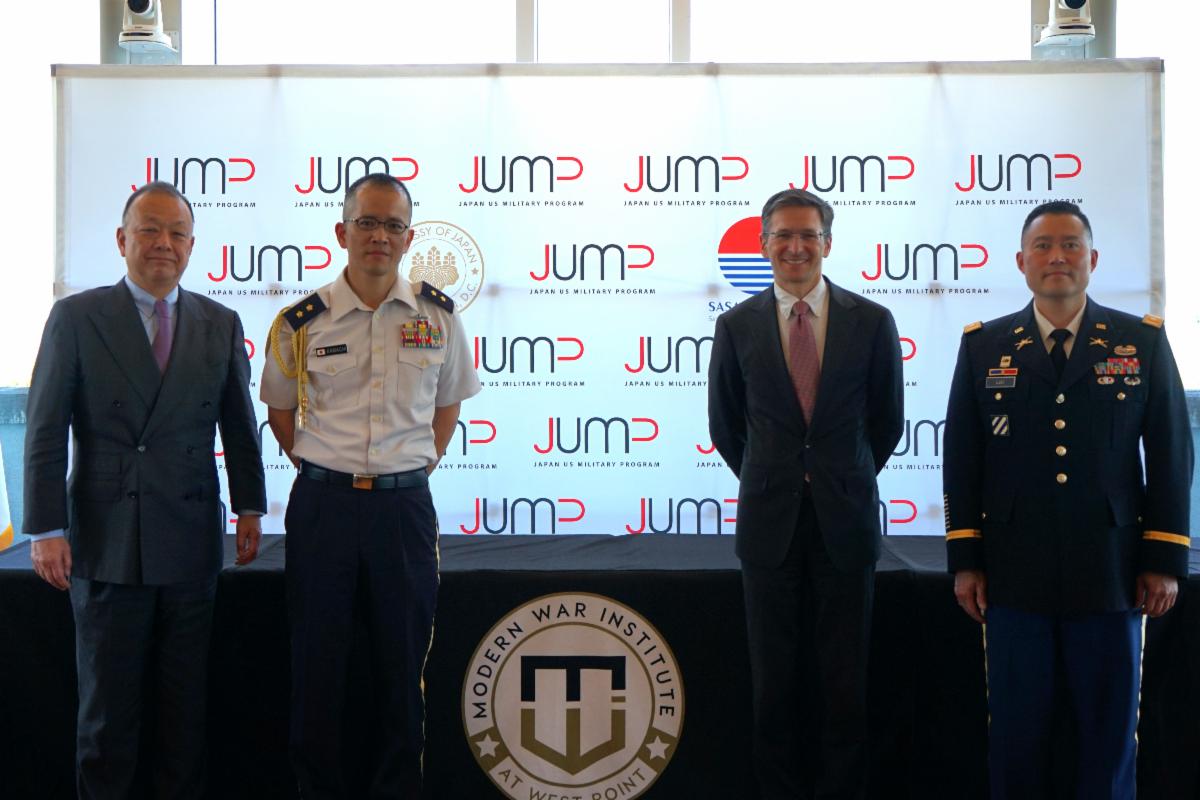
On October 7, Sasakawa USA held a Japan US Military Program (JUMP) event at the U.S. Military Academy at West Point, NY in partnership with the Embassy of Japan and the Modern War Institute at West Point. The event included a panel discussion with remarks by MG Yusuke Kawachi (JGSDF), defense and military attaché, Embassy of Japan; Dr. Zack Cooper, senior fellow, American Enterprise Institute; and LTC Phil Luu (USA), foreign area officer and instructor of Chinese, West Point. The event engaged 50 cadets and faculty members in an in-depth discussion on the importance of the U.S.-Japan alliance in addressing multidimensional challenges in the Indo-Pacific.
While at West Point, Sasakawa USA also held meetings to discuss the U.S.-Japan alliance and how West Point approaches Indo-Pacific security with LTG James B. Bartholomees (USA), superintendent, West Point; BG Joseph Katz (USA), commandant of cadets, West Point; the Modern War Institute; the department of social sciences and humanities; and the department of English and world languages.
This JUMP material is distributed by Sasakawa Peace Foundation USA on behalf of the Embassy of Japan. Additional information is available at the Department of Justice, Washington, DC.
Photo (left to right): Dr. Satohiro Akimoto, MG Yusuke Kawachi (JGSDF), Dr. Zack Cooper, and LTC Phil Luu (USA)
| | |
Washington Kenkyu Group:
Discussion with Dr. Whit Ayres
| | |
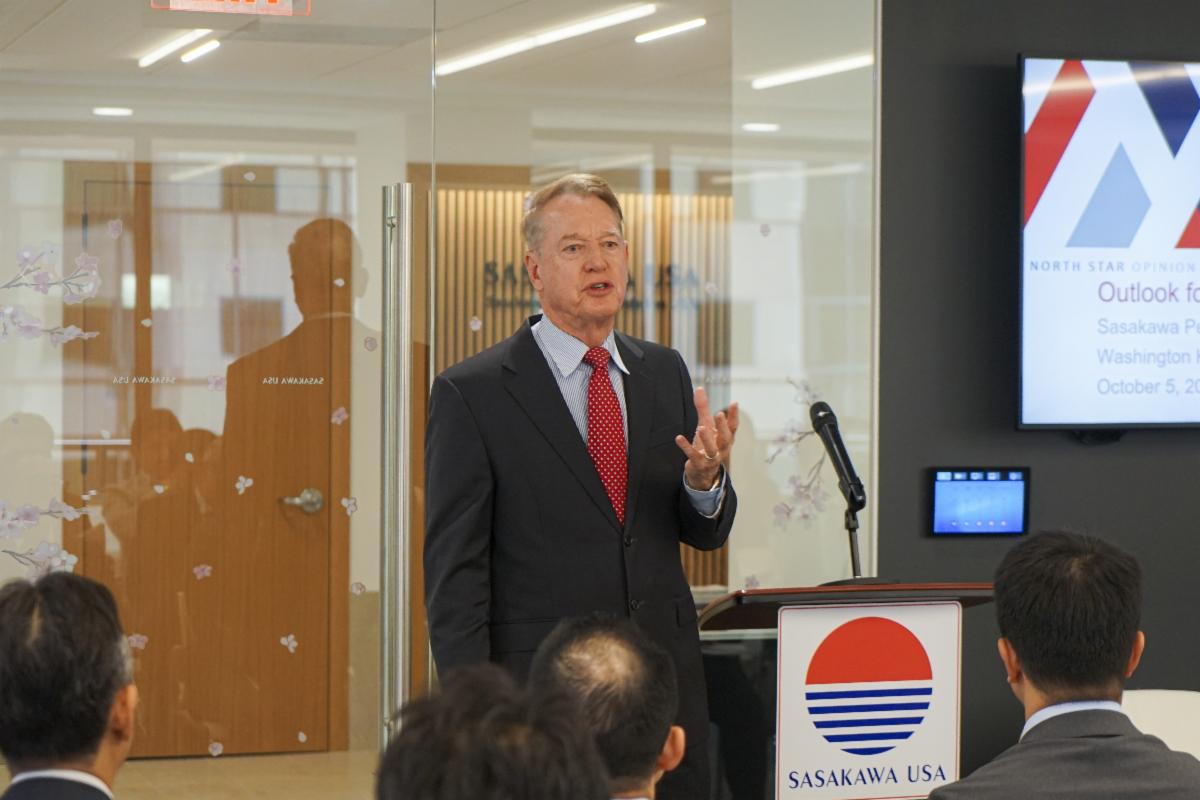
On October 5, Sasakawa USA hosted Dr. Whit Ayres, president of North Star Opinion Research and a leading Republican public opinion expert and campaign strategist with 40 years of experience, for a Washington Kenkyu Group discussion on the outlook for the 2026 U.S. midterm elections and the future of the Republican Party. The event was moderated by Dr. Satohiro Akimoto, chairman and president, Sasakawa USA.
Drawing on polling and public opinion trends, Dr. Ayres discussed the challenges facing Republicans, including President Trump’s low approval ratings, concerns over the economy and foreign policy, and weaker enthusiasm among some Republican voters. At the same time, he highlighted Republican advantages, including a favorable Senate map, a fundraising edge, and redistricting. Dr. Ayres assessed that Democrats are likely to take control of the House, while the Senate remained a toss-up. Looking beyond the midterms, he discussed the potential for greater competition between the MAGA and traditional wings of the Republican Party, while cautioning against premature predictions about the 2028 presidential race. The Q&A also explored trade, AI, younger and Hispanic voters, and the implications of the elections for U.S. politics and policy.
Photo: Dr. Whit Ayres
| |
JET Alumni Engagement:
Career Compass with JETAAPNW
| |
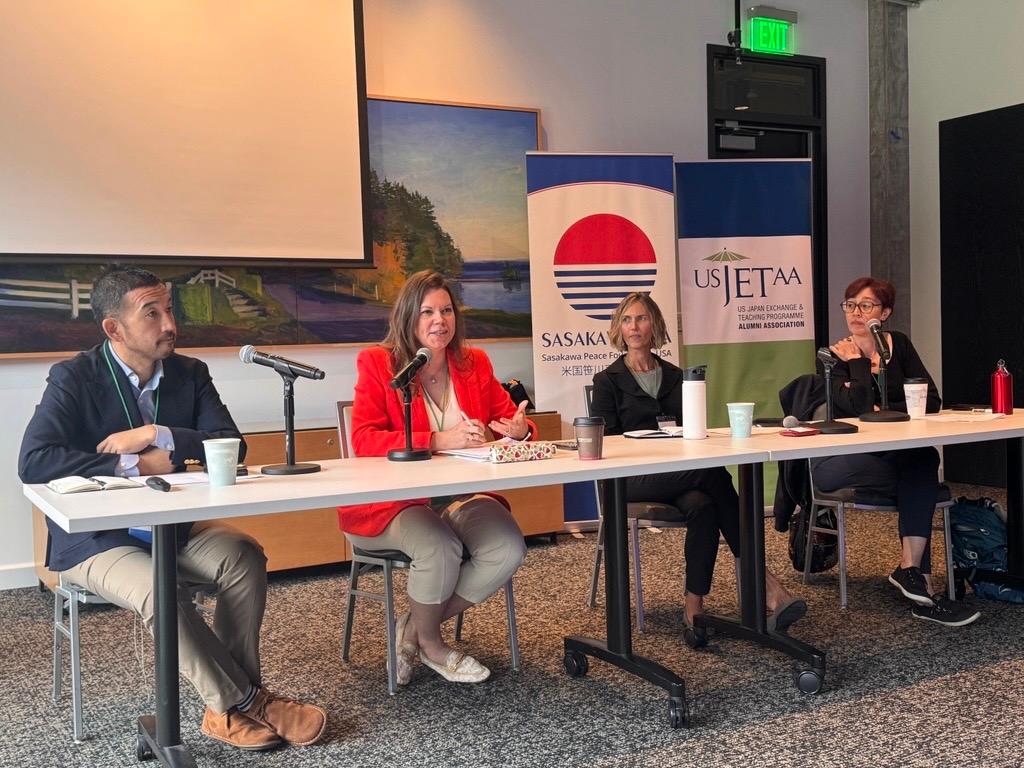
On October 3, Sasakawa USA partnered with the Pacific Northwest Chapter of the JET Program Alumni Association (JETAAPNW) and USJETAA to host “Career Compass: Navigating Towards Japan” in Seattle as part of JETAAPNW’s “Transitions 2026: Opportunities Forum and Networking Expo.” This annual program offers JET alumni and emerging U.S.-Japan leaders guidance on career pathways and professional development. Through career talks and a panel discussion, the event explored topics such as hiring trends among Japanese companies in the United States, effective networking strategies, the job application process, and key skills for Japan-related careers.
Panelists included Ms. Jessyca Livingston, executive director of USJETAA; Mr. Takeshi Yamagishi, senior manager of QUICK USA; Ms. Emily Frank, career coach at Career Catalyst; and Ms. Shanti Shoji, director of programs at Sasakawa USA. The event was emceed by Ms. Lynn Miyauchi, co-president and transitions coordinator of JETAAPNW.
Photo (left to right): Mr. Takeshi Yamagishi, Ms. Shanti Shoji, Ms. Jessyca Livingston, and Ms. Emily Frank
| | Sasakawa USA Visits West Coast and Hawai'i Universities | | |
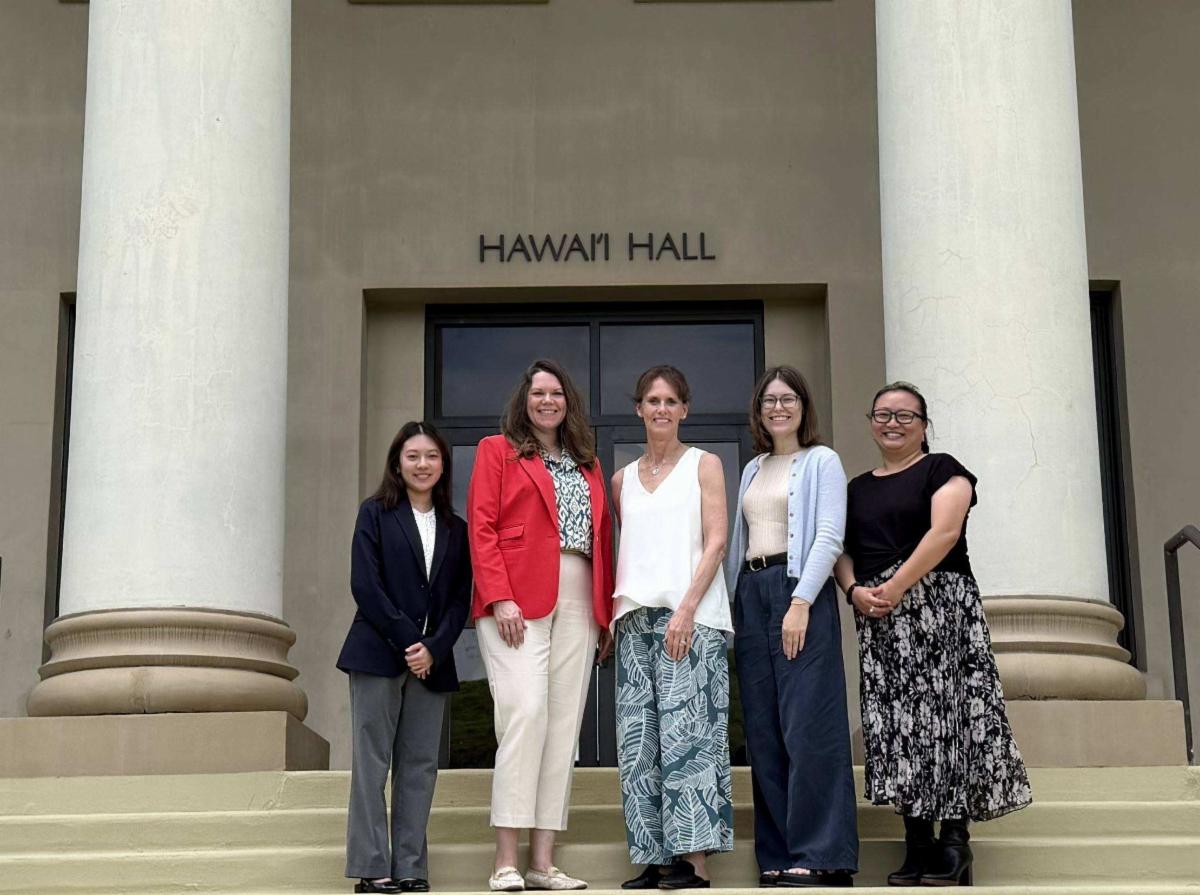
From October 1 to 5, Sasakawa USA director of programs Ms. Shanti Shoji and senior program officer Ms. Kaede Ishidate visited the University of Hawai’i at Mānoa in Honolulu, HI, the University of Washington in Seattle, WA, and the University of Oregon in Eugene, OR. They briefed university leadership on Sasakawa USA’s work and explored collaboration on a potential West Coast and Hawai'i U.S.-Japan Regional Alliance Series, which Sasakawa USA plans to hold with the three universities in February 2027. We look forward to partnering with these institutions to engage students, faculty, and local communities in the Pacific region in high-level dialogue on strategic and regional issues affecting the U.S.-Japan alliance.
Photo: Ms. Shanti Shoji and Ms. Kaede Ishidate with University of Hawai’i at Mānoa leadership
| | “A Pacific pivot ahead for Taiwan?” Op-Ed by Mr. Michael Schiffer and Mr. Brian Harding | | |
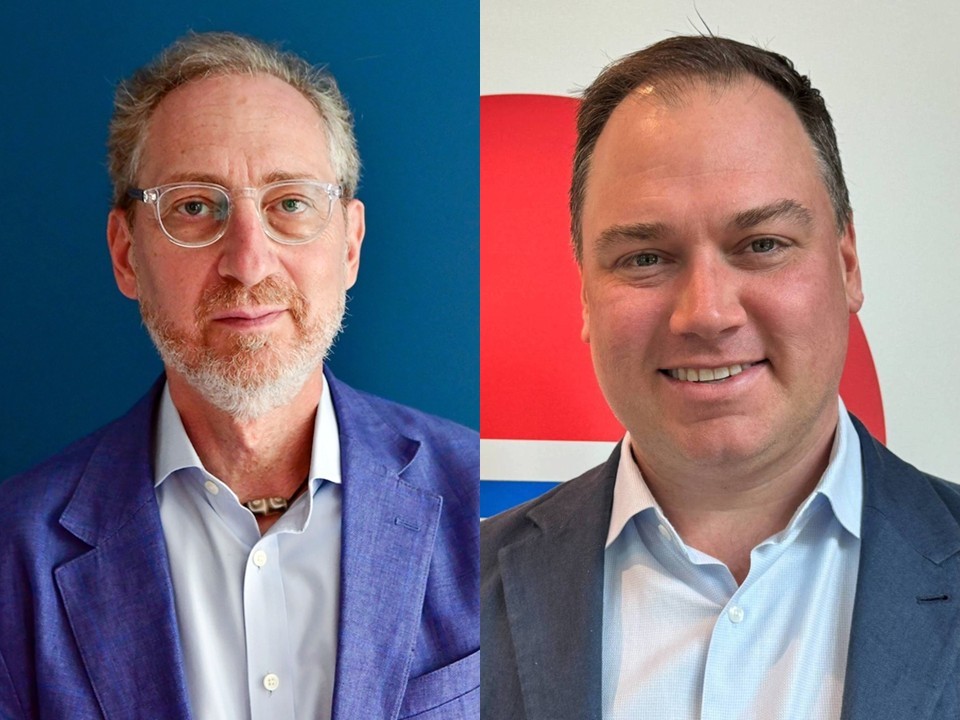
On October 15, Mr. Michael Schiffer, distinguished senior fellow (non-resident), Sasakawa USA, and Mr. Brian Harding, senior fellow (non-resident), Sasakawa USA, published an op-ed in the Taipei Times, in which they examine Taiwan’s evolving role in the Pacific Islands amid growing geopolitical competition. The authors argue that Taiwan’s engagement in the region is no longer primarily about maintaining diplomatic recognition. Instead, Taiwan’s remaining Pacific partnerships, particularly with Palau and the Marshall Islands, have taken on greater strategic significance as the People’s Republic of China expands its regional presence.
Drawing particular attention to Palau, Mr. Schiffer and Mr. Harding highlight opportunities for deeper cooperation among Taiwan, Palau, the United States, Japan, and the Philippines. They note that these partners largely encircle the Philippine Sea, creating a potentially important geography for regional collaboration linking the First and Second Island Chains. The authors also emphasize that Taiwan brings valuable expertise and decades of relationships and infrastructure to the Pacific. As geopolitical competition intensifies, they argue, Taiwan and its partners should consider how these existing ties can support closer cooperation while reinforcing the sovereignty and agency of Pacific Island countries.
Photo (left to right): Mr. Michael Schiffer and Mr. Brian Harding
| | U.S.-Japan Research Exchange with Amb. Michael Sfraga | | |
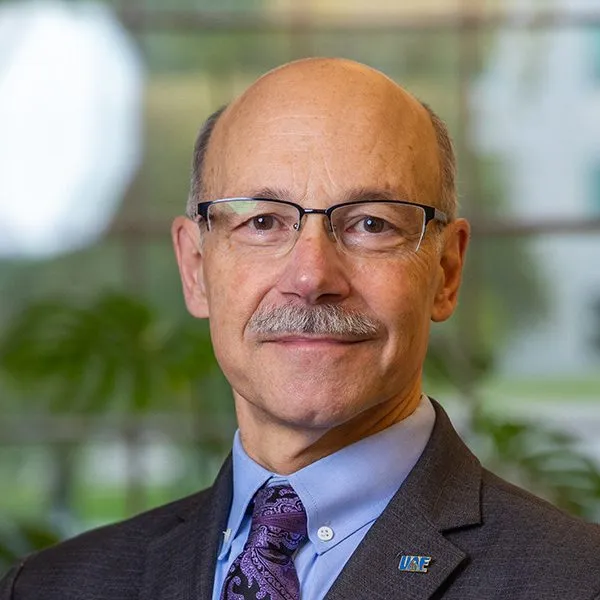
Amb. Michael Sfraga, former U.S. ambassador-at-large for Arctic Affairs and current senior advisor, Arctic and National Security Policy at the University of Alaska Fairbanks’s International Arctic Research Center, will travel to Tokyo from November 9 to 13, 2026 through Sasakawa USA’s U.S.-Japan Research Exchange program. Through meetings with experts and stakeholders across government, civil society, and academia, Amb. Sfraga will evaluate Japan’s current Arctic policy, detail how it may evolve with its upcoming revision, and identify areas where the U.S. and Japan can advance their Arctic partnership. Following his trip, Amb. Sfraga will produce a paper outlining his findings and recommendations for the research topic, which will be published on the Sasakawa USA website.
Photo: Amb. Michael Sfraga
| | U.S.-Japan Research Exchange with COL Koki Kawamura | | |
COL Koki Kawamura, a senior research fellow at Japan’s National Institute for Defense Studies and a colonel in the Japan Ground Self-Defense Force (JGSDF), will travel to Silicon Valley and Washington, DC from November 11 to 19, 2026 through Sasakawa USA’s U.S.-Japan Research Exchange program. During his trip, COL Kawamura will research how artificial intelligence (AI) systems have been deployed in Operation Epic Fury, the U.S. military operation against Iran. This research will also consider how Japan can integrate AI into its own defense architecture, including joint usage within the U.S.-Japan alliance. After his trip, COL Kawamura will write a paper on his findings that will be published on the Sasakawa USA website.
Photo: COL Koki Kawamura
| | Sasakawa USA Bids Farewell to Ms. Misa Imanaka-Miller | | |
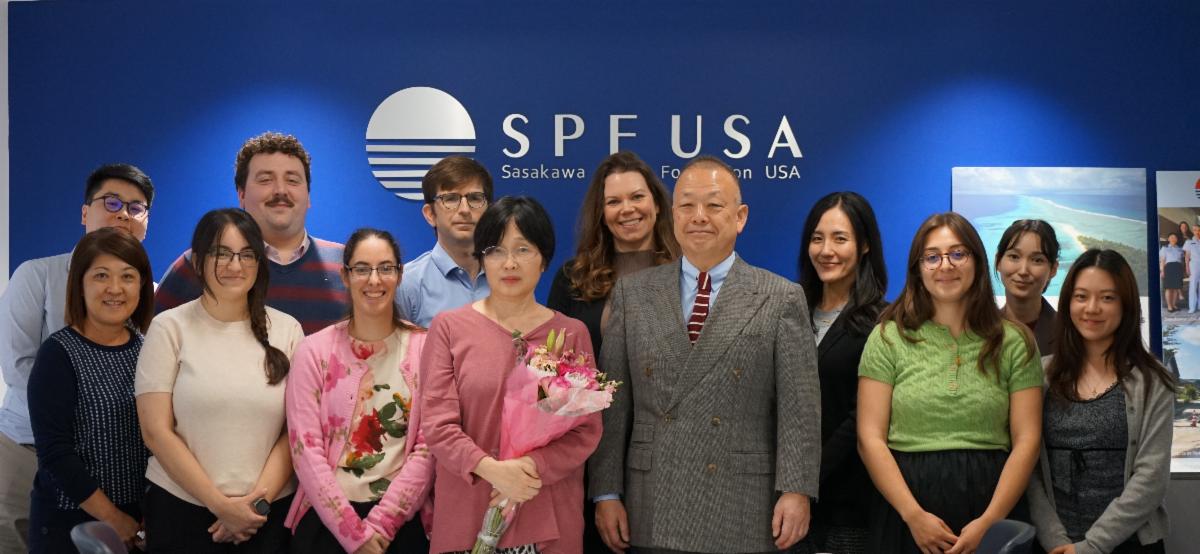
This month, Sasakawa USA bid a fond farewell to Ms. Misa Imanaka-Miller, director of administration, after nearly three decades of dedicated service. Ms. Imanaka-Miller began her career at Sasakawa USA as a library assistant at the Sasakawa Peace Foundation USA Library, then the largest Japanese library in the Washington, DC area. She went on to oversee the library’s operations as office manager before serving as director of finance and, most recently, director of administration.
Sasakawa USA extends its deepest gratitude to Ms. Imanaka-Miller for her longstanding dedication to the organization and its mission. Her extensive institutional knowledge and steadfast commitment have been invaluable to Sasakawa USA’s work to deepen mutual understanding and strengthen the relationship between the United States and Japan, which would not have been possible without her efforts. We wish her all the best in this next chapter and will miss her greatly.
Photo: The Sasakawa USA Team with Ms. Imanaka-Miller
| | |
Sasakawa Peace Foundation USA
1819 L Street, NW, Suite 300
Washington, DC 20036
+1.202.296.6694
| | | | |