IRISH POTATO REGULATIONS UPDATE
|
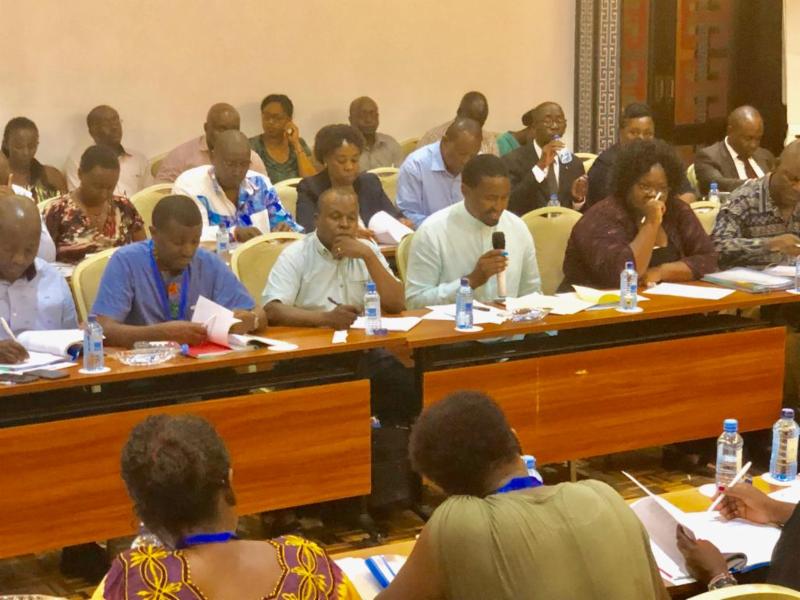
The Cs. Hon Mwangi Kiunjuri presenting the Draft Irish Potato regulations at Mombasa
The proposed Irish potato regulations received a favourable consideration by the National Assembly committee on delegated legislation during the pre-publication session in Mombasa on 5
th
February 2019. The draft has then been reviewed further based on some minor concerns identified at the session. The Cabinet secretary is expected to submit it for Gazetment and there after a launch shall follow. Currently there is Stakeholders’ sensitization and round table engagements on the regulations in Nyandarua, Nakuru, Bungoma, Narok, Elgeyo Marakwet and Meru counties.
|
|
Upcoming Events
1.National Potato Conference on 23
rd
and 24
th
May 2019 at KALRO Headquarters Loresho
2.1st KALRO Scientific Conference and Exhibition on 24 - 28 June 2019KALRO Headquarters
3.43rd Dar-es-salaam international trade fair on 28th June to 13th July 2019. For more details click
here
4.African Potato Association Conference on 25th- 29th August 2019 in Kigali Conference Center.For details click
here
|
|
THE NORTH RIFT REGION POTATO FAIR
The North Rift Region Potato Fair was held on 22
nd
February 2019 at the Agricultural Mechanization Service (AMS) Chepkoilel, Eldoret. 31 exhibitors displayed their products and services in the areas of Crop protection, Mechanization, Soil nutrition, Seed and Ware potato production, Financing, crop rotation among others. The event had 1,218 registered participants that included farmers, stakeholders, and development partners in the potato subsector from all over the country. The event was organized by the Ministry of Agriculture, Livestock Development and Fisheries and the directorate of agricultural mechanization in Uasin Gishu County in partnership with NPCK and was supported by Alliance for a Green Revolution in Africa (AGRA).
The potato fair provides a platform for one-on-one interaction between potato farmers and input and service providers as well as an opportunity to showcase their latest innovations and practical demonstration on good agronomic practices in the demonstration plots. Exhibitors were impressed by farmers’ genuine interest to learn, network and purchase their products while farmers were amazed by the crop performance at the demonstration plots despite the drought that was being experienced in the region.
The event was graced by
Dr. Oscar Magenya, Director at State Department for Agricultural Research who represented Hon. Mwangi Kiunjuri
, the Cabinet Secretary, Ministry of
Agriculture
,
Livestock, Fisheries and Irrigation. In his speech
he reiterated the government’s commitment in improving the potato subsector as outlined in the Big 4 Agenda. The deputy
governor of Uasin Gishu, H.E Daniel K. Kiprotich Chemno also graced the event and urged farmers in the county to diversify their crops in order to reduce the risks associated with relying on one crop.
|
|
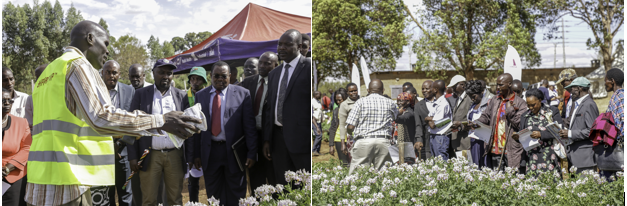
Above left: H.E the Deputy governor of Uasin Gishu County accompanied by other guests during the tour of exhibition stands and plots. Right: Participants listening keenly to one of the exhibitors at the demo plots
|
|
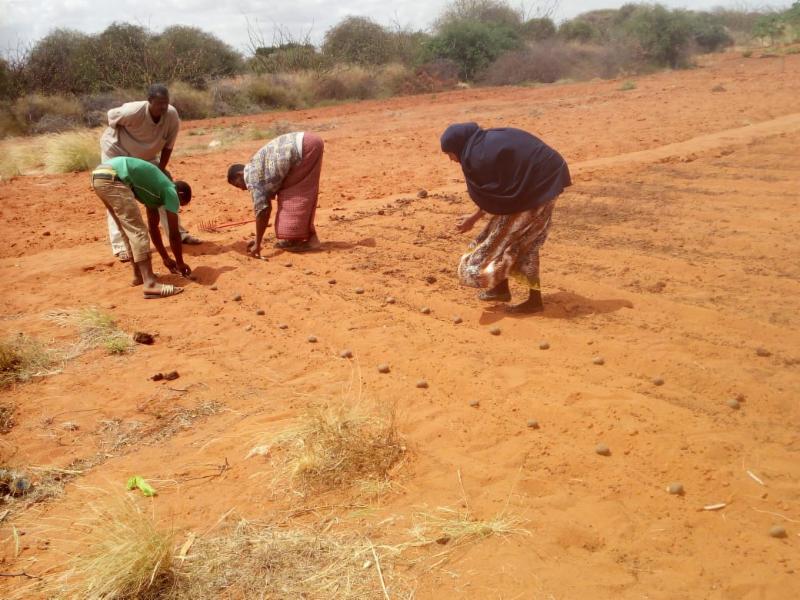
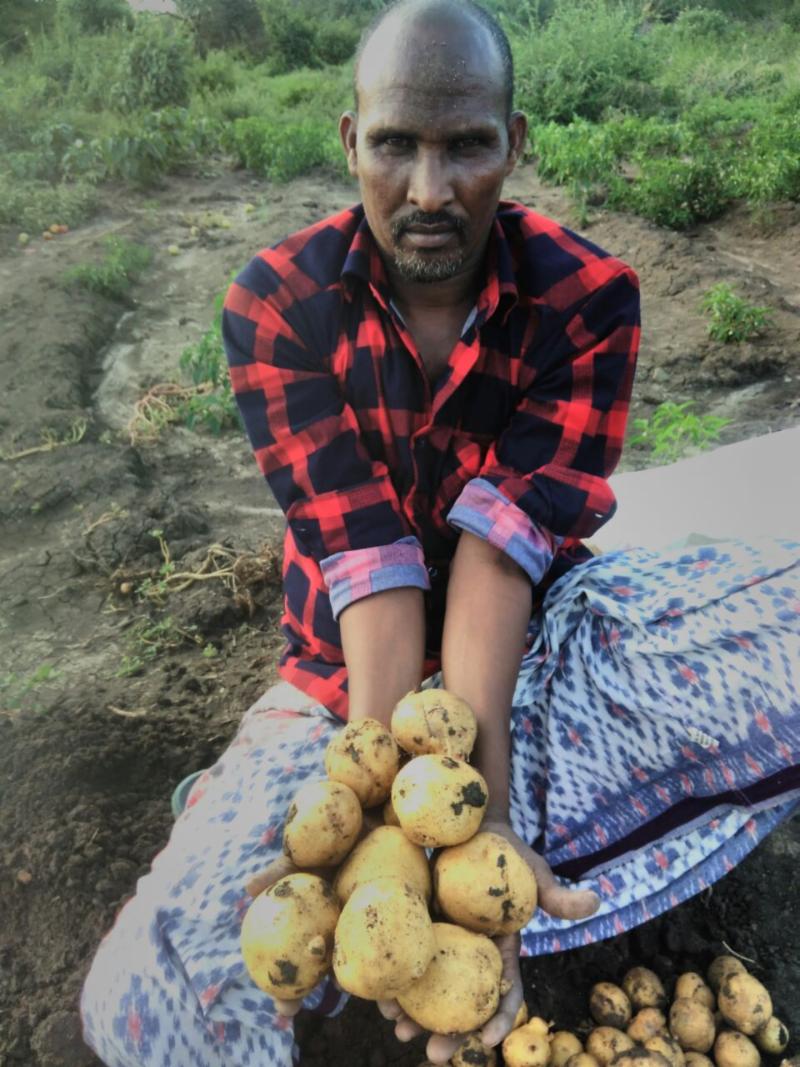
Above:Planting of destiny Variety at Wajir County.Below: Hussein's harvest
|
|
TRIAL, ERROR AND SUCCESS IN POTATO FARMING IN WAJIR
|
By Corien Herweijer, Agrico East Africa
In Kenya, the perception is that potatoes only grow in colder and wet areas like Meru, Molo and Kinangop. There has been unwillingness to try out potato farming in hot and dry counties in the North Eastern part of Kenya such as Wajir. Agrico East Africa and the County Department for Agriculture in Wajir pursued a joint trial with 4 farmers who had access to irrigation and grew potatoes in Wajir.
Through the Penn State University FEW Nexus and Paracclete Consult, the Agricultural Extension team was linked to potato seed producer Agrico East Africa. With support from the Penn State University FEW Nexus the Agriculture team in Wajir had successfully engaged in growing leafy vegetables, tomatoes, onions and capsicums under irrigation. The population in Wajir is now moving from pastoral to more agro-pastoral activities, and have also embraced farming of maize, cereals and sorghum and have reduced overreliance of potatoes supply from Moyale and Meru.
Read more.
|
|
ASTGS VALIDATION WORKSHOP
The Agricultural Sector Transformation and Growth Strategy (ASTGS) is a 10 year strategy developed by the MoALF&I to run between 2019-2029. ASTGS was developed to replace the Agriculture Sector Development Strategy (ASDS) of 2010-2020 which was rendered obsolete due to the promulgation of the new constitution in 2010 that devolved majority of agriculture functions to the county levels. The process of developing ASTGS commenced officially in 2016 with an aim of involving the county governments which is in line with the current constitution. The strategy is also aligned to the Comprehensive Africa Agriculture Development Programme (CAADP) Malabo declaration, long term commitments to the UN Sustainable Development Goals (SDGs), the African Union (AU) agenda 2063 and the most recently launched presidential Big 4 Agenda is also embedded in the strategy. ASTGS is pegged on 3 anchors which include; increase small scale farmer, pastoralists and fisher folk incomes, increase agricultural output and value addition and finally boost household food resilience. The ASTGS validation workshop was held on 29
th
January 2019 at KALRO headquarters in Loresho bringing various stakeholders and policy makers together with an aim of discussing some of the emerging issues that should be included or emphasized in the strategy. During the plenary session, NPCK lobbied for inclusion of potato sector in the fertilizer subsidy programme and also for introduction of improved potato storage methods and technology. Other submissions during the session included;, focus on food safety along various value chains in terms of levels and amount of pesticides used during crop protection activities, better outline the role of youths in the achievement of the strategy. The strategy is expected to be launched later this year.
|
|
|
|
Available seed potato from registered seed producers for the month of March 2019
|
|
|
DELIBERATIONS ON POTATO FLAKES DRAFT SPECIFICATION STANDARDS
One way to increase potato shelf life after harvesting is by value addition through processing. There are many products that can be made from potatoes and one of them is potato flakes. This is a product that is made from boiling potatoes, mashing and then drying them up. They can then either be crushed into flour or consumed by adding milk or water for easier palatability. Potato flakes being a new product in the Kenyan market, there is need to develop the specification standards in order to guide agro processors on the safety and general guidelines for its production. The Tuber and Tuber Crops Technical Committee (TC) that comprises Kenya Bureau of Standards (KEBS), Agriculture and Food Authority (AFA), Kenya Industrial Research and Development Institute (KIRDI)
,
NPCK, University of Nairobi (UoN), Food Science and Technology Platform of Kenya, Mhogo Foods, Graduate Africa, Consumer Information Network, International Potato Centre (CIP), Tropical Heat and Propack Limited held a meeting at KEBS headquarters on 15
th
February, 2019 to deliberate on the above. The meeting involved discussing draft standards specifications for production of potato flakes. The specification standards discussed touched on raw materials, additives, contaminants, microbiological limits, packaging materials, weights, ingredients, test standards on nutritional value and safety. The draft standards discussed will be subjected to various agro processors and other industry players for their input to be incorporated. The adoption and implementation of the standards is expected to create a positive ripple effect across the potato value chain.
|
|
LAUNCH OF SEED POTATO PRODUCTION UNIT AT NATIONAL YOUTH SERVICE (NYS), TUMAINI FARM
The National Youth Service (NYS) and the Kenya Prisons Service launched a seed potato production unit on 15
th
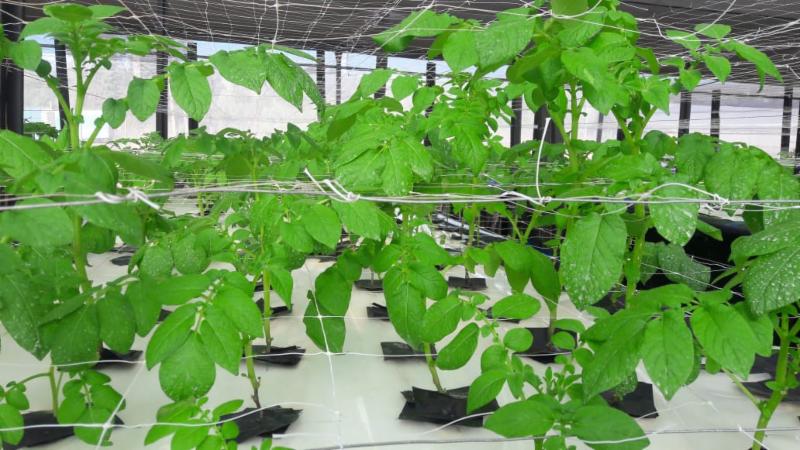
February 2019 at NYS Tumaini farm in Nyandarua County. The objective of the project is to produce seed potato for planting on the 300 acre NYS farm in Tumaini. This will in turn go a long way in meeting the institution’s annual potato demand which currently stands at 8,899 metric tons per year. The seed multiplication units have been installed in 3 greenhouses and uses aeroponics technology. It currently has 6,276 plantlets of Shangi variety. The unit was officially launched by Dr. Fred Matiangi, PhD, EGH Cabinet Secretary, Ministry of Interior and Coordination of National Government together with Prof. Margret Kobia PhD, MGH Cabinet Secretary, Ministry of Public Service, Youth and Gender Affairs. In attendance were Ms. Cecily Kariuki, Cabinet Secretary Ministry of Health and H.E Francis Kimemia, EGH, CBS the Governor of Nyandarua County. Other stakeholders present were, representatives of KALRO, KEPHIS, NPCK, National AND County Ministry of Agriculture Livestock fisheries and Irrigation and potato farmers and farmer groups.
|
|
Above: Aeroponics in the seed production unit
|
|
FOCUS ON VEGETATIVE PROPAGATED CROPS
A workshop on opportunities for shaping the future of seeds for vegetatively propagated Crops (VPCs) took place on 11
th
-12
th
February 2019 at Movenpick Hotel Westlands. The two day workshop organized by International Potato Centre (CIP) and the International Food Policy Research Institute (IFPRI) with the support from CGIAR Research was attended by representatives of the government ministries, county governments, regulatory agencies, private sector, non-governmental organizations and National and International research organizations , all who contribute to key elements of VPCs seed system. The sole purpose of the workshop was to highlight the uniqueness of VPCs in the context of Kenya’s policy and regulatory change process with the ultimate aim of increasing the use of quality planting material by Kenya’s farming community. The use of VPCs in the country is expected to enhance food security and productivity growth, and creating space for innovative approaches that address the distinctive gender dimensions of VPC seed system.
The participants who attended the workshop had an opportunity to discuss in teams and share evidence and insights on the policy and regulatory dimensions of VPCs seed systems in Kenya, Malawi, Mozambique and Tanzania. They also reflected on current approaches to VPCs seed policy and regulation with an emphasis on seed markets, smallholder inclusion and sensitivity to gender and youth.
|
|
VIAZI SOKO CONTINUES TO GROW
Viazi Soko is a web and SMS based marketing platform for seed and ware potatoes that was developed by NPCK and partners and launched May 2017. It allows potato farmers to get information on certified seed and market ware potatoes. By using the mobile platform, farmers are able to query on availability of a particular seed potato variety. The farmer receives an instant response informing them on the seeds variety available, price per kg and the available stock. It also gives the phone number of the seed merchant which the farmer can use to get in touch with the company. This function of the platform is aimed at enhancing farmer access to quick seed potato information as well as improve distribution for the seed potato merchants. Viazi Soko also serves as ware potato marketing platform by linking farmers directly to potato market outlets. NPCK and partners also use the platform to send advisory messages to the farmers. The platform has now a new feature that allows farmers to get information on daily market prices in major towns. This will help in making informed decisions on where to sell their produce. In order to access prices, a registered farmer sends the following message:
NPCK #price
to
22384
. Note there is a space between NPCK and the first #.The farmer will then receive a feedback indicating the prevailing market prices in Nairobi, Mombasa, Nakuru, Kisumu, and Eldoret .This service uses normal SMS rates. The platform currently has 72,368 registered potato farmers. To increase awareness and usage of the platform by farmers, NPCK has trained Ward Extension Officers (WAO) in West Pokot, Nakuru, Meru, Trans Nzoia and Elgeyo Marakwet Counties on how to use Viazi Soko . The Trained WAO’S in turn train the individual farmers in their respective wards.
|
|
HEALTH BENEFITS OF POTATO
Did you know that potatoes are known for being the finest sources of starch, vitamins, minerals and dietary fibre? Research proves that 100 grams of potato gives 70 calories. The fat content being very little with no cholesterol. In a 100 grams, there is just about 0.1 grams of fat. This means if they are well cooked, then one does not need to worry about gaining weight unnecessarily.
Research also shows that potato is an excellent natural source of both insoluble and soluble fibre thus helping in digestion, preventing constipation and decrease absorption of dietary cholesterol. Moreover, the fibre content further helps in absorption of simple sugars in the gut. This keeps the blood sugar levels within the normal range avoiding wide fluctuations. This means that people living with diabetes can consider potato as a source of carbohydrates.
The potato tubers are known to be one of the richest sources of vitamin B6 among other minerals required in a human body. Fresh unpeeled potato is known to be a good source of antioxidant vitamin C. When consumed regularly, the mineral content helps the human body in developing a strong resistance against diseases.
You can find the description of each variety in terms of usage, growth characteristics, physical attributes and where to grow on the
Potato Variety Catalogue 2017
References:
-Agricultural research service, scientist Roy Navarre
|
|
POTATO MARKETING FORUMS: A STRATEGIC INTERVENTION BY NPCK AND PARTNERS
Direct market linkage between farmers and market outlets is widely viewed as part of the solution to solving challenges faced by farmers in marketing potatoes. Towards achieving this, NPCK and partners have come up with a strategic intervention dubbed Potato marketing forums. The forums are made up of potato buyers, potato farmer groups, County government, International Potato Center (CIP) and NPCK. Through these interactive forums, farmers have opportunity to learn more about specific variety requirements and procurement arrangements for each buyer while buyers gather information of farmer group membership, production capacity, acreage, varieties grown etc. At the end of the deliberations, the potato buyers agree and plan how farmers can produce and supply potatoes in the subsequent seasons. These forums have so far been created for the Eastern and North Rift Region.
Read more
|
|
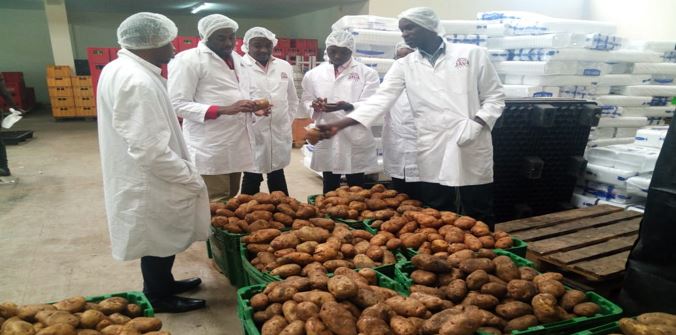
Above:NPCK Team during the Mapping Exercise at JAVA
|
|
Connect with us on social media
|
|
|
|
|
|
|