Greetings Northwest Region:

Current telehealth flexibilities are set to expire on January 30, 2026! 

We will provide updates as soon as they are released. To learn what national provider organizations and telehealth industry groups are doing to make key telehealth waivers permanent, visit the Center for Connected Health Policy's (CCHP) latest newsletter.

NRTRC's annual Telehealth Services and Codes Resource, which provides billing and coding information, has been updated to reflect the CY 2026 Physician Fee Schedule. 

NATIONAL NEWS

Rural Health Transformation Program Awards Headed to States Throughout the West

The Rural Health Transformation (RHT) Program awards have been announced! The RHT Program was established through H.R.1, the federal budget reconciliation bill signed into law on July 4, 2025. In addition to introducing long-term changes to Medicaid and Supplemental Nutrition Assistance Program (SNAP) funding, H.R.1 created the RHT Program, a five-year program to support rural health system transformation across the United States. For each of the five years, $10 billion will be allotted to the states.


The program is administered by the Centers for Medicare & Medicaid Services (CMS) and provides funding to selected states from Federal Fiscal Year 2026 through 2030. All 50 states were awarded on December 27, 2025. For those residing in the NRTRC’s region, find links to your state’s plan below. 

For those residing outside of the NRTRC region, please contact NRTRC for any digital health needs related to your state’s rural health funding.

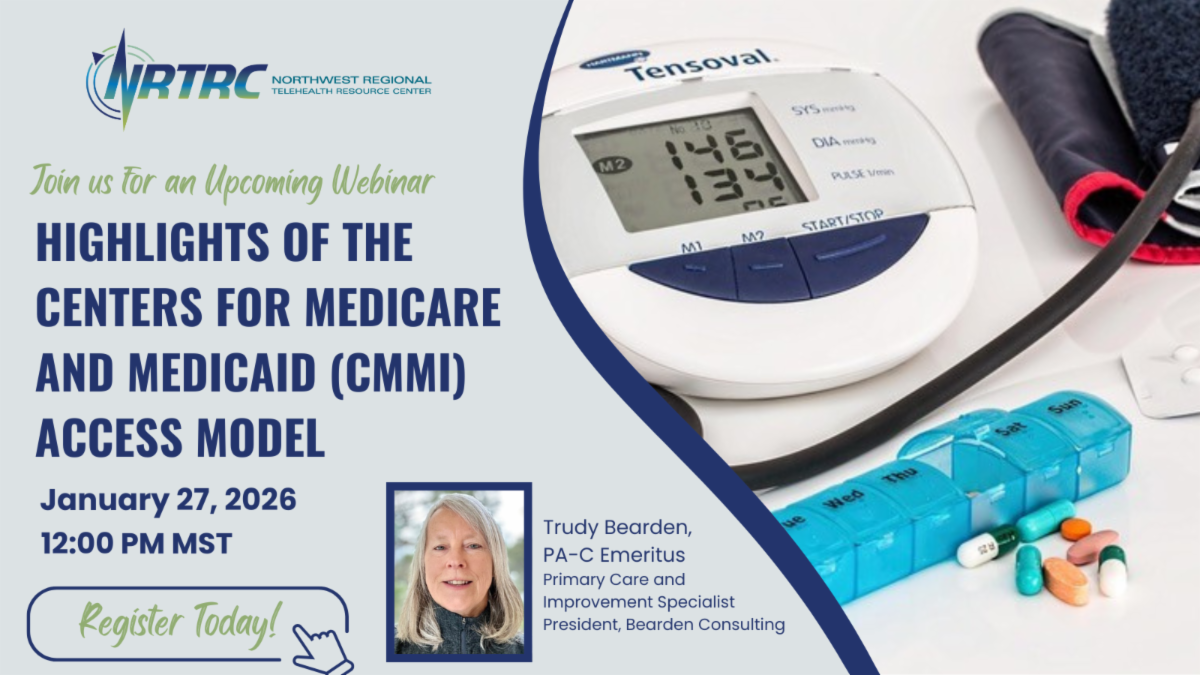
Join the NRTRC Webinar on the CMS/CMMI ACCESS Model

Join NRTRC for a webinar to discuss the Centers for Medicare and Medicaid Innovation (CMMI) ACCESS Model (Advancing Chronic Care with Effective, Scalable Solutions), a voluntary payment model designed to improve care for individuals with chronic conditions. It supports technology-enabled, team-based care beyond traditional clinical settings. The model encourages innovative approaches such as telehealth, remote patient monitoring, and digital health tools to improve outcomes and reduce the total cost of care. Trudy Bearden, PA-C, Primary Care and Improvement Specialist, will present.

For rural communities, the ACCESS Model is particularly significant as it creates new opportunities to support individuals where they live, address workforce shortages, and sustain access to chronic care services through virtual and hybrid care models. It aligns closely with NRTRC’s mission to expand access to healthcare and healthy outcomes to everyone, regardless of where they live. 

DEA Extends Telemedicine Flexibilities for Prescribing Controlled Substances Through 2026

The U.S. Department of Health and Human Services (HHS), with the Drug Enforcement Administration (DEA), announced a fourth extension of telemedicine flexibilities for prescribing controlled medications through December 31, 2026. This extension ensures that patients who rely on telehealth—including seniors, rural residents, and people with disabilities—can continue accessing care.

The extension provides time to finalize permanent regulations and ensures a smooth transition for patients and providers.


What’s included in the extension?

  • Schedule II–V controlled substances: Clinicians may prescribe these medications via interactive audio-video telemedicine for new or existing patients without any prior in-person evaluation.
  • Audio-only telehealth: Permitted for Schedule III–V narcotic medications approved by the FDA for opioid use disorder treatment, also without an in-person requirement.


This extension ensures continuity of care and prevents a telehealth “cliff” while the DEA finalizes permanent rules, including a special telemedicine registration pathway.


Read the full Federal Register rule


Normally, the Ryan Haight Act requires at least one in-person medical evaluation before prescribing a controlled substance remotely. However, this temporary extension suspends that requirement entirely—regardless of whether the in-person visit was ever conducted or scheduled—so long as other prescribing safeguards are maintained. This Fourth Temporary Extension ensures continuity of care by maintaining the same telehealth flexibilities established during the Public Health Emergency without imposing new in-person visit requirements.

REGIONAL NEWS

Utah will become the first state to evaluate the safety of autonomous AI for prescription renewals for chronic conditions. The Utah Department of Commerce’s Office of Artificial Intelligence Policy announced a first-of-its-kind partnership with Doctronic, the AI-native health platform, to give patients with chronic conditions a faster, automated way to renew medications. 

Idaho Board Member Highlight: Abby Losinksi, MHA

Abby Losinski is the Director of Telehealth at St. Luke’s Health System in Idaho, where she leads efforts to expand access to care through innovative virtual health solutions. She has helped develop programs that allow patients to receive care from home, school, or community settings, reducing the need for in-person and emergency visits while maintaining a patient-centered focus.

Losinski also serves as the Executive Vice-Chair of the Idaho Telehealth Alliance and is the founder of Losinski Consulting, where she advises healthcare organizations on telehealth strategy, implementation, and optimization.

With over 18 years of experience in healthcare, Losinski holds a Bachelor of Science in Healthcare Management and a Master of Healthcare Administration from Colorado State University. As a licensed practical nurse (LPN) and certified Epic software builder, she combines clinical, operational, and technical expertise to advance telehealth innovation and improve healthcare access across Idaho and the Northwest.

Northwest Providers Can Gain Knowledge and Skills in Free UW TelePain Program 

NRTRC is once again teaming up with the University of Washington to partner with their TelePain (UW TelePain) program. UW TelePain is a free educational consultation service supporting Alaska, Idaho, Montana, Washington, and Wyoming providers in managing challenging chronic pain cases, made possible through the HRSA Technology-enabled Collaborative Learning Program (TCLP) funding. 


Join interactive Zoom sessions every other Wednesday featuring a dedicated Montana provider case discussion segment (12:30 p.m. MT) followed by an evidence-based didactic presentation (1 p.m. MT), all led by a panel of interprofessional pain experts. Earn up to 1.5 CME/CNE contact hours per session. 


In addition, providers can access the free Pain & Opioid Provider Consultation Hotline (844-520-7246) for direct educational advice from a pharmacist on complex pain medication regimens and challenging cases.

Events to Bookmark

January

Advancing Chronic Care with Effective Scalable Solutions, The ACCESS Model, from The Centers for Medicare and Medicaid Innovation (CMMI).
Jan 27 @ 12 p.m.–1 p.m.

Organizer: The Northwest Regional Telehealth Resource Center (NRTRC)


Learn what the Centers for Medicare and Medicaid Innovation (CMMI) Advancing Chronic Care with Effective Scalable Solutions (ACCESS) Model means for care delivery that improves outcomes and reduces per beneficiary cost and why it matters now. Join us for key highlights and practical insights.


Litigation Risks: Protecting Telemedicine/Digital Health Companies Session 1 | Telehealth & Digital Medicine: Managing Risks in Enforcement, Investigations, and Compliance

Jan 28 @ 10 a.m.–11 a.m.

Organizer: Foley and Lardner


Digital health companies are increasingly facing regulatory scrutiny as government enforcement priorities shift to the telemedicine industry. This webinar will cover the following topics:

  1. Telehealth is a top government enforcement priority.
  2. Digital health tools (AI, apps, Software as a Medical Device) create regulatory exposure.
  3. Whistleblowers fuel investigations, often before the government acts.
  4. Early response and strong compliance programs materially change outcomes.


UW TelePain: Clinical Series & Office Hours

Jan 28 @ 1 p.m.–2 p.m.

Organizer: University of Washington Anesthesiology and Pain Medicine


UW TelePain is held every Wednesday. The format alternates weekly between Office Hours (12:00-1:00pm PT) and a Didactic/Case Discussion session (11:30am-1:30pm PT). 


February


Litigation Risks: Protecting Telemedicine/Digital Health Companies Session 2 | Cybersecurity and Privacy: Latest Trends for the Telehealth and Digital Health Industry

Feb 4 @ 10 a.m.–11 a.m.

Organizer: Foley and Lardner


Cybersecurity threats and privacy compliance remain top priorities for digital health companies. This webinar will cover the following topics:

  1. The latest cybersecurity threats for the telehealth and digital health industry, including attack vectors and incident response best practices.
  2. Emerging topics in privacy compliance and enforcement for the telehealth and digital health industry.
  3. Government enforcement and litigation focused on cybersecurity and privacy matters.


UW TelePain: Clinical Series & Office Hours

Feb 4 @ 1 p.m.–2 p.m.

Organizer: University of Washington Anesthesiology and Pain Medicine


UW TelePain is held every Wednesday. The format alternates weekly between Office Hours (12:00-1:00pm PT) and a Didactic/Case Discussion session (11:30am-1:30pm PT). 


UW TelePain: Clinical Series & Office Hours

Feb 11 @ 1 p.m.–2 p.m.

Organizer: University of Washington Anesthesiology and Pain Medicine


UW TelePain is held every Wednesday. The format alternates weekly between Office Hours (12:00-1:00pm PT) and a Didactic/Case Discussion session (11:30am-1:30pm PT). 


Litigation Risks: Protecting Telemedicine/Digital Health Companies Session 3 | Navigating Payor-Provider Disputes in Digital Health: What Digital Health Companies Need to Know

Feb 12 @ 10 a.m.–11 a.m.

Organizer: Foley and Lardner


Disputes with payors can be stressful, costly, and at times existential for a digital health company. This webinar will focus on what telehealth companies and vendors should be aware of when faced with a payor dispute. Topics of discussion will include:

  1. Proactive Risk Management. Identify common dispute triggers and implement preventative strategies; and understand payor contract terms and audit risks.
  2. Strategic Legal Involvement. When and how to engage legal counsel for maximum impact and understanding the pros/cons of different forums (mediation, arbitration, litigation). 
  3. Litigation Landscape & Trends. What to expect at each state of a payor-provider dispute (e.g., pre-payment audits, claims adjudication, other scenarios – breach) and emerging trends and real-world “war stories” to prepare for what’s coming.


TeleBehavioral Health 2026: Digital Literacy across Healthcare Systems

Feb 20 @ 12 p.m.–1 p.m.

Organizer: University of Washington Behavioral Health Institute


The TeleBehavioral Health 2026 Training Series is a free, twelve-part webinar series open to anyone providing services to individuals who live with mental health and substance use issues. This Zoom-based series takes place on the third Friday of each month, January through December 2026, from 11 a.m.–12 p.m. (PT). You are invited to attend all webinars, but you will need to register for each webinar separately.


March


TeleBehavioral Health 2026: Virtual Care for Eating Disorders: Screening, assessment, and brief interventions.

Feb 20 @ 12 p.m.–1 p.m.

Organizer: University of Washington Behavioral Health Institute


The TeleBehavioral Health 2026 Training Series is a free, twelve-part webinar series open to anyone providing services to individuals who live with mental health and substance use issues. This Zoom-based series takes place on the third Friday of each month, January through December 2026, from 11 a.m.–12 p.m. (PT). You are invited to attend all webinars, but you will need to register for each webinar separately.


Do You Provide Healthcare or Services via Telehealth? 

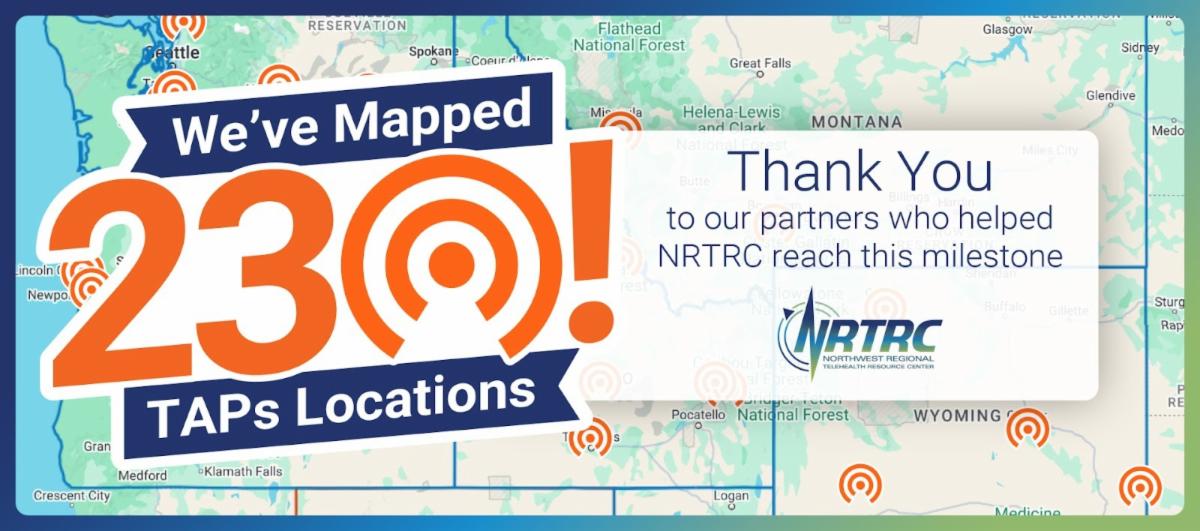
NRTRC’s Find Telehealth helps patients and providers find in-person care, telehealth care, and locations to have telehealth visits. Turn on the map’s Telehealth Access Points (TAPs) button to view sites. 


Click Here to Update Information on Your Practice

Click Here to Add a TAP

Do You Provide Healthcare or Services via Telehealth? 

Image of metal gears bearing the words competence ability knowledge learning skill training and education.

Telehealth Resources


Northwest Regional Telehealth Resource Center

This publication was made possible by grant number UiUTH42531-04 from the Office for the Advancement of Telehealth, Health Resources and Services Administration, DHHS