Northeast Seed Network
Spring–Summer 2026 Update
| | |
The Northeast Seed Network: An Alliance of Regional Seed Partnerships
Our mission is to foster connection and knowledge sharing among those working to improve access to diverse, source-identified seeds and plants. In doing this, we see a future in which a robust seed and plant supply chain—formed through collaboration, coordination, and resource sharing—supports resilient and healthy landscapes.
Thank you for your partnership and participation in this critical work! As we move into the field season, we’re excited to share major progress on our shared seed collection standards, recent learning opportunities, and what the network is working on over the summer and into the fall.
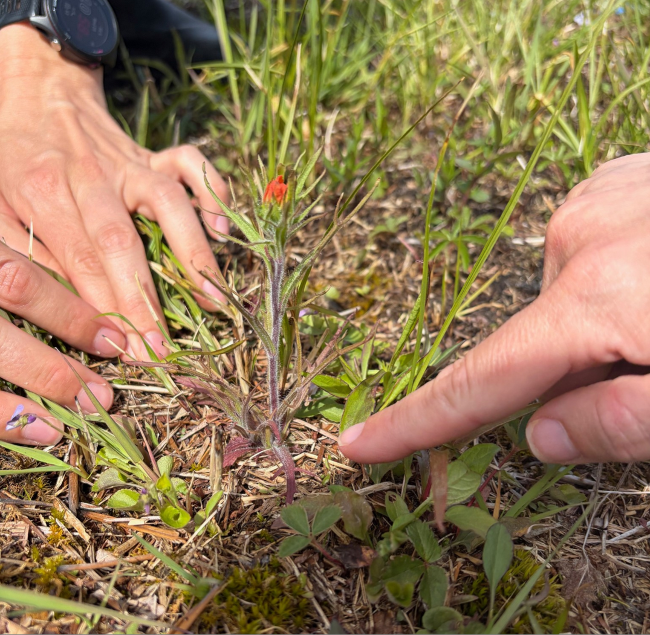
| | The rediscovery of Scarlet Paintbrush (Castilleja coccinea) in northwest Connecticut is a powerful reminder of what can happen when passionate people care enough to take action. This critically imperiled, state-endangered wildflower was believed to be extinct throughout most of its range until a seedling emerged at one of its last known habitat locations following careful stewardship efforts. While our Network doesn't focus specifically on rare and threatened species, we share the same commitment to conserving and restoring biodiversity to improve the health and resilience of our ecosystems. Conservation and restoration are rarely straightforward. For every success, there are countless challenges, setbacks, and lessons learned. That's why being part of a network of people who are not only passionate but also willing to roll up their sleeves and do the work can be so energizing. Together, we can learn from each other, celebrate our successes, and strengthen our collective impact. Credit: Northwest Connecticut Land Conservancy. | | Releasing the Wild Seed Collecting Protocols & Guidance for Land Trusts | | |
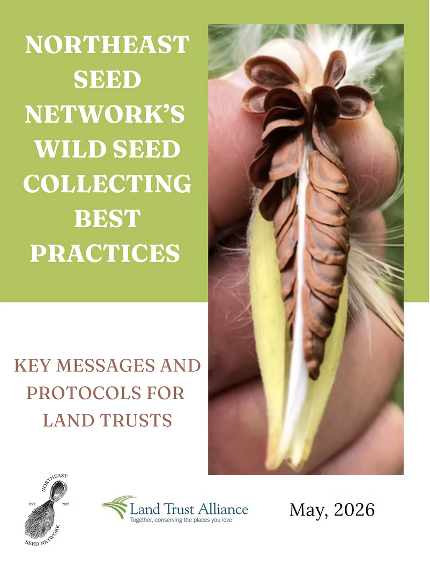
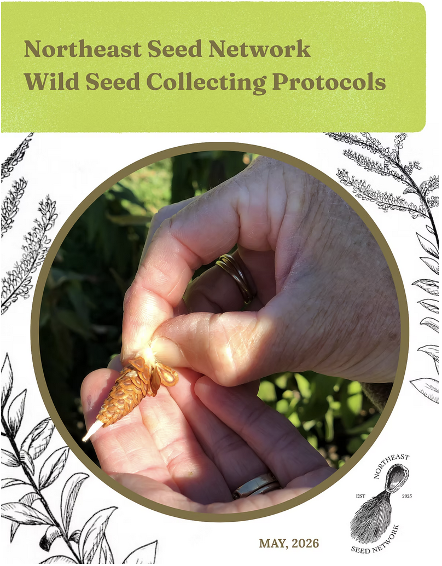
We are thrilled to announce the release of the Northeast Seed Network’s Wild Seed Collecting Protocols and a Best Practices and Key Messages Document for Land Trusts. Developed collaboratively by the Standards and Protocols Committee’s Wild Collections Working Group and partners from across the regional alliance, these resources provide shared, region-wide guidance for wild seed collection.
The protocols cover ethical collection, proper documentation, and scientific sampling to help improve consistency of shared practices across the network. The land trust guidance translates these standards into practical steps for the organizations that steward so much of our region’s conserved land. See the protocols & land trust guidance documents here.
| |
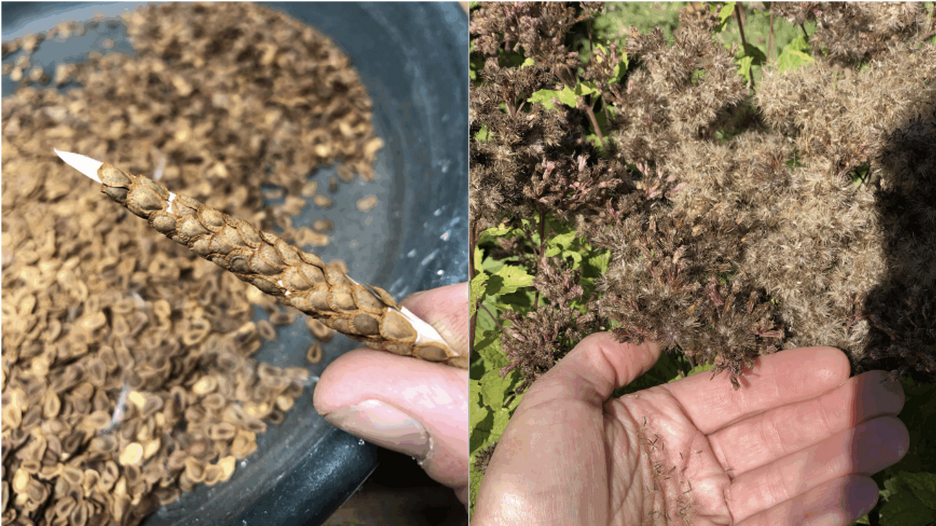
A central principle we want to emphasize is that wild collection should be justified. Seed collecting should be done to restore ecosystems—not to commodify a wild product or to exploit our natural resources—but rather as part of broader programs to strengthen ecosystem health and landscape interconnectedness, for our collective benefit and for future generations. | | | |
A Natural History of Ecological Restoration blog to accompany the Protocols
To accompany the release, we published a new piece on the Natural History of Ecological Restoration blog. Eve Allen, Geordie Elkins, Heather Liljengren, and Sefra Alexandra share why the protocols were developed, how the Standards & Protocols Committee came together, and what the guidance aims to achieve. We also explain why we emphasize the central principle that wild seed collection should be approached with care, intention, and restraint. Read the blog post here.
| |
Watch: Our spring webinar on the Wild Seed Protocols
This spring, the Standards & Protocols Committee hosted a webinar introducing the Wild Seed Collecting Protocols that covered walking through the standards, the reasoning behind them, and how to put them into practice. If you missed it, you can watch the recording here.
Next step: Sharing seed collection & increase information
We are currently working with network members to collect and compile information on:
• What has been collected from the wild across the alliance
• What is currently stored or banked
• Which species are currently in seed increase
This shared information will help:
• Reduce pressure on wild populations
• Minimize unnecessary duplicate collections from the wild
• Improve coordination and resource-sharing across the alliance
For more information, or to share what you’ve collected, stored, or have in increase, please contact Heather Liljengren at locallandconsulting@gmail.com.
Next priority for the Standards & Protocols Committee: Seed Increase Protocols
With the Wild Seed Collecting Protocols released, the Standards & Protocols Committee is turning to its next priority—developing shared Seed Increase Protocols for the network.
• Currently recruiting working group members
• The group is meeting monthly
• Next meeting: Wednesday, July 1st at 10 am ET
• Interested in joining? Please email us at nsn@ehnglobal.org
Other Recent Webinars
Catch up on recent learning opportunities from across the network. Recordings are available on our YouTube Channel. Please share them with colleagues and partners who are getting started.
Engaging Volunteers in Seed Production
This session brought together practitioners from ReSeeding Rhode Island, Wild Seed Project, and Wild Woods Restoration Project to share practical examples of how volunteers participate in seed collection and production efforts, and what has worked, lessons learned, and ideas for developing and maintaining volunteer programs. Watch here.
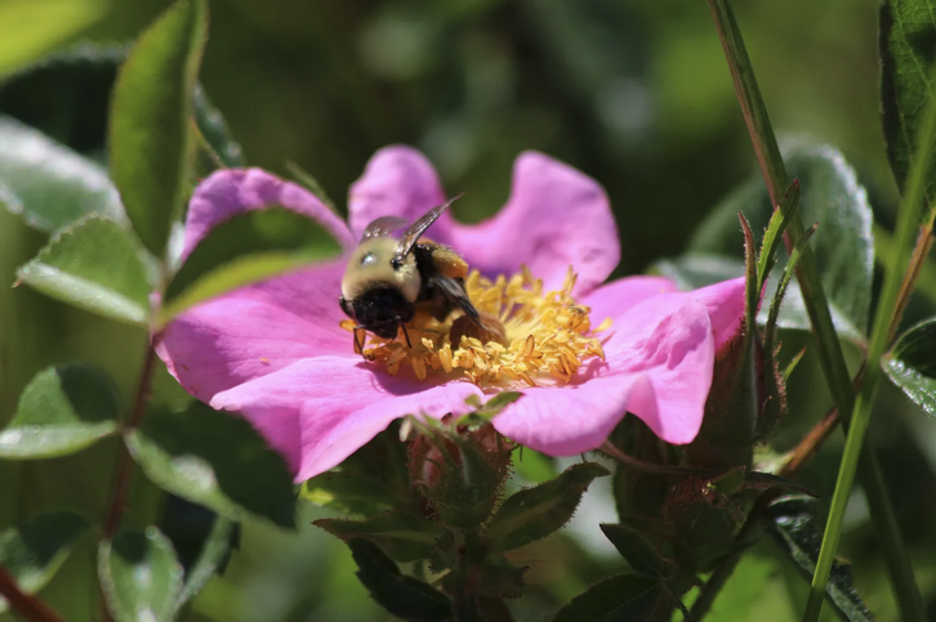
| | Brown-belted bumble bee (Bombus griseocollis) on native pasture rose (Rosa carolina). Credit: Charlotte Lorick, Forgotten Flora Project. | | Group.io ListServs for the Northeast Seed Network, Partnerships, and Hubs | | |
To strengthen communication and collaboration across the Northeast Seed Network, we have launched a Group.iolistserv for the network.
The NSN-wide Group.io listserv serves as a central communication platform where members can share announcements, ask questions, exchange resources, discuss challenges and opportunities, and stay informed about activities happening across the region. This space is designed to help connect practitioners, researchers, seed producers, restoration professionals, and other partners working to advance the production and use of diverse, source-identified native seed and plant materials.
The listserv also includes discussion forums where members can engage with existing questions and topics. We encourage everyone to participate in these conversations and to start new discussion threads on issues, ideas, resources, events, or opportunities that would benefit the broader network.
In addition to the network-wide listserv, each Partnership and Hub has its own dedicated Group.io space to facilitate more focused conversations, project coordination, and information sharing among local partners.
If you would like to join any of the Group.io NSN listservs, please email us at nsn@ehnglobal.org.
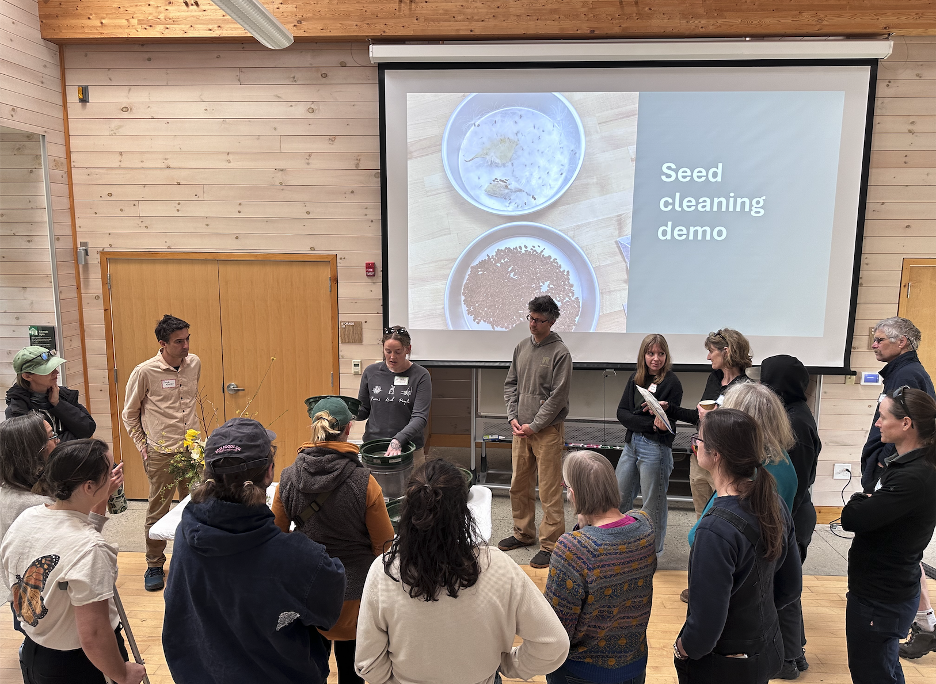
| | Members of the Northern Appalachian–Atlantic Maritime Hub—the northernmost hub in the Northeast Seed Network—gathered on May 5, 2026, for a forum and training day to prepare for the 2025 seed collection season. Participants aligned on hub goals and methods while taking part in hands-on demonstrations of herbarium voucher collection, seed cleaning techniques, and field scouting for plant populations. Credit: Coastal Maine Botanical Gardens. |
MARSB is thrilled to launch our Mid-Atlantic Regional Online Marketplace (ROMP)
The Mid-Atlantic Regional Online Marketplace, or ROMP, is a hub for connecting supply and demand throughout the mid-Atlantic— between stakeholders with a like-minded understanding of the critical importance of locally sourced native plant materials (NPM).
• If your business, organization, or agency provides products or services in support of local native plant materials— or, if you are in the market for local NPM and want your need for native species to be known—then this is for you.
MARSB’s ROMP launched on Tuesday, June 23rd. Visit ROMP to find the live platform or connect with us by reaching out to akousch@marbs.org.
What We’re Working On This Summer and Fall
The Regional Seed Strategy (led by the Restorative Landscape Coalition)
The Restorative Landscape Coalition is leading a Regional Seed Strategy planning process for the Northeast and Mid-Atlantic. This strategy will:
• Develop a unified regional framework to help guide and strengthen work already underway to expand the supply and use of diverse, source-identified native plant materials (NPMs).
• Strengthen collaboration and coordination across states and EPA Level III ecoregions.
• Position the Northeast Seed Network for increased national recognition and funding.
If you are interested in learning more and getting involved, please email us at nsn@ehnglobal.org.
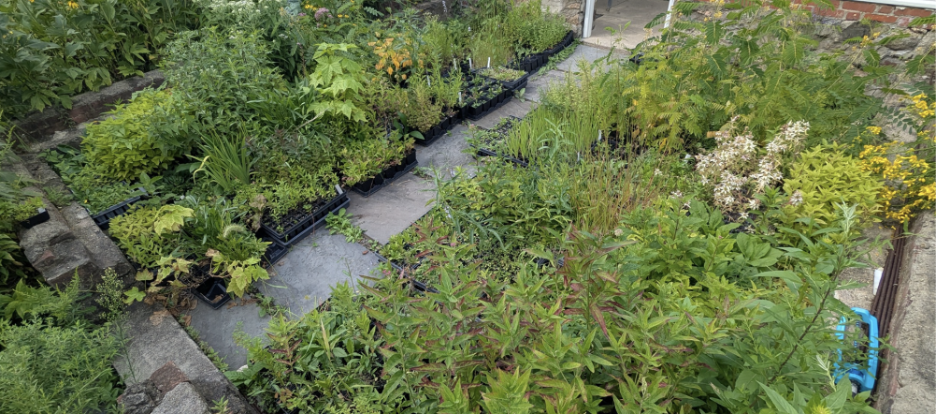
| Ecotypic wildflower seedling trays grown by the Seed-to-Seed program led by Dan Brubaker at Greenwich Land Trust in Connecticut. Credit: Dan Brubaker. | |
Logo and Branding
As the network grows, we're developing a shared logo and visual identity to create a consistent, recognizable presence across the region. We're currently with Cynthia Oswald on logo concepts and brand guidelines, and we look forward to sharing a first look with the network soon. Have thoughts on how the network should look and feel? Email us at nsn@ehnglobal.org.
2026–2027 Work Plan
We are finalizing a network-wide work plan to guide our priorities and coordinate effort across hubs, working groups, and partnerships over the coming year and a half. Building on the milestones of the past year, the plan focuses on supporting the creation and strengthening of regional partnerships and hubs, expanding peer-to-peer learning and shared tools, advancing the Regional Seed Strategy alongside the Restorative Landscape Coalition, and growing our education and communications programming. A summary will be shared with members once finalized!
| | Upcoming Events and Opportunities | | |
July 9 | 12:00 - 1:15 PM – Up-potting Online Workshop, Wild Seed Project
Like the workshop at the Wild Seed Project’s Native Seed Center, but online! Native plants started from seed in winter are often ready for dividing and up-potting in spring. This is part of a workshop series focused on caring for native plants throughout their lifecycle. Register here.
July 16 | 4:00 - 6:00 PM – Twilight Talk at The Fen, Sharon, CT (Ecoregion 58).
Join us for an afternoon seed farm tour and twilight talk in Sharon, CT. We will be hosted by Matthew Sheehan at his farm, The Fen. We will be joined by Heather Liljengren of LocalLand Consulting, whose wild collections work gave rise to many of the plots at The Fen. Heather will also talk about the Northeast Seed Network’s recently published Wild Collections Protocols and how that work is manifested in Matt’s farming operation and landscape restoration projects. Register here.
July 21 | 3:00 - 5:00 PM – Four Season Walk: Summer at Crystal Spring, Brunswick, ME
Join Wild Seed Project for the Four Seasons Walk series! Each year, they choose a special place to visit once in every season, returning again and again to observe how the landscape changes over time. Together, we'll slow down, ask questions, and learn to identify the native plants, shrubs, trees, ferns, fungi, and wildlife that make this place unique. This summer walk takes place at Crystal Spring, where the trails pass working agricultural fields and a unique blueberry barrens ecosystem. Register here.
July 28 | 4:00 - 5:30 pm – Four Season Walk Summer: Evergreen, Portland, ME
Join Wild Seed Project for the Four Seasons Walk this day at Evergreen Woods, which winds around Evergreen Cemetery in the heart of Portland, a valuable refuge in an urban area. Register here.
Mid-Atlantic Hub Partnership Gathering (Fall 2026): Date TBD — a fall gathering to visit the USDA Beltsville National Plant Materials Center and tour seed increase plots. For those who are interested in attending, please contact Rachel Martin rmartin@cliftoninstitute.org.
November 13 | 10:00 AM - 3:00 PM — Ecoregion 58 Gathering at Vassar College, Poughkeepsie, NY. An initial networking and educational meeting for a new local hub for everyone working on increasing access to and use of local ecotype plants and seeds in ecoregion 58. Meeting supported by Catskills Native Plant and Seed Alliance and the Northeast Seed Network. For more information, contact Linda Rohleder linda@wildwoodsproject.org.
Keep up to date on all events through our community calendar. Have an idea for an event you’d like to attend or host? Email us at nsn@ehnglobal.org.
| | Northeast Seed Network Map | | If you want to be listed on the Ecotype Project’s Network Map please fill out our Network Survey. You can also update your listing with a photo or a species list. We will do our best to keep this map updated quarterly. You can also update your listing with a photo or a species list. We do our best to keep this map updated quarterly. | | |
We want to hear from you! | |
Do you have exciting updates, news, or images you’d like to share with the Northeast Seed Network community? We’re always looking to feature stories about seed collection, propagation efforts, restoration projects, and events in our newsletter. Reach out at nsn@ehnglobal.org with your contributions or to discuss how we can highlight your work.
If you haven’t yet done so, please fill out our Network Intake Survey as a first step in joining the Northeast Seed Network.
| |
We couldn’t do this work without you. The time, expertise, and trust you bring are what make the Northeast Seed Network possible. Together, we are laying the foundation for lasting improvements in ecosystem health—and, in turn, human health and wellbeing—across the U.S. Northeast, Mid-Atlantic, and Atlantic Canada. Thank you for being part of this network, for showing up, for sharing what you know, and for helping to grow something bigger than what any one organization could do on their own.
For updates about the Northeast Seed Network, follow us at @ecohealthglobal Instagram, @EcoHealthNet on X, @EcoHealthNet on Facebook, and Ecological Health Network on LinkedIn for updates.
|
| | | |