Northeast Seed Network
2025 Year in Review
| | |
The Northeast Seed Network: An Alliance of Regional Seed Partnerships
Our mission is to foster connection and knowledge sharing among those working to improve access to diverse, source-identified seeds and plants. In doing this, we see a future in which a robust seed and plant supply chain formed through collaboration, coordination, and resource sharing supports resilient and healthy landscapes.
Thank you for your partnership and participation in this critical work!
| | Three Years of the Northeast Seed Network | | |
This March will mark three years since we officially launched the Northeast Seed Network at the 2023 National Native Seed Conference in Alexandria, VA. Read more about our launch here.
Over the past three years—and especially in 2025—we’ve been heartened by the network’s growth and by the impact emerging from this regional alliance.
To date:
● 130 farmers, botanists, horticulturists, seed collectors, researchers, land managers, and restoration practitioners have formally joined the network by completing our directory survey and are listed on The Ecotype Project’s Northeast Seed Network Directory Map.
● Our mailing list has grown to 500+ individuals
● We have helped launch and supported the development of six regional hubs and partnerships across the alliance. Learn more on our website.
We’ve also:
● Established multiple working groups—including the Scientific Research Committee, Standards and Protocols Committee, and Seed Market Research Committee—to advance work on our shared priorities.
● Hosted educational webinars, in-person workshops, and network-wide convenings.
● Brought together botanical gardens, seed banks, arboreta, growers, nursery professionals, and restoration practitioners.
● Helped to establish and strengthen hundreds of social connections among the many people working to increase the supply and use of diverse, source-identified seed and plant material for ecological restoration and related activities across the Northeast and Mid-Atlantic.
These efforts are helping to get the right seeds and plants to the right locations at the right times. By filling regional seed banks and increasing access to diverse, source-identified seed and plant materials, this work gives land managers and restoration practitioners more options to restore healthy, resilient ecosystems. At the same time, it supports farmers and nursery professionals with meaningful livelihood opportunities through mentorship, training, and connecting them to a community of practice.
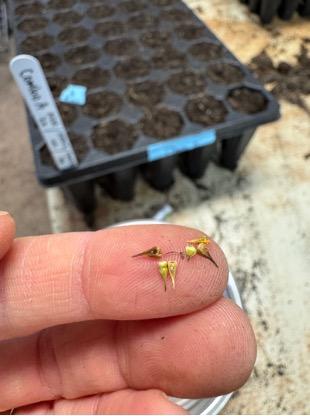
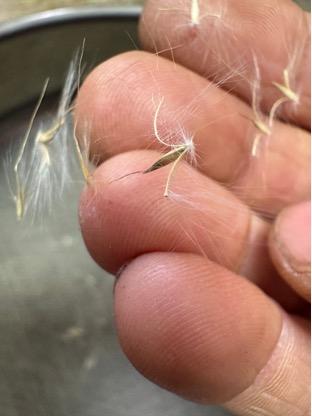
| | Wild-collected native seed cleaning and sowing at Oak Spring Garden Foundation. Species pictured here from left to right: Prickly Bog Sedge (Carex atlantica) and Elliott's bluestem (Anatherum gyrans). | | |
In February, members of the Northeast Seed Network traveled to Tucson, AZ, for the 2025 National Native Seed Conference—Seeds for Change: Seeding the Future Together.
Besides reconnecting with familiar and new colleagues, we hosted a two-part symposium, A Network of Networks: Insights and Innovations from the Northeast, which showcased the progress of our regional alliance since its official launch at the 2023 conference.
| |
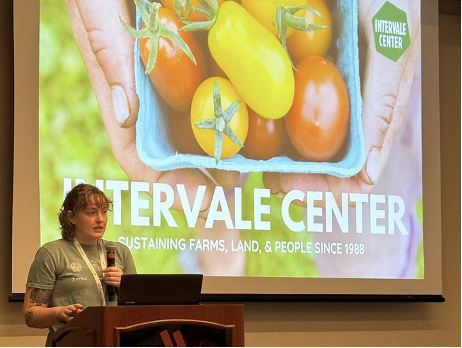
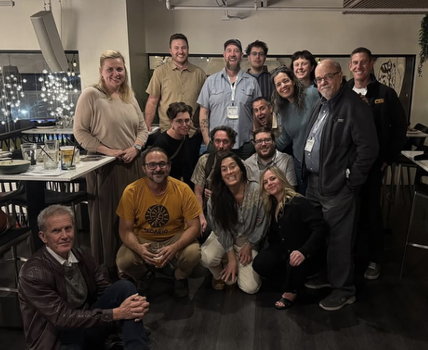
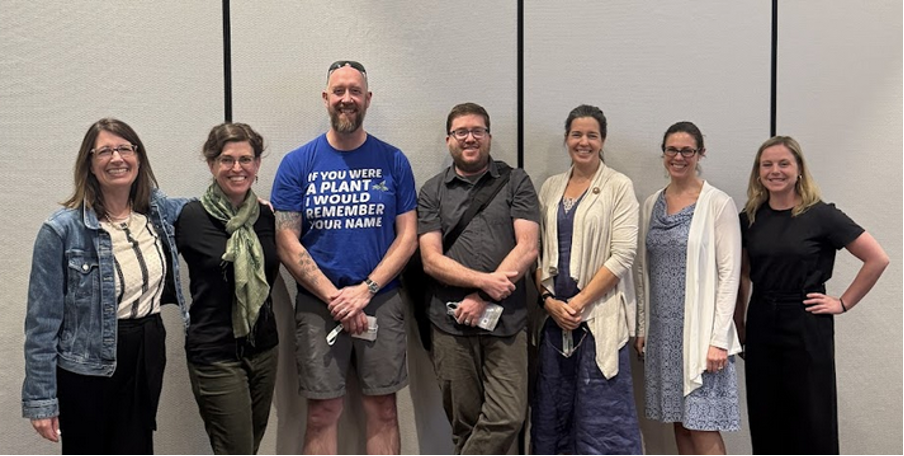
| Top: Brooke Fleischman (Intervale Center) presenting on the Northern Appalachian–Atlantic Maritime Hub. Bottom left: Group photo from the Northeast Seed Network Meet-Up. Bottom right: Symposium presenters (left to right): Melissa Cullina (Coastal Maine Botanical Gardens), Lea Johnson, Uli Lorimer, Matthew Garrambone (Native Plant Trust), Dina Brewster (Northeast Seed Collective & Ecotype Project), Jenica Allen (UMass Amherst), and Eve Allen (Ecological Health Network). | |
In March, we hired our first Indigenous Outreach Liaison, who began building relationships between the Northeast Seed Network, Tribal Nations, and Indigenous communities throughout the Mid-Atlantic, Northeast, and Atlantic Canada. This work has helped us better understand the environmental priorities and initiatives of Tribal Nations in our region, such as food sovereignty and seed saving. We are continually working to incorporate Indigenous perspectives into our efforts and have had representatives from three different tribes join the Seed Sourcing and Collecting Working Group and Standards and Protocols Committee. We also hope to gain more representation across all working groups and seed partnerships, while recognizing that trust-building takes time.
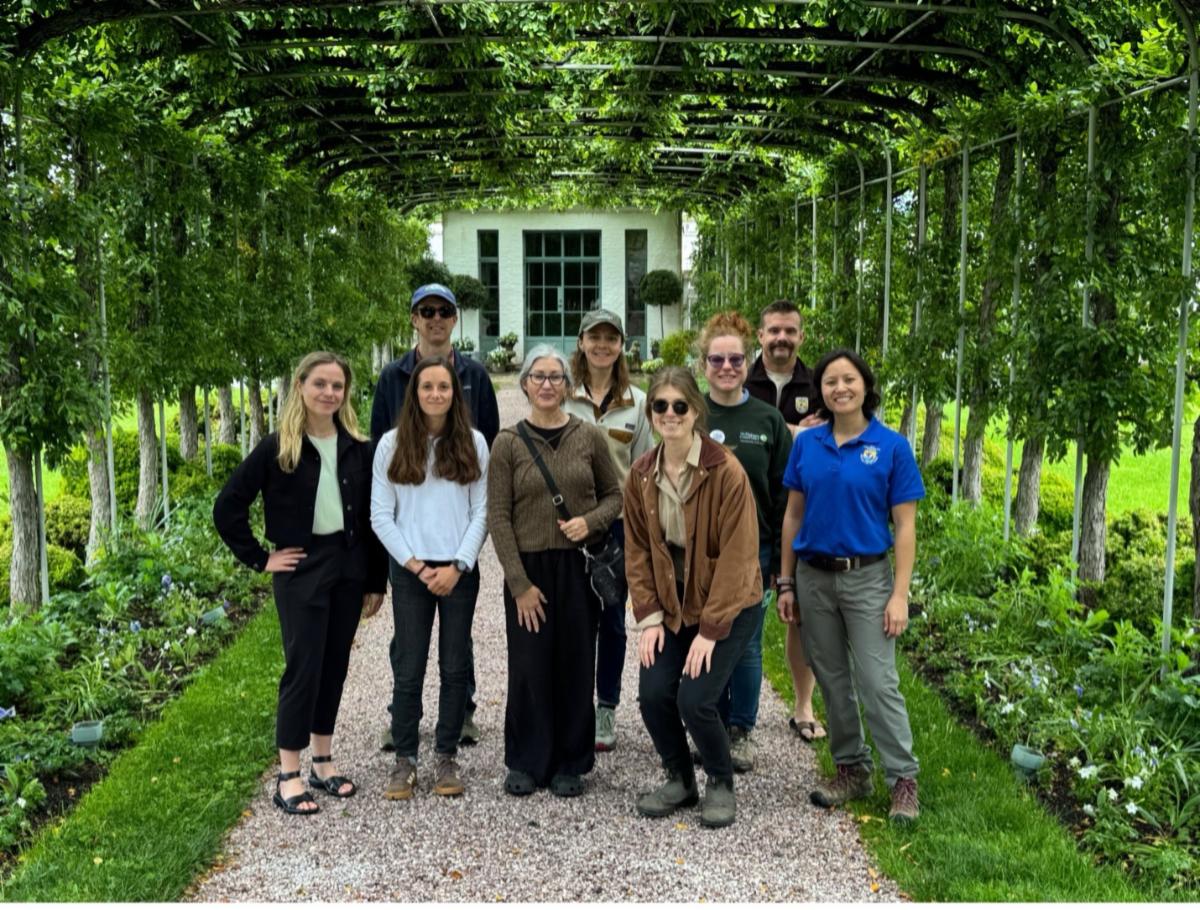
In May, we officially launched the Mid-Atlantic Partnership. Over two days, representatives from the U.S. Fish and Wildlife Service, Virginia Tech, the University of Maryland, the Clifton Institute, the Mid-Atlantic Regional Seed Bank, the Virginia Department of Conservation and Recreation’s Natural Heritage and Pollinator Smart Programs, and The Nature Conservancy gathered in Virginia. We thank Oak Spring Garden Foundation for hosting this meeting and the Ecological Health Network for their assistance with coordinating and facilitating the workshop. The partnership is currently identifying shared priorities for action and developing an organizational model.
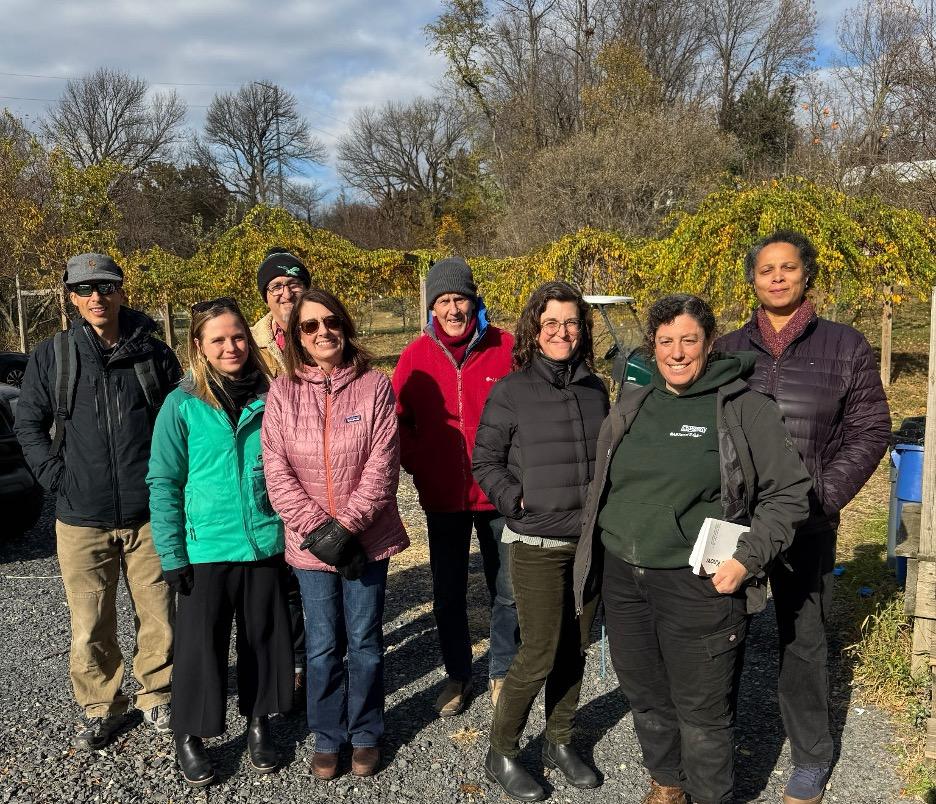
| In-person meeting participants, from left to right: Eve Allen (Ecological Health Network), Bert Harris (Clifton Institute), Phoebe Judge (Virginia Tech), Lisa Kuder (University of Maryland), Charlotte Lorick and Rachel Martin (Oak Spring Garden Foundation), Andi Clinton (The Nature Conservancy), Joe Kirsch and Lauren Cruz (U.S. Fish and Wildlife Service). Virtual participants included, Nicki Gustafson (VA DCR Natural Heritage Program/Virginia Pollinator Smart Program), Casey Johnson (U.S. Fish and Wildlife Service), Ryan Klopf (VA DCR Natural Heritage Program), John Price (MARSB), Kelly Thomas (U.S. Fish and Wildlife Service), and Lauren Shew (Ecological Health Network). | | |
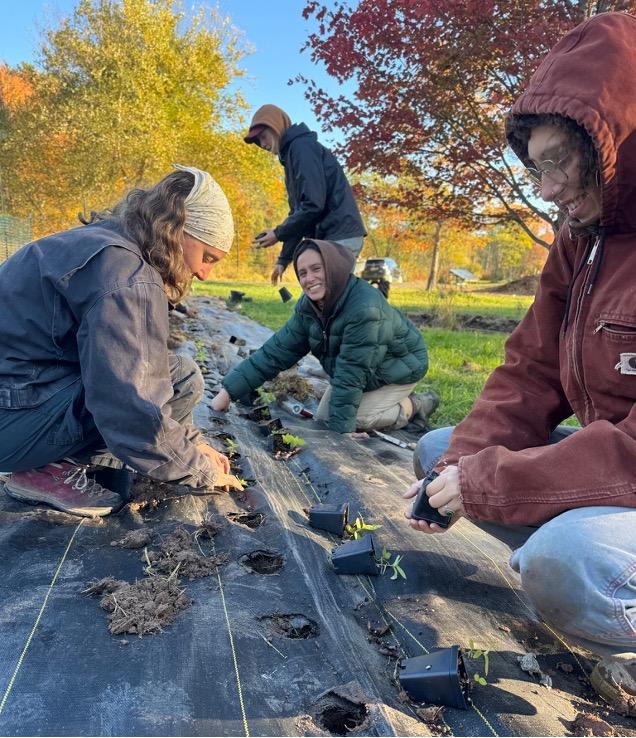
In June, Catskill Mountainkeeper, the Ecotype Project, and other partners began organizing and launching the Catskills Native Plant and Seed Alliance. This collaboration aims to increase the availability of ecotypic seed and plant material for ecoregion 58 in and around the Catskill Park in New York State. Learn more here.
Left: Farmers installing a seed increase plot of Chelone glabra - White Turtlehead - for ecotypic seed production at White Feather Farm in Saugerties, NY. Photo credit: Sefra Alexandra (The Ecotype Project).
| | |
In July, the Northern Appalachian–Atlantic Maritime (NAAM) finalized a focus species list, and collectors began harvesting the first seeds—an important step toward building the local seed supply needed for restoration work at the northernmost extent of the network. Led by Wild Seed Project, Coastal Maine Botanical Gardens, and the Intervale Center—and working with partners including Acadia National Park, Land & Garden Preserve, and the Canadian National Tree Seed Centre—the hub is focused on building a steady supply of ecoregionally adapted bulk seed. Learn more here.
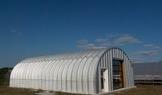
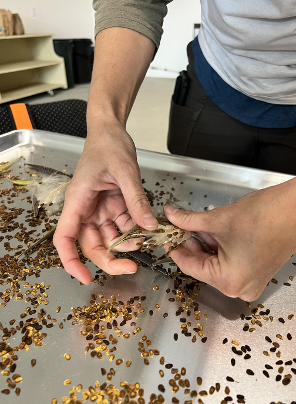
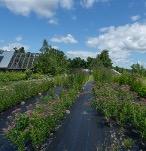
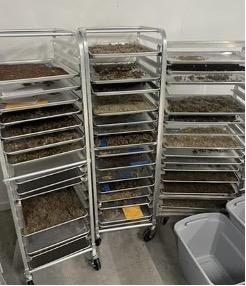
In August, Native Plant Trust launched the Restoration Accelerator™, a program to improve access to source-identified native seed in the Northeastern states. Early-phase priorities include establishing a seed bank of wild-collected material; interviewing end users in Massachusetts, New Hampshire, and Vermont to better understand their projects and seed needs; and providing wild seed collection, nursery production, seed processing, and climate-controlled storage services to growers. Based at Nasami Farm in western Massachusetts, the seed processing and storage facility supports both seed producers and seed users and is an important component of regional infrastructure.
| | Restoration Accelerator photos documenting seed drying and cleaning, production fields, and the seed distribution center. Credit: Native Plant Trust. | |
In September, the Mid-Atlantic Regional Seed Bank (MARSB) formally joined the Northeast Seed Network as a regional partner. Led by Ed Toth, MARSB brings more than 25 years of leadership in building a national native seed supply chain. Its mission—to conserve and wisely manage wild seed resources through scientific sampling, ethical collection, banking, and curation—strongly aligns with NSN’s work and provides valuable tools and frameworks that support the broader network.
MARSB's seed collection team has been busy this winter cleaning most of 2025's 290 seed collections. In 2024, MARSB made collections of over 100 species and documented over 800 new population scouting points across four states!
MARSB is also excited to announce the hiring of Michael Butts as their new Grower Liaison, who will be offering technical guidance and support to new, emerging, and established growers in our region. Finally, MARSB has been collaborating with network partners to develop target species lists for eight states, a process that will be completed by the end of February. Learn more here.
In October, the NSN Steering Committee members completed and approved the Northeast Seed Network Charter, which outlines our core elements and operational framework, and serves as a shared guide for current and future partners.
In November, Restorative Landscape Coalition members gathered at Bartram’s Garden in Philadelphia for its third in-person workshop and officially kicked off a Regional Seed Strategy planning process for the Northeast and Mid-Atlantic. This strategy will help the Northeast Seed Network align around a unified regional blueprint, deepen cross-state and ecoregional collaboration, and strengthen our position for national recognition and funding.
|
In December, the Wild Collections Working Group, led by Geordie Elkins (Highstead Foundation), with participation from across the regional alliance, completed an initial draft of collaboratively developed seed collection protocols and standards for the Northeast Seed Network. This work exemplifies the value of regional collaboration—creating shared guidance so that individual hubs and partnerships don’t have to reinvent the wheel!
| | Strengthening the Network Itself | | 2025 was also a year of operational growth. We expanded our Steering Committee to ensure broader network representation and launched a new Advisory Council to bring diverse member perspectives into strategic decision-making. Together with our working groups, these bodies form the collaborative governance structure supporting the network. Learn more about this in our Northeast Seed Network Charter. | | The impact of strengthened social relationships | | |
While these highlights capture major milestones, what’s harder to measure is the growth of social connections within the network. The Northeast Seed Network keeps fulfilling its goal of promoting interaction and sharing knowledge, and even one new relationship between two people can create ripple effects that lead to meaningful, lasting impact.
Here are examples from our partners:
“Since beginning the Northern Appalachian - Atlantic Maritime Hub (NAAMH), it has been exciting to see initial connections snowball into tangible plans for collaboration. We identified the strengths of each organization involved in our Hub and how those strengths may fit together to achieve our overall goals of collecting and providing bulk seed that - strengthen the seed supply chain across the US/Canadian border, support viability of our northern flora in a changing climate, and support best ecological function and resilience in our region. In 2026, we are looking forward to formalizing a communications plan, standardizing protocols, connecting with end users, and planning for more days where folks in our Hub can connect in person. In May, we are planning an in person meeting and training hosted at the Coastal Maine Botanical Gardens.” - Brooke Fleischman, Statewide Seed Coordinator, Intervale Conservation Nursery, VT and NAAMH coordinating partner
“We are beginning to see how strengthening relationships among seed collectors, growers, and conservation districts can reshape what restoration and home gardening looks like on the ground. In 2026, every non-woody plant offered through the Eastern Rhode Island Conservation District’s annual spring seedling sale will be grown from locally adapted, source-identified seed from ReSeeding Rhode Island and the Northeast Seed Collective. Wholesale plants are grown by Plant Community LLC in East Greenwich, Rhode Island—where ReSeeding Rhode Island foundation plots are also stewarded—these efforts reflect a growing commitment to the local ecology and the resilience of regional plant communities.” - Susanne Theriault, Vice President Rhode Island Wild Plant Society, and Northeast Seed Network Steering Committee Learn more here.
| |
Looking ahead to 2026
Our priorities include:
● Assist in supporting the creation and strengthening of regional partnerships and hubs.
● Expand peer-to-peer learning, coordination, and shared tools throughout the alliance.
● Expand educational programs through webinars, workshops, field-based learning opportunities, and student fellowships and internships.
● Secure funding and launch a network-wide Listserv and an online central resource hub on the NSN website.
● Enhance communication, collaboration, and visibility throughout the network.
● Advance the Regional Seed Strategy in partnership with the Restorative Landscape Coalition.
| | | | Upcoming Events and Opportunities | | |
A Conservation Threat Assessment for Maine’s Native Plants
Tuesday February 10 | 10:00 AM | Zoom
Join IrisBG for the February Coffee Chat with Melissa Cullina, VP of Plants & Science Coastal Maine Botanical Gardens. Climate change, development pressure, and sea level rise are reshaping ecosystems faster than ever. For the first time, Maine’s entire native flora is being evaluated through a statewide conservation and threat assessment. Register here.
| |
Seed Saving Ethics & Practical Tips at MOFGA Gardener to Gardener
Sunday, February 8 | 3:45 - 5:00 PM | Portland, ME
Wild Seed Project is excited to participate in the inaugural MOFGA Gardener to Gardener conference! Seed Stewardship Director Emily Baisden will join vegetable seed farmer extraordinaire Heron Breen of Fruits of Our Labors Farm. Together, they’ll dive into the similarities and differences when saving seed for varied uses, always with an eye to moving with care and respect toward our plant neighbors. This presentation is part of the larger Gardener to Gardener conference. Register here.
| |
Webinar: Online Winter Sowing
Friday, February 20 | 12:00 - 1:00 PM
Join the Wild Seed Project for our online winter seed sowing demonstration. Our Seed Program Director, Emily Baisden, will demonstrate each step of sowing native seeds and talk through best practices and where to find the materials you need to do this! There will be time for participant questions at the end. Register here.
| |
2026 National Native Seed Conference
The National Native Seed Conference, the premier national gathering on native seed research, policy, production, and restoration, will be held virtually from February 24–27, 2026.
This is a fantastic opportunity to explore cutting-edge research, innovative projects, and emerging insights in native seed science and practice—while connecting with a national community of practitioners, researchers, policymakers, and industry leaders. Be sure to attend the panel Seeds of Collaboration: Connecting the Pipeline from Collection to Restoration, moderated by Northeast Seed Network member Elan Alford of Mt. Cuba Center. We look forward to seeing you there!
| | |
Lecture: How Science, Fieldwork, and Time Reshape Our Understanding of New England’s Flora
February 28 | 1:00–4:00 PM | Kingston, RI
The public is invited to attend a talk by special guest speaker Arthur Haines at the Rhode Island Wild Plant Society’s Annual Meeting, focusing on recent advances in the study of New England’s flora. First published in 2011, Flora Novae Angliae became a key resource for plant taxonomy and conservation in the region. Now, fifteen years later, the upcoming second edition incorporates new research and field discoveries, with an emphasis on their implications for Rhode Island’s flora. Learn more and register here.
| |
NSN Lunch & Learn: Engaging Volunteers in Seed Production
Friday, March 13 | 12:00–1:00 PM ET | Zoom
Join Linda Rohleder (Wild Wood Restoration Project), Sue Theriault (Reseeding Rhode Island), and Maura Sanchi (Wild Seed Project) to see practical examples of how volunteers participate in seed collection and production efforts. The speakers will share what has worked, lessons learned, and ideas for developing and maintaining volunteer programs, and will answer any questions you may have. Register here.
| |
NSN Webinar: Introduction to Seed Production
Tuesday, April 7th | 10:00–11:00 AM ET | Zoom
This introductory webinar will give an overview of small-scale native seed production, including core concepts, common challenges, and key considerations for getting started. It’s designed for those new to seed production or aiming to expand small wild collections into restoration-scale seed quantities.
Presenter: Seth August, NYC Parks Plant Ecology Center & Nursery (PECAN). Register here.
|
NSN Webinar: Seed Collection Best Practices
Tuesday, May 5th | 11am–12:00pm | Zoom
Hosted by the Standards & Protocols Committee, this webinar will present best practices for wild seed collection, based on the collaboratively developed regional standards and protocols. The session will emphasize ethical collection, proper documentation, and maintaining consistency across the network. Register here.
|
Northeast Seed Network Check-In Meeting (Virtual)
Monday, May 18 | 9am–10:30am | Zoom
A network-wide check-in for members and partners to share updates, hear what’s happening across hubs and working groups, and stay connected to ongoing Northeast Seed Network activities. Register here.
| |
NSN Field-Based Learning Events - Dates to be announced!
In collaboration with network partners, we are organizing a series of on-farm and field-based learning opportunities focused on seed collection, production, processing, and other applied practices. These visits will promote peer-to-peer learning and knowledge exchange and will be scheduled for summer through fall 2026.
Keep up to date on all events through our community calendar. Have an idea for an event you’d like to attend or host? Email us at nsn@ehnglobal.org.
| | We couldn’t do this work without you. The time, expertise, and trust you bring are what make the Northeast Seed Network possible. Together, we are laying the foundation for lasting improvements in ecosystem health—and, in turn, human health and wellbeing—across the U.S. Northeast, Mid-Atlantic, and Atlantic Canada. Thank you for being part of this network, for showing up, for sharing what you know, and for helping to grow something bigger than any one organization. We look forward to continuing this work together in 2026 and beyond. | | Northeast Seed Network Map | | |
If you want to be listed on the Ecotype Project’s Network Map please fill out our Network Survey. You can also update your listing with a photo or a species list. We will do our best to keep this map updated quarterly.
Northeast Seed Network Coordination
The Northeast Seed Network is coordinated by the Ecological Health Network. Eve Allen, Program Director for the US Northeast Bioregion, and Lauren Shew, Director of Operations, help maintain the structure that supports the regional alliance by coordinating communication, organizing meetings and events, and assisting with the day-to-day work that keeps the network moving forward. To get in touch with feedback or questions email nsn@ehnglobal.org.
| | |
We want to hear from you! | Do you have exciting updates, news, or images you'd like to share with the Northeast Seed Network community? We're always looking to feature stories about seed collection, propagation efforts, restoration projects, and events in our newsletter. Feel free to reach out to us nsn@ehnglobal.org with your contributions or to discuss how we can highlight your work in upcoming editions. | |
Thank you for being a crucial part of the Northeast Seed Network's success. Together, we are sowing the seeds for more biodiverse, climate-resilient, and healthy landscapes across our shared ecoregions. If you haven’t yet done so, please fill out our Network Intake Survey as a first step in joining the Northeast Seed Network.
For more information, please contact us at nsn@ehnglobal.org.
For updates about the Northeast Seed Network, follow us at @ecohealthglobal Instagram, @EcoHealthNet on X, @EcoHealthNet on Facebook, and Ecological Health Network on LinkedIn for updates.
|
| | | |