|
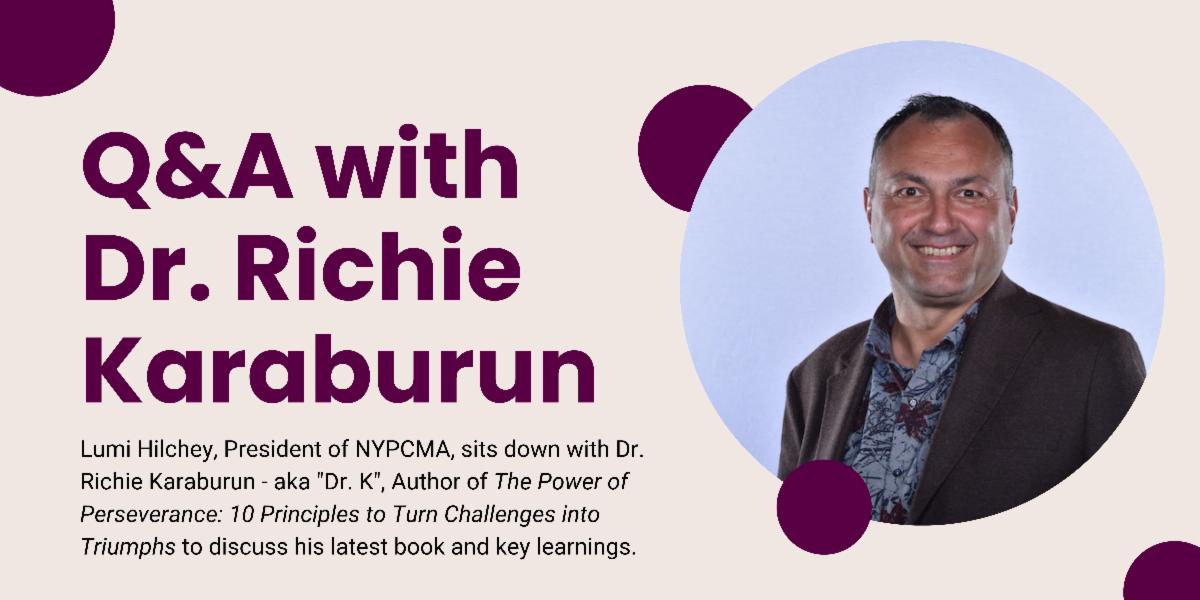
Lumi Hilchey: What moment in our organization’s history inspired the core thesis of your book?
Dr. K: As I reflect on PCMA’s recent history, particularly how the association navigated the unprecedented disruption of the global pandemic and the rapid transformation of business events, I see a clear parallel to the moment that inspired The Power of Perseverance.
The defining moment behind my book came when I was unexpectedly fired from a presidency role at a global travel company. My identity had been deeply tied to title, performance, and measurable success. Losing that position forced me to confront a difficult truth: technical skills and hard-driving results are not enough. Long-term success depends on resilience, emotional intelligence, relationships, and the ability to reinvent oneself when circumstances change.
That period of reinvention ultimately led me to academia, to mentoring future leaders, and to writing this book.
Similarly, PCMA did not retreat during the crisis. The meetings and events industry faced existential uncertainty. Yet instead of shrinking, the association leaned into education, innovation, dialogue, and community.
The core thesis of my book is simple: success is not about avoiding disruption. It is about developing the mindset and soft skills to grow through it.
PCMA’s journey through uncertainty, reinvention, and recommitment to community reflects what perseverance looks like at an organizational level.
Lumi Hilchey: The “Steadfast Together” Link: Is there a chapter or area in the book that translates to our theme?
Dr. K: Yes. The chapter that most directly aligns with “Steadfast Together” is Principle 5: Your Network Is Your Net Worth
In this chapter, I emphasize that no meaningful success happens in isolation. Perseverance is not a solo act. It is sustained by relationships, trust, and community.
When I experienced a career setback, it was not personal determination alone that enabled recovery. It was the strength of the professional network I had built over decades. I had invested in relationships, maintained bridges, and contributed to others’ success. When I needed support, that network became an opportunity.
“Steadfast Together” reflects the same philosophy:
- Amplifying voices
- Supporting colleagues under pressure
- Creating environments where ideas can be shared respectfully
- Choosing collaboration over isolation
In challenging times, isolation weakens organizations. Connection strengthens them.
The African proverb I reference in the book captures it well: if you want to go fast, go alone. If you want to go far, go together.
“Steadfast Together” is not just an inspiring theme. It is a strategic advantage in an industry built on human connection.
Lumi Hilchey: If a PCMA member reads only one chapter to help them in their role, which should it be?
Dr. K: If I had to recommend one chapter specifically for PCMA members, it would be Principle 7: Unlock a Growth Mindset to Break Through Limits
The meetings and events industry is undergoing constant transformation. Artificial intelligence, hybrid engagement models, shifting attendee expectations, generational workforce changes, and economic volatility are reshaping how we design experiences and lead teams.
Technical tools will evolve. Platforms will change. Formats will shift.
What determines long-term relevance is mindset.
In this chapter, I focus on:
- Turning setbacks into comebacks
- Viewing “not yet” as progress rather than failure
- Committing to continuous learning
- Updating yourself the way companies update their products
For meeting professionals, this is critical. The leaders who will define the next decade are not those who mastered yesterday’s playbook. They are those who commit to disciplined reinvention.
A growth mindset allows professionals to remain curious rather than defensive, adaptive rather than rigid, and collaborative rather than territorial.
In a “Steadfast Together” culture, the growth mindset ensures that dialogue stays open, innovation continues, and fear does not shut down creativity.
The Power of Perseverance was written as a practical operating manual for professional resilience. In an industry built on bringing people together, perseverance is not just about pushing through difficulty. It is about strengthening the human skills that technology cannot replace: communication, empathy, adaptability, and community.
When those skills are cultivated collectively, not individually, organizations do more than survive disruption. They shape the future.
Lumi Hilchey: Thank you Dr. K and for all your support with our Chapter. For those interested in purchasing The Power of Perseverance: 10 Principles to Turn Challenges into Triumphs, the best option is Amazon. The book is also available through the NYU Bookstore, both online and in person. The book is also available in Walmart.com
|