 | |
Two in Five High School Students Feel Hopeless. In Areas with Fewer Supports, It’s Even Tougher
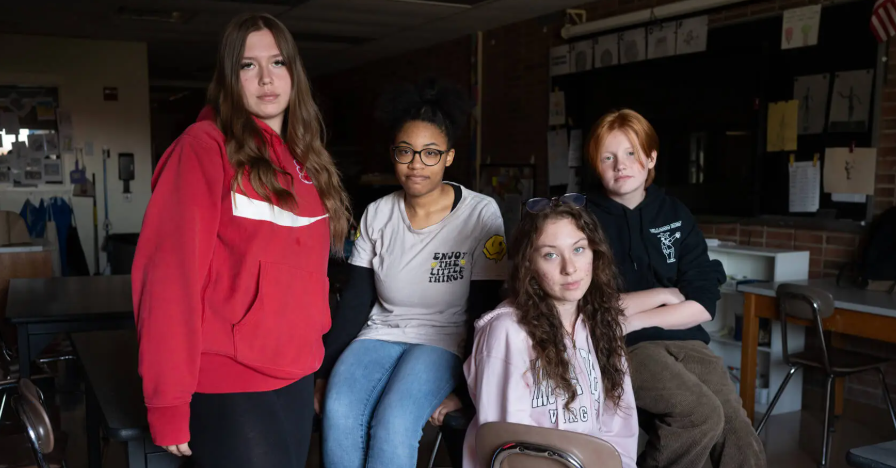
Lauren Rowe’s art room at West Mifflin Area High School is more than just a place for drawing and painting: It serves as a safe space for students to talk openly about their mental health struggles. An educator for 17 years and lifelong resident of West Mifflin, a suburban town southeast of Pittsburgh, Rowe has witnessed firsthand the evolving social dynamics and challenges teenagers face daily. Now as the faculty sponsor for the SAVE Promise Club, she is helping to train students to make their school a safer place. “Teens are in charge of a lot more than people know,” Rowe said. “I always say they are my boots on the ground … They’re the ones seeing the behaviors in the bathrooms, the hallways, the stairwell.” Rowe works in a community in which around half of high school students have reported feelings of hopelessness, University of Pittsburgh and UPMC researchers revealed in September. Similar numbers were also reported in other eastern suburbs of Pittsburgh, according to the survey administered in 2018. Read more here.
|  | |
New Study Shows Program for Patients With Severe Mental Health Conditions on Medicaid Led to 11.5% Decrease in Cost, Nearly 20% Decrease in Inpatient Utilization
Cityblock Health, a value-based healthcare provider for Medicaid and dually eligible beneficiaries, today announced results from its Advanced Behavioral Health (ABH) Program as part of a study published today in NEJM Catalyst. Findings show that Medicaid members enrolled in Cityblock's ABH program had a statistically significant 11.5% decrease in total cost of care and a 19.7% decrease in inpatient utilization, compared to members not enrolled in the ABH program. In terms of health-related social needs, findings also show that 43% percent of members enrolled in the ABH program had an identified food need and 95% of food needs identified for members in the ABH program were addressed. Read more here.
|  | |
Medicaid Managed Care Survey Highlights Barriers to VBC Adoption
In an annual survey of Medicaid managed care plans, data sharing challenges and provider readiness or willingness to participate in alternative payment models continue to be significant barriers. The Institute for Medicaid Innovation’s (IMI) annual Medicaid managed care survey is an effort to collect robust, longitudinal data on Medicaid managed care organizations (MCOs) across the following categories: high-risk care coordination, alternative payment models, pharmacy, behavioral health, maternal and perinatal health, sexual and reproductive health, child and adolescent health, long-term services and supports, social determinants of health, health equity, and telehealth. The findings from the survey are intended to equip Medicaid stakeholders with the information needed to accurately articulate the national narrative about Medicaid managed care. Read more here.
|  | |
NYU Collaboration with NY State Targets Opioid Funds Effectiveness
A new partnership between New York University and New York State is poised to transform the evaluation of Opioid Settlement Funds' impact. The initiative centers on three key areas: research and evaluation, data analysis, and collaboration. By examining the effects of these funds on addiction services, workforce development, care coordination, naloxone distribution, and support for disadvantaged populations, the project aims to improve the quality and accessibility of critical services. Utilizing data from OASAS programs, Medicaid, Medicare, and SPARCS, the partnership will deliver a comprehensive analysis of program outcomes. Collaborative efforts will focus on identifying research priorities and ensuring access to the necessary data to guide the work. The ultimate objective is to elevate addiction services across the state by using evidence-based findings to foster meaningful improvements and brighter futures for those impacted by addiction. For more information on this initiative, please contact communications@oasas.ny.gov.
| 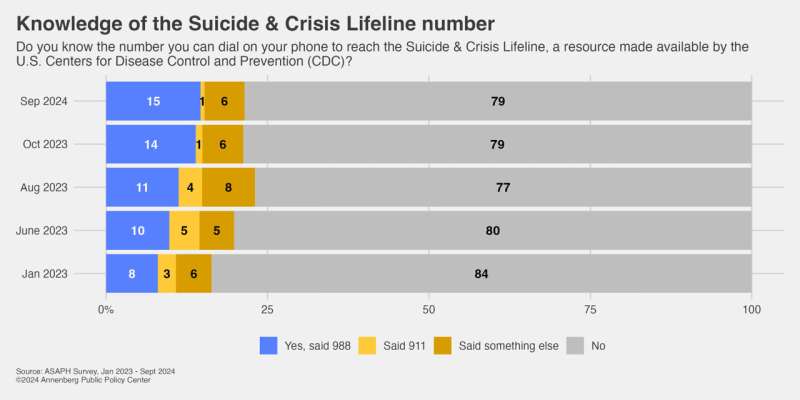 | |
Fewer Than 1 in 5 Survey Respondents Know the 988 Suicide Lifeline
Annenberg Public Policy Center survey data shows that public recall of the 988 Suicide & Crisis Lifeline number has grown slowly since the three-digit phone number was introduced in July 2022. Just 15% of U.S. adults are familiar with it, as of September 2024. Survey respondents who accurately report awareness of the Suicide & Crisis Lifeline number increased significantly from August 2023 (11%) to September 2024 (15%). Those 15% of respondents reported both that they knew the number, and when asked in an open-ended format, said the number was 988. The number who inaccurately reported that the number was 911 (the nationwide emergency phone number) decreased to 1% in September 2024 from 4% in August 2023. Read more here.
| |
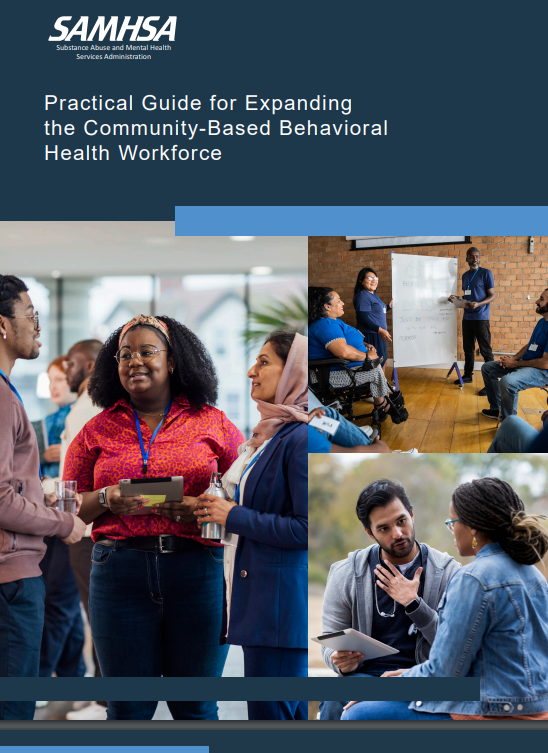
New SAMHSA Practical Guide: Expanding the Community-Based Behavioral Health Workforce
Community-initiated care (CIC) and behavioral health support specialists (BHSS) have emerged from community efforts to address the significant shortage of behavioral health services. CIC is offered by community members who are not within the traditional health system but who may have lived experience and who have received training and acquired behavioral health knowledge, skills, and competencies to deliver screening and intervention services. BHSS are health workers, such as peer specialists and paraprofessionals, who support community members in achieving overall wellness. This practical guide presents strategies and best practices for expanding the community-based behavioral health workforce through increased use of CIC and BHSS.
Related: SAMHSA launches new Serious Mental Illness Training and Technical Assistance Center (SMI TTAC)
|  | |
How Tech Created a ‘Recipe for Loneliness’
Over the summer, Laura Marciano, a researcher at Harvard, interviewed 500 teenagers for a continuing study investigating the link between technology and loneliness. The results were striking. For several weeks, the teenagers, who were recruited with the help of Instagram influencers, answered a questionnaire three times a day about their social interactions. Each time, more than 50 percent said they had not spoken to anyone in the last hour, either in person or online. To put it another way, even though the teenagers were on break from school and spending plenty of time on social media apps, most of them were not socializing at all. Americans now spend more time alone, have fewer close friendships and feel more socially detached from their communities than they did 20 years ago. One in two adults reports experiencing loneliness, the physiological distress that people endure from social isolation. The nation’s surgeon general, Dr. Vivek Murthy, declared loneliness an epidemic late last year. Read more here.
|  | |
DEA Extends Telehealth Flexibilities Through 2025
The U.S. Drug Enforcement Administration (DEA) has extended telehealth flexibilities, which allow for the prescribing of controlled substances without an in-person visit, through 2025. The flexibilities were first put in place during the COVID-19 pandemic, and allow clinicians to prescribe several behavioral health medications virtually, including medication-assisted treatment (MAT) for opioid use disorder and adderall for ADHD without conducting an in-person visit first. This is the third time that the DEA has extended the deadline. In 2023, the agency released a new proposal that would essentially end all controlled substance prescribing via telehealth without an in-person visit. The proposal was met with industry criticism. The DEA noted that it received 38,000 comments in response to the proposed rule, and as a result extended the flexibility through 2024 “to give DEA time to consider a new path forward for telemedicine.” Read more here.
Related: Fear of Opioid Medications Leads to Riskier OUD Treatment Choices
|  | |
Suicides in the US Military Increased in 2023, Continuing a Long-Term Trend
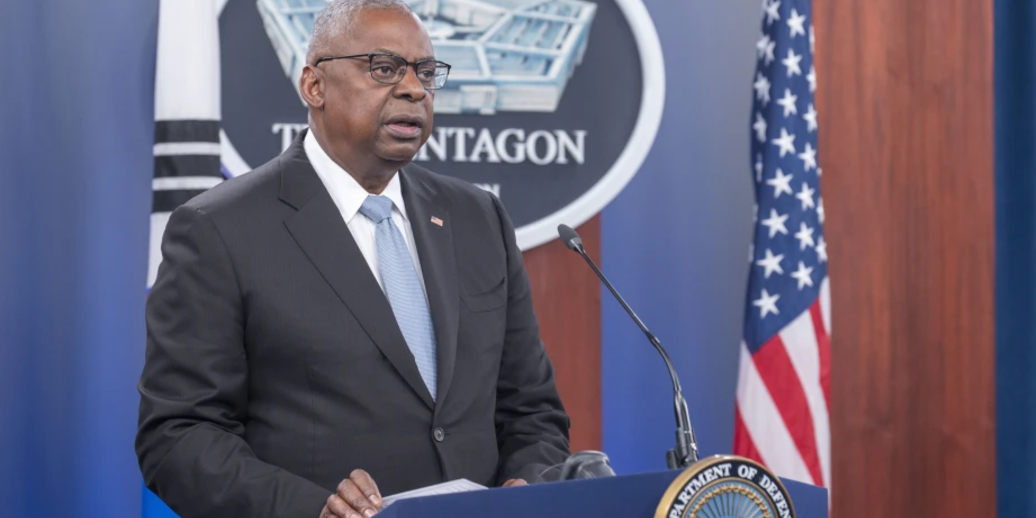
Suicides in the U.S. military increased in 2023, continuing a long-term trend that the Pentagon has struggled to abate, according to a Defense Department report released on Thursday. The increase is a bit of a setback after the deaths dipped slightly the previous year. The number of suicides and the rate per 100,000 active-duty service members went up, but that the rise was not statistically significant. The number also went up among members of the Reserves, while it decreased a bit for the National Guard. Defense Secretary Lloyd Austin has declared the issue a priority, and top leaders in the Defense Department and across the services have worked to develop programs both to increase mental health assistance for troops and bolster education on gun safety, locks and storage. Many of the programs, however, have not been fully implemented yet, and the moves fall short of more drastic gun safety measures recommended by an independent commission. Read more here.
|  | |
Advocates and Schools Fight to End Suicide on College Campuses
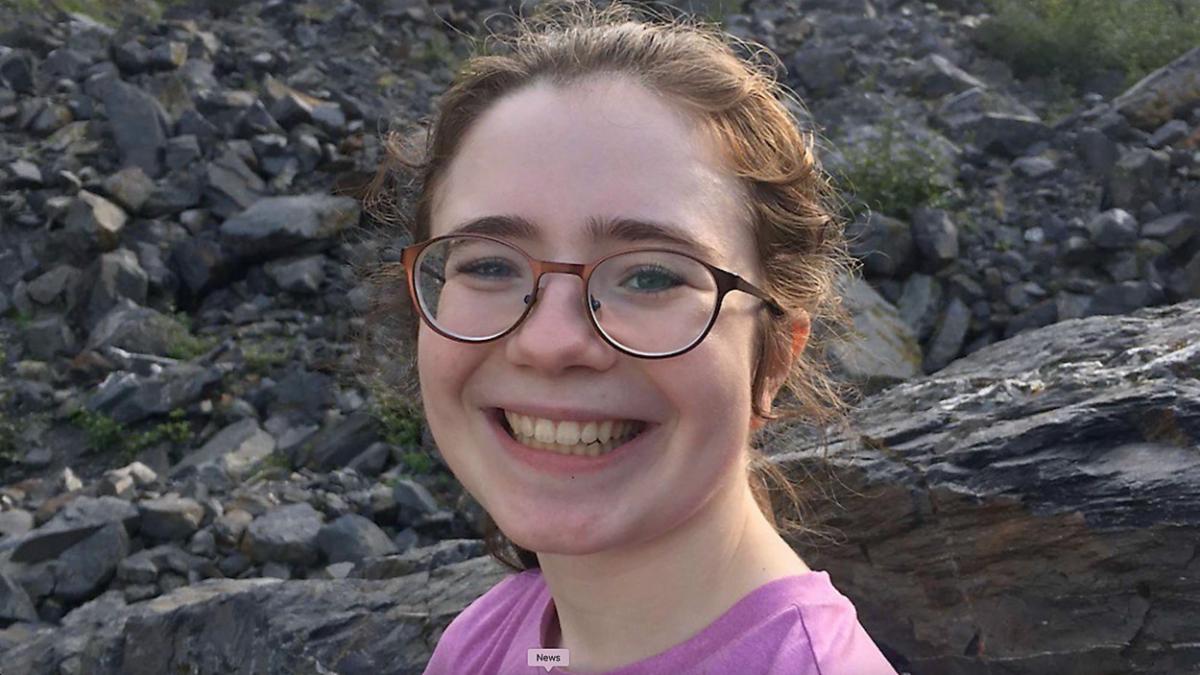
For many young adults, college is their first experience on their own. The new independence can be exciting, but it can also be isolating, especially for those with a history of mental health struggles. We look at how one young woman lost her own battle with mental illness and how those who loved her are fighting to prevent future tragedies. Zack Dugue met Rachael Shaw-Rosenbaum at a scholarship weekend in March 2020.
He said there was a connection from the moment they met. “She was one of the most brilliant people I have ever spoken to in my entire life.” “She was doing all the things she thought that she should be doing,” he said. “But she was put into this impossible situation.” Both preparing to attend elite colleges, their schedules were packed. But when COVID cancelled their summer plans, they spent the time together. “It was a very special summer,” Zack recalled. Read more here.
|  | |
These Matchmakers Connect Teens and Elders. The Friendships Benefit Both Sides.
When Andrea Levitt, 82, first met Angelo Williams, 16, at a cookies-and-tea event in New York City a few months ago, she was feeling down. She lives alone and has been more isolated in recent years, ever since her son and his family moved away. "I remember being at the table with Angelo and he was so funny, it completely got me out of my depression," she says. "And the best thing - I'm a big basketball fan, and Angelo liked basketball." Angelo says that's just one thing they bonded over. "We really just hit it off, you know…at first Andrea was talking about when she was younger she met a lot of these celebrities at the time, and she was really into theater…we really connected over that." Today the pair are talking to each other over Zoom, but they met in person through a nonprofit organization called Dorot, which is the Hebrew word for 'generations.' Read more here.
Related: How students and grandparents could solve the global mental-health crisis
|  | |
Fidelis Care Awards $128,000 in Rural Health Grants to Nine Community Organizations Across New York State
In observance of National Rural Health Day, Thursday, November 21, Fidelis Care, a statewide health plan with more than 2.4 million members in New York State and a Centene Corporation company, has awarded $128,000 in rural health grants to nine community-based organizations. The grants aim to assist organizations that support health and wellness in rural communities across New York, with an emphasis on serving high-need, low-income individuals and their families. Read more here.
| |
 | |
Cross-Sector Strategies for Addressing Homelessness: Three State Programs Leading the Way for Targeted Populations
States are responding to a series of overlapping public health crises, including increased homelessness and housing instability, increased morbidity and mortality due to substance use disorders, and over-reliance on corrections and institutional care in the absence of robust community-based solutions for complex behavioral health and social support needs. State policymakers are key players in shaping the policy ecosystem toward aligned federal, state, and local resources needed to implement effective programs. At NASHP’s 2024 Annual Health Policy Conference, Ohio, Michigan, and Illinois shared how they are implementing such strategies, tailored to the needs of individuals with substance use disorder, individuals reentering the community from incarceration, and transition-age youth. Read more here.
| |
Red Flag Laws and Clinicians - New Policy Outsider Episode
Extreme Risk Protection Orders, or “red flag” laws, are a state policy tool designed to temporarily remove firearms from individuals who are behaving in a manner dangerous to themselves or to others. As state laws, they vary in their design and implementation, including who is able to petition to have firearms removed. In some states with red flag laws, physicians, pediatricians, and other clinicians are enabled by law to fill this role. On a new episode of Policy Outsider, guests Shannon Frattaroli, a professor at the John Hopkins Bloomberg School of Public Health, and Nina Agrawal, a pediatrician and a Richard P. Nathan Public Policy Fellow at the Rockefeller Institute, join the show to share why clinicians are well-suited to be ERPO petitioners and their challenges with the laws as currently constructed. Listen here.
|  |  | |
UPCOMING EVENTS & TRAININGS
Treating Youth Firesetting Behavior
November 21, 12 - 2 pm, CTAC/MCTAC
Lived Expertise and Data Management: Trauma-Informed Approaches and Perspectives
November 21, 1 - 2:30 pm, Corporation for Supportive Housing
Hands Across Long Island – Stories of Stigma in the Healthcare System
November 21, 2 - 3:30 pm, BHN
Distinguishing Performance Measurement from Evaluation: What You Need to Know
November 21, 2 - 3 pm, COSSUP
Empowering Youth in Crisis: Collaborative Approaches to Mental Health
November 21, 2 - 3:30 pm, National Council for Mental Wellbeing
Financing Peer Crisis Respites in the United States
November 21, 2 - 3 pm, SAMHSA
New York Health Equity Reform 1115 Waiver Webinar
November 25, 4 - 5:15 pm, The Alliance for Rights and Recovery
Helping Children Thrive: Strategies to Support Children’s Mental Health
December 3, 12 - 1 pm, NIHCM Foundation
WeSpeakNYC – A Toolkit for Overcoming Mental Health Stigma in BIPOC Communities
December 3, 2 - 2:40 pm, BHN
Housing 101 for Health Centers
December 4, 2 - 3:30 pm, Corporation for Supportive Housing
Improving Behavioral Health Care for Older Adults in the Criminal Justice System
December 4, 2:30 - 4 pm, SAMHSA's GAINS Center
Peer Recovery Support Series: Passionate Professionals; Dispassionate Practice
December 5, 12 - 1:30 pm, NAADAC
Preparing States I/DD Systems for Implementation of the Medicaid Access Final Rule
December 5, 2 - 3 pm, Manatt Health
Breaking Mental Health Stigma in the NYC Hispanic/Latino Community
December 5, 2 - 2:25 pm, BHN
Breaking Down Barriers with The SUNY Downstate STAR Program’s “Stop Mental Health Stigma” Campaign
December 9, 2 - 2:40 pm, BHN
Health and Housing Partnerships to Support Individuals Living with or at-risk for HIV/AIDS
December 10, 2 - 3:30 pm Corporation for Supportive Housing
Homelessness and Access to Care: Best Practices for Health Centers
December 11, 1 - 2 pm, Corporation for Supportive Housing
Health Care Workforce Innovation: Solutions to the Staffing Crisis
December 11, 12 - 2 pm, NEJM Catalyst
United Way of the Dutchess-Orange Region – Empowering Communities through Inclusion and Mental Health Anti-Stigma Efforts
December 11, 2 - 2:25, BHN
Partnering with Community Colleges to Grow and Strengthen the Community Responder Workforce
December 12, 2 - 3:30 pm, CSG Justice Center
Yates INSYGHT – Combating Mental Health Stigma in a Rural Community
December 14, 2 - 2:40 pm, BHN
Family Treatment Courts: An Evidence-Based Approach to Family-Centered Care
December 17, 1 - 3 pm, NCSACW
Screenings and Assessments for Substance Use Disorders to Support Successful Reentry
December 17, 1:30 - 3 pm, SAMHSA's GAINS Center
Transforming Child & Family Services With Innovation
December 18, 1 - 2 pm, Netsmart
Supporting Children of Incarcerated Parents: Addressing School-Based Bias and Stigma
January 8, 3 - 4 pm, CSG Justice Center
| |
CLMHD CALENDAR
NOVEMBER
Children & Families Committee Meeting
November 26: 11:30 am - 1 pm
CLMHD Office Closed - Thanksgiving
November 28 - 29
DECEMBER
CLMHD Executive Committee Meeting
December 4: 8 - 9 am
LGU Clinic Operators Call
December 10: 10 - 11:30 am
Addiction Services & Supports (ASR) Committee Meeting
December 12: 11 am - 12 pm
Developmental Disabilities Committee Meeting
December 12: 1 - 2:30 pm
Mental Health Committee Meeting
December 12: 3 - 4 pm
Children & Families Committee Meeting
December 17: 11:30 am - 1 pm
Membership Call
December 18: 9 - 10:30 am
Mental Hygiene Planning Committee Meeting
December 19: 1 - 3 pm
CLMHD Office Closed - Christmas
December 25
| |