|
Governor Hochul Continues New York’s Nation-leading Efforts to Address the Opioid and Overdose Crisis and Signs New Legislation to Keep New Yorkers Safe
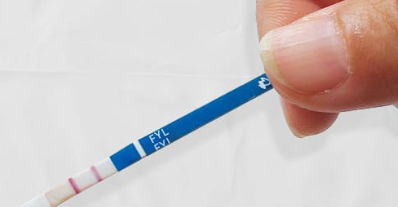
Governor Kathy Hochul on Tuesday signed legislation that builds on New York’s ongoing efforts to address the opioid and overdose epidemic that is impacting states across the nation. “I’m committed to keeping New Yorkers safe and fighting the opioid crisis and overdose epidemic that has taken far too many neighbors, friends and family members in New York and across the nation,” Governor Hochul said. “This legislation ensures New Yorkers have access to live-saving information during the most critical moments.” Legislation S.4393/A.5004 will require the Department of Health to distribute fentanyl test strips along with opioid antagonists, which it distributes to registered opioid overdose prevention programs. The legislation will also require that an informational card or sheet distributed along with the opioid antagonist contain information about fentanyl test strips and their uses. Read more here.
| |
Governor Hochul Announces New Ombuds Program to Help New Yorkers With Developmental Disabilities and Their Families
Governor Kathy Hochul last Friday announced that the new Ombuds for the developmental disabilities’ service system, headed by Community Service Society of New York, is now open and ready to accept New Yorkers’ calls in need of assistance navigating services, resolving complaints, providing education and making the right connections. The new Ombuds program will operate independently from the Office for People With Developmental Disabilities (OPWDD). The program has been developed to assist those with developmental disabilities and their families in resolving and navigating the OPWDD service delivery system. This includes service access and quality, better understanding their rights, and support throughout the process of finding the best avenue for what suits their needs. Read more here.
| |
An Epidemic of Vicious School Brawls, Fueled by Student Cellphones
Ricardo Martinez, an 11th grader, was in his high school lunchroom in April when a mass brawl erupted. He watched, horrified, as a dozen teenage boys rampaged through the cafeteria, pummeling and kicking one another, overturning tables and chairs. Other students jeered and jostled to film the fight on their phones. “It was like a stampede of videos,” said Mr. Martinez, now 18 and a senior. “Everyone was trying to get the best angle.” But the pandemonium at Revere High School in Revere, Mass., was just beginning. Within minutes, students in other parts of the building began receiving text messages about the lunchroom brawl. Suddenly, teachers said, dozens of riled-up teenagers started racing down hallways and careening down stairways with their phones to get to the fight. Read more here.
| |
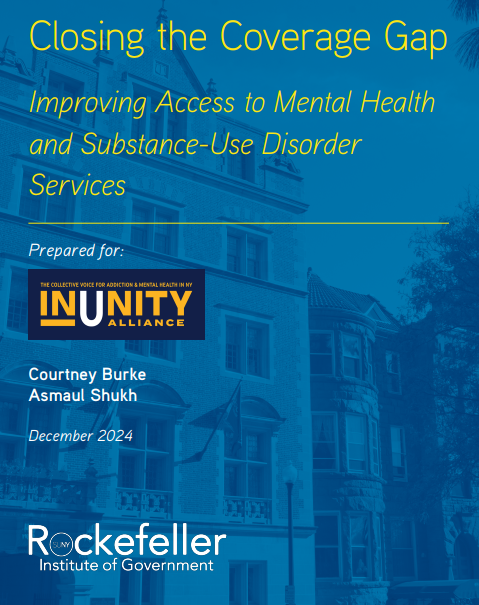
Closing the Coverage Gap: Improving Access to Mental Health and Substance-Use Disorder Services
Across the nation, many adults and children face substance use and mental health challenges, yet access to care is often delayed by months or even years, worsening conditions and leading to devastating outcomes like overdose or suicide. Marginalized communities, including racial and ethnic groups, LGBTQ+ individuals, and people with disabilities, face even greater disparities. Underfunding, low reimbursement rates, regulatory constraints, and staffing shortages further limit access to behavioral health services. This paper explores insurance-related barriers to care and highlights state policy reforms that improve access through public and private insurance solutions at both state and federal levels.
Related: Patients Want Mental Health Referrals from PCPs or Insurance – But Few Get Them
Almost Half of Patients Entering Opioid Treatment Already Take Buprenorphine
| |
New York Announces Launch of Statewide Mental Wellness Campaign
The New York State Office of Mental Health has announced the launch of “Be Well,” a statewide public awareness campaign aimed at helping New Yorkers better understand the importance of mental wellness and the impacts of stress and trauma. The $1.9 million state-funded campaign includes a new website aimed at helping people improve their mental well-being, and advertisements. The goal of the “Be Well” campaign is to give New Yorkers simple and accessible ways to improve their mental wellness and manage stress. The campaign will also provide information about the negative impact that stress and traumatic events can have on both physical and mental health. Read more here.
| |
Matching Care to Need: 5 Facts on How to Improve Behavioral Health Crisis Response
It would hardly be controversial to expect an ambulance to arrive if someone called 911 for a physical health emergency. And yet, for years, the default responders for a behavioral health emergency have been law enforcement officers, not behavioral health professionals. This has recently led to public calls for change, particularly following high-profile instances such as those involving Sonya Massey, Najee Seabrooks, and Andrew Washington—where a person with a mental health need died at the hands of a responding officer. But even when the outcomes haven’t been fatal, community advocates and law enforcement professionals agree that responding officers are often not the ones best suited to handle these crises. Thankfully, jurisdictions across the country have started implementing best practices in crisis response, including investing in behavioral health responses that are evidence-based and promote long-term recovery and community safety. Read more here.
Related: SAMHSA - Advising People on Using 988 Versus 911: Practical Approaches for Healthcare Providers
| |
America's Opioid Crisis: Counties as Frontline Forces in the Fight
The opioid crisis and addiction remain twin crises faced by the American healthcare industry today. Despite passionate advocacy and innovative, focused programs by public and private supporters, the opioid crisis continues to devastate communities across the United States. In 2023, an estimated 107,543 drug overdose deaths occurred in the U.S.—a decrease of 3% from the previous year, according to CDC data. While national headlines often focus on federal policies and funding to combat the crisis, a critical battlefield in the fight is occurring at the county level where providers and families combat the opioid crisis up close. Counties serve as the first line of defense, providing essential services in public health, mental health, law enforcement and social services—supporting communities in crisis and driving lasting recovery. Read more here.
| |
How Are States Spending Opioid Settlement Cash? We Built a Database of Answers
In the past few years, state and local governments across the U.S. have begun spending billions in opioid settlements paid by companies accused of fueling the overdose crisis. But where is that money going, who is getting it, and is it doing any good? KFF Health News, partnering with the Johns Hopkins Bloomberg School of Public Health and Shatterproof, a national nonprofit focused on addiction, undertook a yearlong investigation to find out. Dozens of interviews, thousands of pages of documents, an array of public records requests, and outreach to all 50 states resulted in a first-of-its kind database that catalogs more than 7,000 ways opioid settlement cash was used in 2022 and 2023. It’s the most comprehensive resource to date tracking some of the largest public health settlements in American history. Read more here.
| |
What We Measure Matters: Centering Lived Experience in Developing Behavioral Health Quality Measures
In 2023, 23% of adults in the U.S. reported experiencing a mental illness, totaling more than 58 million Americans. Of those 58 million, 46% reported not receiving treatment. During the same period, 17% of adults across the nation reported experiencing substance use disorder, yet three out of four did not receive treatment. The need for services far outpaces access for the general public, and significant disparities exist in access to treatment and outcomes for certain racial and ethnic groups. Increasing the quantity of behavioral health services (i.e., number of providers, appointment slots) is key to addressing the nation’s behavioral health crisis. However, it is also critical that both existing and expanded services are high quality, as defined not only by providers and payers, but also by people with lived experience of behavioral health needs. Existing quality measure frameworks have been developed primarily from a payer and provider perspective and have not meaningfully recognized the perspectives of people with lived experience. Read more here.
| |
|
Surgo Health Launches Nation's Most Comprehensive Youth Mental Health Tracker
Surgo Health, in partnership with Pivotal, a network of organizations founded by Melinda French Gates, and SHOWTIME/MTV Entertainment Studios, has launched the interactive, publicly available Youth Mental Health Tracker (YMHT), the nation's most comprehensive database on youth mental health and wellbeing. In a new white paper, "The Youth Mental Health Tracker: Uplifting Youth Mental Health and Wellbeing from Crisis to Empowerment," Surgo Health reveals key findings that showcase the complexity and duality of youth mental health, including how many young people perceive happiness despite reported struggles, the impact of parents on care-seeking, and the unique challenges and opportunities for different groups of young people. To translate these insights into actionable policy recommendations, Surgo Health and national mental health policy advocacy organization Inseparable have also released "Beyond the Crisis: Policy Pathways to Uplift Youth Mental Health and Wellbeing," offering recommendations for policymakers to improve youth mental health across the U.S. Read more here.
Related: CDC - Trends in Mental, Behavioral, and Developmental Disorders Among Children and Adolescents in the US, 2016–2021
| |
New Youth Mental Health Campaign Focuses on Building Trust with Caring Adults
The National Children's Alliance has launched a youth mental health awareness campaign called #BeThereNow. The new initiative encourages parents, caregivers, and other adults to spend time with the young people in their lives and form a bond of trust. The campaign’s goal is to make it easier for youth to seek out trusted adults when they need mental health support. The #BeThereNow webpage provides fact sheets detailing ways to get involved with young people, as well as how to identify if a young person is in crisis. Read more here.
| |
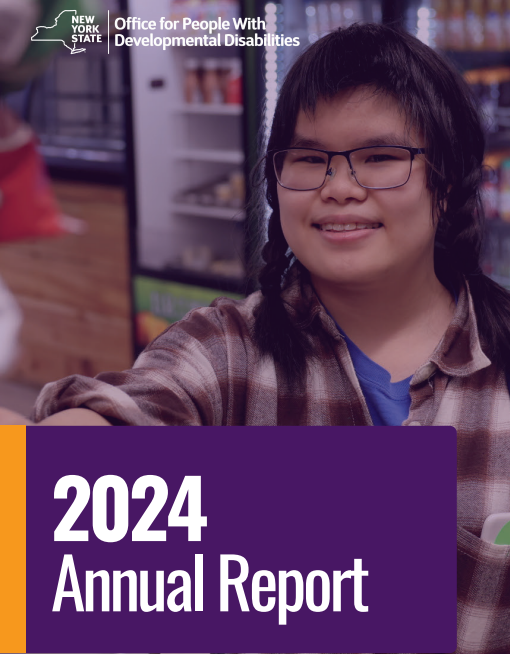
OPWDD Releases 2024 Annual Report
OPWDD has released its 2024 Annual Report, providing updates on the agency’s 2023-2027 Strategic Plan. The report highlights achievements in stabilizing the direct support workforce, increasing employment opportunities, improving transparency with data, and amplifying diverse voices. New this year, the report features concrete outcome metrics, data, and infographics, as well as details on OPWDD’s Short-Term Housing Strategy. This strategy addresses sustainability concerns for Certified Residential Services, with updated guidance and opportunities for home-enabling supports to be issued this week. These accomplishments were made possible through collaboration with advocates, families, and providers. OPWDD thanks all who participated in Strategic Planning forums to share valuable insights and help move the developmental disabilities service system forward. Read the report here.
| |
UPCOMING EVENTS & TRAININGS
Behavioral Health Care Access Among Lesbian, Gay, and Bisexual (LGB) Populations
January 7, 1 - 2 pm, SAMHSA
Supporting Children of Incarcerated Parents: Addressing School-Based Bias and Stigma
January 8, 3 - 4 pm, CSG Justice Center
Becoming a MHFA Instructor
January 10, 2 - 3 pm, National Council for Mental Wellbeing
Incorporating Digital Therapeutics into the Patient Journey
January 13, 12 - 1 pm, PsychU
Innovative Horizons: Integrating Artificial Intelligence (AI) in Substance Use Counseling
January 15, 2 - 3:30 pm, NAADAC
The ROI of Resource Navigation: Findings from the Accountable Health Communities Model
January 21, 1 - 2 pm, Camden Coalition
Integrating Care: The Role of MOUD in Addressing Opioid Use Disorder and Infectious Disease
January 29, 1 - 2 pm, PCSS
Treating People who Use Meth or other Stimulants: Leveraging Contingency Management in Criminal Justice Settings
January 29, 2 - 3:30 pm, SAMHSA's GAINS Center
Comprehensive Clinical Assessments with a Focus on Quality
January 19, 3 - 4:30 pm, NAADAC
Conducting Cultural Assessments: Engaging and Providing Treatment for Justice-Involved Individuals
February 26, 3 - 4:30 pm, NAADAC
Sequential Intercept Model (SIM) of Peer Support in Criminal Justice
March 26, 3 - 4:30 pm, NAADAC
| |
CLMHD CALENDAR
DECEMBER
Mental Hygiene Planning Committee Meeting
December 19: 1 - 3 pm
CLMHD Office Closed - Christmas
December 25
JANUARY
CLMHD Office Closed - New Year's Day
January 1
| |