| |
Governor Hochul Announces Launch of New Nearly $3 Million Scholarship Program to Support Individuals Looking to Enter or Advance in Addiction Services Workforce
Governor Kathy Hochul last week announced the launch of a new scholarship program, which makes nearly $3 million available to individuals pursuing a bachelor's degree in Addiction Studies or the education requirements for a New York State Office of Addiction Services and Supports credential at Alfred State College, Stony Brook University, and Empire State University. This partnership, led by OASAS, is designed to help individuals working in OASAS, Office of Mental Health, or Department of Health Certified programs obtain either a Credentialed Alcoholism and Substance Abuse Counselor, Credentialed Prevention Professional credential, or bachelor's degree in addiction studies to enter or advance their careers in the addiction services profession. Read more here.
Related: Hochul approves law to retain health care workforce in New York
6 takeaways for the government workforce crisis
| |
Governor Hochul's Op-ed in The New York Daily News: New York's Pledge on Youth Mental Health Crisis: Gov. Hochul Lays Out Her Plan to Invest In Solutions
On Sunday, the New York Daily News published an op-ed by Governor Kathy Hochul on New York's multi-pronged approach to the youth mental health crisis. Text of the op-ed is available below:
On June 15, I was proud to gather more than 1,000 people at New York's first-ever Youth Mental Health Summit, where I was joined by advocates who care deeply about fixing the unprecedented mental health challenges many children and teenagers face. The presence of so many at the summit — including national mental health experts, youth advocates and providers, parents and caregivers, educators, and others — made a statement that we collectively understand the magnitude of this crisis, the pain it's causing, and the kids who need our help. Read more here.
|  | |
Gillibrand And Goldman Introduce Bill To Support People Living With Serious Mental Illness
Last week, U.S. Senator Kirsten Gillibrand (D-NY) and Congressman Dan Goldman (D-NY-10) announced the Strengthening Medicaid for Serious Mental Illness Act to provide desperately needed mental health support to the 14 million adults in the U.S. living with a serious mental illness (SMI), such as schizophrenia, bipolar illness, and major depressive disorder. Too many individuals living with SMI are stuck in a devastating cycle moving between hospitals, jails, and housing instability due to lack of access to community-based treatment. In 2021, over 1/3 of individuals with SMI did not receive any form of mental health treatment. This bill creates a new package of services under Medicaid targeted specifically to individuals living with SMI, sets a national standard for SMI care, and incentivizes states to provide intensive community-based services to treat SMI. Read more here.
|  | |
The School Counselor Pipeline is Broken. Can New Federal Money Fix It?
Daniel Bennett’s office at Sodus Intermediate School [Wayne County, NY] is a haven for kids in crisis. When fourth, fifth or sixth graders here are fed up, ready to fight, or exhausting their teacher with their unfocused energy, they can visit Bennett’s office to jump on the mini trampoline, bounce on the balance ball chairs, or strum out their frustration on one of the guitars that hang on one wall. Sometimes, the kids arrive angry, outraged at how they’ve been treated by a classmate or teacher; other times they show up sad, or overwhelmed. This spring morning, a boy came in crying, complaining he’d been treated unfairly during a game in gym class. He told Bennett he didn’t understand the game’s rules and was punished for breaking them. Read more here.
|  | |
He Was Handcuffed and Hospitalized. Now He’s on Track for Housing.
On the coldest night of the winter, Mazou Mounkaila was sleeping under an overpass in the Bronx when the ambulance crew arrived. The wind chill was minus 4 degrees. Paramedics and homeless-outreach workers told Mr. Mounkaila he had to go either to a shelter or a hospital. Mr. Mounkaila, a courtly former warehouse manager from the West African nation of Niger who has been homeless for about a decade, declined to do either. But he had no choice. The police showed up. “To my surprise,” Mr. Mounkaila said, “they handcuff me.” He spent the next 104 days at Jacobi Medical Center in the Bronx being treated for schizophrenia. Mr. Mounkaila, 59, was hospitalized under a contentious policy Mayor Eric Adams rolled out last fall to address a homelessness crisis unraveling in plain view on the streets of the nation’s biggest city. Read more here.
| |
Study: Helplines for Mental Health Support: Perspectives of New York State College Students and Implications for Promotion and Implementation of 988
Mental health and suicide are serious concerns in the U.S. Though many adults report struggling with their mental health, a significant proportion do not receive care for various reasons including stigma, limited availability, long wait times, inability to pay, and a lack of culturally appropriate options. Helplines can be used to fill gaps in care and, though currently underutilized, are a significant focus of the federal government in the implementation of 988. To better understand the factors that facilitate and impede the utilization of helplines, a study was conducted with 14 focus groups with 95 college students attending a public university and two private colleges in upstate New York between April 2019 and October 2020. Findings suggest the need for improved education, marketing, and training around helplines and may be used to inform implementation and promotion of 988 in its early stages. Read more here.
|  | |
Peer Specialists Use Life Experience to Help Others with Mental Illness, Addiction
Soon after patient advocate Ken Meyran sets foot in the Zucker Hillside Hospital psychiatric unit, patients usually approach him in the hallway. Sometimes, patients want to show their artwork. At other times, Meyran listened to their concerns about their hospitalization, he said. Not long ago the New Hyde Park resident was a patient in the hospital in the throes of depression and other conditions after selling his Farmingdale health center. In working with these patients, Meyran, who isn’t a physician or nurse, hopes his recovery journey can break their barriers to recovery. Read more here.
Related: Standardized Credentialing, Reimbursement Clarity Could Accelerate Use of Peers in Behavioral Health Care
|  | |
The DEA Relaxed Online Prescribing Rules During COVID. Now It Wants to Rein Them In.
Federal regulators want most patients to see a health care provider in person before receiving prescriptions for potentially addictive medicines through telehealth — something that hasn’t been required in more than three years. During the covid-19 public health emergency, the Drug Enforcement Administration allowed doctors and other health care providers to prescribe controlled medicine during telehealth appointments without examining the patient in person. The emergency declaration ended May 13, and in February, the agency proposed new rules that would require providers to see patients at least once in person before prescribing many of those drugs during telehealth visits. Read more here.
| |
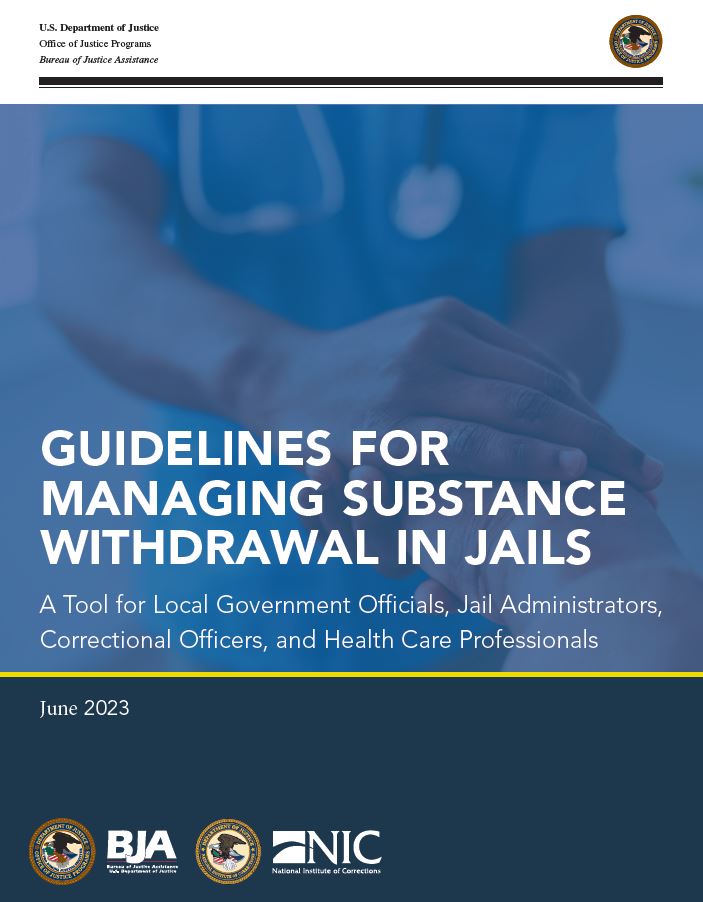
Justice Department Releases New Tool to Manage Substance Withdrawals in Jails
The Justice Department’s Bureau of Justice Assistance (BJA), one of six program offices within the Office of Justice Programs (OJP), and the National Institute of Corrections (NIC) last week announced the release of Guidelines for Managing Substance Withdrawal in Jails: A Tool for Local Government Officials, Jail Administrators, Correctional Officers and Health Care Professionals. This groundbreaking document supports the department’s commitment to increasing access to evidence-based treatment for individuals with substance use disorders (SUD) and those at risk for overdose, including individuals who are incarcerated or reentering their communities.
|  | |
Digital, Retail Mental Health Services Are Straining Community-Based Behavioral Health Providers
Behavioral health services offered by digital health and retail companies have attracted many patients with lower-acuity mental health needs. In turn, many community providers are seeing an influx of higher-acuity patients who need in-person services. This often means that community providers assign their clinicians a less balanced caseload, which some warn could lead to burnout. And it’s not only patient acuity levels that are becoming less diversified. Many community providers are now seeing a higher number of Medicaid patients as well. Read more here.
|  | |
Partnerships With Community-Based Organizations: Opportunities for Health Plans to Create Value
As government healthcare programs increasingly require that health plans and providers identify and address patients’ health-related social needs, partnering with community-based organizations (CBOs) is an efficient and effective means of providing essential social care benefits to health plan members, many of whom face significant structural and social barriers, including racism, poverty and isolation.
This resource guide, created by the Camden Coalition, the Partnership to Align Social Care, and the Aging and Disability Business Institute, presents five overarching reasons that health plans should work with CBOs and community care networks as their contracted social care partners. Read more here.
| |
 | |
Medicaid Aims to Better Serve Adults with I/DD, Aging Caregivers
Upwards of a million U.S. households include an adult with intellectual and developmental disabilities who’s supported by an aging caregiver and that number is expected to grow. Now, Medicaid officials are making a push to better meet their needs. The Centers for Medicare and Medicaid Services is issuing a collection of new resources to help state Medicaid and partner agencies as they design and deliver services for this burgeoning demographic. Across four documents, the agency is offering guidance on how states can anticipate the needs of adults with IDD and their caregivers as they get older and tips on devising policies and practices to support these needs and promote person-centered planning. Read more here.
Related: Commemorating the Olmstead Anniversary with Revitalized Enforcement Initiative
IDD Providers Battle Major Misconceptions, Work to Integrate Mental Health Services
|  | |
SAMHSA Funding Opportunity: Minority HIV/AIDS Fund: Integrated Behavioral Health and HIV Care for Unsheltered Populations Pilot Project
The purpose of this program is to pilot an approach to comprehensive healthcare for racial and ethnic medically underserved people experiencing unsheltered homelessness through the delivery of portable clinical care delivered outside that is focused on the integration of behavioral health and HIV treatment and prevention services. Recipients will be expected to take a syndemic approach to healthcare delivery through utilization of low barrier substance use disorder (SUD) treatment; mental healthcare; HIV and viral hepatitis testing and treatment; HIV prevention including condom, Pre-Exposure Prophylaxis (PrEP) and Post-Exposure Prophylaxis (PEP) distribution; and harm reduction services. Read more here.
Related: Q&A: Westchester Medical Center Doc On How to Reach New Yorkers Still Impacted By HIV
|  | |
UPCOMING EVENTS & TRAININGS
Emerging Respite Care Strategies in Medicaid Home and Community-Based Services Waivers
June 29, 3 - 4 pm, NASHP
Peer Support via Telehealth Platforms
June 29, 3 - 4 pm, NAADAC
Implicit Bias, Understanding the Impact of What We Don't See
July 10, 10 am - 12 pm, NATTC
Building Behavioral Health Ecosystems of Care
July 10, 2 - 3 pm, Camden Coalition
Medication for Opioid Use Disorder
July 11, 10 - 11:30 am, CEATTC
New York State Summit on Peer Mentor Programs for Military Veterans
July 11 - 12, National Veterans Resource Center, Syracuse
Behavioral Health Staffing Strategies for 2023 and Beyond
July 11, 12 - 1 pm, Behavioral Health Business
Improving Police and Mental Health Partnerships for Youth in Crisis
July 12, 2 - 3:30 pm, CSG Justice Center
Health, Wellness, and Balance
July 12, 3 - 4:30 pm, NAADAC
Long-Acting Injectables For The Treatment Of Bipolar I Disorder: Relevant Questions From Providers
July 13, 12 - 1 pm, PsychU
Emerging strategies to keep staff safe
July 13, 1 - 2 pm, HANYS
Using Responsivity Principles to Attain Better Results for People with Behavioral Health Needs in the Justice System
July 13, 2 - 3:30 pm, CSG Justice Center
Medicaid Coverage Opportunities for Justice-Involved Populations: CMS Guidance and States’ Approaches
July 13, 3 - 4 pm, Manatt Health
Bridging the Gap: Linking Individuals to Recovery Support Services
July 17, 3 - 4:30 pm, SAMHSA's GAINS Center
Supporting the Emotional and Mental Health Needs of Harm Reduction Staff
July 17, 3 - 4:30 pm, National Council for Mental Wellbeing
Navigating Medicaid Buy-In
July 18, 12 - 1 pm, MHANYS
Adult MHFA for Public Safety - Overview
July 18, 2:30 - 3:30 pm, National Council for Mental Wellbeing
Transition of Care from Hospital to Community
July 18, 6 - 7 pm, PsychU
Exploring Unresolved Symptoms In Major Depressive Disorder (MDD): Potential Role Of Norepinephrine
July 19, 12 - 1 pm, PsychU
From Corrections to Community: Navigating the New Medicaid Section 1115 Demonstration Opportunity, Part 1
July 19, 2 - 3 pm, CSG Justice Center
Adult MHFA for Higher Education - Overview
July 25, 2:30 - 3:30 pm, National Council for Mental Wellbeing
Combating Fatal Overdoses: A Data-Driven and Multidisciplinary Approach to Addiction Response
July 25, 3 - 4 pm, Camden Coalition
Medicaid and CHIP Renewals: What to Know and How to Prepare, A Partner Education Monthly Series
July 26, 12 - 1 pm, CMS
Improving Treatment Outcomes for People With Cognitive Impairment
July 26, 3 - 5 pm, NAADAC
Professional Development for Peers - Progress, Not Peerfection
July 27, 3 - 4:30 pm, NAADAC
Youth MHFA for Tribal Communities and Indigenous Peoples - Overview
August 8, 2:30 - 3:30 pm, National Council for Mental Wellbeing
Partnering with Law Enforcement
August 16, 2 - 3 pm, HANYS
| |
CLMHD CALENDAR
JULY
CLMHD Office Closed - Independence Day
July 3 & 4
CLMHD Executive Committee Meeting
July 5: 8 - 9 am
LGU Clinic Operators Call
July 11: 10 - 11:30 am
Addiction Services & Supports (ASR) Committee Meeting
July 13: 11 am - 12 pm
Mental Health Committee Meeting
July 13: 3 - 4 pm
IOCC Meeting - Albany, In-Person
July 18: 1 - 3 pm
Membership Call
July 19: 9 - 10:30 am
Deputy DCS Call
July 25: 10 - 11 am
Developmental Disabilities Committee Meeting
July 27: 1 - 2:30 pm
| |