|
Governor Hochul Announces 30 Awards Statewide Totaling $25 Million to Expand Health Clinics and Improve Access to Healthcare Services for People With Developmental Disabilities
Governor Kathy Hochul on Monday announced 30 awards with a $25 million investment to help address health equity for people with developmental disabilities who often find it difficult to find comprehensive healthcare that meets their needs. This critical statewide initiative was announced as part of Governor Hochul’s 2025 State of the State and enacted in the FY26 Budget. The New York State Office for People With Developmental Disabilities (OPWDD) prioritized awards based on projects related to expanding access to dental care, improving physical diagnostic space to better accommodate wheelchairs, creating sensory-friendly areas for neurodiverse patients, and improving access to specialty physical health services in ‘healthcare deserts.’ Read more here.
| |
New Mental Health Parity Index Highlights Where Disparities Persist
Despite policymakers putting a focus on the issue, mental health parity challenges remain for much of the country, a new report shows. The new Mental Health Parity Index identifies disparities in 43 states in terms of access to in-network mental health and substance abuse treatment in comparison to physical health. The analysis found that patients in seven out of 10 counties face challenges in accessing in-network mental healthcare. The index was developed by the Kennedy Forum with support from Third Horizon, the American Medical Association, the American Psychological Foundation and Ballmer Group. It's based on data from the four largest commercial insurers. Beyond access differences, the index also identified payment disparities for mental healthcare and substance abuse treatment in all states. The analysis found that on average, the difference in payment between mental health and physical health ranges from 16% to 59% across the country. Read more here.
| |
'Mini Specialists': 5 Models Reshaping Behavioral Health in Primary Care
“I see an optimal level of [behavioral health] integration into primary care occur when we have multiple validated models layered,” he said. “Layer[ing] them one on top of each other really provides some synergy to at its best support the primary care team, starting with the primary care provider.” The five layered care models represent what Dr. Franz describes as an “optimal environment” for integrated behavioral health in primary care — “the North Star, the Holy Grail.” The models include:
-
Primary care behavioral health model: An embedded behavioral health clinician works directly within the primary care team, sharing treatment plans, conducting real-time assessments and performing “warm handoffs” during patient visits. The model emphasizes immediate access to behavioral care within the clinic and requires protected time for unscheduled, in-the-moment interventions.
-
Collaborative care model: A team-based, largely asynchronous model where a psychiatrist, care manager and primary care provider collaborate. The care manager and psychiatrist review cases regularly, often without direct patient interaction, and provide treatment recommendations based on measurement-driven criteria, with the goal of improving outcomes and graduating patients from the program over time. Read more here.
Related: The new playbook for clinician well-being
| |
States Face Another Challenge With Medicaid Work Rules: Staffing Shortages
Katie Crouch says calling her state’s Medicaid agency to get information about her benefits can feel like a series of dead ends. “The first time, it’ll ring interminably. Next time, it’ll go to a voice mail that just hangs up on you,” said the 48-year-old, living in Delaware. “Sometimes you’ll get a person who says they’re not the right one. They transfer you, and it hangs up. Sometimes, it picks up and there’s just nobody on the line.” She spent months trying to figure out whether her Medicaid coverage had been renewed. As of late March, she hadn’t been reapproved for the year for the state-federal program, which provides health insurance for people with low incomes and disabilities. Crouch, who suffered a debilitating brain aneurysm a decade ago, also has Medicare, which covers people who are 65 or older or have disabilities. Medicaid had been paying her monthly Medicare deductibles of $200, but she’d been on the hook for them for the past three months, straining her family’s fixed income, she said. Read more here.
| |
Understanding Autism: What An Evolving Diagnosis Means for the Millions of Americans It Affects
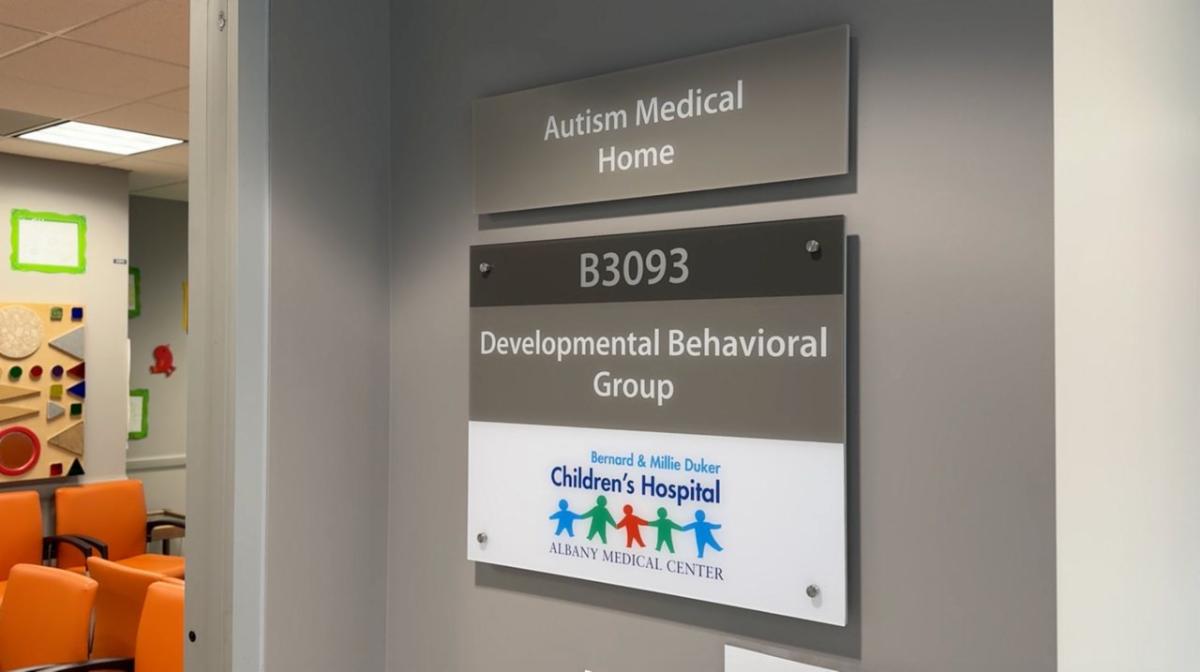
The word "autism" was first used in 1943, when psychiatrist Leo Kanner gave the diagnosis to a boy named Donald Triplett and identified a handful of other children around the world with similar traits, describing them as withdrawn from the world around them. Eight decades later, autism is understood as something far broader, a unique way people experience life. Today, one in 31 children in the United States has autism spectrum disorder, up from 1 in 150 in 2000, according to the Centers for Disease Control and Prevention. Researchers say that jump reflects better diagnosis and broader definitions, not a true increase in cases. "Autism represents a spectrum of abilities, challenges, sensitivities, preferences," said Dr. Judith Lucas, a developmental and behavioral pediatrician at Albany Med. Lucas said autism has likely always existed throughout human history, but children who have it were historically misunderstood. Read more here.
| |
‘The Next Opioid Epidemic': Gambling Legalization Outpaces Public Health Response to Addiction
Mike Sciandra grew up around gamblers. It wasn’t long before he became one. Born in Las Vegas, Sciandra’s earliest memories center on casino arcades—playing with rolls of quarters while his family gambled on the casino floor. By nine years old, Sciandra played cards for money. By 15, he placed bets at a Keno parlor, where staff knew him well enough to discreetly let him play as a minor. By 21, Sciandra gambled in the big leagues: casinos. He didn’t stop for over 20 years. He played through graduate school, jobs, a marriage. Almost every night after his daughter went to bed, Sciandra gambled. On business trips around the Midwest, Sciandra would stop by his favorite machines, sometimes even using his corporate card. The whole time, Sciandra kept his habit a secret. “It was truly a double life I was living,” Sciandra, now 47, said, “doing a lot of things that were really incongruent with my own personal beliefs.” During the COVID-19 pandemic, the marketing business Sciandra ran took a serious hit. “I went back to the one thing that I kind of always knew, and that was gambling,” Sciandra said. With casinos closed, he started day trading. “I was finding any way possible to gamble. By the time I got to December of 2020, I was spiraling so bad that I knew I needed help." Read more here.
| |
Gen Z Increasingly Skeptical of - And Angry About - Artificial Intelligence
While some might envision Gen Z welcoming artificial intelligence into their lives, a new Gallup survey finds people between the ages of 14 and 29 are becoming increasingly skeptical of — and downright mad at — AI. Compared to a similar survey last year, they’re less excited and hopeful about the change it could bring and more angry at its existence, citing concerns about AI’s impact on their cognitive abilities and professional opportunities. Respondents said they used AI at nearly the same rate they did before — they reported only a slight increase in daily and weekly exposure — but when asked how it makes them feel, the answers revealed growing misgivings. Thirty-one percent said it made them angry, up 9 percentage points from 2025. And just 22% said it made them feel excited, down 14 percentage points from last year. Only 18% of respondents said it made them feel hopeful, marking a nine-point drop. Forty-two percent said it made them feel anxious, roughly the same as last year. Read more here.
Related: "Soft Socializing" Is the Gen Z Trend That's Making Low-Pressure Hangouts the New Normal
| |
When Departments Get Officer Mental Health Wrong
Many years ago, I represented a police officer whose employer wanted him to sign a last chance agreement. It was a disciplinary case involving several charges, not the least of which included sick leave abuse and the amorphous description of “erratic workplace behavior.” The last chance agreement signaled that the agency wanted to pave the path for an eventual termination of the officer. His was one of four preliminary conferences I had scheduled that day at the agency’s disciplinary counsel’s office to either settle cases or proceed to an administrative trial. With his case, they offered little room to negotiate — either take the agreement and forestall termination for a few months, or go to trial the following week, wherein his sick leave abuse alone could result in termination. My subsequent interview with the officer regarding the underlying charges did not progress far before I noted he was under some type of mental distress. Read more here.
| | |
UPCOMING EVENTS & TRAININGS
Becoming an MHFA Instructor
April 16, 2 - 3 pm, National Council for Mental Wellbeing
Accelerating Reentry: Recidivism Data & A New Roadmap for Success
April 16, 2 - 3:30 pm, SAMHSA's GAINS Center
Section 504 Digital Accessibility: Requirements for Upcoming May Compliance Deadlines
April 17, 12 - 12:30 pm,
New York's Healthcare System in the Face of Federal Uncertainty
April 20, 12 - 1 pm, Albany Law School
Brain Injury Treatment: Psychopharmacology & Medical Interventions
April 21, 10 - 11 am, DOH/OMH/OASAS
Workforce Solutions Jam: Extending the Behavioral Health Workforce - Alaska’s BH Aide Model
April 21, 1 - 2 pm, National Council for Mental Wellbeing
Community-Initiated Care in Behavioral Health: Exploring Funding Mechanisms for Substance Use Disorders
April 21, 2 - 3 pm, SAMHSA CFRI
Stronger Together: Elevating the Family Peer Role in Multidisciplinary Teams Part 1: Clarity in Roles, Strengthening Collaboration
April 22, 10 - 11:30 am, CTAC
Unseen, Unheard, Untreated: A Disconnected System’s Call for the Medicine of Connection
April 22, 12 - 1:30 pm, NAADAC
What to Know About H.R.1 and Immigration Restrictions
April 22, 1 - 2 pm, Corporation for Supportive Housing
An Introduction to Autism Spectrum Disorder (ASD) in Young Children: Part I
April 22, 1 - 2:30 pm, TTAC
Applying New Peer Workforce Resources in Integrated Care Teams
April 22, 3 - 4 pm, Center of Excellence for Integrated Health Solutions
New Insights on Veterans' Health in New York State
April 23, 12:30 - 1 pm, NY Health Foundation
Responding to High Acuity Challenges in Supportive Housing (Part 1)
April 23, 12:30 - 1:30 pm, CSH
Youth Mental Health: Trends, State-Level Strategies & the Role of Digital Technology
April 23, 2 - 3 pm, NIHCM Foundation
Peer Education & Support for People with SMI in Correctional Facilities
April 27, 2 - 3 pm, NAMI
Ethical Issues and Best Practices in Substance Use Disorder Treatment for Clinical Supervisors, Counselors, and Interns
April 29, 12 - 1:30 pm, NAADAC
From Data to Dollars: Using American Community Survey Data to Strengthen Grant Proposals
April 29, 2 - 3 pm,
Mental Health Outpatient Treatment and Rehabilitative Services (MHOTRS) Proposed Part 599 Regulation Changes Webinar
April 29, 2:30 - 4 pm, MCTAC
An Introduction to Autism Spectrum Disorder (ASD) in Young Children: Part II
April 30, 11:30 am - 1 pm, TTAC
Wait...What’s Due Now? Inside Cognitive Overload and the White-Knuckle Effect Among College Students with Mental Health Conditions
April 30, 12:30 - 1:45 pm, Transitions ACR
Hospital and Community Transitions: Webinar for MHOTRS Providers
May 5, 1:30 - 2:30 pm, MCTAC
Innovations in Substance Use Care Delivery for Medicaid Members: A No Wrong Door Approach
May 6, 2 - 3:30 pm, CHCS
Stronger Together: Elevating the Family Peer Role in Multidisciplinary Teams Part 2: Strength Based Collaboration
May 6, 3 - 4:30 pm, CTAC
9th Annual Older Adult Mental Health Awareness Day Symposium
May 7, 10 am - 5 pm, National Council on Aging
Responding to High Acuity Challenges in Supportive Housing (Part 2)
May 7, 1:30 - 2:30 pm, CSH
Beyond the Court Order: New Long-Term Evidence from Mobile County’s AOT Program
May 7, 2 - 3 pm, Policy Research Associates
Supporting Individuals Engaged in Opioid Use Disorder Treatment for Peers
May 13, 12 - 1:30 pm, NAADAC
Brain Injury: Practical Strategies for Engagement
May 19, 10 - 11 am, DOH/OMH/OASAS
Integrated Care in MHOTRS Webinar
May 28, 2 - 3 pm, MCTAC
Beyond Dual Diagnosis: Understanding the Relationship Between Personality Disorders and Substance Use Disorders Among Adults
June 10, 12 - 1:30 pm, CTAC
Balancing Public Meeting and Records Transparency Amid Rising Threats and Public Pressure
June 11, 2 - 3 pm, NACo
Essential Clinical and Peer Supervision Practices in Substance Use Disorder Services
June 17, 12 - 1:30 pm, NAADAC
| |
CLMHD CALENDAR
April
Developmental Disabilities Committee Meeting
April 16: 1 - 2 pm
Children & Families Committee Meeting
April 21: 12 - 1:30 pm
May
LGU Clinic Operators Call
May 5: 10 - 11 am
Executive Committee Meeting
May 6: 8 - 9 am
CLMHD Spring Full Membership Meeting
May 11 - 13, Albany, NY
Addiction Services & Recovery Committee Meeting
May 14: 11 am - 12 pm
Mental Health Committee Meeting
May 14: 3 - 4 pm
Children & Families Committee Meeting
May 19: 12 - 1:30 pm
Membership Call
May 20: 9 - 10:30 am
| |