|
Governor Hochul Recognizes Suicide Prevention Month and Announces Statewide Efforts To Help At-Risk New Yorkers
Governor Kathy Hochul issued a proclamation on Tuesday recognizing September as Suicide Prevention Month in New York and outlined some of the initiatives that have made the state a national leader in reducing these tragic deaths. Additionally, Governor Hochul directed State landmarks and bridges to be illuminated in purple and teal at dusk on Sept. 2, to recognize prevention efforts and show solidarity with New Yorkers whose lives have been impacted by suicide. “Even one suicide is one too many,” Governor Hochul said. “In recognition of Suicide Prevention Month, we are redoubling our prevention efforts and raising awareness of the statewide resources available to help those in crisis or anyone who feels like they need someone to talk to.” September is recognized nationally as Suicide Prevention Month, dedicated to promoting awareness, education, and action to prevent suicide. The recognition honors the lives lost to suicide, supports the survivors of suicide loss, and reinforces New York State’s commitment to mental health and wellness for all. Read more here.
| |
National Nonprofit Helps Rural Youths Prevent Suicide
A national nonprofit is launching a program to help rural youths talk with each other about mental health struggles. Rural Minds will pilot the Rural Youth Mental Wellness program starting in October 2025 in New York and Pennsylvania. It is expected to roll out nationwide in fall 2026. The program will focus on the particular challenges of young people who live in rural areas. Rural youths age 15 to 19 are 74% more likely to commit suicide than their urban peers, according to the Rural Health Information Hub. The new program focuses on developing and normalizing peer-to-peer communication about mental health. Young people are often more comfortable talking with each other about personal struggles than with an adult, said Chuck Strand, the executive director of Rural Minds. The biggest step is often having the courage and sensitivity to ask someone if they are thinking of harming themselves, Strand said. “Those are tough discussions to have, and one of the printable program pieces that we have already in that resilience program is how to have that conversation,” he said. Read more here.
| |
Governor Hochul Announces $7.5 Million Awarded to Establish Youth Safe Spaces
Governor Kathy Hochul on Tuesday announced $7.5 million in awards to four nonprofit community-based organizations to launch Youth Safe Spaces and address the evolving behavioral health needs of teens and young adults. Administered by the state Office of Mental Health (OMH), these peer-led, non-clinical programs will serve youth ages 12 to 24 in welcoming, community-based settings, offering safe spaces, resources, and connections to help them navigate mental health challenges. Safe Spaces provide inclusive, peer-led environments designed to reduce isolation, promote positive relationships, and connect young people to both traditional and non-traditional supports. These non-clinical programs complement clinical services and expand access to care by addressing cultural, financial, and systemic barriers. Read more here.
| |
The Must-Have Skills for Today’s Behavioral Health Workforce
As behavioral health evolves amid staffing shortages, rising demand and growing complexity, clinicians must sharpen a new set of skills to meet the moment. From AI fluency to cross-disciplinary collaboration, here is what eight industry leaders say the workforce needs. Question: As investment in the behavioral health workforce continues nationwide, what is one essential skill professionals should develop to drive successful outcomes in the field and why? Blair Brown, MD, PsyD. Executive Clinical Director of Clinical Quality and Research at LifeStance Health (Scottsdale, Ariz.): An essential skill for mental healthcare professionals is humility, the ability to accept and integrate feedback into clinical practice. As clinicians, we are the mechanism of change, and like any tool, we must regularly evaluate if we’re being effective. Driving improved patient outcomes requires a commitment to measurement and a willingness to see feedback as a catalyst for growth, rather than criticism. When clinicians are open to feedback, they can adapt, grow and continuously improve their approach, which helps support a culture of learning and the delivery of consistently high-quality care. Read more here.
| |
Over a Billion People Living With Mental Health Conditions – Services Require Urgent Scale-Up
More than 1 billion people are living with mental health disorders, according to new data released by the World Health Organization (WHO), with conditions such as anxiety and depression inflicting immense human and economic tolls. While many countries have bolstered their mental health policies and programs, greater investment and action are needed globally to scale up services to protect and promote people’s mental health. Mental health conditions such as anxiety and depression are highly prevalent in all countries and communities, affecting people of all ages and income levels. They represent the second biggest reason for long-term disability, contributing to loss of healthy life. They drive up health-care costs for affected people and families while inflicting substantial economic losses on a global scale. The new findings published in two reports – World mental health today and Mental Health Atlas 2024 – highlight some areas of progress while exposing significant gaps in addressing mental health conditions worldwide. Read more here.
| |
Connecting Medicaid Members to Work: Expanding Access to Evidence-Based Employment Models
New federal Medicaid work requirements present state agencies with a challenging implementation task. The requirements are likely to result in coverage losses, particularly among Medicaid members with complex health and social needs. Many may not qualify for exemptions yet still face significant barriers to maintaining steady employment or meeting reporting rules. H.R. 1 mandates that Medicaid members aged 19-64 who are covered through the Affordable Care Act Medicaid expansion or an 1115 demonstration waiver that provides minimum essential coverage must engage in employment, education, a work program, or community service to maintain their Medicaid eligibility. Read more here
| |
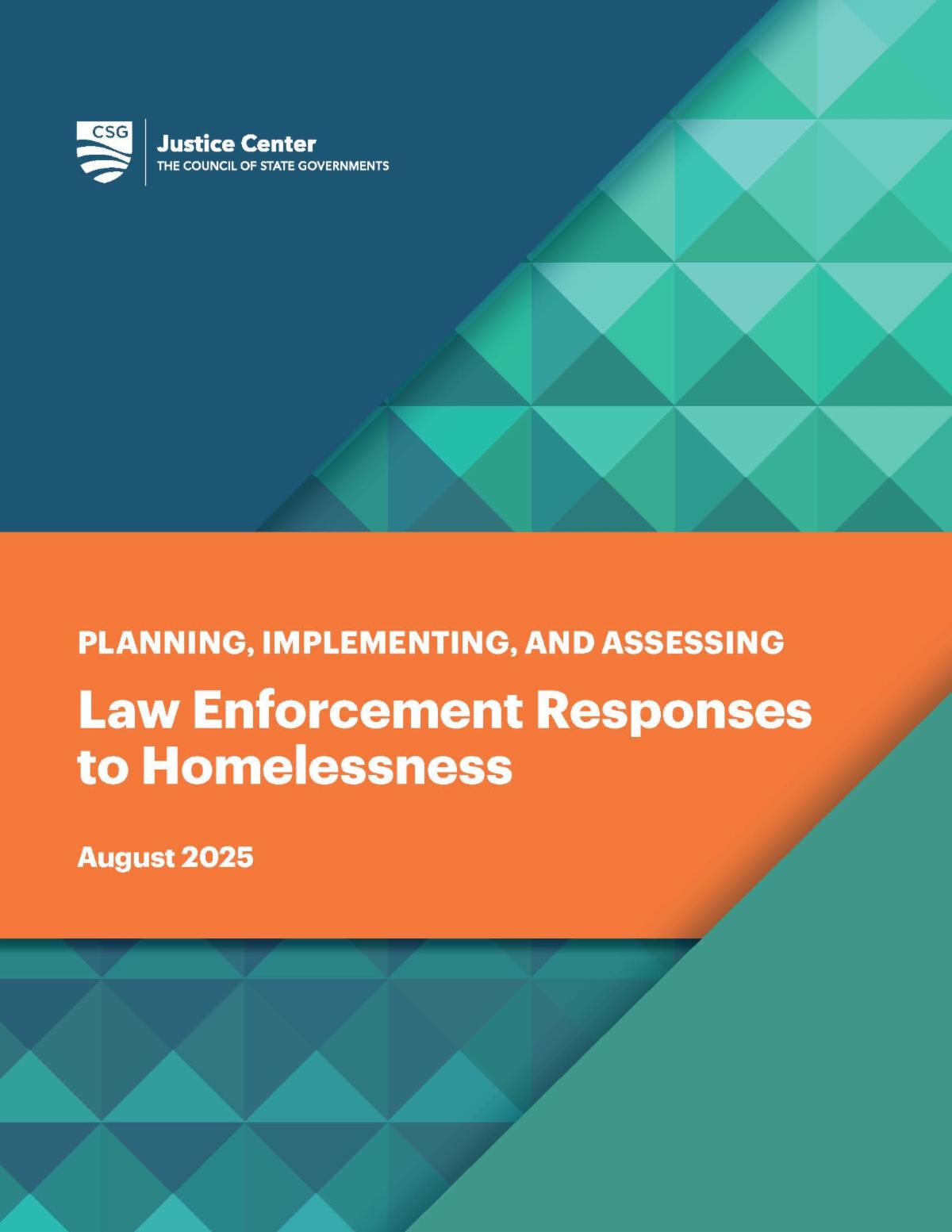
Planning, Implementing, and Assessing Law Enforcement Responses to Homelessness
Homelessness is a growing crisis in America, increasing by 12% between 2022 and 2023 alone. While there are a range of ideas about how to address this issue, in many places across the country, law enforcement officers are still typically the default first responders to these kinds of community concerns. This publication details how communities can strategically plan for and assess their law enforcement homelessness response efforts, using a shared vision, a logic model, and regular assessments to determine if the response is achieving its intended goals. It also discusses the importance of expanding the knowledge base of law enforcement practices and strategies to establish a set of national standards for effective and successful homelessness responses.
| |
SAMHSA Announces $19M in Supplemental Funding to Strengthen Housing Capacity for Homeless People with Serious Mental Illness
The Substance Abuse and Mental Health Services Administration (SAMHSA) is awarding $19 million in new supplemental funding through the Community Mental Health Services Block Grant for efforts to address the intersection of homelessness and serious mental illness (SMI). This funding advances the President’s Executive Order Ending Crime and Disorder on America’s Streets. This supplemental funding provides an opportunity for states to align public health, housing, and justice systems in order to reduce homelessness and improve outcomes for individuals with SMI. The funding will help states build capacity and promote collaboration across systems, with a particular focus on addressing the intersection of homelessness and SMI. Read more here
Related: SAMHSA Announces $43M in Supplemental Funding to Support Youth Recovery Housing Services
| |
Attorney General James Secures Settlement with MVP Health Plan Over Mental Health Ghost Network
New York Attorney General Letitia James last week announced an agreement with MVP Health Plan (MVP) to overhaul its mental health provider directory, ensure the accuracy of its mental health provider network, and provide restitution to plan members impacted by the directory’s inaccurate listings. The settlement follows an investigation by the Office of the Attorney General (OAG) that uncovered systemic issues within MVP’s network, including incorrect directory information, that may have left some members unable to access care or forced them to pay out-of-pocket for out-of-network treatment. The agreement, which is the first resolution resulting from Attorney General James’ report, Inaccurate and Inadequate: Health Plans’ Mental Health Provider Directories, requires MVP to adopt significant, industry-leading reforms to improve the accuracy of its online provider directory and pay restitution to impacted plan members. Read more here.
| |
Addiction Providers Cautious on Promised Prior Authorization Changes
Forty-eight health plans voluntarily signed onto a commitment to simplify prior authorizations across all of health care in June. Changes to the scope of prior authorizations won’t immediately take effect in the behavioral health space. Still, some experts told Behavioral Health Business they worry whether this will happen at all or if the commitments are just empty promises without accountability. They’re not alone. KFF News found that 61% of poll respondents think it is not likely insurance companies will follow through on this initiative. “I’m really skeptical that a pledge from the insurance companies is going to result in increased access to care,” Lindsey Vuolo, vice president of health law and policy, Partnership to End Addiction, told BHB. Read more here.
| |
What If Crisis Organizations Got Youth Engagement Completely Wrong?
An LGBTQ+ young person attempts suicide in the United States every 45 seconds. For decades, crisis organizations assumed youth need to hear, “We’re here to help.” But what if that assumption was wrong? What if well-meaning messages about “being there” and “getting help” push young people away? The Trevor Project, a nonprofit focused on LGBTQ+ youth suicide prevention and crisis intervention, began an experiment in 2021 using sentiment driver analysis. We discovered something unexpected: Young people trusted us more when we appeared “innovative and forward-thinking” than when we emphasized being “helpful.” This work takes on new urgency as the organization faces unprecedented challenges: the Trump administration’s executive orders have systematically dismantled federal support for LGBTQ+ youth services, including the elimination of 988’s specialized suicide prevention option that connected over 69,000 young people monthly to trained counselors. Since the 2024 election, crisis calls have surged 700%, while research shows anti-LGBTQ+ policies directly cause up to 72% increases in suicide attempts among transgender youth. Read more here.
| | |
UPCOMING EVENTS & TRAININGS
Key Strategies to Tackle Unsheltered Homelessness - Session 1
September 4, 1 - 2 pm, CSH
Beyond Recidivism: A New Era of Measuring Reentry Success
September 4, 2 - 3 pm, CSG Justice Center
Creating Optimal Access for OUD Services Utilizing Stages of Change
September 4, 3 - 4 pm, PCSS
Understanding Psychiatric Diagnoses and Making Informed Choices about Treatment
September 4, 3 - 4:30 pm, SAMHSA
Toward Whole-Person Care: Integrated Substance Use and Primary Care Integration
September 8, 2:30 - 4 pm, National Council for Mental Wellbeing
Runaway & Homeless Youth in NYS: Services, Referrals, and Mental Health Intersections Part 2
September 8, 2:30 - 4 pm, CTAC
Cannabis Use: An Examination of National Trends and Protective Strategies for Youth and Young Adults
September 8, 3 - 4 pm, SAMHSA
Engaging Payers and Maximizing Reimbursement for the Collaborative Care Model
September 9, 1 - 2 pm, National Council for Mental Wellbeing
Strategies to Prevent Substance Use Among Youth in Rural Areas
September 10, 10 - 11:30 am, NCROTAC
Mental Health Awareness: Shedding Light on the Interplay between Suicide & Stigma
September 10, 12 - 1 pm, PsychU
Redefining Recovery: A Human-centered Approach to SUD Care
September 10, 2 - 3 pm, National Council for Mental Wellbeing
Competency and Restoration Reimagined from Practice to Possibility: Level Setting
September 10, 2 - 3:30 pm, NCSC
Scaling Telehealth And Other Emerging Technologies To Mitigate The Health Care Workforce Crisis
September 10, 2:30 3:30 pm, Manatt Health
Key Strategies to Tackle Unsheltered Homelessness - Session 2
September 11, 1 - 2 pm, CSH
Integrating Behavioral Health and Primary Care in Rural Communities
September 15, 12 - 1:30 pm, NCROTAC
Underwriting Services Funding in Supportive Housing
September 15, 3 - 4:30 pm, CSH
National Recovery Month Virtual Event: Recovery Ready, Set, Go!
September 16, 2 - 3 pm, National Council for Mental Wellbeing
Advancing Integrated Care Via Collaborative Partnerships: Hospitals, Health Systems, CMHCs and CCBHCs
September 16, 2 - 3 pm, National Council for Mental Wellbeing
Supporting Older Adults with Behavioral Health Needs
September 18, 10 am - 12 pm, SPOP
Braiding Funding Streams to Provide More Person-Centered Care for People with Complex Health and Social Needs
September 18, 1 - 2 pm, CHCS
The Essentials for Contracting: Models, Contract Negotiation, and Compliance for Peer Organizations
September 18, 2 - 3:30 pm, SAMHSA
Stories of Hope: A Value-Centered Approach to Storytelling Informational Webinar
September 18, 3 - 4 pm, National Council for Mental Wellbeing
From Policy to Practice: Behavioral Health Therapists Using AI and Emerging Technologies
September 23, 1 - 2 pm, National Council for Mental Wellbeing
Law Enforcement and Public Health Collaboration
September 24, 10 - 11:30 am, NCROTAC
Mental Health Awareness: Shedding Light on the Interplay between Suicide & Stigma (Part 2)
September 24, 12 - 1 pm, PsychU
Layers of Denial Prevention: Shift Your Focus from Working Denials to Preventing Them
September 24, 1 - 2 pm, Streamline Healthcare Solutions
Strategies to Build and Support the Health Care Workforce
September 24, 2 - 3 pm, NIHCM
Innovative Prevention and Care for People Who Use Drugs (PWUD)
September 25, 12 - 1 pm, NCROTAC
Integrated Care Billing: Bi-Directional Care Coordination & Integration Strategies
September 29, 1:30 - 2:30 pm, National Council for Mental Wellbeing
Advancing Child & Youth Behavioral Health with Measurement-Based Care
September 30, 1 - 2 pm, greenspace
Scenario Planning for Nonprofits: Building Resilience and Sustaining Impact
October 1, 1 - 2 pm, Social Current
Embracing Tech-Enabled Innovation in an Evolving Medicaid Environment
October 1, 2 - 3 pm, CHCS
Securing the Future: What Behavioral Health Providers Need to Know About AI and Data Security
October 7, 1 - 2 pm, National Council for Mental Wellbeing
AI in Action: Community Behavioral Health Providers Share Lessons Learned
October 23, 1 - 2 pm, National Council for Mental Wellbeing
| |
CLMHD CALENDAR
SEPTEMBER
LGU Clinic Operators Call
September 9: 10 - 11:00 am
Addiction Services & Supports (ASR) Committee Meeting
September 11: 11 am - 12 pm
Mental Health Committee Meeting
September 11: 3 - 4 pm
Membership Call
September 17: 9 - 10:30 am
IOCC Meeting
September 18: 1 - 3 pm
Developmental Disabilities Committee Meeting
September 25: 1 - 2 pm
OCTOBER
CLMHD Executive Committee Meeting
October 1: 8 - 9 am
Addiction Services & Supports (ASR) Committee Meeting
October 9: 11 am - 12 pm
Mental Health Committee Meeting
October 9: 3 - 4 pm
CLMHD Office Closed - Columbus Day
LGU Clinic Operators Call
October 14: 10 - 11:00 am
Membership Call
October 15: 9 - 10:30 am
Developmental Disabilities Committee Meeting
October 16: 1 - 2 pm
Children & Families Committee Meeting
October 21, 11:30 am - 1 pm
CLMHD Fall 2025 Full Membership Meeting
October 22 - 24, Penn Yan, NY (Yates County)
| |