|
Only 1 in 4 Addicted to Opioids Takes Life-Saving Meds. Why?
Between 1999 and 2023, approximately 806,000 Americans died from opioid overdoses, according to the Centers for Disease Control and Prevention. Yet of the estimated 2.4 million U.S. adults with opioid use disorder, only one in four receives medications that can reduce overdose risk. Telehealth has shown promise as a potential tool to prevent opioid overdose deaths, but funding for a study launched last year by health economist Haiden Huskamp examining its use and impact was terminated as part of the mass cancellation of federal research grants by the Trump administration in May. “A lot of our research, including that for this grant, is looking at why so few people are getting evidence-based treatments for substance use disorder,” said Huskamp, Henry J. Kaiser Professor of Health Care Policy at Harvard Medical School. “Medications for opioid use disorder are highly efficacious. They reduce opioid use; they reduce overdose risk and other negative outcomes. These medications save lives.” A shortage of clinicians specialized in treating opioid use disorders — particularly in rural areas — presents a major barrier to receiving care, she said. Read more here.
Related: The Quality Of Opioid Use Disorder Treatment In Medicare Is Low And Lags Behind Medicaid
| |
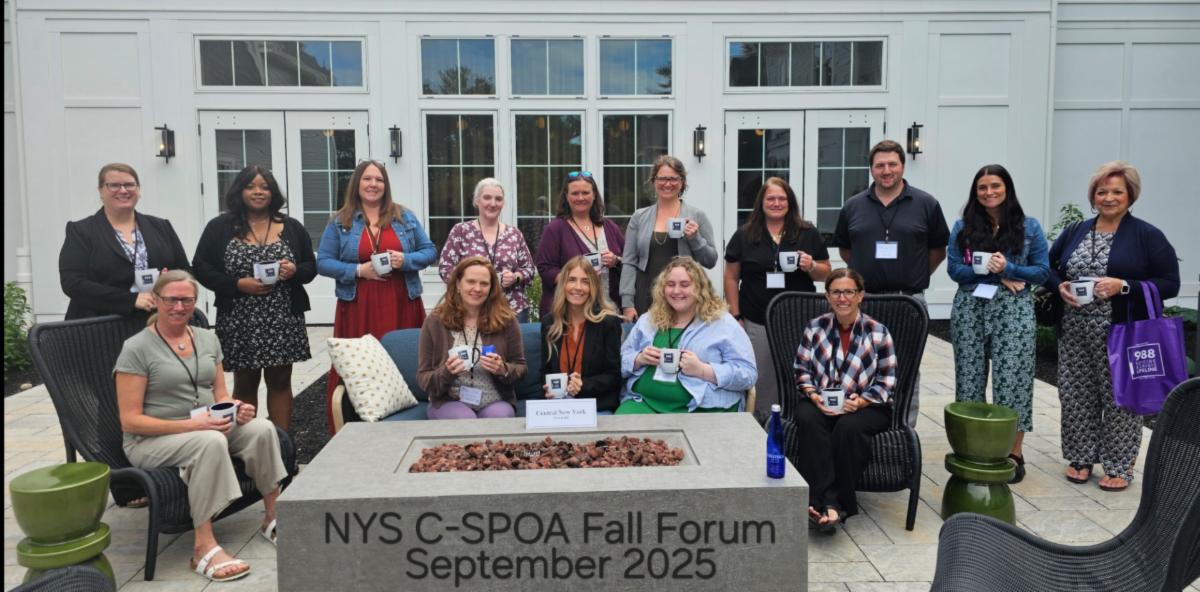
2nd Annual C-SPOA Fall Forum: Building Pathways to Care
The 2nd Annual Children’s Single Point of Access (C-SPOA) Fall Forum, held September 16–17 in Saratoga Springs, brought together county C-SPOAs and OMH leadership for two days of learning and collaboration. Hosted by the NYS OMH and CLMHD, the Forum highlighted updates on OMH RTF Authorization Centralization, Regional breakout session for counties to share challenges and innovations to strengthen their local service networks, role of C-SPOAs in determining HCBS eligibility and High Fidelity Wraparound services, and CANS-NY 2.0 implementation. An overview of training available through the Mental Health Association of NYS (MHANYS) on mental health literacy as a resource to C-SPOAs in their role of supporting schools, families, and communities. C-SPOA Coordinators also convened to share successes such as suicide prevention events and new resource apps, while raising concerns about service gaps for non-Medicaid youth and workforce shortages. The goal of this forum was to strengthen collaboration statewide as counties prepare for an expanded role in connecting children and families to care.
| |
Governor Hochul Announces $25 Million to Expand Access to Health Care for People With Developmental Disabilities
Governor Kathy Hochul today announced that $25 million in capital project grants will go toward the development of Regional Disability Health Clinics through the New York State Office for People With Developmental Disabilities (OPWDD). While the federal administration moves forward with slashing access to vital Medicaid services, New York State is committed to improving access to health care services for people with developmental disabilities. “People with developmental disabilities often struggle to access dental care, physical therapy and specialty medical needs,” Governor Hochul said. “That’s why I included funding for Regional Health Clinics in New York’s last budget cycle. Waiting years for proper care or finding out medical adaptive equipment is unavailable is not an option and harms the dignity and health of those who need care most. Equal access to healthcare is crucial for every New York family.” Read more here.
| |
OPWDD Launches Developmental Disabilities Taskforce on Aging
The Office for People With Developmental Disabilities (OPWDD) has launched its first-ever Developmental Disabilities Taskforce on Aging, a joint initiative with the Developmental Disabilities Advisory Council (DDAC). The taskforce brings together leaders, self-advocates, families, and subject matter experts to develop recommendations that address the unique needs of New Yorkers with developmental disabilities as they age. This population often faces complex challenges related to aging in place, accessing healthcare, and maintaining quality of life. “As people with developmental disabilities live longer, healthier lives, we have both the opportunity and responsibility to adapt a service system that was not originally designed to support the complexities of aging,” said Willow Baer, OPWDD Commissioner.
| |
Rural Health Systems Could Get $50 Billion in New Federal Funding
Mixed in with cuts for Medicaid and social programs, the One Big Beautiful Bill included a historic allocation of $50 billion for states to improve rural health care. The Centers for Medicare and Medicaid Services (CMS) launched the Rural Health Transformation Program on Sept. 15. Program goals align with HHS Secretary Robert F. Kennedy Jr.’s Make America Healthy Again agenda. The aim, he said, is to “deliver dignity and dependable care to rural communities, making sure every American has access to affordable, high-quality treatment.” The window is unusually tight for a federal grant program. Submissions are due by early November. Funding decisions will be made by the end of December. The stakes are high: the program will distribute $10 billion a year over five years, but the November deadline will be the only opportunity to apply. If a state’s application is not approved, it won’t have a chance to submit another one. Read more here.
Related: KFF - Key Takeaways from CMS’s Rural Health Funding Announcement
| |
Medicare Coverage Of Intensive Outpatient Programs Could Reduce State Behavioral Health Care Costs
People who are dually eligible for Medicare and Medicaid have complex needs, and their care also tends to be costlier compared to those with Medicaid-only coverage. Twenty-six percent of dually eligible individuals have five or more chronic conditions, and 50% have a mental health diagnosis. In 2021, the dually eligible population represented just 13% of Medicaid enrollment but accounted for 27% of total Medicaid spending. As states face Medicaid cuts resulting from the recent passage of the 2025 budget reconciliation bill (HR 1), Medicare’s recent expansion of behavioral health care coverage to include intensive outpatient program (IOP) services and other behavioral health services could reduce state Medicaid costs for behavioral health services and also improve access to care for dually eligible individuals. Yet, to realize these potential benefits, states will need to educate their behavioral health care providers about Medicare’s new role in covering these services. Read more here.
| |
Strengthening Cross-Agency Collaboration Across Medicaid and Other State Partners to Support Work Requirement Implementation
New federal Medicaid work requirements present significant challenges for state Medicaid agencies, particularly in minimizing coverage disruptions for eligible members. To support effective implementation and prevent unnecessary coverage loss, Medicaid agencies can collaborate with other state agencies not only to comply with new work requirements, but also to connect members with employment, education, and training opportunities, while aligning systems to support efficiency and accuracy. This brief outlines opportunities for Medicaid agencies to collaborate with partners in labor, education, corrections, SNAP, TANF, and other agencies to successfully address work requirements implementation challenges and maintain member coverage. It offers guidance on data sharing, referrals, and public outreach, along with best practices from states already advancing cross-agency partnerships in other areas.
| |
SAMHSA Awards More Than $45 Million in Supplemental Funding to Support Young Adult Sober Housing Services
The Substance Abuse and Mental Health Services Administration (SAMHSA), a division within the U.S. Department of Health and Human Services (HHS), today announced it has awarded more than $45 million in new supplemental funding to State Opioid Response (SOR) program recipients to focus on sober or recovery housing among young adults. This investment advances President Trump’s Executive Order, Ending Crime and Disorder on America’s Streets, by providing sober housing and recovery support services, which are critical to combatting our Nation’s challenge of homelessness, addiction, and illness. Sober housing for those in early recovery is a safe and supportive alcohol- and drug-free residence where people can live, build stability and work toward independence. This therapeutic model allows people to actualize their hopes and dreams to live a fulfilling and self-directed life. Read more here.
Related: HS Provides More Than $1.5 Billion in State and Tribal Opioid Response Grants
| |
How States Can Better Partner with Community-Based Organizations to Reduce Overdoses
Despite recent declines in overdose deaths nationally, overdose rates continue to rise. Opioid settlement funds, along with other state and federal funding streams intended to address the opioid crisis, provide state leaders with new opportunities to direct resources where they are needed most. Community-based organizations (CBOs) that are known and trusted within their communities are critical partners in providing these tailored services and supports that reduce risk factors for overdose. Though CBOs play an imperative role in addressing a wide range of health and social needs at the community level, they often face systemic challenges in accessing state-administered funding. This toolkit by the National Academy for State Health Policy (NASHP) and Center for Addiction Research and Effective Solutions at the American Institutes for Research (AIR CARES) provides a menu of practical strategies that state opioid settlement administrators and other grant-making agencies are using to improve funding access for CBOs operating in or serving disproportionately affected communities.
| | |
New York State High Schools Train Teens in Mental Health First Aid
High schools across New York state are training students on how to support their peers in crisis, as rates of teen anxiety, depression, and suicide continue to climb across the country. According to the Centers for Disease Control and Prevention, more than 40% of U.S. high school students reported persistent feelings of sadness or hopelessness in 2023, with nearly 1 in 5 saying they had seriously considered suicide. The training initiative is part of Gov. Kathy Hochul’s broader youth mental health strategy, which aims to equip young people not only to care for their own well-being, but also to support peers in crisis — and to recognize when to guide them toward professional help. “Peer-to-peer support is something so integral at this stage of our lives,” said 17-year-old Jacob Wolmetz, a high school senior from Suffolk County who serves on the Governor’s Youth Council. Teenagers “might not feel comfortable talking to a school social worker or counselor. It’s easier to confide in people you trust.” Read more here.
| |
UPCOMING EVENTS & TRAININGS
Innovative Prevention and Care for People Who Use Drugs (PWUD)
September 25, 12 - 1 pm, NCROTAC
988 in New York State
September 25, 12 - 1 pm, NYSPHA
Suicide Prevention Through Postvention: An Organizational Approach
September 25, 1 - 2 pm, National Council for Mental Wellbeing
Reimbursement Strategies for Medicaid Substance Use Disorder Services
September 25, 2 - 3:15 pm, NORC
Integrated Care Billing: Bi-Directional Care Coordination & Integration Strategies
September 29, 1:30 - 2:30 pm, National Council for Mental Wellbeing
Advancing Child & Youth Behavioral Health with Measurement-Based Care
September 30, 1 - 2 pm, greenspace
Soteria Houses: Safe, Humane, Life-Enhancing Treatment for Psychosis
September 30, 2 - 3:30 pm, National Empowerment Center
Understanding and Treating Personality Disorders Part 2: Treatment Challenges and Strategies with Personality Disorders
October 1, 12 - 1:30 pm, CTAC
Scenario Planning for Nonprofits: Building Resilience and Sustaining Impact
October 1, 1 - 2 pm, Social Current
Embracing Tech-Enabled Innovation in an Evolving Medicaid Environment
October 1, 2 - 3 pm, CHCS
Public Education Strategies to Tackle County Challenges: Mental Health, Workforce, and Gun Violence
October 2, 2 - 3 pm, NACo
Securing the Future: What Behavioral Health Providers Need to Know About AI and Data Security
October 7, 1 - 2 pm, National Council for Mental Wellbeing
The Next Phase of AI in Behavioral Health: Putting Clinical Judgment Back in Charge
October 7, 1 - 2 pm, Clinically AI
Innovative Medicaid Strategies to Enhance the Behavioral Health Care Workforce
October 7, 2 - 3:15 pm, CHCS
Sexual Misconduct: Where's the Line? Boundaries and Ethics in Addiction Counseling
October 8 - 9, 9 am - 4 pm, CCSI - IN-PERSON in Rochester, NY
NAMI Ask the Expert: New Perspectives on Lithium
October 9, 4 - 5:30 pm, NAMI
Scaling Behavioral Health: Strategies for Sustainable Growth
October 15, 2 - 3 pm, Behavioral Health Business
Competitive, Compliant and Client-focused SUD Care
October 16, 2:30 - 3:30 pm, Elias
2025 On the Shoulders of Giants Scientific Symposium
October 16, 5 - 7:30 pm, Child Mind Institute
Putting Communities First: How Counties Leverage Tech to Improve Behavioral Health
October 21, 2 - 3 pm, NACo
Engaging Medicaid Members and Community-Based Organizations Through Beneficiary Advisory Councils
October 22, 1 - 2:15 pm, CHCS
AI in Action: Community Behavioral Health Providers Share Lessons Learned
October 23, 1 - 2 pm, National Council for Mental Wellbeing
| |
CLMHD CALENDAR
OCTOBER
CLMHD Executive Committee Meeting
October 1: 8 - 9 am
Addiction Services & Supports (ASR) Committee Meeting
October 9: 11 am - 12 pm
Mental Health Committee Meeting
October 9: 3 - 4 pm
CLMHD Office Closed - Columbus Day
LGU Clinic Operators Call
October 14: 10 - 11:00 am
Membership Call
October 15: 9 - 10:30 am
Developmental Disabilities Committee Meeting
October 16: 1 - 2 pm
Children & Families Committee Meeting
October 21, 11:30 am - 1 pm
CLMHD Fall 2025 Full Membership Meeting
October 22 - 24, Penn Yan, NY (Yates County)
| |