|
Governor Hochul Unveils Plan to Restrict Smartphone Use in Schools Statewide and Ensure Distraction-Free Learning in New York
Governor Kathy Hochul yesterday stood with students, parents, teachers, social justice advocates and law enforcement officials to launch her push to restrict smartphone use in K-12 schools statewide. The launch of this new effort follows the introduction of this legislative proposal as part of Governor Hochul’s FY 2026 Executive Budget Proposal. Additionally, Governor Hochul today released a new report with recommendations gathered from her statewide listening tour this past year with students, parents and teachers regarding excessive smartphone use in schools. This effort continues Governor Hochul’s commitment to protecting youth mental health and promoting student success in the digital age, following her action last year to secure and sign a first-in-the-nation law to restrict addictive social media feeds for minors. Read more here.
Related: Governor Hochul Announces $10 Million Available to Support Youth and Teen Mental Health First Aid
| |
DiNapoli: Numbers of Homeless Population Doubled in New York
Homelessness in New York state has grown sharply, more than doubling between January 2022 and January 2024, according to a report released today by New York State Comptroller Thomas P. DiNapoli. Homelessness grew by 53.1% from January 2023 to January 2024, more than four times the rest of the nation. The large spike was driven by New York City and the influx of asylum seekers, but the rest of the state also had double- and triple-digit rate increases, led by Glens Falls, Saratoga and the surrounding counties. The number of homeless children increased from 20,299 in 2022 to 50,773 in 2024. Almost one in three of New York’s homeless are children, one of the highest shares in the nation. Read more here.
| |
US Departments of Labor, Health and Human Services, Treasury issue 2024 Mental Health Parity and Addiction Equity Act Report to Congress
WASHINGTON – The U.S. Departments of Labor, Health and Human Services, and the Treasury last week issued their 2024 Report to Congress on the Mental Health Parity and Addiction Equity Act enforcement and implementation, which suggests that group health plans and health insurance issuers are making progress complying with the Mental Health Parity and Addiction Equity Act, but are continuing to fall short of the requirement to cover mental health and substance use disorder benefits in parity with medical and surgical benefits. The report highlights the ongoing efforts of the departments to strengthen and enforce the protections of MHPAEA and better ensure that plan participants, beneficiaries and enrollees do not face greater barriers in trying to access mental health and substance use disorder benefits as compared to medical and surgical benefits, including finalizing new rules for MHPAEA in September 2024. Read more here.
| |
Sheriffs Launch Blue Envelope Program Statewide
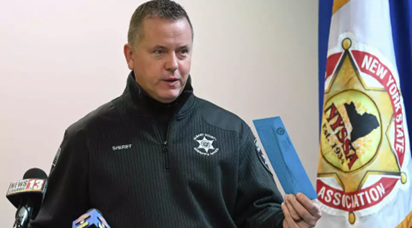
The New York State Sheriffs' Association announced week the statewide implementation of the Blue Envelope program, intended to help drivers with autism during encounters with law enforcement officials. The program, touted at a news conference at the association’s downtown Albany headquarters, provides drivers with a light blue envelope to hold a photocopy of their license, vehicle registration, insurance information and contact information for a support person. The envelope alerts law enforcement officers that the driver has autism and to adapt how they approach the interaction. Read more here.
| |
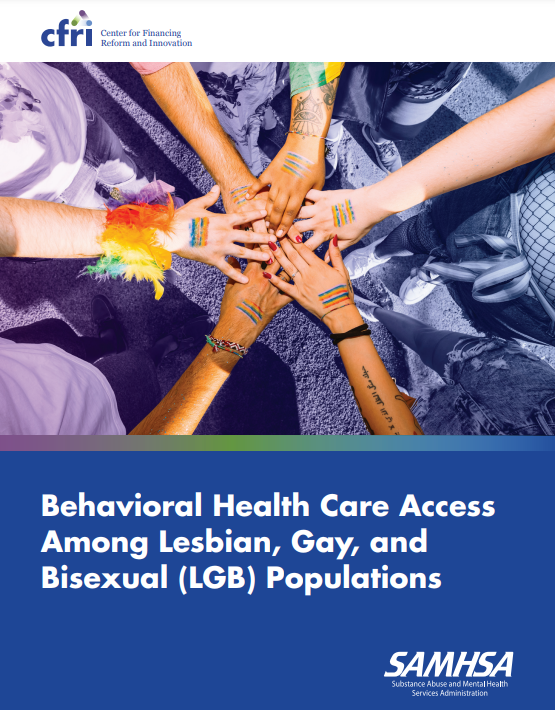
Behavioral Health Care Access Among Lesbian, Gay, and Bisexual (LGB) Populations
The Behavioral Health Care Access Among Lesbian, Gay, and Bisexual (LGB) Populations report highlights findings from the 2023 SAMHSA publication Lesbian, Gay, and Bisexual Behavioral Health: Results from the 2021 and 2022 National Surveys on Drug Use and Health on the elevated rates of substance use, suicidality, and mental illness among LGB individuals compared to straight individuals. The report investigates whether these findings remain statistically significant when controlling for factors such as age, race, educational attainment, marital status, and financial hardship.
| |
NYSARH Receives $500,000 Grant from Mother Cabrini Health Foundation
The New York State Association for Rural Health (NYSARH) proudly announces its receipt of a $500,000 grant from the Mother Cabrini Health Foundation to launch the Older Adult Rural Mental and Behavioral Health Workforce Support Program (OARS). This transformative initiative addresses the critical need for mental and behavioral health services in rural communities while increasing workforce support and reducing stigma surrounding mental health. Read more here.
| |
Rising Cannabis Use Disorder Cases Prompt Treatment Providers to Expand Services
Experts warn that rates of cannabis use disorder (CUD) are increasing due to more favorable perceptions of the drug and higher concentrations. Providers already treating substance use disorders (SUDs) have the tools to treat CUD – a move that could increase care access and strengthen revenue streams. However, better treatment modalities may still be needed. “If you are a provider who already treats any other SUD like alcohol or opioids, you could treat this as well,” Dr. Alta DeRoo, chief medical officer of Hazelden Betty Ford Foundation, told Addiction Treatment Business. “If you do any type of addiction, the principles of treating the addiction are the same.” Center City, Minnesota-based Hazelden Betty Ford Foundation was created in 2014 through a merger of the Hazelden Foundation and the Betty Ford Center. It operates 17 treatment centers in California, Colorado, Florida, Illinois, Minnesota, New York, Oregon, Washington and Wisconsin. Read more here.
| |
Beyond Hard Hats: Mental Struggles Become the Deadliest Construction Industry Danger
BIRMINGHAM, Ala. — Frank Wampol had a dark realization when he came across some alarming data a few years ago: Over 5,000 male construction workers die from suicide annually — five times the number who die from work-related injuries, according to several studies. That’s considerably more than the suicide rate for men in the general population. “To say this is a crisis would be an understatement,” said Wampol, vice president of safety and health at BL Harbert International, a construction company based in Birmingham with over 10,000 employees. Since then, the company has added mental health first-aid training for on-site supervisors and distributed information about suicide prevention to laborers in the field. The efforts are part of a larger push led by the industry and supported by unions, research institutions, and federal agencies to address construction workers’ mental health. Read more here.
| |
|
UPCOMING EVENTS & TRAININGS
Changing Pathways: How to leverage evidence-based practice to improve treatment outcomes for OUD
January 23, 12 - 1 pm, Behavioral Health Tech
The Interconnection between Health Equity, the Social Determinants of Health and the Impact of Intersectionality (in Rural Communities)
January 23, 2 - 4 pm, NCROTAC
Integrating Care: The Role of MOUD in Addressing Opioid Use Disorder and Infectious Disease
January 29, 1 - 2 pm, PCSS
Treating People who Use Meth or other Stimulants: Leveraging Contingency Management in Criminal Justice Settings
January 29, 2 - 3:30 pm, SAMHSA's GAINS Center
Healing Over Handcuffs: Advancing Deflection Strategies
January 29, 2 - 3 pm, National Council for Mental Wellbeing
Comprehensive Clinical Assessments with a Focus on Quality
January 29, 3 - 4:30 pm, NAADAC
Effective Strategies for Violence Prevention and Serving Higher-Risk Youth in the Community
January 29, 4 - 5 pm, National Council of Juvenile and Family Court Judges
When clinicians become family caregivers
February 5, 2 - 3 pm, Camden Coalition
FREE Getting the Grant Workshop - In-Person - Ithaca, NY
February 6, 8 am - 4 pm, Appalachian Regional Commission
Navigating Concerns on Youth Crime, Violence, and Behavioral Health: 3 Steps to Take Series
February 11, 2 - 3 pm, CSG Justice Center
The Power of Collaboration: Aligning Perspectives to Build with Purpose
February 11, 2 - 3 pm, Behavioral Health Business
Supporting African Americans in Treatment and Recovery: Medications for Alcohol Use Disorder (MAUD)
February 13, 3 - 4 pm, PCSS
Providing Quality Treatment Programming: What It Means to Ensure Fidelity to the Treatment Model
February 18, 2 - 3:30 pm, SAMSA's GAINS Center
Wellness and Resilience in Rural Communities: An Overview of Rural Minds
February 19, 12 - 1 pm, OMH/SPCNY
Overcoming Workforce Challenges in Behavioral Health Care
February 26, 1 - 2 pm, National Council for Mental Wellbeing
Justice Center Code of Conduct Train-the-Trainer Session
February 26, 1 - 4 pm, Justice Center for the Protection of People with Special Needs
Conducting Cultural Assessments: Engaging and Providing Treatment for Justice-Involved Individuals from BIPOC and LGBTQIA+ Communities
February 26, 3 - 4:30 pm, NAADAC
Youth and the Legalization of Marijuana
March 12, 3 - 4:30 pm, NAADAC
Justice Center Code of Conduct Train-the-Trainer Session
March 26, 1 - 4 pm, Justice Center for the Protection of People with Special Needs
Sequential Intercept Model (SIM) of Peer Support in Criminal Justice
March 26, 3 - 4:30 pm, NAADAC
| |
CLMHD CALENDAR
FEBRUARY
CLMHD Executive Committee Meeting
February 5: 8 - 9 am
AOT Coordinators Call
February 7: 10 - 11:30 am
LGU Clinic Operators Call
February 11: 10 - 11 am
LGU Billing Staff Call
February 11: 11 am - 12 pm
Addiction Services & Supports (ASR) Committee Meeting
February 13: 11 am - 12 pm
Mental Health Committee Meeting
February 13: 3 - 4 pm
CLMHD Office Closed - Presidents' Day
February 17
Children & Families Committee Meeting
February 18: 11:30 am - 1 pm
Membership Call
February 19: 9 - 10:30 am
| |