|
How States Are Preparing for Medicaid Eligibility Changes
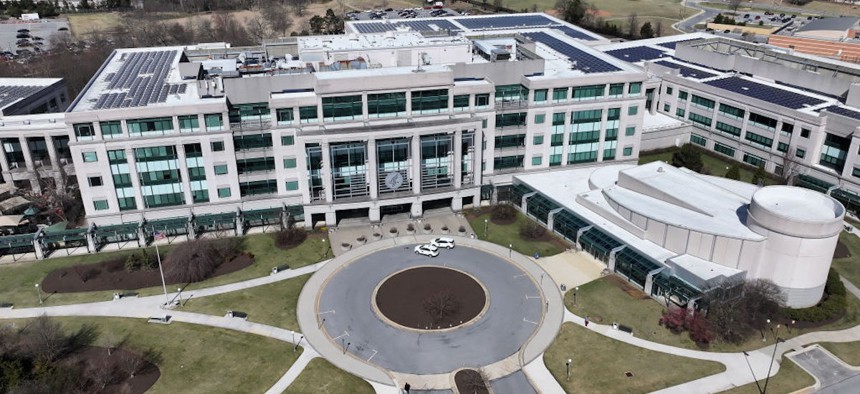
States have less than five months to comply with recent changes to Medicaid’s eligibility requirements that go into effect next year, and they’re turning to various policy and legislative initiatives to get the job done.
On Jan. 1, 2027, Medicaid enrollment will look different for millions of Americans. Under President Donald Trump’s H.R. 1 and final interim rules issued by the Centers for Medicare and Medicaid Services in June, enrollees face more stringent work and community engagement requirements. The interim final rules stipulate that certain enrollees aged 19 to 64 years must participate in at least 80 monthly hours of an education program, employment or volunteer service. Enrollees may be exempt from such activities due to specific life conditions, such as pregnancy or holding a veteran status, or their compliance with other assistance programs like Supplemental Nutrition Assistance Program. While the long-awaited final guidance largely upholds HR 1’s original statute, it introduced stipulations that many states had not been preparing for as they have rolled out system and operational changes since its passage last July. Read more here.
Related: Court Case Challenging Medicaid Work Rule's 'Frailty' Requirement Gets Moved Up
How Medicaid Requirements Could Fail Patients in Recovery
| |
Integrity Partners Awarded Nearly $2 Million to Implement Zero Suicide Across Rural New York
BATAVIA, N.Y.—Integrity Partners for Behavioral Health IPA has been awarded the full five-year grant from the Substance Abuse and Mental Health Services Administration to implement the Zero Suicide framework across rural New York. The initiative will begin with a phased demonstration in 10 outpatient behavioral health organizations and expand training and learning opportunities across a network reaching all 44 rural counties in New York State. The project will strengthen suicide-risk identification, evidence-based treatment, safety planning, follow-up, care transitions, workforce training, and continuous quality improvement for adults at risk for suicide. NORC at the University of Chicago will serve as Integrity Partners’ principal Zero Suicide training, implementation, and evaluation partner. NORC will train participating organizations, provide ongoing implementation assistance, manage the project evaluation, and use findings to support continuous improvement throughout the five-year initiative. Read more here.
| |
Supercharged by Social Media, the GLP-1 Boom Is Warping Teen Psyches
In 2024, Amelia Cate Prosser remembers feeling as if GLP-1 drugs were suddenly everywhere: stashed in her friends’ parents’ refrigerators, glorified on the red carpet and dominating the cafeteria conversations at her private all-girls high school in Melbourne. But it was on social media where the noise was — and continues to be — the loudest. The teen says she could hardly open an app without being bombarded with posts and advertisements about weight-loss injections. Impeccably sculpted models in sports bras warning that sometimes “effort alone isn’t enough” crowded her feeds; so did before-and-after images glamorizing other young women’s rapidly transformed physiques. (Were they AI-generated? Hard to know.) It was around that time that Prosser, now 17, says she developed anorexia and, later, bulimia. “My friends and people I know, we’ve all lost track of what a normal, healthy, especially female body looks like,” says Prosser, who’d used a fake birthday to sign up for adult social media accounts, instead of the more restrictive teen ones. “Whether we say it out loud or not, it’s a very known thing that we all would like to look like that.” Read more here.
Related: Schools across the US banned phones. Teens are demanding more offline support
| |
UHF Medicaid Conference Explores Strengthening Program Through Partnership, Innovation, and Trust
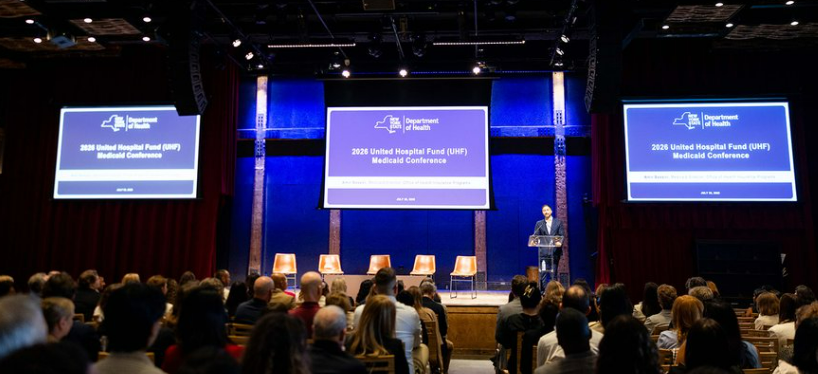
The state’s initiative to bridge social services and health care delivery for New York Medicaid members with the greatest needs is successfully reaching the populations it was built to serve, according to Medicaid Director Amir Bassiri. Speaking at United Hospital Fund’s Annual Medicaid Conference on July 30, Mr. Bassiri noted that 60 percent of the 1.5 million Medicaid members screened to date under the 1115 waiver demonstration are in fact in the “enhanced populations” targeted by the initiative, including those with chronic conditions or significant behavioral, medical, or social risk factors. These screenings so far have included 453,000 members with substance use disorder or serious mental illness and 376,000 high-risk children, signaling that the waiver is reaching those who can benefit from the social services it provides. The newly shared data comes amidst the New York State Department of Health’s request to extend the 1115 waiver—which expires in March 2027—and roughly 18 months after health-related social needs screenings began in earnest following the build-out of a robust payment system and infrastructure of social care networks leading the service delivery. Read more here.
| |
Mental Health Peer Support Professionals in CCBHCs: A Workforce Integration Needs Assessment
The peer workforce is essential to Certified Community Behavioral Health Clinics (CCBHCs). Peer support is one of nine required services in every CCBHC — a clear signal that lived and living experience belongs at the center of behavioral health care. But designating a service isn’t the same as sustaining a workforce.
This needs assessment from the National Council for Mental Wellbeing, developed with support from Bristol Myers Squibb, takes a close look at how mental health Peer Support Professionals (PSPs) are integrated into CCBHCs nationwide and the evidence-based strategies required to successfully recruit, retain and grow this critical workforce. Read the Workforce Integration Needs Assessment here.
| |
Childhood Screen Detects Mental Health Risks
Children who experience traumatic events have a higher risk of health and mental health disorders. Traumas may include abuse, neglect, or domestic violence. But some children experience another type of adversity: unpredictable home environments. Examples include lack of a bedtime routine, parental mood swings, or an unstable relationship between parents.
Previous research has linked unpredictable parenting and home routines to poorer mental health in children. Yet, current screening methods don’t assess unpredictability during childhood. They are also better at identifying mental health conditions among large groups of people than for individual children.
An NIH-funded research team led by Dr. Tallie Z. Baram at the University of California, Irvine and Dr. Laura Glynn at Chapman University set out to address these limitations. The team added five unpredictability measures to a current adversity screen. They tested whether these measures helped improve the detection of childhood mental health conditions. The study included about 30,000 children seen in 19 pediatric primary care clinics in Orange County, California. The team compared mental health diagnoses from the children’s electronic health records with their screening results. Read more here.
| |
Accelerating Growth in the Mental Health Care Workforce
Millions of Americans struggle to access mental health care due to a shortage of trained professionals. More than 1 in 3 people live in areas without enough mental health care workers. Kaiser Permanente is working to change this. They have developed workforce programs to help expand and broaden the mental health workforce. They also remove barriers that keep many people from entering the field and becoming licensed. In 2025, we helped nearly 1,000 aspiring professionals on the path to licensure. But this effort alone can’t solve the national shortage. Several challenges make it hard to build the mental health workforce:
-
Burdensome licensing standards: Getting licensed requires thousands of supervised work hours, which are often unpaid. Licensing standards help ensure providers are qualified, but some states require more than 3,000 hours of supervised work hours, far more than other states. This adds financial strain and keeps people out of the field without a clear benefit to care.
-
Limited access to supervision: Rural and underserved areas often don’t have enough qualified supervisors. Federal rules that limit which providers can serve as supervisors contribute to this and can delay the path to licensure.
-
Community shortages: There’s a strong need for a multilingual workforce that can better understand and serve more people and that can meet the needs of communities facing disproportionate shortages. Read more here.
| |
Thurston County’s Project SAFER Builds Stronger Relationships Between Emergency Responders and People with Developmental Disabilities
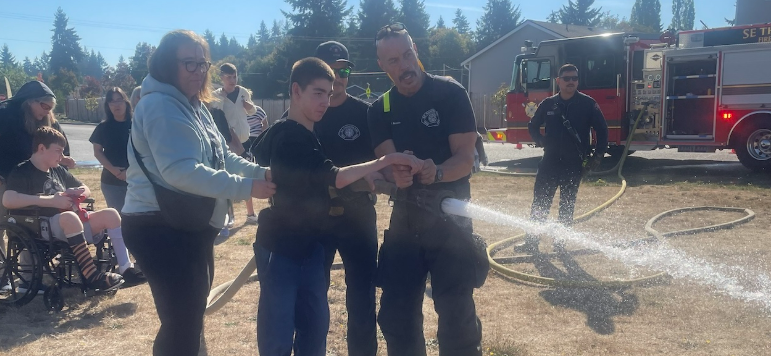
Olympia, WA - Thurston County Public Health & Social Services’ Project SAFER (Special Assistance for Emergency Responders) is helping bridge the gap between people with intellectual and developmental disabilities (I/DD) and first responders. The program fosters understanding, improves communication, and helps reduce the potential for misunderstandings during emergency situations. Project SAFER was originally developed to educate police officers, firefighters, EMTs, and other emergency responders about effectively interacting with people who have intellectual and developmental disabilities (I/DD) or who are neurodivergent. Due to its success, Thurston County is expanding the program’s education and training to include judges and other members of the legal system, as well as professionals in the medical field. Communication differences between people with I/DD and emergency personnel can sometimes lead to misunderstandings or unnecessary involvement with the legal system. Project SAFER trainings help increase knowledge, confidence, and comfort for everyone involved. Read more here.
| | |
UPCOMING EVENTS & TRAININGS
Anticipating Policy Change
August 13, 1 - 2 pm, Social Current
Centralizing Training for Scalable Compliance
August 13, 2 - 2:45 pm, National Council for Mental Wellbeing
From Paperwork Burden to Collaborative Care
August 14, 2 - 2:45 pm, National Council for Mental Wellbeing
Workforce Solutions Jams: HR1 & the Behavioral Health Workforce
August 18, 1 - 2 pm, National Council for Mental Wellbeing
Modeling the Financial Impact of CCBHCs: Helping States Demonstrate Value, Cross-system Impact, and Plan for Sustainability
August 18, 3 - 4 pm, National Council for Mental Wellbeing
Creating a Trauma-Informed, Recovery-Oriented System of Care Series
August 19, 12 - 1 pm, National Council for Mental Wellbeing
From Policy to Practice: Implementing Effective Threat Assessment Programs
August 19, 1 - 2 pm, American Hospital Association
Integrating Perinatal Mental Health and Substance Use Care within Crisis Systems
August 19, 1:30 - 2:30 pm, SAMHSA
Doing More With Less: How Counties Can Successfully Address Behavioral Health Crisis Response Needs
August 20, 2 - 3 pm, NACo
Metabolic Psychiatry: A Nutrition Based Approach to Treating Mental Illness
August 20, 2 - 3:30 pm, SAMHSA
Leveraging the Certified Community Behavioral Health Clinics Model to Strengthen Reentry and Homelessness Response
August 20, 2:30 - 4 pm, SAMHSA's GAINS Center
Addressing Nicotine Use in Patients with Opioid Use Disorder (OUD)
August 20, 3 - 4 pm, PCSS-MOUD
Mobile Crisis Foundations & Capacity Building
August 25, 2 - 3 pm, SAMHSA
Building Integrated Care Teams for Co Occurring Behavioral Health and Substance Use Conditions
August 25, 4 - 5:30 pm, MPATTC
Using PSYCKES for ACT Teams
August 26, 10 - 11:30 am, OMH
Opioid Use Disorder in the Perinatal Period: Screening and Treatment
August 26, 12 - 1 pm, Project TEACH
Bridging the Gap – Workforce Collaboration in CCBHCs
August 26, 2:30 - 3:30 pm, National Council for Mental Wellbeing
From Hire to Licensed: Accelerating Your Workforce Pipeline
August 27, 3 - 3:45 pm, National Council for Mental Wellbeing
Exploring the Intersection of Housing and Civil Commitment: Civil Commitment for Substance Use Disorders and Mental Illness
September 3, 1 - 2:30 pm, SAMHSA's GAINS Center
Elevating Peers and Community Health Workers within Integrated Care Teams
September 10, 1 - 2 pm, National Council for Mental Wellbeing
Suicide Attempt survivor and Adolescent Support groups-Examples and opportunities
September 14, 12 - 1 pm, SPCNY
National Recovery Month Virtual Event: Recognizing Addiction Transfer in Recovery
September 15, 12:30 - 1:30 pm, National Council for Mental Wellbeing
Using PSYCKES for FQHCs
September 15, 1 - 2 pm, OMH
Workforce Solutions Jams: HR1 & the Behavioral Health Workforce
September 15, 1 - 2 pm, National Council for Mental Wellbeing
Chasing Other Dragons – Atypical Intoxicants
September 16, 12 - 1:30 pm, NAADAC
Final Coaching Call: Integrated Systems Care for Opioid Use and Co-Occurring/Co-Morbid Disorders
September 21, 12 - 1 pm, National Council for Mental Wellbeing
Creating a Trauma-Informed, Recovery-Oriented System of Care Series
September 24, 3 - 4 pm, National Council for Mental Wellbeing
REGISTRATION OPEN - The 2026 New York State Suicide Prevention Conference
September 29 - 30, Ithaca, NY
Transforming Documentation: From Pitfalls to Best Practices
September 30, 12 - 1:30 pm, NAADAC
Cross-Agency Data-Sharing: What Corrections Can Learn from Montana
September 30, 3 - 4:30 pm, CSG Justice Center
| |
CLMHD CALENDAR
August
Mental Health Committee Meeting
August 13: 3 - 4 pm
Membership Call
August 19: 9 - 10:30 am
Developmental Disabilities Committee Meeting
August 20: 1 - 2 pm
September
Executive Committee Meeting
September 2: 8 - 9 am
CLMHD Office Closed - Labor Day
September 7
LGU Clinic Operators Call
September 8:10 - 11 am
Addiction Services & Recovery Committee Meeting
September 10: 11 am - 12 pm
Mental Health Committee Meeting
September 10: 3 - 4 pm
Membership Call
September 16: 9 - 10:30 am
| |